Texas: The Rio Grande Valley in Winter
Including Whooping Cranes
-
Feb 8-17, 2027
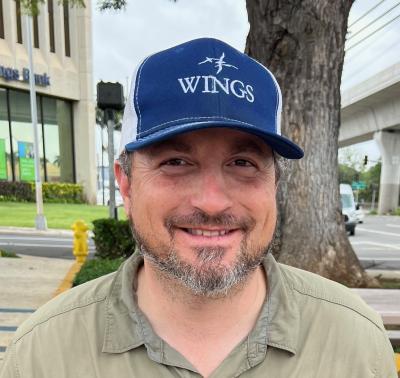
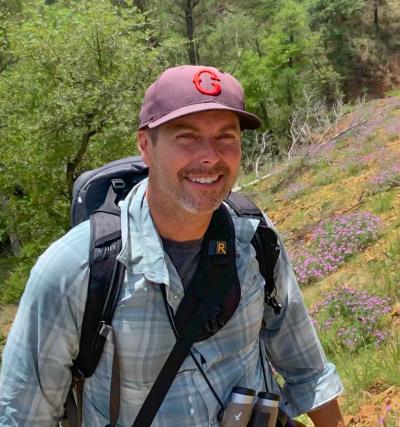
Jake Mohlmann
Tour Price to be Determined


Tour Price to be Determined
At a time when much of the country is still firmly in winter’s embrace, South Texas offers a typically mild climate along with a notable abundance and diversity of both wintering and resident birds. We’ll visit famed spots such as South Padre Island, Santa Ana National Wildlife Refuge, Bentsen - Rio Grande Valley and Estero Llano Grande State Parks, Santa Margarita Ranch (if warranted), and the riverside below Falcon Dam, looking especially for birds whose range in the United States is largely restricted to South Texas. Winter is also a time when vagrants from Mexico appear, and our schedule is flexible enough to allow us to pursue any that are present.
Most of the world’s wild Whooping Cranes winter along a small stretch of the Texas coast. We’ll make a special boat trip to visit these magnificent creatures and connect with the many birds that use the rich central Texas coastline during the winter months.
Day 1: The tour begins with a 6:00 pm meeting in the lobby of our Harlingen motel. Night in Harlingen.
Days 2-3: We’ll spend two days exploring coastal sites at Brownsville, Boca Chica, and South Padre Island, as well as the central Lower Rio Grande Valley’s wonderful array of reserves possibly including Santa Ana National Wildlife Refuge, Bentsen - Rio Grande Valley State Park, Weslaco’s increasingly famous Frontera Audubon Society grounds, and the newly developed Estero Llano Grande State Park. We’ll look particularly for specialties such as Hook-billed Kite, White-tipped Dove, Common Pauraque, Buff-bellied Hummingbird, Couch’s Kingbird, Clay-colored Thrush, Tropical Parula, and Altamira Oriole, but we’ll also scrutinize the ever-present winter passerine flocks which may contain Blue-headed Vireo and warblers including Nashville, Black-throated Gray, and Yellow-throated. If any rare gulls are present we may visit the Brownsville city landfill, and we’ll scan the many wetlands along the boat channel for terns, herons, egrets, and shorebirds. Our schedule will be flexible and if major rarities are present, we’ll search for them. Nights in McAllen.
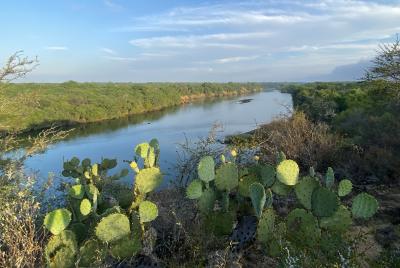
Days 4-5: After our final morning in the Lower Valley, we’ll travel inland and upriver to a more arid section of the Rio Grande Valley. Well-known riparian spots such as Chapeño, Salineño, and San Ignacio will occupy much of our time. If Santa Margarita Ranch, a restricted area, has multiple rarities, we’ll include it in our itinerary. We’ll focus on species such as Green and Ringed Kingfishers and Audubon’s and Hooded Orioles. In some years a few Muscovy Ducks, Red-billed Pigeons, or one of the rarer raptors such as Common Black-Hawk, Zone-tailed, or even Roadside Hawk may also be present, and we’ll make a special effort to locate the diminutive and often maddeningly hard-to-pin-down Morelet’s Seedeater. In the desert scrub of Falcon State Park, we may see Northern Bobwhite, Verdin, Cactus Wren, Black-throated Sparrow, and Lark Bunting, among many other species, and we’ll explore Falcon Lake where waterfowl can be abundant and Sprague’s Pipit sometimes hides in the grassy verges. Nights in Zapata.
Day 6: We’ll spend the morning upriver seeking any desert species or river specialties that we may have missed and then make our way back to Harlingen, with stops along the way as current ornithological possibilities dictate. In the late afternoon, we’ll return to Brownsville for the evening spectacle of parrots coming into roost. The parrot flock here is perhaps the largest in the valley, and it’s certainly the most diverse. We might see up to six species although only two are currently recognized as “established”. Night in Harlingen.
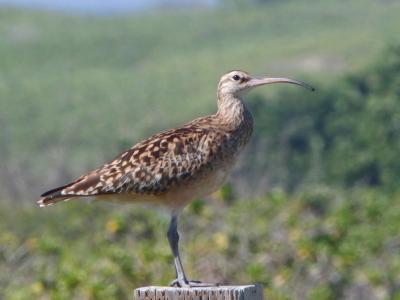
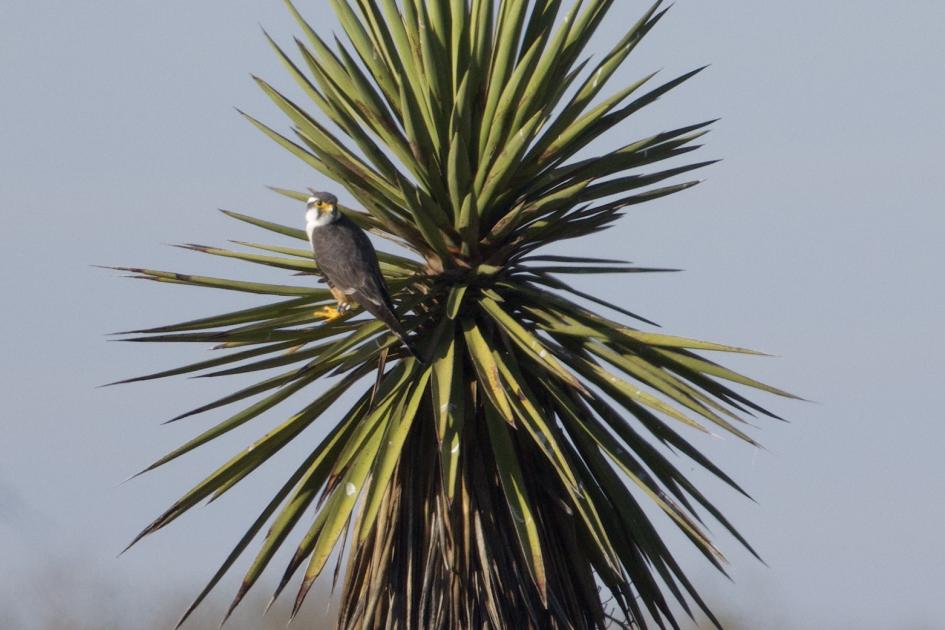
Day 7: We’ll drive to the coastal plain, where the flat grasslands support pairs of Aplomado Falcon, foraging Long-billed Curlew, singing Eastern Meadowlark, and soaring White-tailed Hawk. The shallow Laguna Madre supports large numbers of wintering waterfowl, including the largest concentration of Redhead in the world, and the woodlots and marshes of South Padre Island play host to rails, innumerable waders, and larids, and sometimes a surprise or two. After a bird-rich day along the coast and dinner at a beachside restaurant, we’ll return to Harlingen. Night in Harlingen.
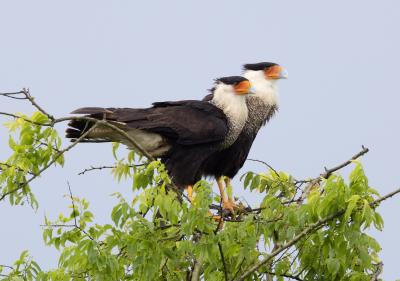
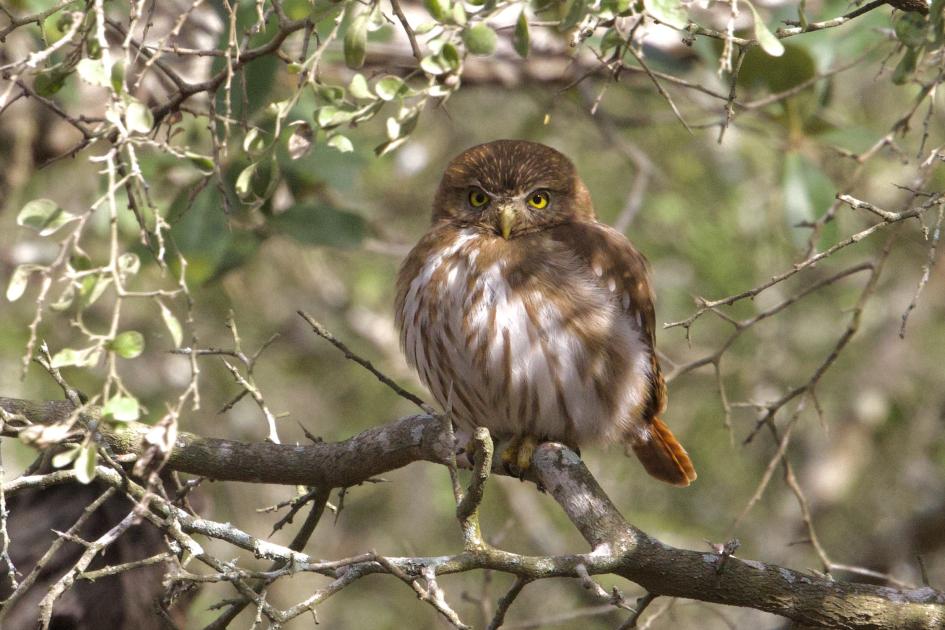
Day 8: We’ll leave Harlingen, passing through the vast King and Kenedy Ranches on the way to Corpus Christi. We’ll stop at the King Ranch and have a local guide help us search for Ferruginous Pygmy-Owl in what is perhaps the best place to see it north of the Mexican border. We’ll stop frequently to bird the oak woodlands and mesquite grasslands where small ponds and farm fields harbor impressive numbers of waterfowl. Raptors should be common on the roadsides, and we’ll look especially for Harris’s and Ferruginous Hawks and Crested Caracara. Night in Corpus Christi.
Day 9: The bays and inlets around Corpus Christi and Aransas Pass support large numbers of wintering waterbirds. We’ll spend the morning on a boat exploring the back bays near Aransas National Wildlife Refuge. Whooping Crane is the main attraction, and we usually get good looks at several family groups. Along the way, we’ll keep an eye out for Roseate Spoonbill, Reddish Egret, and American Oystercatcher. In the afternoon we’ll visit Port Aransas and Mustang Island, where raptors are numerous and both Sedge Wren and Le Conte’s Sparrow lurk in the weeds. A peek at the Gulf of Mexico off Port Aransas may produce a Northern Gannet or an unusual gull. Night in Corpus Christi.
Day 10: The tour concludes this morning in Corpus Christi.
Note: The information presented below has been extracted from our formal General Information for this tour. It covers topics we feel potential registrants may wish to consider before booking space. The complete General Information for this tour will be sent to all tour registrants and of course supplemental information, if needed, is available from the WINGS office.
ENTERING THE UNITED STATES: Non-U.S. citizens will need a valid passport and may need a tourist visa or visa waiver. Consult your nearest U.S. Embassy or consulate for details. Canadian citizens should carry proof of citizenship in the form of a passport or birth certificate.
COUNTRY INFORMATION: There is no U.S. Department of State Country-Specific Travel Information for the USA. You can review foreign travel advice from the UK government here: https://www.gov.uk/foreign-travel-advice and travel advice and advisories from the Government of Canada here: https://travel.gc.ca/travelling/advisories. You can access the CIA World Factbook background notes on the United States here: https://www.cia.gov/the-world-factbook/countries/united-states/
PACE OF THE TOUR: We usually begin our day between 6:30 and 7:30 a.m. and return to the hotel usually between 5 and 6 p.m. On days when we’re looking for species such as parrots and rails, we’ll leave at dusk and may go directly to dinner without the usual break. Although we spend much time on foot, our walks are on flat terrain with numerous pauses.
The boat trip to see the Whooping Cranes is on protected inland waters and is rarely rough. Our craft for this trip also has bathrooms and an enclosed cabin with windows for those who do not want to sit on deck.
HEALTH: Texas presents no real hazards.
Smoking: We request that you do not smoke in the vehicles or when the group is gathered for meals, checklists, etc. If you are sharing a room with a non-smoker, please do not smoke in the room. If you smoke in the field, we ask that you do so well away and downwind from the group.
As it may be difficult to replenish supplies of personal medications, please anticipate your needs and bring an adequate supply.
Miscellaneous: The most common injuries result from spines penetrating the soles of tennis shoes. Virtually every desert plant is armed with thorns or spines and we recommend of at least ankle height as the best safeguard.
Sun: The sun can be intense—a broad-brimmed hat, proper clothing and strong sun screen lotion are essential.
Insects, Arachnids and Chiggers: South Texas has mosquitoes, ticks, and more troublesome still, chiggers. Although insects seldom present a problem in winter, we recommend using insect repellents with a high concentration of DEET. However, care must be taken to avoid getting the DEET repellent on optical equipment as DEET dissolves rubber and plastic and can damage coated lenses. Camping supply stores and outfitters carry some reasonably effective and natural alternatives, such as products containing permethrin 0.5%, that aren’t corrosive.
Fire ants are widely distributed and thoroughly noxious. The leaders will identify the ants at first encounter and remind you frequently to watch where you stand.
We actively look for rattlesnakes and feel lucky to see one. These fascinating reptiles are not a hazard but one always needs to use common sense when dealing with potentially dangerous wild creatures. Scorpions are mostly nocturnal and rarely seen, and the tarantulas occasionally seen on the highway are not dangerous.
CLIMATE: Mid-winter temperatures can vary from the low 40s F to the upper 80s or even low-90s. Temperatures will be a bit chillier on the water and there is always the possibility or rain and/or wind. We suggest bringing several layers of clothing, a rain jacket, and light gloves to be prepared for a variety of conditions.
ACCOMMODATIONS: We will be staying at standard, comfortable motels. WiFi is available throughout.
FOOD: Meals mostly taken in local restaurants are good U.S. standard with excellent Mexican fare and Gulf seafood. Breakfast will typically be at our lodging and lunches may be picnics depending on the day and the weather forecast.
WINGS tours are all-inclusive and no refunds can be issued for any missed tour meals.
Food Allergies / Requirements: We cannot guarantee that all food allergies can be accommodated at every destination. Participants with significant food allergies or special dietary requirements should bring appropriate foods with them for those times when their needs cannot be met. Announced meal times are always approximate depending on how the day unfolds. Participants who need to eat according to a fixed schedule should bring supplemental food. Please contact the WINGS office if you have any questions.
TRANSPORTATION: We will be traveling by leader-driven 12 or 15 passenger window van or minivan, depending on the group size. Participants should be willing and able to ride in any seat in tour vehicles.
2026 Narrative
South Texas thrilled us all during our week in this birding paradise. We encountered an impressive 200 species of birds in just over 1 week. Winter in this region is a great time to search for rare strays from Mexico. This year provided some of the rarest birds in the country, including an unreal Mottled Owl experience at the Santa Margarita Ranch and an excellent encounter with a Crimson-collared Grosbeak in Edinburg. Rare local species were enjoyed, including Brown Jays and Morelet’s Seedeaters below Falcon Dam, and watching Aplomado Falcons hunt in the wind-swept coastal plains. We had a ball in Corpus Christi while watching adult Whooping Cranes teach their young how to hunt blue crabs at Aransas National Wildlife Refuge. The weather couldn’t be beat, the food was incredibly good, and the companionship of the group was perhaps the most exciting part.
As the first light of the day was emerging, we headed down towards the US/Mexico border in Brownsville. The University of Texas Lower Rio Grande Valley campus here not only has amazing architecture, but it also hosts a lot of nice native habitat surrounding several resacas that are always ripe with birds. Right after exiting the van we started familiarizing ourselves with common valley species like Golden-fronted Woodpecker and Black-crested Titmouse. Northern Mockingbirds were perched in several places and Orange-crowned Warblers lurked in the trees. We had a study of a Tropical Kingbird, noting several differences between its appearance and voice compared to the similar-looking Couch’s we’d hopefully see later in the trip. Out of nowhere, a pair of Red-crowned Amazons flew over showing short tails and vibrant red tops of the head. Groups of Green Parakeets screeched by as they flew in circles overhead and a few Laughing Gulls coasted over sporadically. A long-tailed yellow bird turned out to be female Hooded Oriole, and just a couple trees down was a dapper red male Summer Tanager. The main resaca here was absolutely full of waders. We had perfect viewing conditions, and at quite close range, of many species typically seen at great distances. Just under the bridge we had Green, Snowy, Little Blue and Tricolored Herons all trading places while chasing fish along the shoreline. On the other side of the bridge a couple young Roseate Spoonbills swept their heads back and forth with their unique feeding method. In amongst them were several White Ibis, mostly crisp white adults, but with at least one brown youngster present. Pied-billed Grebes were in attendance in good numbers, and we finally saw their smaller cousin Least Grebe with bright yellow eyes and small pointy bill. The male Blue-winged Teal’s white face crescents stood out from their gorgeous sheeny blue head color. We had a good study in differentiating Double-crested and Neotropic Cormorants as they adorned the dead emergent trees like Christmas ornaments. There were even a few Anhinga thrown into the mix showing skinny heads and necks compared to those more bulky cormorant features. A single Wilson’s Warbler was spotted in the scrub at the end of the ‘land bridge’. It’s a good thing we tracked it down for good looks, because it led us to a large group of foraging warblers we would have otherwise missed. We had Black-throated Gray and Black-throated Green Warblers in quick succession for a nice comparison of the two. A bright Yellow-throated Warbler came down to the lower branches to pick insects out of a taught spider web. The recently split Northern Yellow Warbler female we saw didn’t add much color, but was nice to see since it had been designated as its own species recently. The rarest warbler of all popped up at eye level. This Tropical Parula let us watch long enough to confirm its purity, as it didn’t have any eye arcs and the orange on the chest was the correct size and color to eliminate possible hybridization with Northern Parula. Also in the mix was a Blue-headed Vireo that came in close, showing well its blue head, white spectacles, green back and yellow flanks. A woodpecker flew in that turned out to be a female Ladder-backed, a lifer for some. After lunch we stopped by another wetland in San Benito where it didn’t take long to find a Limpkin that had been spending the winter feeding in the vegetation-choked resaca. A couple Lesser Scaup were actively diving, but by far the most common fowl here were the over 500 Black-bellied Whistling Ducks taking an afternoon nap. After this we made our way up to Port Mansfield tucked into the western side of the shallow Laguna Madre. On the way we had a great raptor show. It was quite windy so the birds were holding on tight to roadside posts instead of facing the wind in flight. We pulled up right next to a Northern Caracara taking pride in its black hairdo and bright orange face. Harris’s Hawks were surveying the scrub from exposed perches, and a particularly confiding Osprey chose a convenient perch at eye level about 20 feet from the road. In the ‘town’ itself, we were surprised to see a couple Wild Turkeys picking through a grassy field, these being of the ‘Rio Grande’ subspecies easily differentiated by the coloration on their tail tips. Our main target was a Kelp Gull that had showed up a couple weeks prior. It didn’t take us long to find it while it sat sleeping on the mudflats of Fred Stone Park. Its pitch-black mantle was the same color as its dark wingtips, and its multi-colored bill tip showed it was non-quite a full adult bird. We were very excited to get such an unexpected and rare gull on our first day of the tour! Amongst the Ring-billed and Laughing Gulls were a bunch of terns. Mostly we watched the small dark-billed Forester’s with black eye masks. A single Caspian Tern was easy to pick out amongst them, standing tall with bright red bill and full black cap. We watched waders here feed in the mudflats including several rusty Long-billed Curlews and slightly smaller Marbled Godwit with two-toned slightly upturned bill. Lesser and Greater Yellowlegs were nice to see together, and a single Black-bellied Plover eventually lifted its wings up high to show the diagnostic black armpits the species is known for. On our way out of town we had even more raptor highlights. Right next to the road on a small tree was perched a White-tailed Kite. While watching that we noticed at least 2 more of these aerialists expertly working the wind, and a flyby Northern Harrier vying for our attention. We made our way over to McAllen to our next hotel and had a break before heading back out in the evening to search for parakeets. As we made our way up 10th Avenue we could see hundreds of Turkey Vultures slowly floating down from the sky making their way to their roosting places for the evening. As if right on cue a Peregrine Falcon was spotted circling the tallest building for miles, likely out for one last hunt before calling it a day. As we continued north it was obvious we were in a proper bird staging area when we started to notice some of the over 25,000 Great-tailed Grackles that were getting together for one last social event of the day. It was unbelievable to see this many birds in one place with their ridiculous sounds almost deafening, especially when the flock 250 Green Parakeets took off in unison each vying for the last squawk before settling once again on the surrounding powerlines. Not only were the grackles and parakeets impressive, but the congregation of a group of over 100 Bronzed Cowbirds was also a sight to behold.
The following morning, we made the short drive to Edinburgh to check out their Scenic Wetlands World Birding Center. The main reason we wanted to check this place out was to see if we could find a Crimson-collared Grosbeak that had been seen in the week’s prior, but little did we know there was a lot more waiting for us there. We arrived a bit early so began birding the parking lot and large water impoundment across the street. Scoping the water provided some more duck species including groups of Green-winged Teal and white-cheeked Ruddy Ducks. A couple Ring-necked Ducks were inspected closely and male Gadwall had their brown mantle feathers draped nicely. Our only Nashville Warbler was spotted here, as well as a Bewick’s Wren that insisted on singing from an exposed perch for as long as we wanted to enjoy it. Plain Chachalacas were moving by us in all directions, even chasing each other precariously across the tops of the fences. We were seemingly kicking Inca Doves out of the way on all paths while walking around. Within 5 minutes of entering the complex we heard the distinctive rise and fall call note of the Crimson-collared Grosbeak. We tracked it down and were rewarded with a female-type bird coming in just above our heads feeding in a sparsely leaved potato tree. We felt fortunate to get such good looks at what was likely the only one of this species currently in the country. Nearby we had an entertaining Curve-billed Thrasher perched up on top of a mesquite tree singing its song to the world. A few minutes later a lovely Long-billed Thrasher scurried across the path, allowing a quick succession of studies for these closely related birds. We took time to scan the main pond here and soon after setting up the scope a huge bird came in and wheeled right across our sight. It was a female Ringed Kingfisher that called like a machine gun before finally alighting on a tree across the way. A group of Black-necked Stilts picked through the muddy edge, and a single Spotted Sandpiper joined their party. While observing this a Black Phoebe came in to hunt the verges of the pond, not long before an Eastern Phoebe had a similar agenda. The song of the White-eyed Vireo was a constant presence in the understory of the scrub and we heard it often throughout our time in the valley. We were all happy to have one of these skulkers come out into the open and let us review its plumage features at length. It really is a beautiful bird. Flowering plants were in general an anomaly in the valley this year due to severe drought conditions. This location had a good supply of them, and as a result we got our best looks at the specialty Buff-bellied Hummingbird coming into a burst of red blooms. Just before leaving we studied several adult Yellow-crowned Night Herons, some of which were exhibiting bright golden forecrowns clearly getting ready for the breeding season ahead. After pulling ourselves away from this bird-rich area we ate at a taqueria that most participants considered the best venue of the trip. The intricate tile workings in the cathedral-like main room combined with homemade bread and local toppings combined for a truly memorable culinary experience. Being able to study a dozen male Bronzed Cowbirds in the parking lot was also a nice bonus. Heading south we had our sights on Estero Llano Grande State Park and the suite of birds this place always has to offer. This park boasts a bird list of over 359 species in only 20 years of existence! At the Indigo Blind we got up close and personal with another valley specialty the Clay-colored Thrush. Its overall brown plumage helps it blend in with the dark understory of the forest, and its habit of sitting still for long periods of time can make it very hard to spot. We took time to search the leaf litter in the Tropical Zone for the Common Pauraque. Due to this species amazing camouflage, it took us a while to find this cryptic caprimulgiforme perfectly hidden in the leaf litter and may have failed without the help of one of the helpful volunteers who work here. Despite knowing where it was, it was still hard to re-find. At one point a young Red-shouldered hawk swooped in overhead, perching briefly on an exposed snag. We also connected with an Eastern Screech-Owl peering through squinted eyes from a tree hollow. This owl may be split one day into a separate species perhaps named McCall's Screech Owl. This distinct population only has a gray morph and lacks the typical whinny call of the prominent subspecies.
The following morning the fog had rolled in and the visibility was minimal. We drove over to the town of Alamo where someone had given us a tip about a Zone-tailed Hawk that was roosting in the area. Near the spot we were to check, loud whistles and flocks of dark birds caught our attention. We then realized we were next to the Alamo Inn, where they were feeding Black-bellied Whistling Ducks in their courtyard. The site of hundreds of these birds was amazing, and the sound of that many constant whistles was mesmerizing. Scott even befriended the local domestic goose who would have come along with us in the van if we’d have let it. We continued our search in the low visibility and eventually saw a large dark mass perched near the top of a towering tree. It turned out to be the Zone-tailed Hawk we’d heard about. It allowed quite close approach for us, and gave a good study of the white bands on its tail. We also noticed it was missing its right eye, something that could be a death sentence for any raptor in the wild. Hopefully this gorgeous bird would be able to find enough food in the immediate area and not have to stray too far in pursuit of hunger. Santa Ana National Wildlife Refuge was next on our agenda. This piece of land protects over 2,000 acres of woodland and sits right in the middle of a major east/west and north/south migration corridor. The impoundments at Pintail Lakes were full of water, something that wasn’t the case for many of the places we visited during the week. As a result, waterfowl numbers and diversity were high. Least and Pied-billed Grebes swam in close proximity. Shorebirds were utilizing this harbor including Black-necked Stilts and a swirling flock of Least Sandpipers. Gadwall were loafing on the shore of some islands, as were diminutive Green-winged Teal. Ruddy Ducks were both active and asleep, both activities showing their stiff cocked tails the group is known for. A small cluster of Bufflehead seemed out of place in the shallow ponds, normally preferring deeper water to dive in for prey. We loved watching a male Cinnamon Teal in perfect light dabbling along the close shoreline. A white flash low over the water disappeared into the low hanging branches on the perimeter. We were happy to meet up with a Green Kingfisher, the smallest kingfisher species of the trip. We also enjoyed extensive views of Belted and Ringed Kingfisher here, completing the trifecta of kingfisher species possible. Vermilion Flycatchers were posted up on several trees, appearing like a flame on the ends of the branches. We kept running into a Loggerhead Shrike that would fly a few shrubs ahead of us, perching at chest-height for a close inspection. On the muddy verges of the largest impoundment a Wilson’s Snipe was feeding, only occasionally bursting from cover to fly over to another area to rummage. As we were leaving a raptor was called out overhead that turned out to be a stunning adult Gray Hawk that took its time slowly circling overhead showing off black and white tail bands and soft gray plumage. We were famished so headed to some of the famed Texas barbeque we’d been hearing about. After our culinary adventure, we stopped by a local park in McAllen where we got great looks at a Greater White-fronted Goose that chose to spend the winter at this convenient location. Now that’s a true snow bird. After this we made our way to Zapata to get ready for our evening adventure. As the shadows were getting long, we headed over to Santa Margarita Ranch in hopes of witnessing one of the super-rare birds being recorded here at nighttime. We began trekking down towards the banks of the Rio Grande River. Common Pauraques ‘reeer’ calls were scattered over the landscape and some were sallying for insects in the road ahead. Then all of a sudden out of the darkness came some low grunts, and instantly we knew this was the Mottled Owl we were keeping our fingers crossed for. We sat motionless while the prized owl made its way towards us through the riparian forest. All of a sudden, our guide quickly lit the owl up in the soft glow of the spot light for us to snap some pics and take in this amazing beast. This is a long-staying third USA record, and the first Mottled Owl that was actually chaseable, giving us a thrill we’ll never forget.
The following day we traveled back to the Santa Margarita Ranch, which had been reporting some other ridiculously rare and amazing birds over the last few weeks. We had our fingers crossed the birds would still be there for our chance to see some of these highly sought after creatures. We left Zapata in the dark and met our guide for the day at the border wall, recently constructed on this private ranch abutting the Rio Grande River. One thing that makes this ranch special is its bluffs. These high hills are hard to come by in this part of Texas. They allowed a stunning view up and downriver, as well as far into Mexico to the south. Immediately birds started streaming by including both species of cormorants and a trickle of gulls including American Herring. A pair of Ringed Kingfishers flew by downriver, hovering like a helicopter over the gently flowing water eyeing anything that could be considered food. Two different pairs met up and had an aerial battle between territories that was quite entertaining. The bluffs here sit atop some sizeable wash banks, one of which hosts a breeding pair of these magnificent birds, USA’s largest kingfisher. On the main island just upstream ducks were resting in small groups in the shallows including Blue-winged Teal, American Wigeon, and Northern Pintails. A couple Greater Scaup gave us a good study of the differences between them and the Lesser Scaup nearby. We took time to look at all the Mottled/Mexican Duck candidates and eventually picked out a bird we all agreed was good for a legitimate Mexican Duck. Below the nearest bank a pair of Wood Ducks were spotted slowly picking food off the surface of the river. While scanning distant treetops our local guide called out some dark objects sitting close together that turned out to be a pair of Red-billed Pigeons. These birds sat long enough that we had time to note all their features, including their mostly white and slightly red bills. Flocks of Greater White-fronted Geese flew over that first alerted us to their presence by their unique high-pitched honks. In the cattails below the bluffs we heard the distinctive calls of the Morelet’s Seedeater. Eventually we spotted a male that sat long enough for us all to have a good look in the scope at these tiny little guys. Swamp Sparrows were trading places with the seedeaters, and it turned out they were both feeding close to a couple Wilson’s Snipes that were perfectly concealed in the downed marsh vegetation. Also working the shoreline were a couple American Pipits slowly walking along without a care in the world. There was a Merlin perched across the river in a prominent snag that would occasionally cause a kerfuffle as it shot out chasing birds up and down the river. After a few hours of viewing from the bluffs we made our way over to the ranch house buildings where a large covey of Scaled Quail was already waiting for us in the road. While soaking in the ‘cottontops’ we also had good looks at a Cactus Wren and its nearby nest, as well as a male Black-throated Sparrow perched up nicely singing its beautiful song for us all to hear. Then we headed down to the riparian vegetation we’d been overlooking in hopes of finding some of the other rarities that had been being reported here. After we passed through two locked gates we parked and began walking along the 2-track. About 5 minutes later as we approached the feeding area where a loud shriek came out from the forest. Instantly, a Brown Jay materialized out of nowhere and was soon joined by a couple more. This huge jay used to be much easier to see in the USA, but this ranch is now the only reliable, publicly accessible place to run into them on this side of the border. Our local guide strategically placed loads of citrus, peanut butter, marshmallows, and other sundry things out on the branches in hopes that the birds would find some interest. It didn’t take long for a pair of bright yellow and black Audubon’s Orioles to come in to investigate the buffet, joined by a kaleidoscope of colors in the form of Altamira Orioles, Green Jays, and Northern Cardinals. The appropriately named Olive Sparrow gave us quite a show here, spending lots of time poking around the downed logs right by our feet. A group of Northern Bobwhite came in to scratch at the ground, and wandering White-tipped Doves came in to give their approval to the buffet. We strolled along the banks of the river where possibly the same two Red-billed Pigeons we’d seen earlier revealed their presence, but stayed extremely hidden in the dense trees along the water. Amongst some foraging flocks of birds here we also added Black-and-white Warbler and Northern House Wren to our growing list. Some participants who had turned around early from our hike and were sitting at the feeders got an amazing surprise when a female Rose-throated Becard landed right in front of them causing quite a stir. On the way out we checked some of the Chihuahuan Desert scrub on the ranch and eventually had looks at a Black-tailed Gnatcatcher replete with dark cap. We had an incredible experience at the ranch with a total of nearly 90 species tallied during our time there. Just after leaving we got a call from some of the other birders who were at the ranch with us that day that a Chihuahuan Raven was teed up on a power pole along the main road nearby. We hurried that way and eventually got great looks at a pair of these corvids, even seeing the white bases of the neck feathers that help distinguish this from Common Ravens. Over at Starr County Park there were more RVs than I’d ever seen, and not that many birds perhaps as a result from all the activity. There was however a nice flock of Western Meadowlarks that gave us a good look, and a Say’s Phoebe perched on a nearby fence line rounding out our three phoebe species expected for the trip. At Falcon State Park we meandered through the circuitous roads with windows down listening for anything interesting. We came to a halt when we noticed a Collared Peccary (Javelina) feeding behind one of the trailers. It became clear that it was coming in for a drink of fresh water that the hosts had put out. It wasn’t the only thing coming in to the water source. A Greater Roadrunner also popped into view and took its time taking beak-fulls of water to satiate its own thirst. We took a look at the butterfly garden which had several species coming into its own water feature. We noticed a bird in the undergrowth with long tail that liked to stay hidden. It turned out to be a Green-tailed Towhee, an uncommon species in this region. We tried our best to get a good look at the bird, but time was fading and we had to head back to the hotel after a long and productive day.
The following morning, we worked our way back down to the bountiful forests below Falcon Dam to the hamlet of Chapeño. In some of the yards here we got excellent looks at a flock of Pyrrhuloxia. It was comprised of showy males with long crests, pink features, and pale bills. Near Salineno we had a roadside surprise when a Rock Wren popped out of nowhere and gave us a great look as it sat on top of a prickly pear cactus. We took some time to scan from the boat launch along the river, tallying species we’d become familiar with over the last couple of days. One pair of Black Phoebes was particularly stunning as they sat completely exposed up high in a tree in perfect light for photos. The arrangement here at the famous Dewind’s feeders never disappoints as numerous specialties stock up on food for leaner times, or perhaps just to be gluttons. Seriously good views of Golden-fronted Woodpecker, Black-crested Titmouse, and the streaky Long-billed Thrasher all graced our lenses mere meters away. An unmistakable Audubon’s Oriole came in repeatedly to a peanut butter ‘lick’ and a non-descript oriole showed up that was either a Bullock’s or Baltimore. The verdict is yet to be determined. The gracious hosts here showed us an expertly constructed little blue house that conveniently had an Eastern Screech-Owl head poking out of it. It seemed like the owl was way too big for the hole, but then we realized it was mostly because its feathers were fluffed up giving the illusion of grandeur. It was also great to watch a pair of Verdin actively building their nest. The adults took turns at bringing in mostly down feathers they’d collected from nearby, likely making the final finishing touches on their nest that would undoubtedly receive some eggs in the near-future. As we started to make our way back down the valley, we made a quick stop near Roma where we were able to get a Cassin’s Sparrow to pop up into a bare shrub allowing close looks at this seemingly featureless little brown job. Next we took time to walk around Anzalduas Park on the banks of the Rio Grande south of the town of Mission. Here the conditions were hot and windy. Perhaps this is the reason why we noticed a tree full of similarly-sized birds that turned out to be American Pipits. We all thought it odd they were all together in one small tree, and pondered why this could be the case. Also here, we added a pair of Eastern Bluebirds to our list, as well as some Northern Rough-winged Swallows foraging near the dam. As we were leaving we watched a Savannah Sparrow work its way along the cement embankment, always keeping just ahead of the van as it fled. Then we trekked further east back towards Harlingen and had a couple places to check before the day was over. We searched some very back roads for Burrowing Owl. We noticed a car slowly coming towards us and wondered whether they were birders looking for the same species. Needless to say the couple was quite surprised when we asked if they’d seen any birds. Clearly they were not birders and instead ‘cruising’ as they put it. It is Valentine’s Day after all! Eventually we did find the Burrowing Owl we were looking for, tucked nicely into a broken pipe in the road. We also had a wonderful experience watching a White-tailed Kite do what it does best, perfectly still in the air occasionally coming to the ground to check on small mammals to snatch up. Although it was never successful, it clearly didn’t like the Northern Harrier that came close by as it chased it away with haste. Maybe it had a nest location nearby? Lastly today we checked a sod farm in hopes of finding Sprague’s Pipit. It took a while, but eventually we got great look at one of these birds as it crept slowly through the short grass. We had been scanning with the scope for a long time trying to discern some distant birds when Mary Anne popped out of the van to ask why we were looking so far away, and not at the bird a mere 50 feet away. Turned out it was a Sprague’s MUCH closer so we took time looking for its wing bars and streaked back before heading back to the hotel for the day.
The next morning we headed out towards the coastal plains in search of birds that utilize this wind-swept habitat. First we checked an area known to host Aplomado Falcons, a big target bird for the trip. Our luck was with us as we pulled down a dusty 2-track and quickly spotted our quarry. A pair of these masters of the plains were perched on a power tower, giving us a chance to pick out the larger female next to the slimmer male. Eventually they took flight and headed out low over the plains. We were able to catch up with them again and watch them hunt for a bit. It was great to see this species thriving in its native habitat after at one point being completely extirpated from the entire state of Texas. There was also a gorgeous White-tailed Hawk here that was actively hunting from its perch. It didn’t take long for us to realize why it was named as such. We then continued east to South Padre Island known as being a popular spring break destination, but also hosts a suite of birds worth checking out. In the mangroves we tracked down a couple rusty-headed Mangrove Yellow Warblers, a recent split from Northern Yellow Warbler and rightly so with its obvious different plumage and habitat preference. We watched a tern slowly come in nearby and hunt the bare ground. This habit is something Gull-billed Terns are known for and we were excited to watch it at length while it worked its way through the breezy conditions. We checked some mudflats by the Convention Center where orange-billed Royal and black-billed Forster’s Terns all huddled together on the edge of Laguna Madre. A sizeable flock of American Skimmers was nice to practically walk right up to, allowing inspections of the odd-shaped bill this bird utilizes for hunting just above the water. We also noticed an odd Laughing Gull in the mix that was missing both of its feet. It was easy to pick out as it was much shorter than the surrounding gulls. It’s amazing how a bird like this can survive in such a condition. Dunlin numbers reached one hundred, closely followed by impressive numbers of Sanderling. A group of Short-billed Dowitchers huddled together with some feeding bouts for a good lesson in dowitcher ID. Interspersed with a dozen Willets were many Black-bellied Plovers, similar in size but having a completely different foraging behavior and bill shape. A single rusty Marbled Godwit was a treat, as we watched it probe along with its slightly upturned bill. We were fortunate to have both light and dark morph Reddish Egrets in close succession. A white-morph bird allowed extremely close views. We were able to drive the van right up next to it and have looks at the antics that make either color of this species recognizable. After some of the best seafood in South Texas we left the island and checked another spot where San Martin Lake flows into the Brownsville Ship Channel. The tide was perfect, and as a result there were scads of shorebirds, gulls, and terns present. Black-necked Stilts were the most numerous. A pair of American Oystercatchers sat close by, enabling inspection of their large orange bills and dark and white plumages. Another Marbled Godwit hunkered out of the wind and even more stately Long-billed Curlews slowly strode across the flats. Among the 350 Laughing gulls we were able to pick out a couple Ring-billed Gulls in the lot. The terns were well-represented with large groups of Forster’s and Royal, and even a few Gull-billed Terns with oversized bills and all white plumages. This evening we headed back to Brownsville in order to try our luck with Oliveira Park in hopes of seeing the magic that is its famed parrot roost. Minutes after we pulled up White-fronted Amazons started flying in staging on the surrounding power lines. A pair of stunning Yellow-headed Amazons sat in the top of a eucalyptus in the waning like with heads glowing in the sun. Birds met up in couples as if exchanging information on where the best foods were for tomorrow's forage. Shortly thereafter other species started dropping from the sky and came to roost in a well-lit tree, including 150 Red-Crowned Amazons. It was quite a sight to see this many parrots swirling overhead as the sun was setting. We put them to bed in some huge trees and went to sample yet another delicious meal.
The following morning, we left Harlingen early and headed north for about an hour to the King Ranch. The King Ranch is the largest in the United States and has four distinct divisions. We set out with our local guide to explore the Norias division, an area that sees only about 10% of all visitors to the ranch, and the best overall for birding. At our timely first bathroom stop, a few calls alerted us to the presence of a Couch’s Kingbird we got to study in the scope. Raptors were a common theme for the day. An unbelievable amount of American Kestrels were seen throughout our time here and the many Harris’s Hawks we regularly encountered definitely turned into one of the highlights. We also got to see a bunch of White-tailed Hawks perched and in flight. Some mammal highlights were getting great looks at Nilgai, a non-native Asian antelope with a good population in this part of south Texas, as well as a herd of Scimitar-horned Oryx, another antelope adapted for the deserts of the Sahara. One of the main reasons we come here is to find the Ferruginous Pygmy-Owl but despite our best efforts, we couldn’t turn one up. Notwithstanding this, we enjoyed our time birding this area that not many birders who visit this region get to explore. After our day at the ranch, we headed up to Corpus Christi for the next leg of our journey. When we arrived to the city, we took time to track down the continuing Cattle Tyrant, a wayward bird of origins unknown that showed up here two years ago. Luckily, it wasn’t far from its favorite dumpster where we watched it expertly catch flies as they emerged from the bin. It’s tough to say whether it was of wild provenance, however it certainly was acting like every other Cattle Tyrant I’ve seen in the world. Before checking into our hotel for the night, we made one last stop nearby to check out a Red-footed Booby that had been hunting the harbor for a couple of weeks. It was easy to see how it got its name with those bright red feet.
The following morning, we headed to Rockport to catch our boat for the day trip through Aransas National Wildlife Refuge. Aransas National Wildlife Refuge is the wintering grounds for about 3/5 of the entire population of Whooping Cranes in the world. The weather was perfect with cloudy skies and low winds. As we motored across Aransas Bay a couple Common Loons allowed close approach before diving into the depths and out of view. As we hit the tip of the refuge, we noticed dozens of stick nests perfectly placed in the stunted trees. We proceeded to count over 50 Great Blue Herons who were getting ready to utilize these to begin the nesting process in the coming weeks. We hopped onto the Intracoastal Waterway, which follows the coastline from the southern tip of Texas all the way up to Massachusetts. The boat slowly crept by various oyster beds and sandy islands filled with coastal birds like resting American Oystercatchers, Ruddy Turnstones, and several “Western” Willets. There were also groups of cormorants with both Neotropic and Double-crested sitting side by side. Soon after hitting the waterway, it wasn’t long until we caught a glimpse of our first family group of Whooping Cranes foraging in the recently burned areas of the refuge. Typically, these birds stay in small groups of 2 adults and 1 or 2 young as they constantly look for food, including the blue crab, a staple food on its wintering grounds. Over the next couple of hours, we saw at least 20 of these endangered species, sometimes at not far from our boat. Brown Pelicans were a constant presence during the boat trip, diving from high up on unsuspecting fish, with lesser numbers of American White Pelicans feeding in small groups in the shallow pools. It was nice to see the differences in feeding styles of these 2 species that look similar, but feed completely differently. At one of the shallow ponds on the refuge, we spotted an adult dark-backed Lesser Black-backed Gull that stood out like a sore thumb all by itself. These gulls used to be pretty rare not that long ago, but have increased their numbers in recent years. After we had our fill of Whooping Cranes we returned back across Aransas Bay to Fulton, where we had our final TexMex lunch. Afterwards, we took the ferry and made our way over to Mustang Island to the Leonabelle Turnbull Birding Center. This location provides a resting spot for lots of birds and gives a unique perspective from above with which to view them. As soon as we walked out onto the boardwalk, a bird immediately caught our eyes. We were delighted to observe an American Flamingo feed with its head upside down through the shallows of the freshwater outlet. Occasionally, it would pick its head up high and curl its neck, exposing its improbably shaped bill and glaring pale eyes. This bird had been seen in the region over the last couple of years, but would disappear for lengths of time. We couldn’t have been happier that it decided to reappear a couple of days before we got to a scheduled stop on our itinerary. The flamingo views were excellent, but not to be overshadowed were the spectacular views we also obtained from a pair of adult Whooping Cranes preening in the same wetland. Though we had seen over 20 on the boat trip earlier in the day, we took time to study the birds at a much closer range than we’d experienced and were able to appreciate the presence they bring to the Texas coastal landscape. Lots of other birds were also enjoyed here. A plethora of Long-billed Dowitchers huddled close together for an afternoon nap. A group of Black-necked Stilts fed amongst just as many American Avocets. Droves of Green-winged Teal sought refuge on the shores, as well as flocks of Northern Shovelers. Common Gallinules walked around the water’s edge, and White Pelicans gave us a good show as they flapped their huge wings as they bathed. One of the Soras here emerged from the marsh and fed alongside a side-slough. After our amazing day, we enjoyed our final Thai dinner and chatted about the trip we’d just experienced. This was truly an unbelievable week of birding in South Texas. The long list of Lower Rio Grande specialties was immense, and we even had a few really rare birds to throw into the mix. This area proved once again why so many people take a break from the snowy doldrums the rest of the USA partakes in to experience this special place in the winter months.
Jake is the most wonderful, terrific, and fantastic bird guide. As always, he made sure we were all comfortable, safe, and seeing the birds we wanted. Jake makes seeing birds fun.
- Peggy C. on Texas: The Rio Grande Valley in Winter
Our tour was excellent. Jake was a wonderful guide, intrepid and dedicated to seeing the special birds of the Lower Rio Grande. He was also a great teacher, very patient with questions about the birds, and patient too in explaining the daily itinerary and why we were there. I was more than amazed at his knowledge of the birds and the area. His kindness, caring and good spirits kept me going even when the weather was not cooperating.
- Jeannette M. on Texas: The Rio Grande Valley in Winter
Jake is an exceptional guide. He has an uncanny ability to find birds by eye and ear, like a magician pulling a rabbit out of a hat. More often than not, he’d find what he was looking for within minutes of arriving at a site. Plus, he’s got a great personality, is always smiling, and is a good conversationalist when you’re riding shotgun in the van. He made sure everyone got eyes on the birds we were seeking and got the scope on it right away so everyone could get a better look. A phenomenal birder and a great guy!
- Rick R. on Texas: The Rio Grande Valley in Winter
Maximum group size seven with one leader.
More Tours with these Leaders
May 23 to Jun 1 2026 • Gavin Bieber and Jake Mohlmann