Central Asia: Uzbekistan and Kazakhstan
Birding the Silk Road
-
May 9-27, 2027
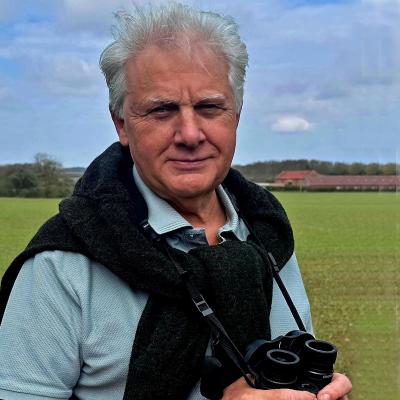
Steve Rooke with local leaders
2027
Single Room Supplement $860


2027
Single Room Supplement $860
The Silk Road, Samarkand, and Bukhara—the names conjure up images of fierce Mongol hordes storming out of the east and of dusty camel trains and crowded bazaars where rare jewels and exotic spices were traded by travelers from far-off lands. Stretching from the Caspian Sea to the Tien Shan Mountains, the Central Asian countries of Uzbekistan and Kazakhstan are indeed richly endowed with history and culture. The varied traditions and customs of this fascinating region are matched by a wide variety of habitats. From Tashkent we’ll take ‘the Golden Road to Samarkand’ and follow the Silk Road to Bukhara, and beyond into the drifting sand dunes of the Kyzyl Kum Desert, where we’ll look for Pander’s Ground Jay, one of the region’s special birds.
Following this ancient trading route to Kazakhstan, we’ll seek out ancient woodlands where Yellow-eyed Stock Doves and Saxaul Sparrows still breed before we reach the dramatic splendor of the snowcapped Tien Shan Mountains, awash with wildflowers and home to Himalayan Snowcock and Güldenstadt’s Redstart. Heading north, we’ll find ourselves surrounded by the enormous skies and wormwood-scented breezes of the Kazak steppes, alive with White-winged and Black Larks and swarms of waders, gulls, and terns. Now oil-rich countries in their own right, Uzbekistan and Kazakhstan are developing fast but still retain an air of mystery and intrigue, which Steve Rooke, on this 36th tour there, looks forward to sharing with you.
Day 1: Participants should plan to arrive in Tashkent (see note **, below) no later than this evening or (if using Turkish Airlines, the preferred airline for this tour) in the early hours of Day 2. You will be met on arrival and transferred to our group hotel. Night in Tashkent.
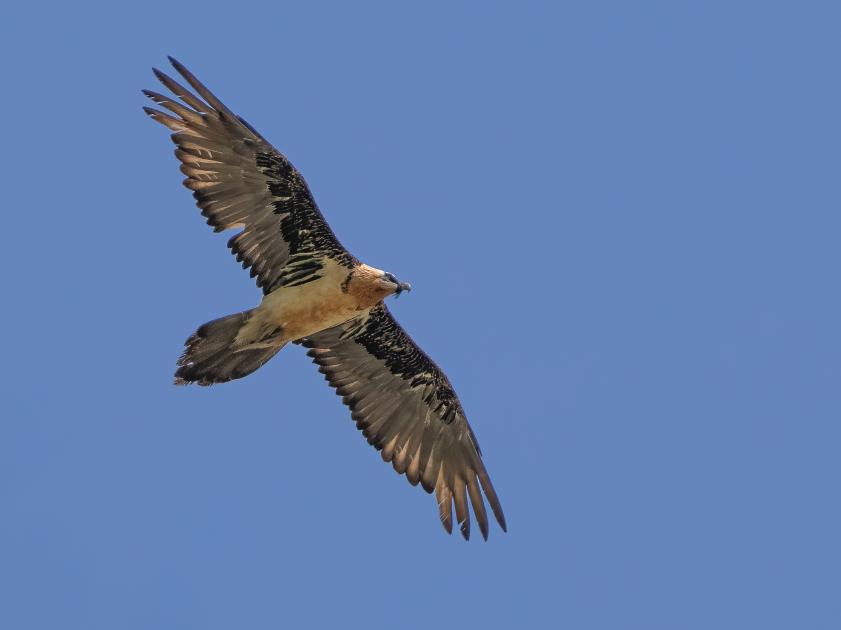
Day 2: The group will convene for an early breakfast at our hotel in Tashkent, and afterward we’ll drive to a mountain area. As we start to climb we’ll make stops to look for such birds as Indian Golden Oriole, Asian Paradise Flycatcher, Common Nightingale, Greenish and Eastern Olivaceous Warblers, Spotted Flycatchers and, with luck, the rare Rusty-tailed Flycatcher. We may catch sight of a mighty Lammergeier sailing overhead or a Blue Whistling Thrush darting along a stream. As we get higher the deciduous trees give way to juniper trees and this is where we’ll look for two special birds – Rufous-naped Tit and Blyth’s Rosefinch. We should also see Yellow-breasted Tit along with White-capped and Rock Buntings. Night at a local hotel.
Day 3: We’ll spend some time this morning birding in this area where new birds could include Cinereous and Eurasian Griffon Vultures, Booted Eagle, Oriental and European Honey Buzzards, and Hobby. Later we'll set out along the fabled Silk Road to the wonderful town of Samarkand. We should arrive in time to take in a few of the sights, such as the stunning Registan a beautiful assembly of turquoise-blue domes and towering minarets and one of the most famous sites in Central Asia. Night in Samarkand.
Day 4: To the south of Samarkand lies a range of low hills where we’ll stroll along a delightful valley alive with Red-headed Buntings. White-throated Robins and Eastern Orphean and Upcher’s Warblers breed among the bushes, as do Hume's Lesser Whitethroats and Tawny Pipits while Hume’s Short-toed Larks feed among the rocky outcrops. Turkestan and Lesser Grey Shrikes and Eastern Rock Nuthatches also breed here, along with a few pairs of European Bee-eaters. Our location on a high pass means we could see some raptors, including the massive Himalayan Griffon Vulture or the smaller Booted Eagle. Other highlights could include Blue Rock Thrush or Pied Wheatear and we’ll also look for Finsch’s Wheatear which should be feeding fledged young by now. Those interested in plants or butterflies will find much to occupy them, as this sun-drenched spot is alive with insects and flowers.. Night in Samarkand.
Day 5: We’ll have time this morning to visit more sights of the historic city, including perhaps the most amazing of all, Shah-i-Zinda or the Street of Tombs, and the massive Bibi Khanum mosque with its attendant Alpine Swifts. We will make an early morning visit to the ancient walls of the city, built as far back as the 6th century BC when it was known as Afrosiab, where we may find Eurasian Eagle Owl at its daytime roost Later we’ll set out once more along the Silk Road to the oasis town of Bukhara. Night in Bukhara.
Day 6: Today we’ll venture deep into the dry Kyzyl Kum Desert to search for the handsome Pander’s Ground Jay, one of the special birds of Central Asia. These striking grey, black, and white birds spend much of their time running over sand dunes dotted with saxaul bushes, occasionally flying up to perch in a prominent position. We can also expect to see the local desert race of Little Owl, Blue-cheeked Bee-eaters, Steppe Grey Shrike, Isabelline Wheatear, and Streaked Scrub Warbler, while any small stand of trees can hold migrants, from flocks of Rose-colored Starlings and Eurasian Golden Orioles to Thrush Nightingale and Ortolan Bunting. Night in Bukhara.
Day 7: We’ll visit some of the wetlands that surround this old oasis town, exploring reedbeds that are home to Clamorous and Moustached Warblers as well as the Paddyfield Warbler, Bearded Tit, and the local “Thick-billed” race of Reed Bunting. Smart Citrine and Black-headed Wagtails and Bluethroats add splashes of color while White-tailed Plover in breeding plumage are common. Caspian Gulls can usually be found, and although Marbled Ducks occur here, they can be difficult to locate. We’ll also look out for flights of Glossy Ibis and Pygmy Cormorants. We’ll see more Blue-cheeked Bee-eaters and Pied Bushchats, and there is always the chance of a Purple Heron, or Collared Pratincole.
We’ll return to Bukhara to spend the remainder of the afternoon immersing ourselves in the splendor of the historic old town. We’ll visit the Ark, where Stoddart and Connolly met their famous demise in 1842; the Kalen Minaret, one of the few buildings left standing after the visit of Genghis Khan; the trading domes where Silk Road travelers would gather; and many other sights. There will be time to haggle over the price of a Bukharan rug, buy spices, or pause for a cold drink at Labi Hauz, the social heart of the old town, surrounded by magnificent buildings and mulberry trees that were planted in the 15th century. Night in Bukhara.
Day 8: Venturing out of the town once more, we’ll explore a mix of dry scrub, reed-fringed pools, and open desert steppe. We’ll be looking in particular for Sykes’s Warbler, Rufous Bush Robin, and the shy Ménétries’s Warbler. The roadside wires are a good place to see Oriental and European Turtle Doves and Long-tailed Shrikes, while any pool can hold flocks of Red-crested Pochards or migrant Red-necked Phalaropes. We’ll return to Bukhara and board the new high-speed train that will whisk us back to Tashkent. Night in Tashkent.
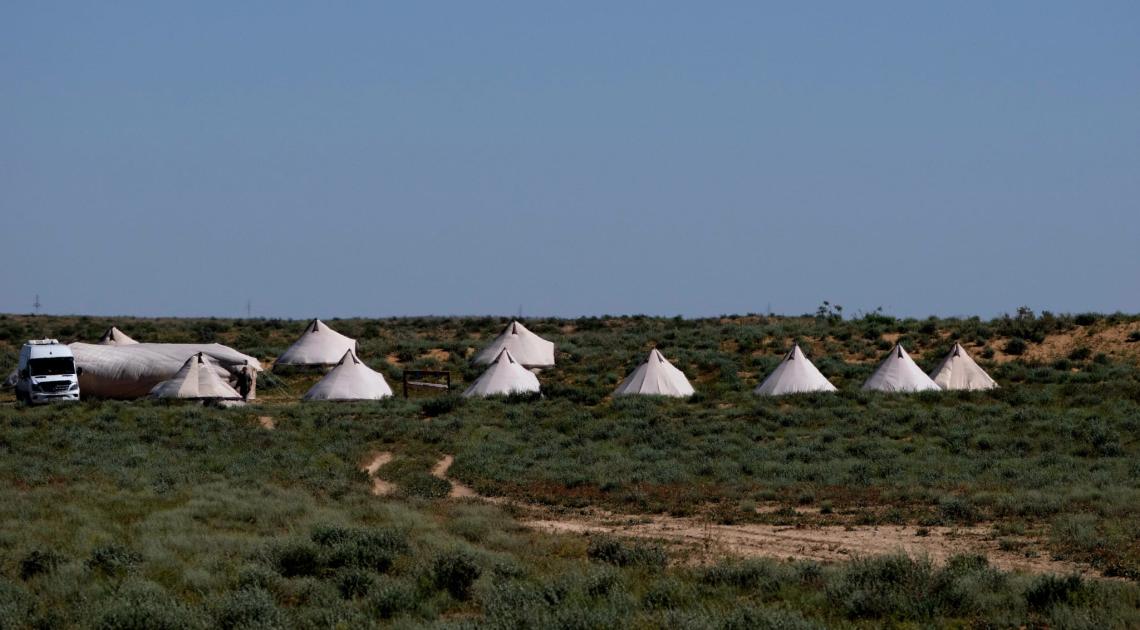
Day 9: Leaving Uzbekistan, we fly to Almaty in Kazakhstan. On arrival we’ll drive north into the wild heart of Kazakhstan to spend two nights camping in the Taukum Desert, a vast area of undulating sand dunes and wormwood-scented grasslands. On the way we’ll stop at a large lake, where we may witness the bustle of a huge Rose-colored Starling colony and look for White-headed Duck, as well as any unusual migrant waders such as Terek Sandpiper or Lesser Sandplover. Night in the desert camp, where each single or couple will have a good-sized tent.
Day 10: Our camp is located near an artesian well that acts as a magnet for local breeding birds as well as numerous migrants. There should be good numbers of larks coming to drink—Calandra are the most obvious, but Greater and Turkestan Short-toed are also frequent visitors and there is always the chance of Bimaculated Lark. Other birds we can expect include flocks of Black-bellied Sandgrouse and, if it’s a good year, a few Pallas’s Sandgrouse, as well as some of the scarce resident Greater Sand Plovers or handsome Caspian Plovers in full breeding plumage. This open desert is also home to Macqueen’s Bustard. These notoriously shy birds are hunted here and their numbers have declined, but we will spend some time scanning the distant horizon for a displaying male.
Farther north lies the delta of the Ili River, a strange area of sand dunes interspersed with marshy pools and stands of turanga trees, and home to some of the region’s special birds. Yellow-eyed Stock Dove, White-winged Woodpecker, Azure Tit, and the beautiful Saxaul Sparrow are all easy to see, and careful searching may reveal a roosting Striated Scops Owl. The reedbeds are home to Little Bittern, Paddyfield Warbler, and some interesting races of Penduline Tit, while the wetlands can hold anything from massive Dalmatian and Great White Pelicans to dapper Ferruginous Ducks. Later we’ll return to the camp and visit clumps of trees and small pools that can attract a dazzling array of migrants that can include anything from Oriental Turtle Doves and Barred and Blyth’s Reed Warblers to Black-throated Thrushes or perhaps a Little Crake or European Nightjar. Night in our desert camp.
Day 11: After a final morning around the camp we’ll return to Almaty. We’ll stop along the way at the same lake to see if there are any newly arrived migrant waders. As we drive, Long-legged Buzzards will be a common roadside sight, and if the rains have been good, there will be vast expanses of poppies stretching to the horizon. We’ll reach Almaty and check in to a comfortable hotel with plenty of time for ‘regrouping’ after our two nights under canvas. Night in Almaty.
Days 12–13: Today we’ll take a mountain road, and climb steadily through pristine spruce forests, into the Tien Shan mountains. We’ll stop to look for Nutcracker, Three-toed Woodpecker, Songar Tit, and Eversmann’s and Blue-capped Redstarts, and, in the mountain streams, Blue Whistling Thrush and both Brown and White-bellied Dippers.
We’ll pause at a lake located in a deep valley and scan the stony shoreline for the Ibisbills that regularly nest here, although our attention will undoubtedly be drawn to the tinkling song and striking plumage of numerous Red-fronted Serins. Once we rise above the tree line, we’ll find ourselves in a crystal-clear landscape of dense juniper bushes, flower-strewn alpine meadows, and snowcapped peaks. The juniper will be alive with the song of Himalayan Rubythroats, Hume’s Leaf Warblers, Black-throated Accentors, Red-mantled and Common Rosefinches, and White-winged Grosbeaks. The beautifully marked White-browed Tit-Warbler can also be found in this habitat, along with the skulking Sulphur-bellied Warbler.
On one day we’ll drive higher to a mountain pass where the handsome Güldenstadt’s Redstart nests and both Red-billed and Alpine Choughs will be wheeling overhead. We’ll also be looking for the Altai and Brown Accentors that inhabit this mountain wilderness, along with Plain Mountain Finches and Water Pipits. We’ll have already heard the eerie calls of Himalayan Snowcock echoing around the lofty peaks, and at this altitude we should be able to look down on some calling males. Nights in a hotel on the outskirts of Almaty.
Day 14: The snow-capped Tien Shan Mountains continue to provide a stunning backdrop to our journey today as we head east towards the open plains and hills of the Upper Charyn region, watching the roadside wires for Rollers and Lesser Grey Shrikes as we go. The scenery in this part of Kazakhstan is truly inspiring with endless desert plains backed by low hills, dramatic gorges and distant snow-capped mountains. The open plains are home to Demoiselle Cranes, Lesser Kestrels, Horned Larks and Asian Desert Warblers, while the low hills and gorges host Rock Sparrow, Siberian Stonechat and Meadow Buntings, and any small spring could be visited by Mongolian and Asian Crimson-winged Finches and Grey-necked Buntings. Raptors could include the mighty Golden, Imperial and Steppe Eagles and on a high pass we hope to see Himalayan Griffon Vultures gliding overhead, along with Black Vultures and perhaps a Lammergeier. Night at a local lodge.
Day 15: If Pallas’s Sandgrouse has avoided us thus far we’ll scour the plains looking for this nomadic wanderer. We are bound to see its more common cousin, Black-bellied Sandgrouse, but Pallas’s cannot be relied on to appear, as their numbers vary from year to year. This is good Saker country, and we’ll be on the lookout for one as well as for Desert Wheatear, smart Desert Finches, Spanish Sparrows, and Pale Martins. We’ll visit an enormous reedbed where Savi’s Warblers reel from the reed tops, competing with noisy Great Reed Warblers. Night at a local lodge.
Day 16: We’ll head back to Almaty and connect with a flight to Astana the bustling and vibrant capital of Kazakhstan. It’s located in the heart of the vast Asian steppe, the sea of grass that once stretched all the way to eastern Europe. Night in Astana.
Days 17–18: We’ll have two days to explore the rich steppe habitat and all that it has to offer. Close to the town we’ll visit a small river to look for singing Bluethroat, and Barred and monotone Booted Warblers. As we venture farther afield, the extensive grassland is peppered with wetlands alive with clouds of Black and White-winged Black Terns and displaying Marsh Sandpipers, while Great Bitterns creep around the reedbeds. We’ll visit a lake that holds Slavonian, Black-necked, and Red-necked Grebes and endangered White-headed Ducks as well as a good selection of passage waders, while a small orchard can be an amazing place for a variety of migrant passerines.
Farther out we’ll enter the ancient steppe with its immense grasslands and lakes of fresh and salt water. Birdsong will fill the air, and the sense of space will be exhilarating. We’ll search the grasslands for Dalmatian Pelican, Pallid Harrier, Red-footed Falcon, Demoiselle Crane, Great Black-headed, ‘Steppe,’ and Slender-billed Gulls, a range of waders including breeding Black-winged Pratincoles, the rare Sociable Plover, hordes of migrant Red-necked Phalaropes, and handsome Ruffs in full breeding plumage. Passerines should include Citrine Wagtail and two splendid larks—White-winged and Black—steppe birds par excellence. Nights in Astana.
Day 19: The tour concludes this morning with a transfer to the airport.
Note: The information presented here is an abbreviated version of our formal General Information for Tours to Central Asia. Its purpose is solely to give readers a sense of what might be involved if they take this tour. Although we do our best to make sure that what follows here is completely accurate, it should not be used as a replacement for the formal document which will be sent to all tour registrants, and whose contents supersedes any information contained here.
ENTERING UZBEKISTAN: As of January 2026, U.S. citizens may travel to Uzbekistan visa-free for business and tourism for up to 30 days. Your passport must have 3 months’ validity beyond your allowed period of stay, and at least one blank visa page for entry stamp. For more information, visit the website of the Embassy of Uzbekistan in the US: https://uzbekistan.org/
ENTERING KAZAKHSTAN: At the time of this writing (May 2026), U.S. travelers may enter Kazakhstan without a visa for stays up to 30 days on each visit and may not stay more than a cumulative 90 days within a six-month period. Your passport must have 3 months’ validity beyond your allowed period of stay, and at least one blank visa page for entry stamp. Further details are available at the Embassy of the Republic of Kazakhstan in the USA’s website: https://www.gov.kz/memleket/entities/mfa-washington/activities/5896?lang=en&parentId=5894.
Important Note: At the time of writing UK citizens do not need a visa for either country. It is essential that citizens of other countries contact their nearest embassies or consulates for both countries to see if they require visas or official letters of invitation. If you do, please notify the WINGS office as soon as you book so that we can let you know what we need from you to have the letters of invitation issued. Note that some countries do not have either a Kazakhstan or Uzbekistan Embassy and people living in these countries will have to apply to alternate Embassies. However, it is possible to obtain a visa for both Uzbekistan and Kazakhstan on arrival in the country. We can advise you on this nearer the time.
COUNTRY INFORMATION: You can review the US Department of State Country Specific Travel Information on Kazakhstan and Uzbekistan at https://travel.state.gov/content/travel/en/international-travel/International-Travel-Country-Information-Pages/Kazakhstan.html
Review foreign travel advice from the UK government here: https://www.gov.uk/foreign-travel-advice and travel advice and advisories from the Government of Canada here: https://travel.gc.ca/travelling/advisories
PACE OF TOUR: Participants should have a good degree of fitness and mobility and be prepared for the occasional discomfort. Walks vary but can be up to 2 miles in total. We sometimes walk over uneven or rocky grounds and there are some uphill walks at altitude in the mountain regions we visit. In the mountains some uphill walking is inevitable but we do all we can to keep this to a minimum. There will be some very early starts such as the day we visit the Kyzyl-Kum Desert as we need to be there very early to avoid the intense midday heat. During an average trip there are some departures at 5:00am or 5:30am but typically the day starts around 6:00am. We usually finish around 6:00pm although there may be longer days if we have a lot of travelling to return to our hotel or if we are taking a late domestic flight.
Central Asia is a big place and as a result, we have to cover a lot of ground to get to all the various habitats. Consequently there are some long drives, the longest being from Bukhara to Samarkand and from Samarkand to Tashkent, each around four hours in duration, but the drives out east from Almaty, and north into the Taukum Desert are also drives of around three hours duration. One day in the steppe around Astana involves a long drive to get to the main areas, and back.
Camping will obviously be simple (but fun) and you need to be prepared for that. Generally most people are surprised by just how comfortable the camping is. Everyone gets their own tent (see Accommodation below).
Tourism in Central Asia is still a low-key affair away from places like Samarkand and Bukhara and you should be prepared for the occasional hitch. Things tend not to happen quickly and patience is needed when dealing with things like hotel check-in and especially at the airports.
HEALTH: The Centers for Disease Control and Prevention (CDC) recommends that all travelers be up to date on routine vaccinations. It is important that you consult your doctor or local travel clinic to find out what vaccinations you will need. Please contact your doctor well in advance of your tour’s departure as some medications must be initiated weeks before the period of possible exposure.
The most current information about travelers’ health recommendations can be found on the CDC’s Travel Health website at: https://wwwnc.cdc.gov/travel/destinations/traveler/none/uzbekistan https://wwwnc.cdc.gov/travel/destinations/traveler/none/kazakhstan
Altitude: We will reach elevations of up to 10,800 feet during our time in the mountains.
Smoking: Smoking or vaping is prohibited in the vehicles or when the group is gathered for meals, checklists, etc. If you are sharing a room with a non-smoker, please do not smoke in the room. If you smoke in the field, do so well away and downwind from the group. If any location where the group is gathered has a stricter policy than the WINGS policy, that stricter policy will prevail.
Miscellaneous: Tap water is basically OK in the large hotels but to be safe, we recommend that you drink bottled water, which along with soft drinks and beer, is widely available. Upset stomachs can be encountered in Central Asia and in fact seem to be on the increase in the Bukhara region. We suggest bringing anti-diarrheal medicine such as Imodium. Sachets of rehydration powder are also worth bringing as it replaces the vital salts and minerals lost during a bout of diarrhoea. We also suggest bringing a broad-spectrum antibiotic if your doctor will prescribe them for you.
We will experience strong sun in several places so a good sunscreen is important. Sunglasses are also worth bringing, not only for the strong sunlight but also for the snowfields in the Tien Shan Mountains.
CLIMATE: At this time of year the weather can be changeable and difficult to predict. We should experience generally uniform temperatures and weather conditions away from the mountains but in recent years there have been some wet and cold springs. In the mountains around Almaty the altitude alone will ensure that the nights and early mornings will be cool. However even here the sun will very quickly raise the temperatures and if there is no cloud cover it can get very hot, even at 10,000 feet. As with any alpine environment the conditions can change quickly and you should come prepared for this. Away from the mountains we should experience dry and sunny weather with temperatures rising to the mid-80s F (mid-30s C) in places. The hottest place will probably be the Kyzyl-Kum Desert and a good sun hat and adequate sunscreen will be needed here. It is not humid. The weather can be cool in the northern steppe up at Astana with rain a distinct possibility. You will need to be prepared for wet and cool weather almost anywhere in Kazakhstan, less so in Uzbekistan.
ACCOMMODATION: In Almaty, Astana, Tashkent, Samarkand and Bukhara we stay in good quality modern hotels or small guesthouses with all the usual facilities. When we stay east of Almaty we use a basic but comfortable lodge. Here there are limited rooms available so if we have a large number of singles, single rooms cannot be guaranteed. The bathroom facilities are shared. There are 2 twin-bedded rooms to each unit and each unit has a toilet and separate hand basin. The showers are also shared and are in a separate room along the corridor.
We’ll spend two nights camping in the Taukum Desert. The camp is very comfortable and uses reasonably sized tents, each with a low camp bed, and foam mattress. A sleeping bag is provided although you can bring your own if you wish. A sleeping bag liner is a good idea though. The camp has a separate kitchen and ‘mess’ tent where our (excellent) meals are served. Washing facilities while camping will be basic. There are simple taps for washing hands, brushing teeth etc. and two shower tents. The toilets are simple earth toilets with conventional toilet seats. We have found the camping to be surprisingly comfortable but if you have any queries about this aspect of the tour, please contact the WINGS office. Note that after our two nights at the camp, we stay in a comfortable hotel in Almaty.
Internet Access: An increasing number of the hotels we use have internet access although it can be painfully slow. The hotels in Uzbekistan will all have WiFi. In Kazakhstan, the hotels in Astana and Almaty have WiFi but away from there do not expect any sort of internet access. Mobile phone access is very good throughout both countries and most services seem to work there.
FOOD: Central Asian cuisine is usually adequate and sometimes surprisingly good to excellent. Salads are ubiquitous and generally the meals are not too spicy although they can be in one or two places. Soups feature largely in the diet as does meat but vegetarians usually cope fairly well. There will be opportunities to try a few regional specialities.
Food Allergies / Requirements: We cannot guarantee that all food allergies can be accommodated at every destination. Participants with significant food allergies or special dietary requirements should bring appropriate foods with them for those times when their needs cannot be met. Announced meal times are always approximate depending on how the day unfolds. Participants who need to eat according to a fixed schedule should bring supplemental food. Please contact the WINGS office if you have any questions.
WINGS tours are all-inclusive and no refunds can be issued for any missed tour meals.
Drinks: Bottled water, soft drinks or a beer are included at meals, as is coffee or tea. In addition, we keep a supply of bottled water on the tour vehicles to which you can help yourselves. Bottled water is also usually in the rooms where we stay.
TRANSPORT: Transportation is by coach or minibus and two internal flights. There are a few long drives and these are broken by stops for birdwatching. In Uzbekistan, where the roads are good, we usually have a large luxury coach if we have a full or nearly full tour, although on some days we need to switch to small minibuses. To travel from Bukhara to Tashkent we use the new high-speed train. In Kazakhstan we use a smaller vehicle to cope with the various off-road driving we need to do. Participants must be willing and able to ride in any seat in tour vehicles and we will organise a seat rotation policy.
We can't render google maps without your cookie consent. To see the map, please reset your cookies, then accept all, then reload this page.
2026 Narrative
We began our Central Asia adventure by gathering in the Uzbek capital of Tashkent. Setting out early the next day we followed the ancient silk route westwards. Various crisscrossing roads took us through acres of crop fields and rice paddies. The many pylon nesting White Storks were a delight to see, as were numerous Glossy Ibis and our first Eurasian Rollers lining the roadside wires. We had plenty of time to explore Zammin National Park and we were well rewarded. Highlights included the rare Rusty-tailed Flycatcher, Rufous-naped Tit, Blyth’s Rose Finch, plenty of Asian Paradise Flycatchers, Oriental Turtle Dove, Greenish Warblers, Spotted Flycatchers, glowing Indian Golden Oriole, White-capped Bunting and some truly stunning views of an adult Lammergeier. Moving on we reached the ancient Silk Road city of Samarkand and had time to look around the awe-inspiring Registan – an amazing collection of gleaming blue domes, towering minarets and stunning ceramic tiles.
Birding around Samarkand is always enjoyable. We caught up with all the key birds which included White-throated Robin, Upcher’s Warbler, Eastern Orphean Warbler, Turkestan Shrikes, Eastern Rock Nuthatch, Finsch’s Wheatear, and Hume’s Short-toed Lark. The supporting cast comprised many Greenish Warblers, Red-headed Buntings everywhere, a mix of raptors including both Eurasian and Himalayan Griffon Vultures, Eurasian Eagle Owl, Common Nightingales, Eastern Olivaceous Warbler, Tawny Pipit, lots of Eurasian Rollers, and Pied and Northern Wheatears.
The Silk Road beckoned and we set off for Bukhara. Here we caught up with more classic birds of Central Asia of which the stunning Pander’s Ground Jay was the star. But it needed to compete with colourful Blue-cheeked Bee-eaters, smart White-tailed Lapwings, Menetries’s Warbler, pink Desert Finches, Sykes’s Warbler, Rufous Bush Robin, Collared Pratincoles, Streaked Scrub Warblers, and Asian Grey Shrike. There were also some interesting reptiles on show.
Migration was still in full swing and we found ourselves surrounded by Blyth’s Reed and Greenish Warblers almost everywhere we went. As ever there were a few surprises in the form of Arctic and Moustached Warblers, and Thrush Nightingales. Not far from Bukhara we were entertained by a party of Bearded Tits bouncing around the reeds, flights of Pygmy Cormorants, striking Citrine Wagtail, noisy Clamorous Reed Warblers and even noisier White-tailed Lapwings.
The new bullet train took us from Bukhara back to Tashkent and from there it was a short flight to Almaty in Kazakhstan. Heading north and after a forced detour due to road works, we reached our camp in the Taukum Desert. Both Pallas’s Sandgrouse and Caspian Plover are highly sought after birds here. We were therefore delighted to find a group of 15 Pallas’s Sandgrouse right by our camp and later a male Caspian Plover, followed by a female on a nest with lots of Greater Sand Plovers nearby. Elsewhere the various habitats around the Illi River Delta gave us White-winged Woodpecker, Yellow-eyed Stock Dove, and Saxaul Sparrow. Back in the desert we had Calandra Larks, Greater Short-toed Larks and Turkestan Short-toed Larks coming to drink at the pool right by the camp. Being a virtually treeless landscape what trees and bushes there are inevitably attract migrants and among many we found Black-throated Thrush, Barred Warbler, Greenish Warblers, and a flock of Oriental Turtle Doves.
Heading back to Almaty we had two days amongst the snow-capped Tien Shan. Ibisbill performed beautifully for us with some really close views and the prolonged encounter with a very showy male White-browed Tit Warbler was outstanding. We were blessed with excellent weather up there, perfect for enjoying the Guldenstadt’s and Eversmann’s Redstarts, Sulphur-bellied Warbler, Red-mantled Rosefinch, Red-fronted Serins, Three-toed Woodpecker, and White-winged Grosbeak among many others.
Heading east we reached the vast open plains of the Upper Charyn region. Here a small waterhole was a hive of activity with Mongolian Finches, Grey-necked Buntings, Horned Larks and Rock Sparrows piling in to grab a quick drink. Both Black-bellied and Pallas’s Sandgrouse joined them. In the distant hills we had a colourful Meadow Bunting in full song and scurrying Chukars. Down on the plains a group of about 30 Hill Pigeons were unexpected and the usual hybrid Upland/Long-legged Buzzards were present, along with a fine Steppe Eagle. Lesser Kestrels floated around an ancient cemetery and Savi’s and Great Reed Warblers sang from a large reedbed.
Our final destination was the wide-open northern steppe. From the striking modern capital of Astana we travelled deep into the steppe where the feather grass danced in the wormwood scented breezes and there were birds literally everywhere. Highlights included a group of the rare Sociable Plovers, ghostly male Pallid Harriers, two Little Bustards, Black-winged Pratincoles, Red-footed Falcons, drifts of Black Larks and stunning White-winged Larks. There were some huge flocks of White-winged Black Terns and a few Black Terns while gulls included a colony of Great Black-headed Gulls and lots of the Steppe race of Lesser Black-backed Gulls. Some Dalmatian Pelicans drifted overhead, and ducks included several male Garganey, Pochard, and Red-headed Pochard with some White-headed Ducks close to the town. There were loads of shorebirds to wade through all in smart breeding plumage. A gathering of around 100 Terek Sandpipers was amazing while others included lots of Ruff, the fine plumaged males lekking, Curlew Sandpipers, Wood and Marsh Sandpipers, masses of Red-necked Phalaropes, Dunlin, Temminck’s Stints, and Black-bellied Plovers to name a few. A group of the bright grey-headed race of Yellow Wagtails, on their way to breeding grounds far to the north, searched for insects amongst a herd of horses and plain Booted Warblers and sparkling Bluethroats showed well. There was a Long-eared Owl on a nest and migrants included hordes of Spotted Flycatchers, Red-backed Shrikes, and even a late Waxwing. It was hard to tear ourselves away from this parade of birds but our journey had come to an end and we returned to Astana to connect with our flights home, each hopefully taking with us some special memories of our time along the Silk Road.
- Steve Rooke
Steve has admirable knowledge of the birds, their vocalizations, locations visited and their cultural and historical background. He is calm under pressure and quick to adjust to unforeseen events without ever seeming stressed. He is fun to be around and his stories are fascinating.
- Petra W. on Central Asia: Uzbekistan and Kazakhstan
The birds were great, scenery fantastic, arrangements very well done, local guides excellent.
- Mary K. on Central Asia: Uzbekistan and Kazakhstan
It was real honor to be on a tour with Steve Rooke, who has done this trip so many times that his knowledge of the cultural aspects of the tour are outstanding. He is, of course, an excellent birder and does a great job of showing the birds to clients. His sense of humor made our tour exceptional, as there was always a joke or something humorous being shared...Steve did a great job with logistics, as well---just a really excellent tour.
- Joe T. on Central Asia: Uzbekistan and Kazakhstan
Steve's knowledge and love for the countries visited made this a memorable trip...The locations were spectacular and the historical sites in Uzbekistan were top tier. This was a good first trip with Wings. I would highly recommend this trip to anyone wanting something out of the ordinary.
- Michael O. on Central Asia: Uzbekistan and Kazakhstan
The tour met and exceeded my hopes and expectations! Steve is a great leader. Knowledgeable, kind, attentive, and fun!
- Pam M. on Central Asia: Uzbekistan and Kazakhstan
Steve is a great leader and knowledgeable about history, culture and birds. He made the trip fabulous. I loved Bukhara and Samarkand having read about the Silk Road and Central Asia. The mountains were incredible!
- Jacqueline P. on Central Asia: Uzbekistan and Kazakhstan
**Accommodation the night of Day 1 and airport transfer on arrival are included in the tour cost. Meals on Day 1 are not included.
Tour dates may change slightly when summer airline schedules are published.
Single rooms or rooms with en suite facilities may not be available in some places. See Tour Information for details.
Maximum group size 10 with two leaders. Both leaders will accompany the tour irrespective of group size.
More Tours with these Leaders