Arizona: A Winter Week in the Southeast
-
Jan 24-31, 2027
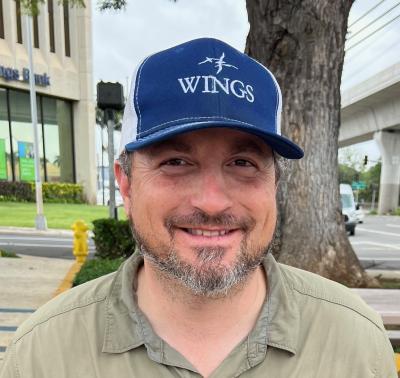
Jake Mohlmann
2027
Single Occupancy Supplement $870


2027
Single Occupancy Supplement $870
This short tour covers a slice of southeastern Arizona at a time when bird populations are high—in some cases spectacularly high. We’ll visit imposing mountains, desolate canyons, vast grasslands, desert lakes and streams, and a few favored human-made sites. We’ll look for the area’s specialized avifauna, search for rarities along our route, and talk about what we’re seeing.
Other than our bookend nights in Tucson, we’ll stay at the charming Casa de San Pedro, a beautiful place with perfect night skies and birds just outside the door.

Day 1: The tour begins this evening in Tucson. Night in Tucson.
Day 2: We’ll depart to the south for Madera Canyon, stopping in desert on the way to look for Rufous-winged and tinkling Black-throated Sparrows. Once in Madera, we’ll be met in the lower canyon’s oaks by Arizona Woodpecker, the gregarious Mexican Jay, Bridled Titmice, perhaps a stunning Painted Redstart, and if we’re very lucky, an Elegant Trogon. Later we’ll continue east through Box Canyon and emerge in rolling grasslands, where perhaps we’ll see Chihuahuan Meadowlark fleeing from roadside fences.
We’ll pass through Sonoita in the heart of Arizona’s wine country, where various sparrows and raptors exploit the vast open lands, and continue east toward the north-flowing San Pedro River and Casa de San Pedro, our very comfortable home for the next five nights and a superb place to come back to after a day in the field. Night at Casa de San Pedro near Sierra Vista.
Days 3–6: From our base at Casa de San Pedro, we’ll fan out in all directions, letting weather and circumstances determine each day’s destination. In general we’ll work from the farthest spot west, in and around Patagonia, and continue a bit farther east every day until we end up in the celebrated Chiricahua Mountains.
We’ll visit Patagonia Lake State Park, where winter birds include Gray, Hammond’s, and Dusky Flycatchers, and with great good luck Black-capped Gnatcatcher, a species that has occurred here in very low numbers in recent years. We’ll also visit feeders in Patagonia proper, where the striking Violet-crowned Hummingbird often winters and Lazuli Bunting adds electric blue to the color palette. The Patagonia city park with its large trees, often ripe with fruit, can harbor interesting wintering species such as rare sapsuckers or Hepatic Tanager.
We’ll explore the Huachuca Mountains and the San Pedro River drainage. What we do here will depend on weather and to some extent on what we’ve seen during the tour’s first days. Several wonderful canyons on the eastern slopes of the Huachucas can hold tooting Northern Pygmy Owl or Montezuma Quail, and the San Pedro River sometimes has a resident Green Kingfisher, often detected by its softly penetrating call, like two stones tapped together.
We’ll spend a day in the Sulphur Springs Valley where we’ll witness at Whitewater Draw Wildlife Area the mass arrival of thousands of Sandhill Cranes from their morning’s foraging. At its best, it’s a spectacular, occasionally deafening experience as multitudes of birds return from feeding on waste corn and other crops in the valley. In addition to the cranes, Whitewater Draw holds a mix of other waterbirds, often including a shimmering cloud of Snow and Ross’s Geese.
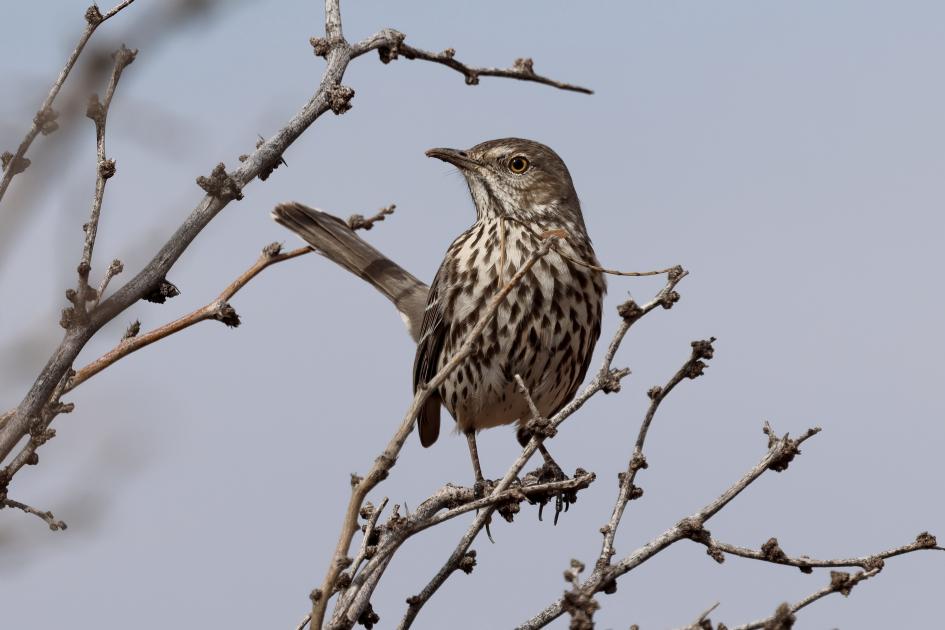
The primitive appeal of large birds in such high numbers is undeniable, but for some the real attraction of the Sulphur Springs Valley is the mass of sparrows, buntings, and raptors that are drawn to all the food that this typically well-watered valley can provide. It’s never quite the same from one year to the next, but the regal Ferruginous Hawk is regular and Red-tailed Hawk in all its bewildering variation is abundant. If it’s a good seed year, waves of White-crowned and Brewer’s Sparrows pour over the landscape and the soft, whistled “whew” of Lark Bunting is everywhere. Among the less common denizens we may encounter are Mountain Plover, buffy-faced Bendire’s and streaky Sage Thrashers, or perhaps Thick-billed Longspur.
No trip to southeast Arizona would be complete without a visit to Portal at the mouth of spectacular Cave Creek Canyon in the heart of the mighty Chiricahua Mountains. Several types of habitats converge in this area and the bird diversity reflects this. In the big thickets just outside town we’ll look for the very shy Crissal Thrasher, the recently split Woodhouse’s Scrub-Jay, and spry Black-tailed Gnatcatcher. Portal proper has numerous feeder arrays and we’ll hope to see Rivoli’s Hummingbird and Blue-throated Mountain-gems, both distinct possibilities at this time of year. If road conditions allow, we’ll drive into the higher reaches of the mountain range where we have a chance to cross paths with Mexican Chickadee, in the only place north of Mexico one can see this range-restricted species. Nights at Casa de San Pedro.
Day 7: After our last delicious breakfast at Casa de San Pedro, we’ll return to Tucson. This desert city is a magnet for wintering birds, usually including something rare. We’ll take time to visit parks and lakes scattered throughout the Tucson Valley, searching for stakeouts and resident Sonoran Desert species we may have missed. We’ll finish with an afternoon stroll around Tucson’s Sweetwater Wetlands, a wonderfully accessible collection of ponds and scrub that can hold hundreds of ducks and a variety of wintering passerines. As the afternoon fades and dusk sets in, numbers of blackbirds, including male Yellow-headed, come in to overnight in the reed beds. Night in Tucson.
Day 8: The tour concludes this morning in Tucson.
Note: The information presented below has been extracted from our formal General Information for this tour. It covers topics we feel potential registrants may wish to consider before booking space. The complete General Information for this tour will be sent to all tour registrants and of course supplemental information, if needed, is available from the WINGS office.
ENTERING THE UNITED STATES: Non-U.S. citizens will need a valid passport and may need a tourist visa. Consult your nearest U.S. Consulate for details.
Canadian citizens should carry proof of citizenship in the form of a passport. Please note that non-US citizens are required by law to carry passports/visas with them at all times.
U.S. citizens should bring their driver’s license, birth certificate and/or passport.
PACE OF THE TOUR: Under normal circumstances no major hiking is required but on occasion, depending on what birds are visiting for the winter and the group’s abilities, we may attempt some brief rock scrambling. A hike of up to 3/4 mile into a mountain canyon with elevation gains upwards of 500 feet may be possible. The longest walk on the tour would be 1-2 miles at an easy pace on level ground through the grasslands looking for various birds.
HEALTH: Arizona presents no real hazards to the visiting bird-watcher but certain factors must be considered.
Elevation: In Tucson we will be staying at 2,600 feet and while in Sierra Vista our hotel is at an elevation of 4,250 feet. If there is no snow on the mountains we may go birding up to 8,000 feet. While at this elevation foot travel will be limited to walking less than ¼ mile from the vehicle.
Sun: Winter sun is powerful and deserves respect. Please bring and use sunscreen as well as a broad-brimmed hat.
Spiny Plants: The most common injury results from spines penetrating light-weight canvas shoes though the sides and soles. Many desert plants are armed with thorns or spines, and native grass seeds can be a nuisance.We recommend tough canvas or leather shoes of at least ankle height and tough trousers as the best safeguards.
Dehydration: Dehydration is a constant concern in Arizona especially when birding at lower elevations in the desert. Drinking a lot of water is highly encouraged throughout the tour. The leader will always have an ample supply of water in our vehicle and make frequent pit stops along the way to use the bathroom facilities.
Smoking: We request that you do not smoke in the vehicles or when the group is gathered for meals, checklists, etc. If you are sharing a room with a non-smoker, please do not smoke in the room. If you smoke in the field, we ask that you do so well away and downwind from the group. If any lodge, accommodation or location where the group is staying or is gathered has a more restrictive smoking policy than WINGS’ policy, the more restrictive policy will prevail.
CLIMATE: In winter (November to February), daytime highs are in the 60-70° range with nighttime lows in the 30s and 40s F. It can be colder at high elevations and it is always possible to experience days with maximum temperatures of 10°F above or below these figures. Be prepared for early morning temperatures below freezing, sometimes in the single digit temps. Rain is infrequent but periodic storms can produce precipitation throughout. Snow is regular above 6000 feet and as low as 3000 feet.
ACCOMMODATIONS: We stay at a standard motel in Tucson near the Tucson Airport, but elsewhere our lodging is of an unusually high standard. Casa de San Pedro Bed & Breakfast (http://bedandbirds.com/) sits on ten acres adjacent to the San Pedro River and Riparian National Conservation Area on the eastern edge of the Huachuca Mountains.
Wireless internet is available in all places we stay.
FOOD: Breakfasts and several catered dinners will be at Casa de San Pedro. We may have some picnic lunches but winter weather is unpredictable. Sit-down meals will be at local restaurants with standard American food.
Food Allergies / Requirements: We cannot guarantee that all food allergies can be accommodated at every destination. Participants with significant food allergies or special dietary requirements should bring appropriate foods with them for those times when their needs cannot be met. Announced meal times are always approximate depending on how the day unfolds. Participants who need to eat according to a fixed schedule should bring supplemental food. Please contact the WINGS office if you have any questions.
TRANSPORTATION: We will be traveling by leader-driven 12 or 15 passenger window van or minivan, depending on the group size. Participants should be able to ride in any seat in tour vehicles. A daily seating rotation will be expected in the vehicles.
We can't render google maps without your cookie consent. To see the map, please reset your cookies, then accept all, then reload this page.
2026 Narrative
In brief:
We just wrapped up another Winter Week in Arizona tour filled with beautiful scenery and abundant wildlife. This year 149 species of birds were encountered as we traversed just over 1,000 miles of mostly paved roads. Every day of our tour visited a very unique area of southeast Arizona, each worthy of day’s exploration. Hepatic Tanagers, Arizona Woodpeckers, and Painted Redstarts met is in the mid-elevation canyons. Sparrows abound in the grasslands as we spent several days enjoying Lark, Rufous-winged, Brewer’s as well as fleeting flocks of Lark Buntings. We saw several local specialties including Greater Pewee, Mexican Chickadee, and sizeable Blue-throated Mountain-Gem. The week had us studying difficult to find thrashers like Crissal and Bendire’s. The incredible Sandhill Crane and raptor show in the Sulphur Springs Valley is an event we’ll never forget. Spending 5 nights in one place meant less time packing and moving, and more time enjoying a place we could call our home away from home for the entire week.
In detail:
While it was still dark, we headed south towards the birding mecca that is Green Valley. In Sahuarita we checked out an area belonging to a Catholic Church to try for a rare bird that had been hanging around there lately. Upon exiting the van, we started familiarizing ourselves with some of the common birds we’d be seeing over the next week like House Finches, Red-tailed Hawk, and American Kestrel. Both Black and Say’s Phoebes hunted the fertile grounds of the church, perching on anything that allowed. A flock of Lark Sparrows lit in a tree exposing their clown-like facial patterns and black chest spots. Mourning Doves were common and one snag was adorned with a dozen Eurasian-collared Doves. It took about 30 minutes before we finally saw our target bird, a gorgeous adult Red-breasted Sapsucker. We’d searched all over the place and ended up finding it the first place we’d checked, attending to seepy sap wells in a large mesquite tree. After this we continued south to Canoa Ranch Conservation Park. A male Vermilion Flycatcher was stunning, looking like a flame perching on the barbed wire fence. The outflow here was perfect for watching a Sora slowly work its way through the cienega’s wet grasses. We had nice comparative views of both Song and Lincoln’s Sparrows right next to each other, noting differences in chest background colors and overall plumage details. Just before leaving we tracked down some high tinkly call notes that led us to a pair of Lawrence’s Goldfinches. This species’ numbers fluctuate every winter, but this year there seems to be a lot around the region. Then we drove north to Desert Meadows park in Green Valley where the hummingbird show was in full force. While admiring an Anna’s Hummingbird perched up high, a Cooper’s Hawk shot by at chest level through the group and landed in the shrubs of one of the houses across the street. A lucky Gambel’s Quail shot out of the bush with the hawk in hot pursuit. Obviously this raptor had a routine as we saw it visit this yard a couple times while we were there, never managing a successful hunt. A young male Costa’s Hummingbird gave us a show as it performed huge U-shaped flights while singing its unique song for an awaiting female. The winner of the most colorful went to a male Broad-billed Hummingbird that didn’t mind sitting still for pictures in perfect light. We inspected a couple more common desert birds like Curve-billed Thrasher and yellow-faced Verdin.
We found a single Rufous-winged Sparrow that sat motionless in a lycium shrub, taking time to sing little bits of song while waiting. This bird is the species on this trip with the smallest world range. Needless to say, we were excited to see it so well. Afterwards we made our way into the famed Madera Canyon. Most birders who come to southeast Arizona visit this place, and we’d soon see why. At the Santa Rita Lodge the giant Rivoli’s Hummingbird was enjoyed. One particular male was flying around the grounds like a fighter jet trying to set the record for how many feeders it could tap in the shortest amount of time. It was crazy to us how large these birds were, initially not realizing they were even hummingbirds due to their large stature. On the ground Wild Turkeys scuffed through the fallen seeds dropped by the Lesser Goldfinches above. A couple Pine Siskins were mixed in with the goldfinches with their extensively streaked underparts. Tiny scaled Inca Doves rooted around in the dander bobbing their heads as they strutted along. It was also nice to see the glowing eyes of the Yellow-eyed Juncos beaming in the shade, compared to the coal-colored eyes of the “Gray-headed” Dark-eyed Juncos feeding next to them. Mexican Jays were numerous, taking turns gorging on the black oil sunflower seeds put out by the host. Also utilizing this food source were several Bridled Titmouse with their black and white facial patterns noted under their tall crests. A couple Arizona Woodpeckers came in repeatedly to pick the remnant suet out of the tree knots. A handsome Townsend’s Warbler almost went unnoticed as it fed slowly through the giant oaks above the feeding frenzy. Although good looking, that warbler didn’t have anything on the Painted Redstart that came in and insisted on foraging on the back deck of the office building. We also enjoyed both male and female Hepatic Tanagers, one red and one yellow, but both with distinctive dark bills and eye masks.
We took a break from the action to have our picnic lunch down canyon. We had a Hammond’s Flycatcher visit us for the event, allowing close study of its long primary projection and squared off back of the head. We took a nice stroll along the trails at Proctor Road. Another set of warblers joined the party here. We had supurb looks at a Black-throated Gray foraging in a mesquite, closely followed by a rare Black-and-white Warbler creeping along like a nuthatch along the bark of the same tree. As the afternoon grew long, we hit the road for our scenic drive over to the San Pedro River and our humble abode that awaited our arrival.
While catching the last bits of darkness the next morning we enjoyed one of our many delicious hand-made breakfasts we grew to love over the next week. We should have known it would be a good woodpecker day when the first bird was a Gila Woodpecker drumming on the metal light pole as we were leaving for the day. While passing through Sierra Vista we gained experience identifying Red-tailed Hawks commonly perched on roadside poles. Most of these were of the pale Fuertes subspecies, with gleaming white fronts prominent in the morning sun. Other raptors were mixed in like a couple of Cooper’s Hawks, as well as a faster surprise. One of the raptors had a dark helmet and revealed itself to be a Peregrine Falcon. We meandered through a neighborhood to get into position for better viewing and just as we did, the bird took off not to be seen again. Our main goal today was birding the acclaimed Patagonian area. Our first stop at the town park gave us stunning views of a male Red-naped Sapsucker coming into some well-used leaky holes in a giant mesquite tree. Acorn Woodpeckers were also zipping through the trees and perching on anything that was available.
Then we headed down to Patagonian Lake State Park. As soon as we got out of the van at the Birding Trail we heard the high-pitched whistles of a Northern Beardless-Tyrannulet. We hurried over to a nearby thicket and found three of these tiny flycatchers feeding together methodically through the midstory. The metallic grinding teeth song of the Anna’s Hummingbird was noted and we watched a gorgeous male flycatching in the parking lot. He would perch occasionally and look directly at us with entire head ablaze in glorious pink saturation. When we heards “oooos and aaaahs” from the group we knew it was facing at just the right angle. We also deepened our love of Verdin while watching them here, noting their bright yellow faces burnt by the sun. The lake was ripe with waterfowl. We took time to scope the many ducks including Ruddy, female-plumaged Common Mergansers, Northern Shoveler, and a single Cinnamon Teal that had our hearts melting with its rusty beauty. Bufflehead of both sexes were in good supply with some of the males displaying to females with head bobbing and lots of pursuit chasing. A few Lesser Scaup showed well, and a single male Ring-necked Duck spent time mostly sleeping.
We headed down the steps to the lake level and immediately found a Cassin’s Vireo that allowed a good study of its purplish head, greenish back and yellow flanks. Several Ruby-crowned Kinglets joined the flock, and Orange-crowned Warblers were in good supply. A bit further down the trail we found a Plumbeous Vireo. It was nice to see Cassin’s and Plumbeous in quick succession for a lesson in unique ID features. We spent time working through some of the mesquite bosques pouring into the edge of the lake. It was amazing the temperature and overall climate difference in these unique areas. Another large flock was mostly filled with Audubon’s Yellow-rumped Warblers but also had a couple rarer species as well. A group of Woodhouse’s Scrub-Jays calls from the depths and eventually came in overhead. Not normally here it was a surprise, but consistent with the fact this winter is an irruption year in the lowlands for this species. Our third Vireo species, this time a Hutton’s, sang its repeated song over and over, but eventually came in for good views. An out of place Eastern Phoebe came in to check us out. This species is common for folks from the east, but a lifer for one participant from California!
A Dusky Flycatcher kept “whitting” while sitting up high in an ash tree. Ladder-backed Woodpeckers worked their way up and down the mesquite trees, and a Hermit Thrush sat still on a horizontal trunk which seemed like for ages. Out of nowhere a Sharp-shinned Hawk appeared in the middle of our group, and quickly left continuing its path to wherever. We made our way back to the van with a quick stop to see if any new birds landed on the lake. A green-headed male Common Merganser joined the party, as did a male Greater Scaup that wound up close to a Lesser giving us a chance to note all the differences between the two similar species. Overlooking the marsh we heard Sora, Virginia Rail, and Common Yellowthroat practicing for the breeding season and male and female Red-winged Blackbirds were setting up territories. We headed over to the deep side of the lake to have our picnic and while doing so set up the scopes to see what was out there. A small flock of Eared Grebes was floating out near some buoys, and a Double-crested Cormorant was using one of the structures to dry its outstretched wings. After a while three Aechmophorus Grebes came out of a cove. We picked out at least one Clark’s and one Western in the lot providing a lifer duo for one of us. A female Phainopepla gave us a good study as it sat very still allowing extended scope views while we had sandwiches in hand. Just before leaving a dapper male Gadwall came in close constantly dabbling and showing his nice black butt while doing so.
After lunch we checked out the Paton Center for Hummingbirds. Just after getting out of the vehicle a couple Black Vultures were spotted high overhead and immediately after a juvenile Golden Eagle slowly soared across the sky, allowing us to note its white wing patches and base of the tail as it went. It didn’t take long for us to score amazing looks at an adult Violet-crowned Hummingbird, the reason a lot of birders come to this location. It perched a long time within a dense shrub, but occasionally came out into the sun to show of its namesake crown in the sun to our amazement. A group of Gambel’s Quail scurried out of the woodpiles and walked single-file down the top of the boundary fence. White-winged Doves were in good supply, some of them even starting to sing implying spring is right around the corner. At the feeders several male Lazuli Buntings came in to add a distinctive color to the palette. There was also both Pyrrhuloxia and Northern Cardinals feeding side by side allowing a great comparison of bill shape, color and size. Amongst the foraging White-crowned Sparrows a couple Inco Doves found company. While watching this a female Spotted Towhee popped out and fed in classic towhee fashion, two feet forward and scrape back. On the same brush pile a Bewick’s Wren sat on top for a very long time allowing photographers a unique opportunity to capture this normally restless species. We had to pull ourselves from the show here to check one more spot before leaving. In the town park we’d checked previously, we made a quick stop and immediately had a male Williamson’s Sapsucker feeding on the same wells the Red-naped had been utilizing earlier in the morning. We couldn’t believe we’d just seen our third species of sapsucker in only two days! As the sun was setting, we headed back east to the San Pedro River Valley and the dinner that awaited us there.
The next morning, we explored the world-famous Sulphur Springs Valley that was furnished with abundant Sandhill Cranes and teemed with raptors. Recent rains had made the dirt roads in the valley questionable at best, but we managed to make our way through the muck just fine. On Coffman Road we took a stroll and were able to find a highly sought-after Bendire’s Thrasher that ended up being quite confiding. The bird sat up long enough for extended scope views, and a careful study of the straight lower mandible compared with the curved upper mandible. We’d seen several Curve-billed Thrasher the last couple days so it wasn’t hard for us to tell the differences between these two species. Further down the road we scanned the irrigation machines until one yielded a perched light-morph Ferruginous Hawk. We also got to study hundreds of Sandhill Cranes in the same field, some of which were practicing their dance moves. All of a sudden, something spooked the flock and they all took off at once and flew directly over our heads for an amazing experience. The bugling calls of the adults rattled through our bodies while the whistles of young birds filtered through the cacophony.
After getting to Whitewater Draw Wildlife Management Area, we spent a couple of hours slowly birding the raised dikes perfectly constructed for viewing. Masses of cranes were moving around in the distance, but the main group of birds that nestled into the safety of the water body were a gleaming white flock of Snow Geese. We took time to examine the flock and pick out several smaller, stubbier-billed Ross’s Geese in the mix. We also had great looks at male Northern Shoveler and Green-winged Teal. Vermilion Flycatchers of all ages were hunting from the bottoms of the willow trees, as was a much-appreciated Gray Flycatcher. Our last expected Empidonax flycatcher was nice to study, exhibiting its signature down-bobbing tail I’d suggested would be the easiest way to identify it. Sparrows were all over the place. In the marsh Song Sparrows of a couple subspecies were picking through the wet grass, joined by a couple Swamp Sparrows for a nice comparative study. Savannah Sparrows were perching on twigs at close-range in the marsh, and we slowly followed a March Wren as it played peekaboo amongst the grass clumps on the edge of the playa. Killdeer were downright numerous, as were the Least Sandpipers that fed amongst them. American Pipits also slowly foraged along the water’s edge running in short bursts to snatch up flies.
On the west side we had a wheeling group of Cinnamon Teal put down right in front of us, including some very handsome all burnt males. A distant rufous-morph Red-tailed Hawk was a nice study with its rusty front side. A random Ring-billed Gull decided to do a fly-by but kept on going north out of view. Some swallows flew over that turned out to be two different species. We picked out Tree with dark backs and white undersides as well as a Barn that was all dark with a longforked tail.
We decided to have our picnic lunch here and it’s a good thing we did. While consuming sandwiches another birder in the lot called out “Rough-legged Hawk!”. The group took turns expertly passing the scope off to one-another while we observed this rare winter raptor glide across the sky taking brief stops to kite. We had heard of this bird potentially being around and were excited to catch up with it. After we left the draw, we set out into the surrounding environs. Along Lee Road a bird popped up into the only shrub next to the van. We were excited to be eye-level with a Sage Thrasher that sat long enough for us all to enjoy. Another Ferruginous Hawk was spotted, this time much closer than the last. The wide gape and overall pale coloration was noted. When it took off we watch it land on the next pole down to show its pale tail and white primary patches, just like the field guide. We cruised up the Central Highway and route 191 looking for raptors and sparrows along the roadsides. Near Sunizona we hit the jackpot with a couple flocks of 100+ Lark Buntings swirling in unison. At one point we were in the middle of a flock as it settled allowing each side of the van a front-row seat.
We took time this afternoon to go over the differences between Chihuahuan and Western Meadowlarks. It was useful to see each species in quick succession displaying the amount of white in their tails, how much yellow in the throat, and unique voices frequently uttered. Over 65 Red-tailed Hawks of several varieties were counted along our valley drive, and Loggerhead Shrikes took second place for most numerous percher. Flocks of Chihuahuan Ravens foraged in the agricultural fields along the way, and let us look closely at the differences between it and the more Common Raven. As the sun was setting, we went back to the Casa, and just as we pulled in a family of Javelina scurried across the drive way. Adults were accompanied by small youngsters and made their way to see if there were any remanent morsels the birds had left behind under the feeders.
The next morning after our delicious broccoli and cheese quiche breakfast we strolled around the grounds of the Casa. At the feeders both Abert’s and Spotted Towhees spent time scratching through the grit knocked off by the House Finches. The grasslands north of the fence were crowded with sparrows. We took our time sifting through flocks of mostly White-Crowned Sparrows to get good looks at several Vesper Sparrows in the mix. Lincoln’s Sparrows were also perched up nicely, and there were even a few Chipping Sparrows thrown in. A particularly confiding Loggerhead Shrike didn’t mind our presence as it made variety of odd sounds not uncommon with this species. The cat-like meowing of a Green-tailed Towhee echoed across the plain and eventually we saw it perched up and scoped it for what seemed like ages. Gila Woodpeckers were downright numerous. At one of the isolated mesquites, we counted eight together in one small tree. As we got back to the grounds, we were greeted by a pair of Cactus Wrens that kept us entertained, perching up and giving their memorable ‘car turning over’ calls repeatedly. A Turkey Vulture flew over briefly. Not a rare bird in general, but it is around here in winter and was perhaps technically the rarest bird we saw all day.
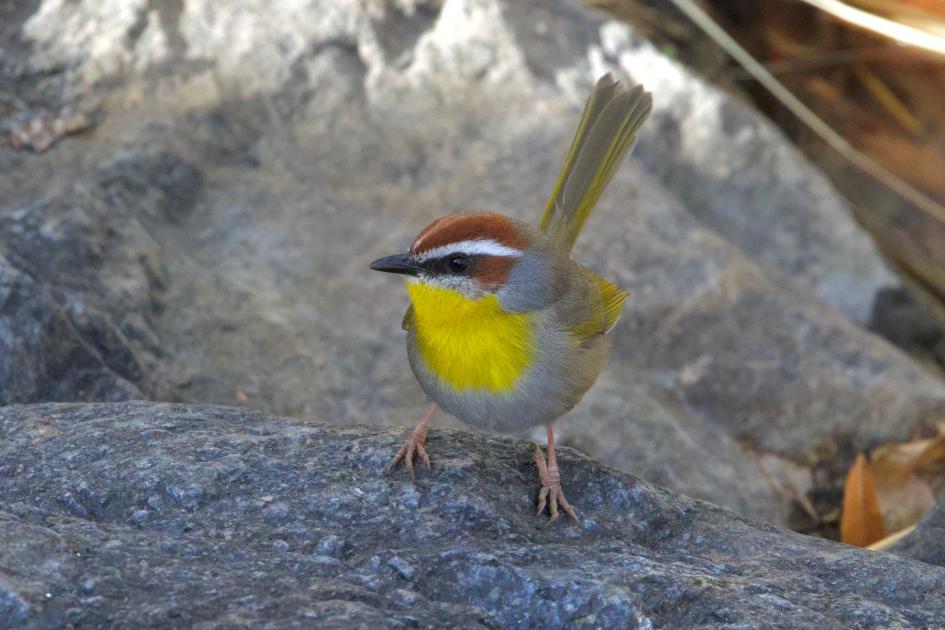
After this we headed north to check out the San Pedro House and trails in a different part of the San Pedro River National Conservation Area. A major highlight here was an adorable Western Screech-Owl that was sitting at the entrance to a hole in a knot of one of the giant cottonwood trees. With just slits for eyes we could tell it was enjoying warming itself with the first rays of the day. A Red-winged Blackbird flock here kept in constant motion. It was comprised of all females, not an unusual occurrence in the winter season for this species. While walking down one of the trails, a sparrow flock added another new species. Several Brewer’s Sparrows were singing their endless garble of notes and sat long enough for us to note how having no major features can be an identification mark in and of itself. After lunch we birded our way up Montezuma Canyon in the Coronado National Memorial. We stopped at a couple pull-offs to pick through some flocks in transit. Each time we jumped right out into the middle of a flock of Bushtits. These tiny gray birds are never alone, and usually give their presence away by high pitched call notes we were tuned in to. At the first stop the Bushtits were joined by a group of Western Bluebirds sitting on juniper tops and White-breasted Nuthatch coming in for a look. Another spot we had a nice-sized White-crowned Sparrow flock that was harboring some other species. An inquisitive Rufous-crowned Sparrow eventually made its way in and sat completely still in a shrub nearby. We couldn’t believe our luck with seeing this bird so well considering how much its usually moving around. A few minutes later a Canyon Towhee took its place in the same shrub. The scopes were already trained on the spot from the previous sparrow and didn’t even need to be adjusted to this new bird. The Canyon Towhee was our 4th species of Towhee recorded for the day. We’d already seen Abert’s, Spotted and Green-tailed at Casa de San Pedro this morning.
Up in Montezuma Pass the views were vast. Far off to the west there was nothing but gently rolling hills and oak-studded grasslands, but to the east there were 52 miles of contiguous fence straight out across the land. What a contrast in landscapes. After taking some photos of the scene, we checked a couple canyons on the west side of the Huachucas for Montezuma Quail. Despite our best efforts we could not turn any rocks into quail. This evening we tried some owling close to home. A pair of Great Horned Owls were the first to pipe up when the sun went to sleep. A male came into a cottonwood close by and hooted his heart out with ear tufts and tail up in the air. Eventually the female responded and the male quickly went over to catch up from any of the day’s happenings. Waiting until it got completely dark was the key for the American Barn Owl we saw. Initially we heard the surreal chirping calls emitted from the adult that was hiding in its day roost. All of a sudden, a face appeared and the owl emerged and quickly landed up in a cottonwood tree, only to quickly shoot off into the riparian forest to find its mate. After dinner we continued our owl themed evening by heading up into the Huachuca Mountain’s enclosed canopy and tracking down a Whiskered Screech-Owl to end the night. We couldn’t believe we’d recorded an amazing four species of owl in one evening.
No trip to southeast Arizona would be complete without a visit to Portal at the mouth of the mighty Cave Creek Canyon. We made a brief stop at a museum that hosts a riparian exhibit and a particularly good souvenir shop with just about any animal from the region possible to get on a hat. As soon as we entered the vegetated area a couple Black-throated Sparrows came in to feed in this lush habitat in an otherwise barren landscape. A Cactus Wren sat on an ocotillo arm and called outs its memorable ‘song’. A Ladder-backed Woodpecker couldn’t have been seen closer, and a Lincoln’s Sparrow gave a good showing as it scraped around the ground. A brief visit to a private residence in the Big Thicket allowed close looks of the (normally) skulky Crissal Thrasher that sat up for several minutes allowing ample viewing pleasure for all. The largest hummingbird in the country, the colossal Blue-throated Mountain-gem, was seen exceedingly well at Cave Creek Ranch. While here we saw three subspecies of Dark-eyed Juncos. The more common Gray-headed and Pink-sided were joined by a rare Red-backed Junco. This subspecies range is mostly tied to the Mogollon Rim of central Arizona and New Mexico, far from where we were.
We had a quick picnic lunch where we were greeted by a pair of Painted Redstarts that tolerated the group’s presence, allowing to watch them forage in their unique style. After our stunningly beautiful lunch spot under towering cliffs, we made our way up along Cave Creek. The lichen-covered pink rocks began to show themselves as we climbed up above the 7000’ mark searching for some of the montane species. The views from this vantage are beyond belief staring down the heart of this massive craggy mountain range. We drove slow listening for flocks in the pine zone and stopped when we heard some squeaking. This sound turned out to be a sizeable flock with what else being the main component but Bushtits. A pair of Hutton’s Vireos came in for close inspection and a couple Hairy Woodpeckers were working the standing dead trees. One piece of this flock of birds held a pair of Mexican Chickadees, a huge prize for any North American birder. After our successful chickadee journey, we headed back down the mountain and back into Cave Creek Canyon.
We ended our birding day with a walk down Main St. in Portal. This was a peaceful way to end the day, with a male Rivoli’s Hummingbird catching insects in the conifers, Inca Doves singing their ‘hopeless’ songs, and a couple Steller’s Jays defending winter territories. After our long outing of birding, we went back to Palominas and had a wonderful homemade stew prepared by our hosts. What a way to end the day.
We enjoyed one final breakfast before heading out. In the cottonwood tree above the van an adult Sharp-shinned Hawk had roosted and was watching us as we loaded our bags. Just after pulling out of the drive, we made it around the first bend before having to stop to check out a small flock of Western Meadowlarks. Just up the road we did some cruising for quail in some of the neighborhood streets. One particular area was full of birds coming to an impressive feeder and water, however none of our target birds were there. Our last day is always exciting as we meander through the various habitats back to Tucson trying to fill in the checklist with species we haven’t seen up to this point. We heard that a Rufous-backed Robin had shown up in Patagonia since we’d been there. Given this bird’s scarcity we decided to head back to the area and give it a go. A quick stop in Patagonia Town Park was met with a flock of Cedar Waxwings stopping briefly in a towering tree. We arrived at the area in Harshaw Canyon where the robin had been reported. Around the grounds were several hackberry trees, some of which were still retaining some of their berries. We watched and listened intently for an hour but no robins of any kind made an appearance.
The group decided to check out another part of town near the Circle Z Ranch. This property has surface water, a rare commodity in the desert, and tends to have a lot of birds in winter. We walked the road abutting the area and quickly heard a Rock Wren singing a whisper song from the rocky hillside. A bit further on, a pair of Rufous-crowned Sparrows came in to give us a look, and visa versa. A large bird suddenly sallied out for an insect and landed back at the same perch. This was a Greater Pewee that we were able to watch forage for quite some time as it worked both sides of the road. While enjoying the flycatcher, I heard the robin was seen at the area we’d been checking before. After a quick picnic and checking the Paton Center one last time, we tried for the Rufous-backed again. There were just as many birds as in the morning while we were there looking, and the same number of robins as before. Eventually we decided to continue with our day and leave this one behind. It’s important to leave 1 or 2 birds to be unfound so there’s an excuse to come back and visit southeast Arizona again in the future.
Many people were surprised by the varied habitat and bird diversity offered on this tour. While the rest of the country was being overwhelmed with severe winter weather, sunny southeast Arizona provided its usual warm temperatures, clear skies, and abundant bird life. Throughout the week there was a nice mix of regional southeast Arizona specialties, lots of expected wintering wanderers, and even a few of the rarest species in the country at this time. The group got along amazingly well this year, allowing for an easy pace and lots of delightful conversations throughout the days. All this proved once again why this tour is so much fun and a must for anyone looking for a break from the winter doldrums experienced elsewhere in the country this time of year.
- Jake Mohlmann , 2026
I have been on numerous group tours both with WINGS and others. This tour with Jake ranks very near if not AT THE TOP. Jake is a perfect guide, knowledgeable about birds and related topics. He is patient making sure that the birders have good looks etc. He is also a good and careful driver . The seven participants meshed well and the accommodations and meals excellent. I loved that most lunches were picnics.
- Claude B. on Arizona: A Winter Week in the Southeast
Jake is a real gem, an ideal leader - always knowledgeable, pleasant and personable.
- Judy G. on Arizona: A Winter Week in the Southeast
Jake is simply the best guide you could have. His love of birds is obvious and his knowledge of SE Arizona is so impressive. The other birders were so supportive and helpful. It was my first birding vacation and it couldn't have been more perfect. I wish I could go on each and every one of the Wings tours.
- Jen K. on Arizona: A Winter Week in the Southeast
Everything was perfect. Jake is a superb leader with tremendous birding skills as well as great people skills. The B&B was comfortable and charming, and the food ws fantastic. Even the birds put on a show, and Jake had us in a perfect place to watch.
- MaryAnn T. on Arizona: A Winter Week in the Southeast
Jake was a great guide for my first birding experience. He knows how to find birds. He recognizes the bird calls and was uncannily accurate in identifying the birds we were seeing....He also researched the local bird sightings and had an identified agenda each morning which helped ensure we saw a wide variety of birds. As a beginner, he was patient with me when I had to ask novice questions or required a bit of extra assistance to either sight the bird or identify the bird I was viewing.
- John K. on Arizona: A Winter Week in the Southeast
Maximum group size seven with one leader.
More Tours with these Leaders