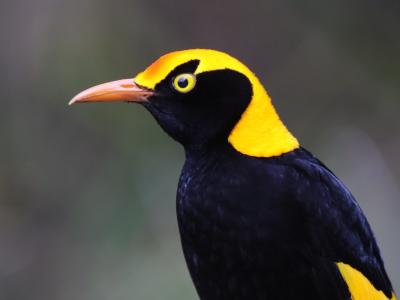
Panama: Darién Lowlands
-
Nov 23-30, 2026
Gavin Bieber
Nusagandi Extension to Dec 1 -
Nov 27 to Dec 4 2027
Gavin Bieber
Nusagandi Extension to Dec 5
2026
Main Tour Single Room Supplement $140
Nusagandi Extension $550
Nusagandi Single Room Supplement $70
2027
Tour Price to be Determined


2026
Main Tour Single Room Supplement $140
Nusagandi Extension $550
Nusagandi Single Room Supplement $70
2027
Tour Price to be Determined
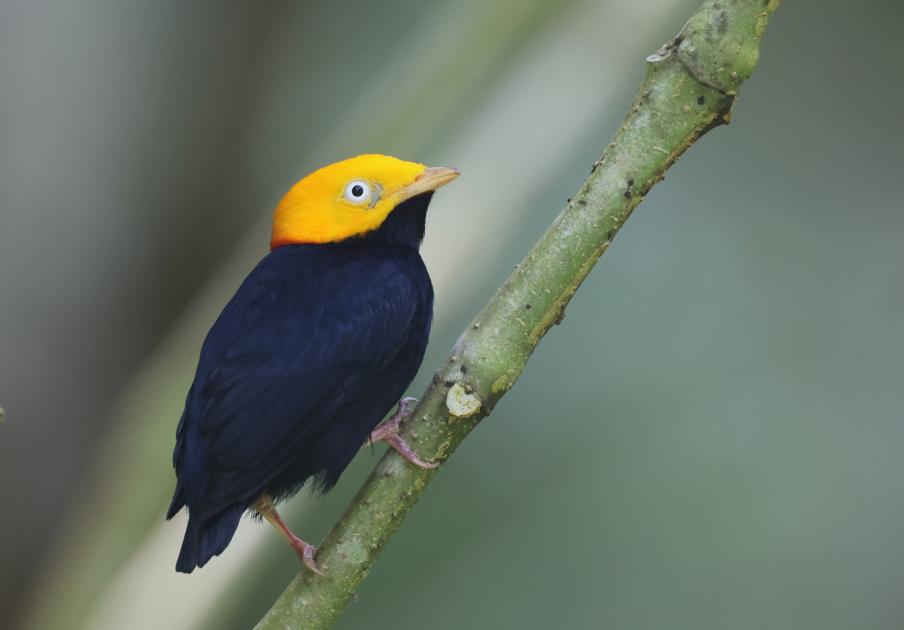
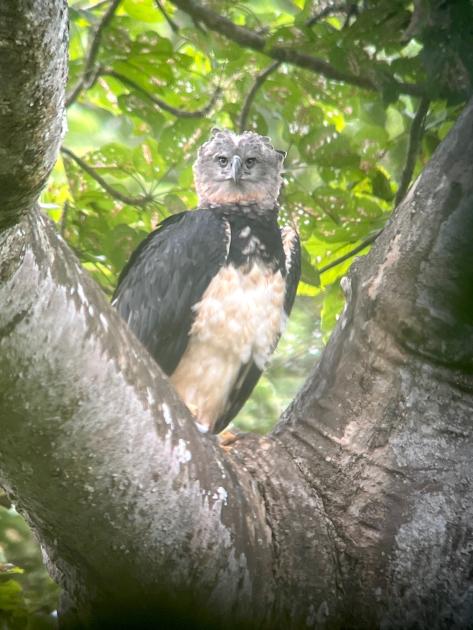
Darién Province in far eastern Panama is one of the wildest and most remote corners of the isthmus. Largely roadless and with steep mountains cloaked in dense vegetation, the region holds its secrets well. With the development of the new Canopy Camp Darién, visiting naturalists finally have an accessible lodge from which to base their explorations. Although the lodge sits among secondary forest and clearings, we’ll be able to access more extensive lowland forests in the large Embera Reserve. We’ll stay in comfortable safari-style permanent tents on raised platforms, each with en suite bathroom facilities and electricity. We’ll spend our week here walking along the trails and road systems near the very eastern end of the Pan-American Highway. The clearing around the camp is surrounded by excellent forest and dense thickets of Heliconia plants, along with their attendant Pale-bellied and Rufous-breasted Hermits. In the early morning we’ll see an array of parrots and toucans perching in the surrounding trees and enjoy a chorus of raucous birdsong. We’ll concentrate especially on locating many of the true specialties of far eastern Panama: Spectacled Parrotlet, Gray-cheeked Nunlet, Rufous-tailed Jacamar, Golden-green, Spot-breasted, and Red-rumped Woodpeckers, Double-banded Graytail, Black Antshrike, Barred Puffbird, One-colored Becard, Golden-headed Manakin, White-eared Conebill, Orange-crowned Oriole, and Black Oropendola. If there is a known active nest site, as has often been the case in recent years, we will also venture out in a quest to find Panama’s national bird; the awe-inspiring Harpy Eagle. A one-day extension from Panama City at the end of the tour will visit the foothill forests of Nusagandi, a rather remote area that is part of the Guna Yala Comarca. Here, we’ll explore a steeper trail network to seek out a range of poorly known species including the enigmatic and monotypic Sapayoa. The Darien is only just beginning to open up to ecotourists and new discoveries are still being made every month. Even for seasoned regional travelers, the Darién lowlands hold a wealth of new birds.
NOTE: This tour can be taken in conjunction with our Panama: Bocas del Toro and the Western Highlands and Panama: Fall at the Canopy Tower tours.

Day 1: The tour begins in the evening with an introductory meeting in the lobby of our Panama City hotel. Night in Panama City.
Day 2: We’ll begin with an early departure for the Darién lowlands, a biologically rich area that marks the easternmost extent of several species whose ranges are more typical of adjacent Colombia. As we travel east we’ll keep an eye out for open-country birds such as White-tailed Kite, Savannah Hawk, and Crested and Yellow-headed Caracaras. Around Lake Bayano a couple of planned stops may reveal our first Eastern Panama specialties such as Black Antshrike, Orange-crowned Oriole or Rusty-winged Antwren. We’ll have lunch at a small restaurant in Torti which has hummingbird and fruit feeders set in a dense garden. While having lunch we should see Snowy-bellied, Rufous-tailed, Scaly-breasted, and Sapphire-throated Hummingbirds and a nice mix of open-country birds. After lunch we’ll continue on into the Darién, arriving at the Canopy Camp in the late afternoon. Night at the Canopy Camp.
Day 3: We’ll spend most of our first full day here birding around the camp and on some of its many forest trails. A dawn start will allow us to experience the sounds of the forest waking up. Yellow-throated and Keel-billed Toucans and Red-lored, Mealy, and Blue-headed Parrots should all be perched around the camp clearing, and White-bellied Antbirds and chattering mixed flocks will call from the forest edge. After breakfast we’ll make our way to one of the nearby camp trails, where we’ll seek out Darién specialties such as Double-banded Graytail, Barred Puffbird, Rufous-tailed Jacamar, Ochre-lored Flatbill, and the diminutive and beautiful Golden-headed Manakin. After lunch and some relaxation that could include watching Pale-bellied Hermits and Sapphire-throated Hummingbirds attending flowers and feeders around the camp, we’ll again head out on a nearby trail looking for a host of great birds. We hope to encounter raucous Red-throated Caracaras or perhaps a nice mixed flock with Bright-rumped Attila, Purple-throated Fruitcrow, or Cinnamon Becard. Depending on the conditions of the day, we may also venture out to a stretch of the nearby Pan American Highway. Near the little-traveled end of the road, the birding can be excellent, with such possibilities as Spectacled Parrotlet, Bicolored Wren, and a host of more open-country birds as well. After dinner we’ll step outside to look for nightbirds around the clearing: Crested, Spectacled, and Mottled Owls are all possible, as are Great and Common Potoos and Common Pauraques. Night at the Canopy Camp.
Day 4: Today we’ll head to the northeast, entering the lands of the Embera people, between the end of the Pan-American Highway and the Colombian border. We’ll head for the small community of Nuevo Vigia Embera, arriving via the “local highway,” that is to say, by dugout canoes. Initially we’ll spend time in a mix of agricultural fields and scrub where we hope to find Striped Cuckoo, Plain-breasted Ground-Dove, Smooth-billed Ani, Giant and Shiny Cowbirds, and a wide array of tanagers, pigeons, and raptors. Farther along on the road we’ll cross the Cuchunaque River, keeping an eye out for waterbirds such as Pied Water-Tyrant and also for Neotropical River Otters plying the banks. After the river crossing, we’ll start to see patches of good forest, where we hope to encounter Black Antshrike, White-bellied and Bare-crowned Antbirds, Barred, Pied, and White-necked Puffbirds, and perhaps parrots like Chestnut-fronted Macaw or Spectacled Parrotlet. Small wetlands are scattered along the road here, supporting large numbers of Wattled Jacana and perhaps Green Ibis or the generally scarce Black-collared Hawk. We’ll look especially hard for Dusky-backed Jacamar, a poorly known species with a small worldwide range that occurs along the creeks here. A short walk into the forest to a sheltered oxbow lake could produce views of Rufescent Tiger-Herons or perhaps even Boat-billed or Agami Herons as well as Green-and-rufous and American Pygmy Kingfishers. On this trail we also have a chance of seeing several of the harder-to-find Darien specialties, such as Gray-cheeked Nunlet, Golden-green Woodpecker, Streaked Xenops, or even Black-billed Flycatcher. This visit will also give us an opportunity to make a stop in a small Embera village, where local artisans sell intricately woven baskets and masks. Night at the Canopy Camp.
Day 5: After breakfast we’ll drive to the El Salto Road, just a few minutes from camp, for the morning. Extending about 3.5 miles from the Pan-American Highway and ending at the banks of the Chucunaque River, the road passes through dry forest that harbors Scaled and Ruddy Pigeons, Chestnut-fronted Macaw, Black and Crested Oropendolas, Golden-green Woodpecker, and the flashy Orange-crowned Oriole. The road winds along a ridge that occasionally offers a good view of the open sky, where we could see some of the thousands of raptors that pass through Panama their way from North American breeding grounds. We’ll look for familiar species (to North Americans) such as Broad-winged, Short-tailed, and Swainson’s Hawks, joining more tropical species such as Crane Hawk, Double-toothed Kite, and perhaps Black or Ornate Hawk Eagle. A short trail near the end of the road runs along the Cuchunaque River and gives access to a dry forest patch where we’ll look for birds such as Rufous-tailed Jacamar and Great Antshrike, and perhaps even encounter an antswarm with attendant Northern Barred Woodcreepers or Gray-headed Tanagers. In the afternoon we’ll head south along the road to Las Lagunas. Extending about 7.5 miles from the Pan-American Highway, the road crosses several small streams and terminates at some large ponds. Here we’ll look for Muscovy Duck, Rufescent Tiger-Heron, Capped Heron, Scaly-breasted Hummingbird, Buff-breasted Wren, Black-capped Donacobius, Shiny and Giant Cowbirds, and Yellow-hooded Blackbird. Raptors abound in the ranchlands as well, and we’ll look for Savannah Hawk, White-tailed and Pearl Kites, Lesser Yellow-headed Vulture, and Bat and Aplomado Falcons. Recent excellent sightings here include several views of Little Cuckoo, a species that barely crosses into North America. Night at the Canopy Camp.
Day 6: The destination for this day will be flexible, but will involve an all-day trip into the Darien National Park, again using a combination of four-wheel drive trucks and dugout canoe to access primary forest. If there are any known nesting sites for Harpy or Crested Eagle that are feasibly reachable from the camp we shall make the attempt. If not, we’ll visit the town of El Real, a small village adjacent to the park that is accessed via an hour-long boat ride from the end of the highway at Yaviza. While on the river we’ll watch the water’s edge for Common Black and Black-collared Hawks, Neotropic Cormorant, Anhinga, a host of herons including Cocoi and perhaps Capped, White, and Green Ibis, shorebirds, and Black Oropendola. High quality forest lies within a half-hour drive of town, and we’ll seek out an array of lowland specialties such as Ruddy Pigeon, Great Jacamar, Red-throated Caracara, Chestnut-fronted and Great Green Macaws and an array of other raptors that might include Black, Ornate or Black-and-White Hawk-Eagles. Night at the Canopy Camp.
Day 7: We’ll start with an early breakfast followed by our farewell to the Canopy Camp. On the way back to Panama City we’ll stop at the San Francisco Nature Reserve, a 1300-acre private forest reserve managed by the St. Francis Foundation. Established in 2001 by Father Pablo Kasuboski, an American priest from Wisconsin, the reserve protects the headwaters of the main rivers of the area as well as its wildlife. The foundation also works on infrastructure development, building and maintaining aqueducts, roads, schools, and churches. The reserve has a variety of habitats— primary, secondary, and riparian forests, forest edge, fields, farmland, ponds, and wetlands—and during our morning here we’ll explore some of them along the short entrance road. We hope to find Boat-billed Heron, Great Jacamar, Broad-billed Motmot, Russett-winged Schiffornis, Royal Flycatcher, Yellow-green Tyrannulet, and Blue and Plain-breasted Ground-Doves. Coming back into Panama City, we’ll stop at several prime birding areas around Lake Bayano, the Río Torti, and the Río Mono to track down any species we may have missed on the drive east. We’ll reach our hotel near the airport in the late afternoon. Night in Panama City.
Day 8: For those not taking the Nusagandi extension the trip concludes this morning in Panama City.
Nusagandi Extension: For the extension we will have an early departure for the roughly hour and a half long drive up into the foothill forests of the Guna Yala Comarca. Here the trails wind through primary foothill forests with short but steep sided hills and small forested valleys with flowing creeks. Trail conditions are dependent upon recent rains, but they will generally be muddy, with some steep sections. On these trails we hope to find one of the principal targets of the area, the Sapayoa. This rather staid green bird is in a monotypic family which has recently been shown to be related to the more colorful Old World broadbills. Flocks here are often centered around noisy groups of Tawny-crested Tanagers, and might contain other birds such as Ochre-throated Foliage-Gleaner, Stripe-throated Wren, Spot-crowned Antvireo and Tawny-faced Gnatwren. We’ll also spend time birding along the paved main road, where we often encounter good sized tanager flocks containing birds such as Shining Honeycreeper, Scarlet-thighed Dacnis, Sulfur-rumped, Emerald, Black-and-Yellow, and Carmiol’s Tanagers. The entire area is excellent for rarely encountered species, and over past visits we have recorded a long list of mouth watering birds such as Crested Guan, Crimson-bellied Woodpecker, Black-crowned Antpitta, Olive-backed Quail-Dove, Spiny-faced Antshrike, Yellow-eared Toucanet and Plumebous Hawk. Time permitting we will visit a lowland site in the afternoon on the way back to our Panama City Hotel where we might encounter a few birds more typical of the drier Pacific coast such as Lance-tailed Manakin, Pale-breasted Spinetail, Isthmian Wren, and Panama Flycatcher. Night in Panama City.
Day 9: The trip concludes this morning in Panama City.
Note: The information presented below has been extracted from our formal General Information for this tour. It covers topics we feel potential registrants may wish to consider before booking space. The complete General Information for this tour will be sent to all tour registrants and of course supplemental information, if needed, is available from the WINGS office.
ENTERING PANAMA: Panama requires of U.S. citizens a passport valid for at least three months after entry. Citizens of other countries may need a visa and should check their nearest Panamanian embassy.
Anyone coming directly from countries where Yellow Fever is endemic must have proof of a current vaccination.
COUNTRY INFORMATION: You can review the U.S. Department of State Country Specific Travel Information at https://travel.state.gov/
HEALTH: The Centers for Disease Control and Prevention (CDC) recommends that all travelers be up to date on routine vaccinations. These include measles-mumps-rubella (MMR) vaccine, diphtheria-tetanus-pertussis vaccine, varicella (chickenpox) vaccine, polio vaccine, and your yearly flu shot. They further recommend that most travelers have protection against Hepatitis A and Typhoid. Please contacting your doctor well in advance of your tour’s departure as some medications must be initiated weeks before the period of possible exposure.
The most current information about travelers’ health recommendations can be found on the CDC’s Travel Health website at https://wwwnc.cdc.gov/travel/destinations/list.
Malaria: It is the opinion of the Centers for Disease Control that travelers to eastern Panama including the Darien are at risk for malaria, although there are no recent cases known in the areas in which we travel. Please consult your physician.
Zika: This virus is expanding north into the northern Caribbean and southern United States and health authorities are still trying to gage its full impact. Couples who expect/hope to become pregnant should consult their physician.
Elevation: Maximum elevation reached on the tour is about 500 feet.
Water: Bottled and potable water are available throughout the tour. We will have coolers with drinks along in the vehicles during outings, and drinking water is available in containers in each cabin.
Insects: Biting insects and arachnids are seldom a major nuisance although chiggers and biting gnats, and occasionally mosquitoes can be locally numerous around the Camp. Careful application of repellent provides good protection and the leader will advise you when it will be necessary.
Smoking: Smoking is prohibited in the vehicles or when the group is gathered for meals, checklists, etc. If you are sharing a room with a nonsmoker, please do not smoke in the room. If you smoke in the field, do so well away and downwind from the group. If any location where the group is gathered has a stricter policy than the WINGS policy, that stricter policy will prevail.
Sun: Sun in Panama can be very intense. Please bring adequate protection, including a sun hat and a strong sun screen of at least 15 rating.
PACE OF THE TOUR: We will try to be in the field at dawn. Most days will involve departures close to 6:15 a.m. Breakfast will be in an open communal dining room before our morning departure. Many of the birding sites that we visit on the tour are within an hour of the camp. We’ll have full mornings in the field and some days will also involve lunches and full afternoons. On others we will return to the camp for lunch and a siesta. On our travel days to and from the Camp we’ll have lunch at a local restaurant with hummingbird and fruit feeders.
There will be some narrow and uneven trails (of about a mile and a half) and we may have to contend with mud and on some years shallow standing pools on the trails. Comfortable and fully waterproof/mud boots are highly recommended. The camp has an array of rubber boots that can be borrowed for your stay, although if you require a particularly large, wide or small shoe, they may not have a good fit. We will also be birding from small boats on several days, which may require stepping into and out of the craft onto natural riverbanks. Note that the location of available Harpy Eagle nests changes from year to year, and sometimes (rarely) these sites are significantly further into the forest, requiring one-way hikes of 3 or 4 miles to access. If that is the case on your chosen year participants may opt to remain at the camp for the day, where the birding and photographic opportunities are excellent.
For those undertaking the one-day extension to Nusagandi please be aware that the trails in this area are significantly muddier (most years), narrower, and much less flat. For the Sapayoa we will need to hike on a roughly 1.2K loop trail with some steep grades down to a creek, and then will have to cross the creek multiple times as we seek out our target bird. The creek crossings are shallow, and the creek is only 3-5 feet wide, but good (waterproof) footwear and walking poles (if needed) are highly recommended. The walking in this area is substantially more demanding than on the main Darien trip.
CLIMATE: The days will likely be between the mid-70s and mid-80s and humid, often with afternoon showers. Rarely do these showers reach the intensity or duration that would impact on a birding excursion, but be prepared for some birding in rain. High-quality rain gear and a small umbrella will go a long way toward making any rainy periods more enjoyable. Bring at least one heavier shirt or light jacket to prepare for rainy or unseasonably cool weather.
ACCOMMODATIONS: We use a single hotel during most of the tour: the Canopy Camp near the end of the Pan-American Highway. This new camp was built using the model of African-style luxury tented camps. We will be using large, walk-in tents that are positioned on individual platforms set around a clearing. Each tent is apportioned with comfortable beds, electricity, fans, and other amenities. A private bathroom with a hot shower and flush toilet is located adjacent to each tent on the platform. The tents have internal wood flooring, screened windows, bedside tables and some shelving for personal effects and are remarkably comfortable.
The first and last nights of the tour will be at a modern, comfortable hotel near the Panama City Airport. The additional night for the Nusagandi extension is also at the airport-area hotel.
FOOD: Breakfasts will be at the Canopy Camp before our morning departures and will include fresh fruit, cereal, yogurt, eggs, bread and a meat dish. Some of our lunches will be field picnics; others will be at the camp or at a local restaurant. All dinners will be at the camp, save for the final dinner at the hotel in Panama City. The food is of excellent quality and features local produce and seasonings.
Please contact the WINGS office well in advance if you have any important food allergies.
TRANSPORTATION: Transportation during the tour is by specially modified open rainforest trucks, or by vans or comfortable buses. Transfers to/from the airport to the Panama City hotel will be by courtesy shuttle. Transport to the Canopy Camp will be by 15- or 22-passenger vans.
Approximate Routing
We can't render google maps without your cookie consent. To see the map, please reset your cookies, then accept all, then reload this page.
2025 Narrative
IN BRIEF: Panama’s vast and sparsely populated Darien Province contains some of the most remote and wild lowland and montane wilderness remaining in Central America. From the end of the highway in the port town of Yaviza to the mountains along the Columbian border there are virtually no roads, and the local Embera and Wounaan people use small dugout canoes to travel around and transport their goods. In early 2014 the Canopy Tower company completed work on a comfortable permanent tented camp near the end of the highway that backs onto an excellent forest reserve protecting the watershed for the nearby town of Sanson. These large tents, positioned on hardwood platforms with decks that give excellent views of the surrounding forest offer individual bathrooms and showers, electricity and full-sized comfortable beds. The camp’s grounds have been heavily planted with flowering and fruiting plants, and we awoke each morning to the sounds of calling Yellow-throated and Keel-billed Toucans, Cinnamon Becards, Whooping Motmots and a bubbling flock of Chestnut-headed Oropendolas that were happily denuding the camp of bananas. The feeders attract a nice array of mammals as well, with daily visits from White-throated Capuchin, Geoffrey’s Tamarin, White-nosed Coati and Red-tailed Squirrel, and evening visits by a varied set of characters including Crab-eating Racoon, Common Opossum and Kinkajou.
Although much of the primary forest that remains is far off the road system, we spent a very enjoyable week birding around the end of the road and out into the beginnings of Embera territory. The bird highlights were many, from the active Harpy Eagle nest site with the female in attendance and posing extremely well, multiple encounters with the critically endangered Great Green Macaw, dazzling male Blue Cotingas gleaming from the treetops, Black Antshrikes lurking in the undergrowth, Spot-breasted and Red-rumped Woodpeckers working trees just overhead, a Dusky-backed Jacamar sitting out for us in excellent light, point blank views of Great Curassow and excellent studies of an array of range-restricted species such as White-headed Wren, Spot-crowned Barbet, Double-banded Greytail, Grey-cheeked Nunlet and the endemic Yellow-green Tyrannulet.
These areas in the Darien are little-explored and I am sure that the creation of a comfortable lodge here will continue to produce a lot of new discoveries. I very much look forward to returning next fall!
IN FULL: We started off the 2025 WINGS visit to the Canopy Camp Darien in a bit of an unorthodox fashion, as no sooner had we attained the pan American highway from our airport hotel the transfer van had a flat tire. While waiting we spotted a few Grey-breasted Martins, two pairs of Blue-headed Parrots and a few more common open-country species. Thankfully we had it replaced in short order, and the event did not portend any other ill tidings for the tour. Normally we start off the Darien trip with a half-day visit to the rolling ridges along the continental divide in Nusagandi. This year our ground agents informed us that the trail system that we would have to use to access our main target bird here, the enigmatic Sapayoa was in particularly poor shape, with deep mud on steep slopes. Rather than tangling with these challenging conditions we opted for a more leisurely start time and spent the day making our way towards the camp. Our first brief stop was at a petrol station near the bottom of the Nusagandi road, where we tallied a little flock containing Tennessee, Prothonotary and Northern Yellow Warblers joining Blue-gray Tanagers, a few Red-crowned Woodpeckers, a chortling Southern House Wren and both Thick-billed and Yellow-crowned Euphonias in a short bare tree just behind the car park. Further out we picked up a couple of perched Smooth-billed Anis, passing Crested and Yellow-headed Caracaras and a perched White-vented Plumeleteer. After loading back up into the bus we didn’t get far before Oscar pointed out a White-tailed Kite hovering over a nearby field. We stopped for a better view, and while stopped also recorded about a dozen hulking Southern Lapwing out on an adjacent rice field.
It was just as well that we omitted Nusagandi this year, as the central stretch of the Pan American highway was under heavy construction, with a few delays, and a lot of unsurfaced and bumpy road to cover. The section of the highway past Lake Bayano to the Darien border is periodically poor. The federal government gets around to fixing it generally only when the local indigenous population starts being annoyed enough about the conditions to blockade the road. Thankfully that hasn’t happened in quite some time, and by the signs of all the construction perhaps the old road condition cycle has been broken. Most likely for the 2026 tour we will enjoy excellent conditions on the newly surfaced road, but for this year it took longer than usual to reach our normal lunch spot in the town of Torti.
Before stopping for lunch though we took a side road off the highway so that we could bird along a quiet road that leads down to the Rio Torti. This proved a very productive spot for us, and our planned short stop soon stretched out to an hour. The birds here were excellent, with a very large (almost overwhelmingly so) mixed flock attending the large trees that lined the river. A lot of the birds were wintering species familiar to most of this year’s participants, but along with the warblers, tanagers and flycatchers that came down from northern climes we found perky Common Tody-Flycatchers, stolid Streaked Flycatchers and boisterous Boat-billed Flycatchers, as well as a few less obvious species like Southern Beardless-Tyrannulet, Yellow Tyrannulet and Golden-fronted Greenlet. There seemed to be something in the flock for every birding taste. For those that like birds with Ant in the name we found a trio of very responsive male Pacific Antwrens, a lovely female Black Antshrike and a pair of Barred Antshrikes. If colour is your preference there was a nice array of gaudy tanagers including Crimson-backed Tanager, a local specialty in the form of White-eared Conebill, and handsome Blue Dacnis. For those who enjoy skulky birds we turned up a Buff-bellied Wren and a furtive Squirrel Cuckoo, and for raptor enthusiasts there was a perched Grey-lined Hawk. Seeing nearly 50 species in an hour provided a great opening act to our birding week and whetted our appetites for lunch.
At our customary roadside restaurant in the nearby town of Torti we found several hummingbird and fruit feeders which made for some excellent birding while we enjoyed our pre-ordered cooked lunches. A hulking Scaly-breasted Hummingbird was doing its best to control all three of the hummingbird feeders on the deck, but despite its efforts we also enjoyed looks at a few Snowy-bellied Hummingbirds sneaking in at regular intervals. Although the hanging bunch of bananas was well past its prime there was a steady procession of frugivores picking over the remains. Some, like the Baltimore Oriole and Summer Tanager were migrants, but others, such as Blue-gray Tanager, Palm Tanager, Thick-billed Euphonia, Orange-chinned Parakeet and Clay-coloured Thrush were residents.
After lunch, we made the final hour and a half drive to the camp, although we stopped a few more times to admire perched birds such as Pearl Kite, Laughing Falcon and Red-lored Amazon. We reached the camp in the mid-afternoon, with time for our lodge orientation, which was interrupted regularly by birds foraging just off the deck. The clearing around the camp has been liberally stocked with hummingbird-friendly plants, and in addition to those flowers the camp staff maintain a half-dozen feeders placed all around the dining area. These feeders, especially those in the shade by the rocking chairs, were being rapidly drained by a horde of hungry hummingbirds. Likely the most common species here were White-necked Jacobin and Sapphire-throated Hummingbirds. By staking out the feeders and flowering Verbenas though we also noted our first Blue-chested Hummingbirds and Pale-bellied Hermits, and had excellent views at just the right angle to fully enjoy the dazzling colours of a male Long-billed Starthroat and several White-vented Plumeleteers and Black-throated Mangos.
Apart from the hummingbird show we were thrilled to spot a responsive pair of Double-banded Greytails in the tall trees just off the deck. This sighting proved to be the only one for the tour of this small and rather atypical furnarid that is restricted to a small corner of Colombia and adjacent Panama. We also found a pair of Spot-crowned Barbets perched in a bare Cecropia tree a bit upslope from the lodge, enjoyed the antics of a very busy pair of Cinnamon Becards that seemed to be starting to setting up for breeding near the kitchen and studied a foraging Streak-headed Woodcreeper that was clambering up a large trunk. It wasn’t all birds either, as the flowering gardens were filled with an array of butterflies including many flashy Emerald-patched Cattlehearts, and during our vigil the bananas were visited by a small group of undeniably cute Geoffrey’s Tamarin. It was a busy hour or so around the camp, which got us primed for a more thorough investigation of the property the following morning.
For our first full day around the Darien, we opted to spend the morning birding on the grounds and driveway of the lodge. It’s an amazingly productive area, and over the three hours or so that we were wandering around we recorded 70 species; likely never getting more than 500m from our tents! Our first bird of the walk was an almost tame Grey-cheeked Nunlet that was sitting in the mid-canopy just off the deck of one of the cabins. This is a range restricted species found only in the Darien and adjacent Colombia. Around the camp clearing we noted that several fruit feeder platforms have been artfully arranged around the dining area of the lodge. In the morning, the hanging clumps of bananas were attracting a few Chestnut-headed, a little group of gaudy Collared Aracaris, and a nice selection of mammals including hungry Geoffrey’s Tamarins, a portly Red-tailed Squirrel, and a group of White-throated Capuchins that were strolling around as if they owned the place. A moth sheet covered in dobsonflies, mantids and moths was bringing in a few predators eager to pick off the assembled insects including a handsome Streaked Flycatcher. The hummingbird feeders were active too, and we added our first Violet-bellied, Crowned Woodnymph and Pale-bellied Hermits to our rapidly growing hummingbird list. We didn’t get very far down the driveway before coming to a lengthy as we looked at the forest up above the lodge. Here in a grove of Cecropias we found our first Grey-headed Chachalacas, a singing Keel-billed Toucan, and a few noisy pairs of Blue-headed and Red-lored Parrots winging overhead. Once across the creek we found an Ochre-lored Flatbill, a fairly colourful flycatcher that is restricted to the Darien in North America, perched high above the road. Nearby was a female or immature male Scarlet Tanager, and a glossy Greater Ani. The forest along the entrance road held a lot of interesting birds for us this year, with a very cooperative
Rufous-tailed Jacamar that was perched low on a horizontal branch, glowing like an emerald and rust beacon in the shadowy understory. At virtually the same spot we played with a tiny Olivaceous Piculet as it bounced around near the top of the canopy overhead. Woodpeckers were quite prevalent during the walk, with a cooperative Cinnamon Woodpecker sitting out so that we could enjoy the view and a group of Black-cheeked excavating a cavity near the bottom of the drive. Another great find was a male Blue-throated Goldentail, a rather unpredictable species of hummingbird that generally avoids coming to feeders. Perhaps the most interesting group of birds though were the raptors. On the walk downhill we found a perched Roadside Hawk that repeatedly uttered piercing calls as we walked by. A lazily circling Black Hawk-Eagle made several overhead passes, and we were even graced with a flyby from an adult King Vulture. Near the bottom creek crossing we were also thrilled to spot a group of three incredibly loud and impressively colourful Red-throated Caracaras perching and occasionally flying around the clearing. While watching (and listening) to the Caracas we spotted an elegant Long-tailed Tyrant sitting atop a nearby bare tree and watched a little group of Southern Rough-winged Swallows flashing their pale rumps as they crisscrossed the road in front of us. By this point in the morning, it was starting to get warm, so the staff of the camp drove down to our position, delivering cold drinks and then ferrying us back up to the lodge. While relaxing for a few minutes around the lodge’s open deck we spotted a beautiful White Hawk that was initially perched above the building before gliding across the camp clearing. One of the participants also found a quietly sitting White-tailed Trogon just outside his tent, and we all scampered down to have a look. Luckily the bird stayed put, and we were all able to see its namesake undertail and pale powder-blue eyering.
Once we were done soaking in our first trogon, we gathered up our gear and walked down past cabin 8, bound for a relatively newly constructed blind a bit past the camps solar panels. A few years ago, the camp staff tried an experiment, dumping the unused parts of their meats into a small clearing downhill. The experiment worked a treat, with daily visits from Black Vultures enjoying a free meal. It didn’t take long before the daily regime started to produce the occasional King Vultures as well. Over the intervening months visits from the Kings became more common, and by the time of this tour one or more (up to 6) King Vultures were daily visitors! Seeing this gaudy and impressively large bird up close was an amazing treat, and our proximity allowed us to really gain an appreciation for the improbable colours of the adults, with their ornate rainbow-hued wattles, pale eyes, and mostly starch-white bodies and wings. The birds somehow teeter along the line between ugly and beautiful. Their size was also startling, as it simply dwarfed the surrounding Black Vultures. While we were photographing the vulture show a good-sized mixed flock arrived at the side of the blind. This held our attention for a good half-hour, with new birds such as Ochre-bellied Flycatcher, a pair of Western Olivaceous Flatbill, a Forest Elaenia, a little group of White-shouldered Tanagers and a Cocoa Woodpecker joining our first Red-eyed Vireo and Black-and-White Warbler bouncing around in a relatively short tree just a bit downslope from our position.
We took lunch back at the camp and then enjoyed a bit of a siesta. In the mid-afternoon after a bit more time sorting through the assembled hummingbirds we departed down the Pan American Highway to near its terminus at Yaviza. The roads around the Darien have recently been vastly improved with modern bridges, good tarmac, and even pull-outs and shelters for buses. Despite these improvements (designed to bring more people out into the eastern reaches of the country) the last 15 miles or so of the highway past the camp is still lightly trafficked, and offers some excellent birding in small roadside wetlands, forest patches and pastures. We started birding at a couple of small wetland sites located in open pastureland. Our principal target here was Black-capped Donacobius but the birds, which are never common, seemed reluctant to show themselves. A flashy Amazon Kingfisher put on a show for us though, diving down and grabbing a large tetra from the pool below the road and then perching at close range as it subdued its meal. Here too were our first Wattled Jacanas (here of the black-backed race that is endemic to the Darien and adjacent Colombia), a distant Ringed Kingfisher and a single Cattle Tyrant. The latter species is a recent colonizer to Panama from Colombia, and although it has spread somewhat to the west is still most numerous along the Darien portion of the highway. At another, slightly larger, wetland we spotted a perched Limpkin sitting in a small palm tree, had distant scope views of a Spot-breasted Woodpecker (a very nice-looking species that is related to the Flickers). Some roadside grasses in front of the marsh here held a mix of seed eating species that included our first Blue-black Grassquit, Ruddy-breasted Seedeater and a brief view of a female Blue-black Grosbeak. Yet another wetland complex was hosting a few Black-bellied Whistling-Ducks roosting with a flurry of egrets, a Cocoi Heron, and a surprising immature Snail Kite. Snail Kites have really increased in number across Panama, due to the creation of several large hydroelectric reservoirs and the huge Lake Gatun (which is part of the canal). All this extra water, and the introduction of apple snails has provided a boon to the species, but in general Snail Kites have not yet regularly appeared in the Darien. This sighting was a first in the area for Oscar, who has been birding the region almost daily for six years!
We then drove out to about a mile shy of the end of the road, where a patch of forest remains along the banks of the Chucunaque River. Here things initially seemed to be quiet, but with a bit of patience we were soon enjoying views of Black-chested Jays, a wonderful flock of Purple-throated Fruitcrows, with the males flashing their claret-toned throats off to excellent effect and where we had a great example of the famous (in birding parlance at least) two-bird theory. Half the group got onto a Lineated Woodpecker perched up high in the canopy, while the other half discovered a female Crimson-crested Woodpecker that was busily excavating a hole in a tall dead tree. The birds were quite close to one another, but from any one vantage point it was only possible to see one at a time, which initially caused a bit of confusion! Toucans were prevalent too, with both Keel-billed Toucan and Collared Aracari showing well just overhead. It wasn’t all big and colourful birds here though, as we tracked down a perched Choco Elaenia (a somewhat scarce canopy flycatcher, and a write-in for the tour), and found our first Dusky-capped Flycatcher.
During the drive back to the north we made a few more stops along the road, with by far the most productive a little town where we tracked down a trio of Bicolored Wrens in someone’s garden. This species is a largely arboreal wren closely related to Cactus Wren, it’s yet another recent colonizer from Colombia, and is still quite rare in the country. We finished the day’s birding here, with a wheeling flock of Short-tailed Swifts and over a half-dozen Lesser Nighthawks flying overhead against a quite dramatic cloud filled sunset.
The next day of the trip was reserved for penetrating more deeply east into the Darien in search of Panama’s national bird; the regal, if not downright imposing, Harpy Eagle. With the arrival of a successful ecolodge in the Darien many local communities are now aware that by finding and protecting Eagle nests they can attract visitors from the camp, thus economically benefiting from conservation. This system has been working quite well, and for the last few years there have generally been multiple Harpy Eagle nests known to the camp guides that visiting birds are allowed access to. As the nesting period for a pair takes an amazing eighteen months these nests can stay viable for quite some time, bringing in much needed money to local communities. The nest that we visited last year was well inside the national park, involving an epic journey from the camp. First there was the half-hour drive to Yaviza, then an hour-long boat trip down the Chuqunaque and up the Rio Tuira to the outpost town of El Real de Santamaria. Once there we just had to board a pickup truck for a half-hour ride to the trail junction and then hike about five kilometers in (on a muddy but flat trail) to the station. Then there was the need to ford a stream and hike another mile into the park to view the nest. Easy peasy!
This year’s nest was in a similar area, but much closer to the road, meaning that we would mirror the steps of last year’s journey to about a half-hour south of El Real, but then rather than a 7k hike we would face only a .75k hike. The van journey was as simple as it could be, and just after dawn we reached the town of Yaviza, picking up a small flock of Carib Grackles near a petrol station as we made our way to the public boat dock on the Chucunaque River. Since we were trying to get into the forest as early as feasible, we didn’t make very many birding stops on the way but a few species along the river edge did captivate us as we passed. Herons were plentiful, and among the flocks of Western Cattle-Egrets and Little Blues we admired a few Cocoi Herons, a largely South American species that closely resembles a Great Blue in size and shape but is clad in a crisper plumage of whites and blacks, and also single Black and Yellow-crowned Night Herons. Probably the most memorable sighting was of a quartet of Green Ibis perched in a riverside tree, but we also spotted our first Common Black Hawk, Bat Falcon, White Ibis and single flyover Black Oropendola.
We landed at the small El Real boat ramp and were met by a couple of high clearance vehicles that would bring us to the beginning of the forest. The road proved to be in remarkably good shape; gravel but only lightly potholed. The little town of El Real had a definite frontier feel, but also a surprising amount of infrastructure given its remote nature. As we rolled through town and neared the small airstrip that is surrounded by marshy grassland we stopped for a bit to watch the antics of a half-dozen Purple Gallinules that were clambering around in the thick vegetation. The quick stop became a bit extended when we noticed that a lot of the grasses were seeding and attracting a good number of Blue-black Grassquits and Ruddy-breasted Seedeaters, as well as lots of Smooth-billed Ani. We played a little bit of tape for Large-billed Seed-Finch and were shocked when a young male popped up into view, lingering for several minutes so that we could all enjoy its oversized pale bill. This species is scarce throughout its range as it is prized as a singing cage bird across much of northern South America. In Panama it is not well established, with only scattered sightings in the eastern half of the country, so it was certainly not an expected write-in on the tour list! This area also produced a pair of tiny Spectacled Parrotlets which we spotted first in flight. Amazingly the birds passed us and then turned around, perching atop a tall shrub just in front of us as if they were wanting to show themselves off. Even better they soon flew down even closer and began to feed on grass seeds, showing their blue faces and emerald bodies off well to our appreciative gaze. Shortly after leaving the town behind, we entered an area of Teak plantations and heard the unmistakable raucous calls of large macaws. We quickly stopped and were amazed to spot a flock of roughly a half-dozen Great Green Macaws feeding in the tall fruiting teak trees. This large and critically endangered Macaw persists in only a few small populations from Nicaragua to Colombia, with another subspecies occurring in two small pockets of coastal Ecuador. Global estimates put the total population at only around 4000 birds, with 2500 of those in the Darien and adjacent Colombia. Very few species of birds have learned to forage in these plantations of teak, but perhaps these large Macaws will do well with the ever-increasing amount of teak in the area and little competition for the large and hard seeds. Our views of these huge birds were fantastic in the scopes, and we took our time soaking in their remarkably bright and varied coloration before the birds took off and rapidly vanished over the canopy.
As we neared the forest the ridgeline of Cerro Pirre began to dominate our views, though the higher peaks were shrouded in fog. Our trailhead began at a small farm just off the road, and while readying ourselves for the trek we birded the clearing near the buildings, finding lots of displaying male Red-breasted Meadowlarks popping up out of the grasses like reverse confetti. Here too were a few perched Greater Ani and some very close courting Yellow-crowned Euphonias.
Once at the trailhead we were joined by Alberto, a local farmer who had first found the nest site, and the owners of the property. The trail was happily flat but quite muddy from recent rains, making progress rather slow. Although it was less than a half-mile it took us an hour to reach the small clearing with tables and a small roof that they have erected for viewing the birds. Perhaps due to the windless conditions and high humidity though we found the forest to be quiet on the walk out, although we did stop to admire a showy pair of Bright-rumped Atillas, a less showy pair of Chestnut-backed Antbirds and a surprising number of very active Black-chested Jays. After about an hour we reached a position to view the large nest that was nestled in the crown of a Cuipo tree. These trees have a very tall and straight trunk that is generally higher than the surrounding forest canopy. Once the tree reaches its super-canopy height it sends out an array of branched trunks from a central spot on the main trunk, creating a large and flat platform well above the forest. This is the preferred nesting spot for large forest raptors including Harpy and Crested Eagles as it affords an excellent vantage point and significant isolation from the main forest canopy which is readily accessed by potential predators. When we arrived, the female was perched several meters from the nest, and best viewed from a position before the main viewing area. After taking her in through the scopes we moved up to the benches and although the nest was still quite high above us, our angle was good enough that we could clearly see the rim of the nest with a large white chick clearing the rim. Soon after we settled down to ingest some snacks and drinks the female took flight, initially heading away but soon returning and perching on an open branch right in front of our position. We were able to watch her from a respectful distance, taking seemingly endless photos and videos and showing her off to the locals through our binoculars, phone cameras and telescopes. Few bird species in the world are as evocative as the Harpy. Standing over three feet tall and weighing in at almost twenty pounds this huge raptor is often regarded as the largest bird of prey in the world. Their legs are thicker than a human wrist, with talons longer than the claws of an adult Grizzly Bear. Incredibly agile, these huge birds fly through the canopy like giant Accipiters, and are capable of grabbing and carrying prey as large as sloths and monkeys from their perches. Eastern Panama serves as the stronghold of the species within North America, and although Harpies do occur as far north as southern Mexico, they are experiencing a steep population decline throughout most of their central American range. Here in the Darien the locals are proud of them, as the species is the national symbol of the country, and many villages are actively protecting birds that they find nearby. Just a bit downslope from the viewing area we found a few fresh jaguar prints in the mud, and heard the ringing calls of a (sadly) subsequently quiet Black-crowned Antpitta; both signs that we were traveling in an area with high quality forest. We stayed with the nest for nearly an hour before we started to head back. The birds, and the warm hospitality and excitement of the local people simply exceeded expectations in every way!
Our walk back was much more productive for birds, with two separate encounters with Russet-winged Schiffornis, a very curious Grey-cowled Wood-Rail and two mixed flocks. The first flock mainly consisted of canopy species such as Yellow-winged Flatbill, Forest Elaenia, White-winged Becard and an uncommon in the lowlands Streaked Xenops. The second flock held more midstory species, with Dot-winged and White-flanked Antwrens, Golden-collared Manakin, a pair of Black Antshrike and a Grey-cheeked Nunlet. As we neared the trailhead Alberto spotted one of his horses and noted that the animal had been attacked by a jaguar the previous night! We could see the wounds on the lucky animals’ neck and haunches, and were amazed that the horse seemed perfectly calm, munching away in a patch of taller grass as if nothing untoward had happened. We took our lunch sitting in chairs under the ranch house roof, with some participants doing a bit of shopping over on some adjacent tables where the local women had displayed some of their handicrafts (mostly woven plates and bowls, and a few animal-themed masks). After polishing off our lunches and thanking Alberto and the owners for their hospitality we loaded back up into the two open-backed trucks and started heading back towards El Real. The way back to the dock was punctuated by a few birding stops too, with some of the highlights being a flyby dark-morph Hook-billed Kite, a female Garden Emerald foraging out in the grassland by the airstrip and a single Shiny Cowbird.
We had a small amount of rain during the boat ride back to Yaviza, but happily it was not enough to cause any real discomfort. Once we bid farewell to the boat captain and his two young boys (who were remarkably adept at carrying our supplies up to the van) we stopped at the local petrol station for a comfort break. Here we picked up a pair of Tropical Mockingbirds and a perched Gray Kingbird, before starting to drive back up the highway towards the camp. On the way we stopped in a good area for Donacobius, and this time were successful at finding one bird that was perched well off the highway in a small bush. These odd birds have been moved around between several different families but are now generally regarded as belonging to their own monotypic family. They seem to be a flashy hybrid between a thrasher and a wren, with more colour and moxie than either. Widespread in the lowlands of South America this species is very range-restricted in North America, occurring only in a few scattered wetlands near the end of the highway. We tried to get a bit closer to the bird by walking about 100m down the road, but by the time we found another vantage point the bird had dropped down into the marsh. This new spot though proved excellent for other species though, as a large mixed flock responded to our pygmy-owl imitations, with a lot of birds dropping down to eye-level and giving us excellent looks. Among the dozen or so species we encountered here we picked up our first Red-legged Honeycreepers, Mistletoe Tyrannulet, Plain-colored Tanagers, better views of Rusty-margined Flycatcher and Spot-breasted Woodpecker. A couple of dainty Lesser Swallow-tailed Swifts were here too, zipping overhead before diving down on some unseen (to us at any rate) cloud of flies. A bit further down the road we stopped when we heard a close calling Striped Cuckoo that proved to be sitting virtually at our feet. This generally furtive grassland cuckoo can become quite bold when singing, and we enjoyed excellent views of two birds that were occasionally chasing each other around and perching up for us in various positions just along the road. It’s a handsome species, with a pleasingly black-striped buff body, rusty tail and bright rufous erectable crown. At our final stop for the drive Oscar managed to locate a White-headed Wren sitting up in a bare tree in someone’s front garden. This large and generally arboreal wren is a very range restricted species; found only (in declining numbers) in eastern Panama and adjacent Colombia. We arrived back at the lodge a bit after five pm, tired and muddy, but ecstatic; it had been an epic day; one truly worthy of a crowning species like the iconic Harpy Eagle!
The next day was a much more relaxed affair, with a bit of time around the feeders and garden in the morning and then a short ride down the highway to visit the El Salto Road. This short road runs northeast from the highway to the banks of the Cuchunaque River, giving the local Embera people access to the road system. It is little traveled and passes through a mix of older second growth forest, small clearings and a few teak plantations. We stopped at a random spot along the road where a nice mixture of native forest, scrub and teak made for a diverse looking flora and then spent much of the morning alternating between riding and walking towards the river. Before we even reached our first chosen stretch to walk we had found a few excellent birds perched up along the roadside. The first was a placidly sitting White-necked Puffbird that was sitting in a tall Cercropia. This is the largest of the local species of puffbirds, glossy black and bright white with a huge bill designed for dispatching its preferred prey; large insects and small vertebrates. While watching the puffbird we noticed movement higher up in the same tree, and were happy to discover a pair of Spot-crowned Barbets that seemed to be courting. Unlike our previous few sightings these birds were on an open branch, at close range and still, providing much better views. A bit farther down the road we stopped to look at a short-tailed bird perched up on a high open limb. Within a millisecond of scanning we knew we had found a gorgeous male Blue Cotinga, as few birds in the world shiny with quite as lustrous a blue. Over the course of the morning, we found another male, and a single speckled female as well, making it quite an excellent morning for cotingas!
We walked a one-kilometer portion of the road that still has decent forest on both sides of the road rather than teak plantation. It was a rather strange day for weather, with the morning starting out rather cool and overcast, and then rapidly warming under nearly full sun, before clouding over again and becoming very humid. Perhaps due to these swings in climate the bird activity seemed a bit slow, but as we walked we were happy to spot both White-tailed and Black-tailed Trogons, Crimson-crested and Lineated Woodpeckers, and several pairs of Chestnut-fronted Macaw. A huge flowering tree with an impressively spreading canopy hosted nearly a dozen singing Bananaquits, and with quite some patience we managed to track down a single Orange-crowned Oriole tucked into one of the flower clusters. This is a very attractive species of oriole, richly coated in a rich yellow/orange, with a crisp black throat and darker orange crown. It is yet another mainly South American species which comes across into eastern Panama. Also in this tree was a single Yellow-rumped Cacique, a perched Yellow-winged Flatbill that was sitting in the lower part of the tree and showing off its limited field marks quite well in the scope. During the walk we found only two small mixed flocks. The first of which contained our first White-shouldered Tanager, a diminutive and undeniably cute Ruddy-tailed Flycatcher and a pair of White-bellied Antbirds that called back vigorously; showing in flashes in the depths of the undergrowth but frustratingly not coming quite close enough for everyone to enjoy. Raptors too were in evidence, climbing in the mid-morning thermals. Among several flocks of migrating Turkey Vultures we picked out one King Vulture, two separate Black Hawk-Eagles, a circling Grey-headed Kite, a few Roadside Hawks and a single Broad-winged Hawk. Eventually we reached the banks of the Chucunaque River and spent a bit of time scanning the remarkably swollen riverbanks and surrounding forest canopy while enjoying some cold drinks. Here we found a pair of Band-rumped Swifts zipping over the trees, saw a few soaring Wood Storks and a cooperative pair of Southern Rough-winged Swallows that were perching on some wires over the river. On the return trip to the main highway we finally pinned down a pair of busy Lesser Greenlets; a small tropical vireo that were low enough that we could appreciate their Nashville Warblerish coloration. Nearby was a pair of tiny Pied Puffbirds perched way up in the canopy and periodically giving their distinctive accelerating whistled call. A few Purple-throated Fruitcrows were about as well, and just as we neared the highway we found a single Crested Oropendola (completing the sweep of 3 possible species in the area).
During our siesta the high humidity became (if possible) even higher, with a true afternoon tropical deluge. The noise of the rain hitting the canvas tent roofs and metal buildings was something to behold, akin to a white noise machine on steroids. Happily for our birding plans the rains ceased shortly after our chosen meeting time for the afternoon outing to Quebrada Felix, but when we reached the creek crossing at the mid-point of the driveway, we encountered a markedly higher river with an impressively fast current. Oscar estimated that the river had 5-6 feet of flowing water, making crossing it in our van impossible. We decided to bird the lower stretch of the driveway instead, hoping that the creek would drop quickly enough so that we could still make it down the highway later in the afternoon. The birding was quite productive. Over the course of about an hour we found a roosting Common Potoo sitting close to the road. It looked a little bit damp from the rains, but its small size and browner colouration were evident, and at one point it shuffled around a bit and opened its eyes, revealing its bright yellow irises (the larger and generally paler Great Potoo possesses all-dark eyes). Here too we enjoyed much better views of a pair of responsive Olivaceous Piculets, locked eyes with the tiny canopy sprite that is the Black-headed Tody-Flycatcher and spotted some passing Lesser Swallow-tailed and Short-tailed Swifts.
Eventually it became clear that the river would not be dropping fast enough for us to have any meaningful birding time down the highway, so we elected to head back up to the lodge, where most of the group spent another hour birding around the camp, revisiting (and relearning) the field marks of the nine local hummingbird species and photographing a group of Collared Aracaris and Chestnut-headed Oropendolas that were busily gobbling up bananas. While on the deck we coaxed a little Brown-capped Tyrannulet down to nearly eye-level (no mean feat) and were really able to appreciate how cute they are. After hearing this species daily for almost a week it was great to finally pin one down. As pair of Red-lored and Mealy Parrots started crossing over the clearing bound for their roosts we headed to our tents to freshen up before dinner and prepare for our trip into the indigenous comarca the following day.
Our last full day around the Darien was spent largely on dugout canoes along the Chucunaque and Tuquesa Rivers, heading upstream into the large Embera-Wounaan Comarca. This is a vast region controlled by indigenous groups, with very few roads and scattered small villages along the rivers. We left the camp early, heading down the road to the boat launch at La Peñita. Our sturdy boats (remarkably long dugout canoes with low plastic chairs) are owned and organized by the villagers of Nuevo Vigia (our destination for the morning) who also maintain the trail network into the forest that we use for birding, and offer assorted handicrafts, and occasionally a short native dance performance for their visitors. As we waited to board our boats we noted a few species around the clearing, notably a perched Crane Hawk, a very busy group of Thick-billed Euphonias that were chasing each other around in the canopy and a female Black-throated Mango that was collecting spiderwebs for her almost completed nest. We then boarded the boats and spent a couple of hours slowly birding upstream on the Chucunaque and Tuquesa Rivers.
We found the Chucunaque river edge forest to be good for birds, with the undoubted highlight being our stop near a tall tree that was festooned with about a dozen Black Oropendolas. We were able to study them at some length, greatly increasing our appreciation of their black bodies, burgundy mantles and multi-hued pink and blue face and bill. Along with the Black Oropendolas were a handful of Chestnut-headed, and one Crested, and very busy pair of Yellow-rumped Caciques and lots of Greater Ani that were hunting for grasshoppers in recently flooded and now emergent vegetation down near the water line. Nearby a small group of birds was perched up in a bare tree, likely trying to dry out a bit after the evening rains. Along with some brightly coloured Baltimore Orioles we spotted a single Olive-gray Saltator. This is another recent colonizer into Panama from Colombia and is a relatively new split from the widespread Grayish Saltator complex. Just before we turned onto the Tuquesa River we stopped to admire some perching Mangrove Swallows and were treated to good views of both Ringed and Amazon Kingfishers that were perching along the riverbank. The smaller Tuquesa River (although it too was roughly 12-15 feet higher than it was on Oscar’s previous visit one week prior) also produced a nice selection of birds. Chief among these was probably Blue Cotinga, of which we found two males glowing blue even against the grey sky and a staid grey toned female with a heavily spotted breast. Raptors were prevalent here, with an adult and later an immature Grey-headed Kite, perched Gray-lined Hawk and Bat Falcon and several vocal and active Roadside Hawks. Perched up in the trees a few people saw a bright yellow and silver Grey-headed Tanager, while most enjoyed a pair of Long-tailed Tyrants and a male Blue Dacnis. Sunning Anhingas and Neotropic Cormorants appeared at intervals, a nice array of herons including both Green and Striated (eastern Panama is where the two species meet) and a few Mangrove, Southern Rough-winged and Barn Swallows and quite a few Spotted Sandpipers kept us company around the boat.
A kilometer or so past the town of Nuevo Vigia we arrived at our first scheduled landing to find that the entire riverbank and stair system that we would normally use to disembark was inundated. Some creative thinking by our boatmen resulted in extensive deployment of machetes to clear a path through the submerged canopy to dry ground. Then they cut out a few steps for us, stuck some poles into the bank for handholds, and presto, we were on dry land. It took a few minutes for us to navigate to the existing trail, but shortly after we were in the right area and were immediately successful at locating our principal target; Dusky-backed Jacamar. This small and swarthy Jacamar has an extremely limited world range (like several other species in the Darien) and is quite poorly known. A few people spotted another Olive-grey Saltator up in the same tree as the Jacamars, perhaps indicating that the species is starting to get more firmly established in the region. Here too we played with a very vocal but eventually non-responsive pair of Bare-crowned Antbirds that were lurking just a bit too far off the trail for us to manage clear views. We then reboarded our craft for the short ride downstream to the village of Nuevo Vigia, with a short detour to admire a sitting Crane Hawk that was just a bit above the water line.
We arrived in the village of Nuevo Vigia and were quickly installed in the tall thatch gazebo near the dock. After some sandwiches, a bathroom (which a local thoughtfully cleaned out just for our use), and cold drinks we set off into the woods initially on the dry season road that for part of the year connects the village to the highway. This allowed us to skirt the edge of the village and walk along a small wetland where we found a few Purple Gallinules, heaps of Variable Seedeaters, and happily another Black-capped Donacobius that was substantially closer than our first bird. Before turning off the road and entering the forest we teased up a large mixed flock which contained a couple of Yellow-billed Cuckoos (an uncommon migrant in the region), a single Indigo Bunting, a very accommodating pair of Spot-breasted Woodpeckers, another pair of Spot-crowned Barbets, Cinnamon and White-winged Becards and Yellow-winged and Ochre-lored Flatbill. Once on the trail, which we found to be an interesting combination of firm footing, sticky mud and actual puddles we found the forest to be relatively short, with a fairly open understory and a significant amount of vines in the midstory. It’s an environment that lends itself to easy birding, with small mixed flocks often foraging along the trail, and larger birds often visible in the distant trees. The trail initially passes through some small plantations of coffee and bananas growing in the forest understory before reaching the first small oxbow lake. Rather unfortunately for us about halfway out to the lake it began to steadily rain, with the overcast skies making the forest understory quite dimly lit. After nearly 3 weeks of birding in Panama we were bound to get rained on at some point, but that’s a small consolation when one is trudging through the rain.
Eventually we reached the small oxbow lake that is tucked into the forest with lots of emergent trees and bordering bushes which provided myriad perches for kingfishers and other fish-eating birds. The lake level was markedly higher this year than on our previous visits, and with so much water across the landscape in general we were worried whether this site would produce for us. We slowly walked along the edge of the water, finding a few Rusty-margined Flycatchers and Lesser Kiskadees hunting over the water before a flash of emerald caught our eye along the bank. It took a bit of time to find a good vantage point, but when we did, we enjoyed excellent views of a Green-and-Rufous Kingfisher (a flashy mid-sized kingfisher that is generally regarded as the most difficult species of new world Kingfisher to see) sitting low over the water. This marked our 6th species (out of 6) of New World Kingfisher for the November 2025 combined tours! The walk back was more productive (and less rainy), with a pair of Black-tailed Trogons perched up in the canopy trying to dry out, a small group of displaying Golden-collared Manakins that were snapping away in the undergrowth, sounding a bit like popping popcorn in a metal pot. One nice mixed flock produced our first tiny Moustached Antwren that was creeping around above our heads, as well as a pair of duetting Black-bellied Wrens that showed off their bright white throats to good effect as they moved around in the canopy. As we exited the forest the sun came out and the temperature rapidly climbed, we hastened over to the public dock and gazebo and enjoyed an excellent lunch in the shade. A few participants even managed a bit of Christmas shopping as they perused the selection of handwoven local handicrafts. After lunch we boarded our trusty dugouts and pointed them downstream, arriving back at La Peñita in remarkably good time aided by the strong current.
As we could not visit the Yaviza Wetlands as planned a few days prior due to the high-water levels at the Camp creek we decided to do so on this afternoon. It took a bit of logistical shuffling, as the only vehicles that could get down the unusually muddy road into the woodlands were the camps four-wheel drive open back trucks. But by this time the rain had returned, so we wanted both trucks so that the participants could all be inside the cabs. Once the appropriate vehicles arrived at the beginning of the road we set off down the track, bound for a swampy set of rice fields with patches of native marsh vegetation. During the drive we flushed an adult Rufescent Tiger-Heron which happily perched on a roadside tree for all to enjoy. Once we reached the main marsh we started to flush Purple Gallinules by the dozens and were amazed to see a flock of Shiny Cowbirds that was easily 500 strong. This species has rapidly expanded in the area, with the cleared forest patches and extensive rice fields clearly providing excellent conditions for them. Hopefully this rapid increase will not have a knock-on effect on the local species which they choose to parasitize. Among this horde of cowbirds we picked out two female Yellow-hooded Blackbirds; a scarce breeder in the Darien and one of the main targets here at the wetlands. Here too we tracked down two cute Pied Water-Tyrants, a flashy black and white flycatcher that forages around marshlands across Northern South America and west into eastern Panama. While taking in all of these birds, and the dozens of Black-bellied Whistling-Ducks that were repeatedly flying overhead we noticed that some tall flowering plants out in the marsh were attracting an array of hummingbirds. At first, we picked out only Black-throated Mango and Sapphire-throated Hummingbirds, but as we scanned more closely we found a pale chested bird with a thin patch of iridescence on the throat and a vaguely copper colour tail. It took a minute to get a clear view, but once we did we realized that we were looking at an immature male Ruby Topaz! This is an exceedingly scarce species in Panama, and arguably one of the flashiest species of hummingbird around. The first record was at the camp about 10 years ago, and since then the species has been detected only once or twice a year in the country. While trying to get everyone scope views of the immature we were shocked to find an adult male as well, with his bright orange throat, ruby crown and rufous-orange tail flashing in the late-afternoon light like a beacon.
We left the camp on the last day a little after breakfast, making the two-hour drive back west to an isolated mountain range that has been protected by an expat American preacher which is known in birding circles as the San Francisco Reserve. On the way we made a quick stop at a private house known to the camp guides. Here we were wildly successful at viewing an improbable two Great Currasows that were foraging in the backyard, eating scraps and rice that the homeowner throws out for her chickens. The property abuts a large patch of forest, and apparently off and on for the last decade a few Currasows come in (particularly in the wet season) to feed early in the morning. As the birds have been coming in daily, they have slowly become accustomed to people, and we were able to watch them at an incredibly close range. Curassows are huge birds, with long tails and charismatically curled crests. The males are velvety black, with a white vent and yellow cere, and the females a rich rust color, with a banded tail and stunning white and black banded crest. Normally the species is wary, and rare, but in this situation, it was almost like watching a homeowner showing off her very oversized and trumped-up chickens. In addition to the Curassows, we were happy to see a couple of Gray-cowled Wood-Rails which came out of the shrubbery and into the open vying for their own ration of rice. After taking a prodigious number of photos and thanking our gracious hostess we headed down a short side road that leads to the indigenous village of Puerto Lara. On this road we stopped at a small, forested lake and were soon enjoying views of nearly a half-dozen dozing Boat-billed Herons. One bird was sitting at a perfect angle that showed off its oversized bill and somewhat droopy expression. Here too we found a pair of Red-rumped Woodpeckers, some Golden-fronted Greenlets and a pair of rather closely perched Mealy Parrots. We then continued down to the end of the road, where on the mangrove-lined banks of the Rio Lara we picked up a flock of passing Muscovy Ducks and a perched Green Kingfisher.
We then continued westward and on to the San Francisco Reserve. This protected area encompasses nearly the entire mountain range and was designed by an ex-pat roman catholic priest to protect the watershed for the nearby town of Torti. The original priest passed away a few years ago, with his replacement eager to reinvigorate the area with small improvements to the forest trail and more heavy agricultural use of the flat portions of the property.
After checking in with the landowners we parked at the beginning of the woods and then spent a bit of time along the forest edge, where a large mixed flock kept us entertained for quite some time. Among the by now familiar species here we picked up our first Yellow-olive Flatbills, an Olivaceous Woodcreeper, a Southern Beardless-Tyrannulet, a Yellow-throated Vireo and a female American Redstart. Also in this flock we spotted a somewhat uncooperative pair of Yellow-green Tyrannulets that were actively foraging higher up in the canopy. This rather unremarkable looking flycatcher is endemic to Panama, occurring from the Canal zone to roughly the base of the Darien highlands. They are generally found in the company of mixed species flocks, and tend to stay high up in the canopy, providing only partial views as they forage among the leaves. We later found another pair in a different mixed flock which were far more cooperative, remaining perched for well over a minute and providing us ample opportunity to soak in their overall lack of useful field marks. Our luck with weather timing was not great; as soon after we finished with the flock it started to rain. We waited it out in the van, and soon after the rains eased off many in the group opted to take a short walk into the forest, crossing the clear-flowing stream and then picking our way up a bit uphill. We noted with some elation that the new priest had recently decided to cut in earthen stairs with wooden railings on the often-muddy slope; making the ascent much easier. We didn’t have a lot of time to explore further up the trail, but in the first few hundred meters we spotted a perched Graceful Black-throated Trogon sitting above the creek. Also here was a placidly sitting Broad-billed Motmot, a species that we rarely encounter on the Darien tours. We walked back down the hill, stopping to admire a very active group of White-shouldered Tanagers that were flaring their shoulder patches and zipping around with quivering tails. Just before boarding the bus again to head for lunch we added one more trogon species to our triplist with a Gartered Violaceous Trogon sitting close to where we were parked.
We enjoyed lunch back at our by now familiar little café in Torti, where we spent a bit of time watching the patio hummingbird and fruit feeders. Although we didn’t spot any species that were new for the trip it was nice to see species like Snowy-bellied Hummingbird and Scaly-breasted Hummingbirds at such close range. The fruit feeders were hosting a busy too, with a mix of tanagers including lots of Blue-gray and Plain-colored, chattering groups of Orange-chinned Parakeets, and a busy group of Thick-billed Euphonias, which made a pleasing background to our meals.
Since the highway out to the Darien was not in good shape this year, especially the section between Torti and Lake Bayano we departed Torti fairly quickly after lunch, trying to leave some time for birding as we headed west towards our Panama City hotel. As we headed westwards the skies closed in behind us, but we managed to (mostly) keep ahead of the rain. Our final stop for the trip was at the Lake Bayano Bridge. The area was quite birdy, and in about a half-hour of time we found a couple of interesting species including our first Jet Antbird, a handsome male Barred Antshrike, a curious Buff-breasted Wren, several foraging Ospreys and impressive numbers of Ruddy Ground-Doves and Great-tailed Grackles foraging along the edge of the road on grain spilled by the local trucks bringing the harvested crops to processing plants.
We reached our Panama City hotel in good time, with only minor traffic delays, and after some time off were sitting down at dinner, drinks in hand and reminiscing about the tour highlights (with our experience with Harpy Eagle, Ruby-Topaz, Green-and-Rufous Kingfisher and Blue Cotinga all getting multiple mentions) over dinner. I want to thank this year’s wonderful crop of participants and our local leader Oscar Fria for making this fun tour to lead. I look forward to many more trips to the dynamic and rich Darien in the coming years!
- Gavin Bieber
The Darien tour was excellent. I honestly don’t see how I could have enjoyed myself more.
- Evan M. on Panama: Darién Lowlands
*There are a limited number of tents at Darien Camp. Singles may not always be available.
Maximum group size 10 with one WINGS leader.
More Tours with these Leaders
Australia: Victoria and Tasmania
Plains-wanderer, Pardalotes, and Penguins
Plains-wanderer, Pardalotes, and Penguins
Sep 16 to Oct 3 2026