Panama: Bocas del Toro and the Western Highlands
-
Nov 14-24, 2026
Gavin Bieber
-
Nov 18-28, 2027
Gavin Bieber
2026
Single Room Supplement $1,390
2027
Tour Price to be Determined


2026
Single Room Supplement $1,390
2027
Tour Price to be Determined
The many mangrove-fringed islands of the Bocas del Toro Archipelago have long attracted those with a sense of adventure, and a new ecolodge built on the southern tip of Isla Bastimentos and adjacent to a large protected area of coastal forest now serves as a welcome and very comfortable base for the visiting naturalist.
We’ll explore the islands, canals, and adjacent mainland in pursuit of birds such as Three-wattled Bellbird (present most years), Red-billed Tropicbird (at a breeding colony), Stub-tailed Spadebill, Snowy Cotinga, and the colorful Montezuma Oropendola. We’ll travel to the mainland on at least two of our days, exploring the bird-rich foothill forests below the La Fortuna Forest Reserve, where birds such as Pale-billed Woodpecker, Green-fronted Lancebill, Slaty-backed and Black-headed Nightingale-Thrush, and Spangle-cheeked, Emerald, Black-and-Yellow and Silver-throated Tanagers occur. And around the coast near the banana-producing town of Changuinola we’ll seek out Black-throated, Bay, and Canebrake Wrens, the scarce Nicaraguan Seed-Finch, Scarlet-rumped Tanager, and a wealth of tropical lowland species. We’ll combine these days in the Caribbean lowlands with several days in the fertile and perpetually spring-like Talamanca Highlands.
The highlands of western Panama and eastern Costa Rica encompass a large area of lightly developed mountains. Forests draped in bromeliads over a carpet of tree ferns and mosses cloak the upper reaches of the hills, while the verdant valleys play host to small coffee plantations and rural villages, all under the shadow of multiple volcanoes, including the hulking 11,400-foot Volcán Barú. These highlands, shared with neighboring Costa Rica, have been designated a globally important bird area, with almost 50 regional endemic bird species. This long list of specialties includes such spectacular birds as Fiery-throated, Scintillant, Volcano and Talamanca Hummingbirds, Prong-billed and Red-headed Barbets, Long-tailed and Black-and-Yellow Silky-Flycatchers, Flame-throated Warbler, Collared and Slate-throated Whitestart, the enigmatic Wrenthrush, Golden-browed Chlorophonia, Maroon-chested Ground-Dove, and Yellow-thighed Brushfinch. In addition, the highlands here are home to the stunning Resplendent Quetzal, surely one of the most evocative birds on the planet.
For those interested in a longer Panamanian adventure with a truly mind-boggling diversity of birds, this tour can be combined with Panama: Canopy Tower on one end and/or Panama: The Darién Lowlands on the other.


Day 1: The tour begins this evening in Panama City. Night in Panama City.
Day 2: We’ll start with a bit of birding around the grounds of our hotel, where we should find species common to the area like Red-crowned Woodpecker, Short-tailed Swift, Tropical Kingbird, Crimson-backed, Palm, Blue-gray, and Plain-colored Tanagers, and Saffron Finch. In the mid-morning we’ll take a shuttle to the nearby domestic airport and board our one-hour flight to the tiny coastal town of Bocas del Toro. From there, a boat will pick us up for the half-hour ride out to our lodge on Isla Bastimentos. Once settled into our cabins, and after lunch and perhaps a short siesta, we’ll explore the banks of flowers that are common in the cleared areas around the lodge. Blue-chested and Rufous-tailed Hummingbirds should be common, but we’ll concentrate on the patches of Heliconia for birds like Bronzy Hermit, Crowned Woodnymph, and, with luck, Green-breasted Mango or Band-tailed Barbthroat. The forest patches on the grounds are excellent for Chestnut-backed Antbird and Black-crowned Antshrike, several of which have become remarkably tame. The whole island is ideal for migrant and wintering warblers, and the fruiting trees should hold our first Northern Waterthrush and Tennessee, Prothonotary, Yellow, and Chestnut-sided Warblers feeding alongside more tropical species such as Golden-hooded Tanager, Bananaquit, Lesser Greenlet, and Tropical Gnatcatcher. As dusk begins to settle, Red-lored and Mealy Parrots should pass overhead, and we’ll make our way up to the canopy tower to watch the show, keeping an eye out for swifts, nighthawks, raptors, and even Green Ibis as the sun sets. Night at Tranquillo Bay Ecolodge.
Day 3: For our first full day in Bocas del Toro, we’ll depart Isla Bastimentos early, traveling by boat to the small mainland town of Punta Robalo. We’ll spend the morning birding in a large protected area called the Palo Seco Protection Forest, part of the vast La Amistad Biosphere Reserve. In the coastal cleared areas between the coast and the main Chiriqui highway we should find birds typical of more open country, such as Groove-billed Ani, Red-breasted Meadowlark, Blue-black Grassquit, Cinnamon-bellied Saltator, Olive-crowned Yellowthroat, and Pale-billed Woodpecker. Large hedgerows between fields often support big fruiting trees, and here we’ll look for an array of flycatchers and tanagers and several species of wrens, including Black-throated, Band-backed, and Bay. Leaving the lowlands behind we’ll ascend the sole highway that traverses the country here, going as far as the continental divide at roughly 4000ft. Here the avifauna is dominated by roving flocks of frugivores, with an array of gaudy tanagers including Black-and-Yellow, Spangle-cheeked, Emerald and Speckled. Here too we might find little flocks of warblers including residents like Costa Rican Warbler and Slate-throated Whitestart, along with migrants such as Blackburnian and Golden-winged Warblers. The possibilities in the Atlantic slope forests are vast, and each trip to the La Fortuna region brings a surprise or two. In the late afternoon we’ll make the return journey to our lodge at Tranquillo Bay, watching for migrant terns or even jaegers in the open bay en route. Night at Tranquillo Bay Ecolodge.
Day 4: We’ll have an early breakfast and then journey north for an hour by boat to the Soropta Canal in a wonderful two-story custom boat designed just for this journey. This seven-mile-long canal was started in 1898 and originally served to shelter and transport banana barges moving between Almirante and Bocas del Toro. Little trafficked now, the slow-moving waters provide an excellent access point to the habitat, with many large fruiting trees, small clearings, and open marshy patches lining the canal, and we’ll spend the morning slowly birding the area from our boat. We’ll look especially for the scarce Nicaraguan Seed-Finch and the Almirante Manakin (a hybrid between White- and Golden-collared). The overall diversity here is impressive, Larger birds, such as Keel-billed and Yellow-throated Toucans, Laughing Falcon, and Olive-throated Parakeet, are often spotted in the early hours perched up on top of the canopy. All six species of New World kingfisher potentially occur along the canal, and other wetland birds like Northern Jacana, Bare-throated Tiger-Heron, Common Black-Hawk, and various waterbirds should be common. We’ll also keep a sharp eye out for the telltale ripples that might signify a surfacing Manatee or playful Neotropic River Otter although both are scarce.
After a picnic lunch we’ll bird the mouth of the Changuinola River, walking along the sandy beach and looking for masses of shorebirds (including Collared Plover), Brown Pelican, and various species of tern. On the way back through the canal we might encounter Black-cowled Oriole, various species of flycatcher, and a host of wintering migrants. Assuming we’re not arriving on an extremely windy or choppy day, we’ll exit the canal and venture a bit offshore to Swans Cay. This tall beehive-shaped island supports a breeding colony of Red-billed Tropicbirds and Brown Boobies, and we should be able to get superb views of these two elegant species. The tropicbirds are often quite confiding, coming to within a few feet of the boat. Eventually we’ll pull ourselves away from the colony and return to our lodge in the late afternoon, with some time before dinner for a shower or perhaps a brief snorkel off the dock, where several large coral heads harbor an outstanding array of colorful marine life. Night at Tranquillo Bay Ecolodge.
Day 5: On this day we’ll head a short distance inland from Isla Bastimentos to a long peninsula that juts out from the mainland. Here a newly constructed, and still very little trafficked road offers access to some good quality lowland forest. We’ll spend the morning walking or riding a stretch of this road, seeking out birds such as Long-tailed Tyrant, Gray-capped Flycatcher, Northern Bentbill, Slaty-tailed, Gartered Violaceous, and White-tailed Trogons, Collared Aracari, Purple-throated Fruitcrow, Pied Puffbird and a decent selection of raptors and aerial insectivores hunting over the canopy. In the late morning we’ll head back to the lodge for lunch and a siesta.
That afternoon, we’ll depart by boat for nearby Isla Popa, a bit more than a mile across the shallow waters of Dolphin Bay. Isla Popa is the second-largest island in the archipelago and quite close to a mainland peninsula, allowing a wide array of bird species to easily colonize it. We’ll explore a mangrove-lined channel looking for Snowy Cotinga, Crimson-fronted Parakeet, Pale-billed and Lineated Woodpeckers, and Mangrove Cuckoo perched in the early morning sun. In addition to the birds, the shallow waters here support large beds of turtle grass that attract interesting marine life like rays, sea turtles, sea stars, and large upside-down jellyfish. A short walk onto the island should allow us to look at some of the varied poison dart frog ecomorphs that call the archipelago home. Each island has its own color morphs, in a bewildering and amazingly bright array of colours. Night at Tranquillo Bay Ecolodge.
Day 6: On this final day around Bocas, we will again head to the mainland, this time to the larger town of Almirante. From here we will spend the day birding on a newly constructed and little developed series of roads that lead up into the foothills and eventually a large hydroelectric project along the upper Changuinola River. The local birders in Bocas have been exploring this area recently, and the list of potential interesting species here is great. Access to these foothill forests on the Caribbean slope is extremely limited as the steep topography of the region and lack of roads keep all but the most determined out of the area. Among the species that we will be seeking on this day are Thicket Antpitta, Slaty-tailed, Lattice-tailed, Graceful Black-throated and Gartered Trogons, the scarce Chestnut-colored Woodpecker, White-collared Manakin, and Sulphur-rumped Tanager. We’ll return to our base in Tranquilo Bay with a bit of time remaining in the day to soak up our final views of the wonderful grounds and the gear up for our move to the highlands the next day.
Day 7: We’ll travel away from Tranquillo Bay, again traversing the continental divide at about 4000 feet in elevation on an excellent road that winds through the Talamanca Range. Our eventual destination is the Los Quetzales Lodge near the mountain town of Cerro Punta on the Pacific side of the divide. It’s about a four-hour drive, but we’ll take all day to make the journey, stopping regularly along the road at different elevations. This lone road through the mountains connects the Bocas lowlands with the rest of the country and affords the visiting naturalist access to a remarkably varied avifauna. Our first stop will likely be in the Atlantic foothills, where a small creek crosses the highway. We’ll look for Buff-rumped Warbler, Louisiana Waterthrush, and perhaps even Torrent Tyrannulet, on the rocky creekbed. Above the water some large spreading acacia trees should be in flower, attracting birds like Red-eyed Vireo and Rose-breasted Grosbeak, and tanager flocks that include such gems as Speckled, Crimson-collared, Emerald, Black-and-yellow, and Silver-throated Tanagers.
As we wind our way uphill from here, the birdlife steadily changes. Acorn Woodpeckers become common, and flocks of Sulphur-winged Parakeets might start shooting over the road. Flowering shrubs attract a wide array of hummingbirds, and we’ll look for Purple-throated Mountain-Gem, Magenta-throated Woodstar, White-tailed Emerald, and Green Hermit feeding on the flowers. A side road that leads to an array of microwave towers passes through a large patch of cloudforest. Here we might find our first Collared Redstart or a tanager flock containing Golden-browed Chlorophonia or Bay-headed, Rufous-winged, Flame-colored, or Spangle-cheeked Tanagers. Blue-and-white Swallows and hulking White-collared Swifts should course overhead, and in the understory, we might encounter the pretty Slaty-backed Nightingale-Thrush or noisy flocks of Common Chlorospingus. In short, the birdlife here is extremely diverse and completely different from the birds that we will have come to know from our days in the Bocas Archipelago. We’ll have a picnic lunch somewhere near the large Lake Fortuna, perhaps accompanied by a passing group of Red-headed or Prong-billed Barbets or just a hungry Rufous-collared Sparrow or two.
Continuing over the continental divide, we’ll pass through the much drier and warmer Pacific lowlands near David, watching for Lesser Yellow-headed Vultures, Pearl Kites, and a host of new open-country birds before winding back up toward the towering Volcán Barú and Los Quetzales Lodge, nestled below the volcano at about 6500 feet. We should arrive with a bit of time to explore the grounds, perhaps seeing our first Band-tailed Pigeon, Lesser Violetear, White-throated Mountain-Gem, Mountain Thrush, or Slaty Flowerpiercer before dinner. Night at Los Quetzales Lodge.
Day 8: The Los Quetzales Lodge sits at the head of a largely settled agricultural valley in the shadow of the 11,400 ft. Volcán Barú. From the lodge grounds the forest stretches uphill toward the peak, offering spring-like temperatures (60–70-degree highs) year-round and access to the forest on the slopes. On our first morning we’ll visit a newly established private reserve just a few kilometers up from our hotel. Here we will have access to several wonderfully situated blinds and hides, as well as banks of fruit and hummingbird feeders which attract an amazing variety of specialty birds. Hummingbird feeders here can be very busy, dominated by Fiery-throated and Talamanca Hummingbird, Violet Sabrewing and possibly Green-crowned Brilliant. With a bit of patience, we should encounter Stripe-tailed Hummingbirds as well. Around the edge of the forest we might detect Northern Emerald Toucanet, Mountain Elaenia, Prong-billed Barbet, or stunning Long-tailed and Black-and-Yellow Silky Flycatchers perched up in the morning sun. Furnarids in particular are well represented here, with birds like Lineated Foliage-Gleaner, Ruddy Treerunner and Spot-crowned Woodcreeper being relatively common. Collared Whitestarts and Black-cheeked Warblers should accompany virtually all of the mixed flocks here, and can be quite confiding. With luck we’ll encounter some of the less common birds in the area too, such as Buff-fronted Quail-Dove, Ochraceous Pewee, Costa Rican Pygmy-Owl, Silvery-throated Tapaculo or the elusive Wrenthrush. After lunch we’ll descend back into town, with some time to visit a few other spots nearby for an array of more open-country species including familiar species such as Red-tailed Hawk, Lesser Goldfinch and Hairy Woodpecker and less familiar ones such as Scintillant Hummingbird, Dark Pewee and Lesser Elaenia. Night at Los Quetzales Lodge.
Day 9: This morning we will return to the higher forests. We’ll likely spend the majority of the morning seeking out the chief prize of the region; the breathtaking Resplendent Quetzal. If any of the many aguacatillo trees nearby are in fruit, we may see one or more birds without even leaving the trail! The males, with their incredibly long trains, are surely one of the most spectacular birds on the planet. Other birds frequent the woods as well; Chestnut-capped Brushfinch, Yellow-thighed and Large-footed Finches, Black-and-yellow Silky Flycatcher, and Tufted Flycatcher. We’ll also seek out any flock activity along the forest trails, keeping an eye out for birds like Silvery-throated Tapaculo, Spot-crowned Woodcreeper, Buffy Tuftedcheek, Ruddy Treerunner, Barred Becard, Yellow-winged and Brown-capped Vireos, Ochraceous and Gray-breasted Wood Wrens, Black-billed and Ruddy-capped Nightingale-Thrushes, Flame-throated Warblers, Spangle-cheeked Tanager, and Sooty-capped Chlorospingus. We’ll also visit another amazing new blind where, for the past few years, it has been possible to see numbers of Maroon-chested Ground-Doves coming in daily. This is the only site in existence where this species is reliably found and somewhat habituated, and our views are generally exceptional.
In the afternoon we’ll likely stop at the Lagunas de Volcán, a series of two shallow lakes nestled into the Chiriquí foothills at about 4000 feet in elevation. Surrounded by a large patch of forest, the region offers several species that are not found at the higher elevations, including Fiery-billed Aracari, Scale-crested Pygmy-Tyrant, Plain Ant-Vireo, and Golden-crowned Warbler. Out in the grassland patches leading to the forest we may encounter Olive-crowned (Chiriqui) Yellowthroat, Pale-breasted and Sllaty Spinetails, Scarlet-rumped Tanager or Rufous-browed Peppershrike as well as a nice array of more open country birds such as Roadside Hawk or Crested Caracara. The caldera lake itself often supports numbers of waterfowl and marsh birds. We’ll head back to Los Quetzales in the early evening in time for dinner. Night at Los Quetzales Lodge.
Day 10: Our penultimate day of the tour will be spent making our way down to the city of David near the Pacific Coast. We’ll spend the morning birding in the mid elevation forests where new birds might include Costa Rican Brushfinch, Riverside Wren or Crested Oropendola. A lengthy stop at a new birding bed and breakfast in the aptly named town of Paraiso will reveal up to ten species of hummingbirds (including Charming and Scaly-breasted Hummingbirds and occasionally Brown Violetear) whirling around us in a bewildering show of speed and color. The adjacent forest supports some good birds as well, such as White-ruffed and Orange-collared Manakins, Black-hooded Antshrike and possibly Red-headed Barbet, Fiery-billed Aracari, Lesson’s Motmot, or Spot-crowned Euphonia. We’ll spend the rest of afternoon birding around the lowlands near David where we might spot a few Pacific lowland birds such as Lesser Yellow-headed Vulture, Pearl Kite, Eastern Meadowlark, Brown-throated Parakeet, Mouse-colored Tyrannulet, Sapphire-throated Hummingbird, the endemic Veraguan Mango and an array of waders and waterbirds in the rice fields. In the early evening we’ll catch a flight back to Panama City. Night in Panama City.
Day 11: In the morning we’ll either head home or continue on to the adjoining tour, a week in the Darién lowlands of far eastern Panama.
Note: The information presented here is an abbreviated version of our formal General Information for this tour. Its purpose is solely to give readers a sense of what might be involved if they took this tour. Although we do our best to make sure what follows here is completely accurate, it should not be used as a replacement for the formal document which will be sent to all tour registrants, and whose contents supersedes any information contained here.
ENTERING PANAMA: Panama requires a passport valid for at least three months after entry by U.S. citizens. Citizens of other countries may need a visa and should check their nearest Panamanian embassy. As of 2016 Canadians and citizens of the UK do not need a visa.
Anyone coming directly from a country where Yellow Fever is endemic must be prepared to show proof of a current vaccination.
COUNTRY INFORMATION: You can review the U.S. Department of State Country Specific Travel Information at https://travel.state.gov/content/passports/en/country/panama.html.
PACE OF THE TOUR: Most days will involve departures between 6:00 and 6:30 a.m. Breakfasts will be at either Tranquilo Bay or Los Quetzales before our departure for the day's activities. Most of the birding sites that we visit on the tour are within a 40-minute drive or boat ride of our lodges. Around the Bocas Lowlands we will bird from our boat (with seating for all participants and shade), or by standard minibus. For our day on the Changuinola Canal it will be necessary to step off of the boat onto the beach using a slanted ramp when we disembark for lunch and take a walk on the beach looking for waders. Having one pair of shoes that can get wet is advisable, though the lodge’s generator room will fully dry shoes overnight if need be. The trails can be muddy in patches, but are mostly level, with some roots and rocks and with small rises. Our walks should be no more than 1.5 miles roundtrip. For our day in the foothills we may walk along the paved road for some longer stretches, with the van following us. Around Los Quetzales Lodge we will likely have one or two longer walks of about 2 miles on trails that are narrow, uneven and for short stretches steep and possibly muddy – if you are a user of hiking poles or would appreciate a steadying support I would suggest packing a pole. Transport from our lodge out to the more remote birding sites will be in two or three 4X4 trucks (as the road conditions are quite poor on the way up to some of our regular sites), with general roadside birding near the vehicles. On several days we will return to our lodge for lunch and an early afternoon siesta, and we will plan an hour break before dinner whenever feasible.
HEALTH: The Centers for Disease Control and Prevention (CDC) recommends that all travelers be up to date on routine vaccinations. These include measles-mumps-rubella (MMR) vaccine, diphtheria-tetanus-pertussis vaccine, varicella (chickenpox) vaccine, polio vaccine, and your yearly flu shot. They further recommend that most travelers have protection against Hepatitis A and Typhoid. Please contacting your doctor well in advance of your tour’s departure as some medications must be initiated weeks before the period of possible exposure.
The most current information about travelers’ health recommendations can be found on the CDC’s Travel Health website at http://wwwnc.cdc.gov/travel/destinations/traveler/none/panama.
Special medications may be unavailable so bring enough to cover your particular needs for the entire trip.
Malaria: Malaria is present in lowland Bocas del Toro area of western Panama. The portions of the tour in the Chiriqui Highlands (Los Quetzales Lodge) are not in malaria areas. Consult your physician about appropriate preventative measures.
Zika: This virus is expanding northward from tropical South America into the northern Caribbean and southern United States and health authorities are still trying to gage its full impact. Couples who expect/hope to become pregnant should consult their physician. The virus is transmitted by mosquitos of the genus Aedes, a day-flying mosquito typically found near people in crowded urban environments that have only a minimum of public services like sanitation, window screens, and drainage; in other words locations that aren’t on most tour itineraries. WINGS tours spend most of their time in natural areas where the Aedes aegypti mosquito is altogether absent.
Elevation: Maximum elevation reached on the tour is about 8500 feet around Los Quetzales, although we will not do any extended uphill or long hikes at that elevation. Otherwise we’ll be below 3500 feet, and for most of the tour very close to sea level.
Sun: Sun in Panama can be very intense. Please bring adequate protection, including a sun hat and a strong sun screen of at least 15 rating.
Insects: Biting insects and arachnids are seldom a major nuisance although chiggers, mosquitoes and biting gnats can be locally numerous in the forested and coastal areas of Western Panama. Careful application of repellent provides good protection and the leader will advise you when it will be necessary. In general, a repellent should contain 30% of the active ingredient, diethyltolumide (DEET). However, care must be taken to avoid getting the DEET repellent on optical equipment as DEET dissolves some rubber and plastic and can damage coated lenses. Camping supply stores and outfitters carry some reasonably effective alternatives, which contain natural products and aren’t corrosive. Tranquilo Bay generally offers sulphur powder that can be dusted onto shoes, pant legs and socks as a prophylaxis against chiggers.
Smoking: Smoking is prohibited in the vehicles or when the group is gathered for meals, checklists, etc. If you are sharing a room with a nonsmoker, please do not smoke in the room. If you smoke in the field, do so well away and downwind from the group. If any location where the group is gathered has a stricter policy than the WINGS policy, that stricter policy will prevail.
CLIMATE: The days will likely be between the mid-70s and high 80s around Bocas, and as cool as the upper 50’s to mid-70s around Los Quetzales, with some afternoon showers. Rarely do these showers reach the intensity or duration that would impact on a birding excursion, but November birding in Panama will involve some wet weather on some days. High-quality rain gear, quick-dry clothing, and a small umbrella will go a long way toward making rainy periods more enjoyable. Bring at least one heavier shirt or light jacket as well, as if windy and wet the higher elevations can feel surprisingly cold.
ACCOMMODATION: Five hotels are used during the tour.
The first night of the tour will be spent at the Radisson Panama Canal (Amador), a fully apportioned hotel just west of downtown Panama City along the Pacific entrance of the Panama Canal with free fast wifi and good birding potential around the grounds. The last two nights of the tour will be at a modern fully apportioned hotel near the David and Panama City International airports.
Our lodge in Bocas, the delightful Tranquilo Bay Eco Adventure Lodge (where we stay for 5 nights), has deluxe cabins, with private bathrooms and air conditioning. Each has a private porch complete with comfortable hammock and chairs. Wifi is available only in the main dining house.
Our highland lodge, Los Quetzales (where we stay for 3 nights), has suites with hardwood floors and walls. Although somewhat basic the rooms have all the necessities, and the grounds and nearby hummingbird garden are excellent for birding. Wifi is available and generally quite fast around the common areas and rooms.
FOOD: Breakfasts will involve fresh fruit, cereal, yogurt, eggs, bread and a meat dish. Some lunches will be picnic and some will be held at the lodges. On our full day excursions, a light mid-morning snack and a cooler filled with cold drinks will be provided. All dinners will be at either the Tranquilo Bay or Los Quetzales, save for the final dinner at the hotel in Panama City. The food is of very good quality and features local produce and seasonings.
Food Allergies / Requirements: We cannot guarantee that all food allergies can be accommodated at every destination. Participants with significant food allergies or special dietary requirements should bring appropriate foods with them for those times when their needs cannot be met. Announced meal times are always approximate depending on how the day unfolds. Participants who need to eat according to a fixed schedule should bring supplemental food. Please contact the WINGS office if you have any questions.
TRANSPORTATION: Transportation during the tour is by standard 12 or 15 passenger vans, and around Tranquilo Bay by small boat (a half-shaded boat that carries up to 12 people, with seating for about 8).
Approximate Routing
We can't render google maps without your cookie consent. To see the map, please reset your cookies, then accept all, then reload this page.
2025 Narrative
IN BRIEF: Our 2025 trip to Western Panama was slightly longer than our previous iterations, with an extra day around Bocas and another extra day in the Pacific Lowlands. We began with a short walk around our Panama City hotel before catching our flight to Bocas del Toro. This produced a surprising number of species, including several of which that we did not see again such as Eurasian Collared-Dove, Yellow-crowned Amazon, Scrub Greenlet, and Isthmian Wren. Our base for the first half of the tour was the very comfortable and aptly named Tranquillo Bay Ecolodge; a small facility tucked onto the southern tip of Isla Bastimentos and bordering the national park. This location afforded us ready access to the many islands of the archipelago and to the nearby mainland. The lodge ground and trails revealed an array of hummingbirds in the flower gardens including several cooperative Bronzy Hermits. In the forest surrounding the lodge we found a pair of handsome Dot-winged Antwren, a male Masked Tityra, and a little mixed flock that contained a stunning male Shining Honeycreeper and our only White-vented Euphonia of the trip. The lodge was also fantastic for a wonderful mix of wintering warblers including seemingly inexhaustible numbers of Prothonotary and Tennessee. The canopy tower allowed us to view the daily parrot and pigeon commute at eye-level, with excellent views of Red-lored, Mealy and Blue-headed Parrots, Montezuma Oropendola, perched Bat Falcons and Common Black-Hawks, a few Lesser Nighthawks and eye-level views of foraging Lesser Swallow-tailed Swifts.
Off the island of Bastimentos we spent a few days exploring the coastal forests and foothills on the mainland where species like Pale-billed Woodpecker, a male Snowy Cotinga, Nicaraguan Seed-Finch, Northern Jacana, Slaty-tailed Trogon and Pied Puffbird call home. A particular treat was our encounter with an adult Jabiru, an exceedingly rare species in the country. After our day in the canal, which produced nearly 130 species from the comfort of the lodges’ custom-made two-story birding boat (and great views of an adult Pinnated Bittern) we stopped in at an island a few miles offshore. Here, among the dramatic scenery and on very calm seas we found breeding Red-billed Tropicbirds, Magnificent Frigatebirds, a Brown Noddy and lots of Brown Boobies. On another day we visited the lone trans-continental highway that winds up and over the mountains through a low pass at roughly 4000 ft in elevation. In these cooler and smaller statured forests we struggled a bit with fog at the higher elevations, but a bit lower down were kept busy with birds such as Emerald, Speckled and Bay-headed Tanagers, Lineated Foliage-gleaner, Black-headed Nightingale-Thrush and Elegant and Tawny-capped Euphonia.
For the second half of the tour, we were based out of the town of Cerro Punta, a small agricultural town tucked in on the slopes of the impressive 11,400-foot-high Baru Volcano. Surrounded by well-forested slopes and two large national parks this highland haven offers excellent access to the full suite of Talamanca endemics shared by Panama and Costa Rica. Declared by international organizations as an avian diversity hotspot these mountain ranges harbour over 40 endemic species of birds, and a wealth of specialized plants and other taxa. Here we explored via truck and foot, finding birds like Ruddy Treerunner, Prong-billed Barbet, the enigmatic Wrenthrush (which we saw extremely well this year), quirky pairs of Yellow-thighed Finches, the dazzling Violet Sabrewing, Flame-throated and Black-cheeked Warblers and, of course, the exquisite Resplendent Quetzal. Perhaps the rarest species that we enjoyed this year was Maroon-chested Ground-Dove; an enigmatic bird that we were able to watch for at a newly established bird hide!
We spent two days this year in the foothills and lowlands of Chiriqui. At a small waterfall on the southern slope of the volcano we were thrilled to find a host of new birds, including the range restricted Chiriqui Foliage-gleaner, a nationally rare pair of Yellow-bellied Tyrannulets, a lengthy encounter with Orange-collared and Velvety Manakins, and great views of a group of striking Fiery-billed Aracari and a sedate Lesson’s Motmot. At the Volcan Lakes this year we enjoyed exceptionally good views of White-throated and Bran-coloured Flycatcher out in the grasslands and had a few mixed flocks in the woods with birds like Golden-crowned Warbler, Orange-billed Nightingale-Thrush and White-winged Tanager being standouts.
We had a full day in the lowlands this year, which started off with a bang when we found a mixed flock containing 6 species of swifts over a suburb in David. We then ventured into a little-explored area along the Costa Rican border, where we enjoyed a group of Central American Squirrel Monkeys, a handsome male Black-hooded Antshrike and both White-winged and Rose-throated Becards. We finished the trip up in the rice fields and pastures around the town of David, where we located a few species more common in the open dry savannahs, such as Lesser Yellow-headed Vulture, Northern Harrier, Savannah Hawk and Fork-tailed Flycatcher.
The trip offers an amazing array of habitats and landscapes all conveniently close to one another and basing out of only two quite excellent lodges. On our 2025 trip we found 378 species of birds and 16 species of mammals (including Cacomistle and Western Olingo) over 10 birding days. It was a fantastic trip, and I can’t wait to return next year.
IN FULL: Our 2025 trip to Western Panama began with a short walk around our Panama City hotel before catching our flight to Bocas del Toro. This produced a surprising number of species, including several of which we had not seen during our just-wrapped Tower tour, such as Yellow-crowned Euphonia and Sapphire-throated Hummingbird. Of note were some very cooperative Yellow-crowned Amazons and Blue-headed Parrots that perched up in front of the hotel entrance, and a lovely male Barred Antshrike and oddly proportioned Scrub Greenlet that we found along the back of the hotel. Even though it was obvious that there was more to see futher out along the causeway we headed back to pack up for our taxi ride to the nearby domestic airport, where we checked in and were soon away on a short 50-minute flight. Those with window seats were treated to views of a lot of closed canopy forest with little to no visible development before we briefly crossed part of the open Caribbean Sea and began our descent over the Bocas del Toro Archipelago. These near coastal islands are fringed with thick stands of red and white mangroves. The larger islands are heavily forested, some with small clearings and seaside settlements, but most covered in intact forest. Around the islands from the air, it is easy to see the many coral reefs, white sandy flats and brilliantly coloured water that makes this area so attractive to residents and tourists alike. After a short 5-minute drive from the Bocas Airport we boarded our boats to head out to the lodge.
Birding, and indeed any travel in the region is primarily accomplished by boat. Bocas town serves as the capitol of the province of Bocas del Toro and is home to somewhere between 5000 and 10000 people (censuses here are highly imprecise as they have no mail service and the counting is done door to door). The town fringes the Southeast corner of the island, and the main road parallels the coast with every building having docks and multiple boats behind. The Tranquillo Bay Lodge has a small fleet of craft of various sizes and capabilities, and we experienced our first taste of island life by taking one of these craft on the nearly half-hour journey south. Along the way we passed countless small mangrove islands, small shacks and large houses on stilts or tucked into the mangroves, fishermen paddling in small dugout canoes, and tourists manning sailboats in the bay. The people of Bocas seem to lead a semiaquatic life, with the sea being the primary source of entertainment, nourishment and travel.
During our transfer over to Isla Bastimentos we paused to admire a large flock of migrant Black Terns that were feeding over a large bait ball of small fish that were being rounded up by some hunting Bonito (tuna). In addition to the nearly 100 Terns we were surprised to see a single Brown Noddy, a locally scarce bird close to shore in Panama. We docked at the island, and even before lunch and our orientation had started accumulating new birds. In the tall mangroves near the dock, we passed a quietly sitting Common Black Hawk, and around the edge of the balcony of the main lodge building, we spotted a steady stream of Prothonotary, Tennessee and Bay-breasted Warblers, and Bananaquits coming in to some provided bananas. We were met here by a tray full of refreshingly cold local fruit drinks, and a nice lunch followed by a short introductory orientation by Jay, one of the owners and founders of the lodge.
After lunch we took a bit of time off, planning to meet up for some local birding at 3:00. After admiring a couple of tiny Lesser White-lined Bats that were hanging on the outer walls of cabin 5 and an active Brown-throated Three-toed Sloth that was hanging down from a small cecropia near cabin 6 we walked a bit down the paved path to visit a small freshwater pond that was put in last year. Around the pond we noted lots of recently deposited Red-eyed Treefrogs egg masses on the overhanging leaves around the pond edge. While studying them in detail we heard some crunching overhead and were happy to see a Double-toothed Kite ripping into an epically large bird grasshopper. Some flower banks nearby produced excellent views of quietly sitting Bronzy and Stripe-throated Hermits, and several foraging Crowned Woodnymphs, Rufous-tailed Hummingbirds and White-necked Jacobin. Here too were a number of Golden-collared Manakins including a couple of males and one quite young juvenile. Recent research into the Golden-White-Orange Collared Manakin complex has revealed that the birds in the Bocas archipelago and east of the Changuinola River are actually hybrid White-collared X Golden-collared Manakins (although the birds on Bastimentos look very similar to pure Golden-collareds). We started off an exploratory walk down the wooded trail system, where we tracked down a pair of eventually cooperative Dot-winged Antwrens that were bouncing around in the midstory, and admired a tiny Striped Rocket Frog with bright orange legs that was playing hide-and-seek in the leaf litter just off the trail. Our plan was to venture further into the woods, but we could hear an occasional call note from a Three-wattled Bellbird off in a different direction. We changed course and walked as close to the bird as we could, but unfortunately it stopped calling and although we waited a bit, we lost track of the bird. Bellbirds tend to call from inside the trees and often sit tight and silent for long stretches of time, so given the distance our failure to pick it out can be readily understood.
We decided to spend the remainder of the afternoon around the edge of the property, where we found a nice mixed flock of migrants including Great Crested Flycatcher, Eastern Wood-Pewee, Swainson’s Thrush and Red-eyed Vireo. Some resident birds were in the flock as well, including a female Shining Honeycreeper, a male White-vented Euphonia, a chatty Boat-billed Flycatcher and a handsome if somewhat hard to spot male Masked Tityra. The flowering banks of porterweed in the main garden were hosting several dazzling cattleheart butterflies and an unusually cooperative Purple-crowned Fairy that lingered on some eye-level flowers for several minutes. After scoping a perched Roadside Hawk and another perched hybrid manakin we capped our first day off with some time up in the observation tower, which offers sweeping views of the south end of the island and its fringing mangroves. From our perch atop the tower, we amused ourselves for some time watching pairs of loud Red-lored Parrots and a few Pale-vented Pigeons and Montezuma Oropendolas flying past at eye level. Lesser Swallow-tailed Swifts showed well, zipping by just a bit overhead and clearly showing their white throats and flanks. A larger all-dark swift with a square tail made a few passes as well, and with some judicious camera work we are confident that it was a White-chinned Swift. Some bare trees out in the mangroves were hosting a pair of perched Bat Falcons, and over the bay we picked out perched Belted Kingfisher and a flying Green Ibis. As it grew dark, we were treated to a couple of Lesser Nighthawks up over the forest and a single calling Short-tailed Nighthawk zipping around the canopy below our position. Over dinner that night we conducted our introductory meeting and enjoyed views of an undeniably cute Central American Woolly Opossum that was feeding on the remains of the bananas just off the railing of the top deck. For what was basically a travel day the bird list still took quite some time to go over!
For our first full day in Bocas, we departed Tranquillo Bay early bound for the mainland. This roughly 45-minute boat ride is quite scenic, passing through countless mangrove islands and tiny settlements before reaching the mainland. As we rounded the south end of Isla Bastimentos heading south, we were pleased that the 11,000-foot-high ridgeline of the Sierra was not fully shrouded in clouds. Apart from a passing shower at the continental divide, and some rain behind us as we headed back to the lodge we had an entirely rain-free day, though the dense fog right at the continental divide was not welcome.
We arrived at the small dock in Punta Robalo in good time and started birding even before disembarking the boats. Old dock pilings along the shore were acting as perfect perches for a nice array of birds including our first Sandwich Terns mixed in with Royals, and a couple of Yellow-crowned Night-Herons perched in the coastal mangroves. We spent the first three hours of the day birding along the road from Punta Robalo to the main Bocas highway. This road passes through a mixture of pastureland, forest, banana plantations and a few very small villages, offering excellent access to a wealth of birdlife that prefers more open habitats. We started around the rather ramshackle town of Punta Robalo, scoping a perched Common Black-Hawk and admiring close pairs of Olive-crowned Yellowthroats and Black-striped Sparrow and our first gorgeous Scarlet-rumped Tanagers (the fiery red and black male in particular is a bird worthy of prime placement in a Parisian fashion runway) all in the grassy margins of the first field. Some flowering shrubs in one of the yards held bubbling Southern House Wrens as well as a little group of foraging Variable Seedeater, and over the houses coursed a large group of feeding Barn Swallows with a single Chimney Swift and Bank Swallow tucked in amongst them.
A little further along the road we found a large open field with odd muddy furrows and some marsh-like vegetation in it. We found the cause for the furrows quite quickly when we noticed a pair of giant Water Buffalo wallowing at the end of them, accompanied by a small group of Snowy Egret, Western Cattle Egret, Green Heron and Green Ibis. With the more open water and edge habitat in this field we were also able to scan the ground more effectively, picking up our first Northern Jacanas, a single (of course) Solitary Sandpiper and a gaudy pair of Grey-cowled Wood-Rails. Some White-throated Crakes shuffled through the edge of one of the furrows, showing bits of themselves as they slowly moved through but never clearly coming out from their vegetative bowers.
The grassy fields and scattered bushes were hosting an impressive number of species, with Groove-billed Anis, Yellow-bellied Elaenia, Buff-throated and Cinnamon-bellied Saltators, bright Red-breasted Meadowlarks and an excellent mix of rather similar flycatchers that included Social and Gray-capped Flycatchers and Great Kiskadee. About midway through our walk down the road we found a mixed flock of birds bouncing around in some fruiting trees. Most were migrant warblers, but we teased a striking pair of Scarlet-thighed Dacnis, Golden-hooded, White-lined, Blue-gray and Palm Tanagers and a few hangers-on, like Blue Ground-Dove, Common Tody-Flycatcher, Olive-backed Euphonia, and Thick-billed Seed-Finch.
As is often the case in open tropical lowlands we found a few raptors during the walk down the road, with perched Roadside Hawks and Yellow-headed Caracaras, and a flyby Hook-billed Kite. We spent a bit of time looking around for a local bird celebrity but alas, there was to be no White-crowned Sparrow for us. Just a few days prior to our visit the Tranquilo Bay guides had located Panama’s second White-crowned (and first in over 40 years). Lots of Panamanian birders had made the trek over to see it, but by the time we arrived the trail was 2 days old. After admiring a trio of sitting Olive-throated Parakeets, our first Brown Jays and a teed up Morelet’s Seedeater we loaded into the bus and drove on to just shy of the main highway. Here a grove of taller trees remains along the road, and we spent a half-hour or so birding this small patch of forest. It proved very productive, with a pair of Band-backed Wrens showing up in the canopy. Related to the more familiar (to North American birders at any rate) Cactus Wren, this species is decked out in tropical garb, with a polka-dotted chest, bright white and black banded back and rich buffy orange flanks and undertail and prefers the upper strata of Caribbean slope forests. Here too we spotted a responsive pair of Black-crowned Tityra, two Streak-headed Woodcreepers, a calling Melodious Blackbird (a recent colonizer to the area from Costa Rica) and a diminutive Black-headed Tody-Flycatcher perched up on a high bare branch.
As by now the morning was beginning to wane we headed inland, bound for the highway that climbs up to the continental divide and eventually descends into the Pacific Lowlands. Just before reaching a planned comfort stop at a petrol station at the junction with the trans-continental road, we ground to a halt when we spotted an oddly proportioned large white bird in a roadside field. It was, rather incredibly, a Jabiru! This striking species is very scarce in Panama, with just a couple of pairs in the country. The Chiriqui Grande lowlands is their stronghold, but with just a couple of birds spread out over the area it’s very scarcely encountered. After a bit of celebration, we headed on to the petrol station, where in addition to the hoped-for restrooms we located a flock of vultures starting to thermal. In amongst the smaller Black and Turkey Vultures were five larger black and white King Vultures making lazy circles as they climbed up over the nearest forested ridge.
We then began ascending the Atlantic slope side of the mountains, eventually reaching the continental divide at a bit over 4000 ft in elevation. Before reaching the crest, we stopped in at the guardhouse for the Bosque Protector Palo Seco (the name of the park that the highway passes through) to enjoy an extravagantly displayed and comfortable picnic lunch. We did a bit of birding around the guardhouse too, finding a cooperative Bay Wren tucked into a huge thicket of vines, a pair of flighty but eventually tractable Buff-rumped Warblers on the slope below the house, two gaudy Orange-billed Sparrows that showed uncharacteristically well a female Mourning Warbler and a very cooperative Wood Thrush (another write-in) that sat on a trailside railing for us in a most obliging fashion.
Once we left the guardhouse to head uphill our run of good birding conditions came to an abrupt end. Just below the continental divide we hit dense fog, with the occasional light rain. With fog and a grey sky it was hard to discern colours on birds perched up in the canopy. Making this doubly frustrating we found a nice mixed flock of tanagers which included a pair of uncommon Blue-and-Gold Tanagers, our first Hepatic and Silver-throated Tanagers, a little group of Common Chlorospingus, a Mistletoe Tyrannulet and a male Tawny-capped Euphonia. We persevered and many in the group saw most of the birds, but the views were not great. A jaunty pair of Slate-throated Redstarts, here of the more tropical yellow-bellied group cooperated much better; coming down to eye level during a fog-free period and flashing their white tails about with abandon. We spent a bit more time along the road looking for flowering shrubs but as the rains began again we decided to head downhill, hoping that conditions would clear.
This plan worked, and a couple of miles down the road we stopped at a curve that has, over the years, proved to be an excellent location for mixed flocks. Initially the area seemed quiet, but with a bit of patience though birds started to appear. First a pair of Cinnamon Becards and a single Black-cheeked Woodpecker showed up, but soon afterwards we were busy obtaining binocular views of Emerald, Golden-hooded, Plain-colored, Bay-headed and Speckled Tanagers, a Northern Plain Xenops, a single Wedge-billed Woodcreeper and yet another write-in species for the trip list; the husky Carmiol’s Tanager. We spent some time trying to track down a furtive Foliage-gleaner that was rummaging around in leaf clusters well above the road, but it never reappeared after showing off its russet tail and wings. A lovely shimmering Crowned Woodnymph feeding on some bright red flowers more than compensated our time.
As by now the afternoon was waning we headed back to the lowlands and on to our boat dock in Punta Robalo. The trip back to the lodge was blissfully dry, although the heavy billowing clouds behind us had swallowed up the mountains in an impressive display. We arrived back at the Tranquilo Bay just a bit before dusk, tired but very happy with a great day in the field. Dinner was a relaxed affair, punctuated with some particularly fine passionfruit cream pie, and a visit on the outer deck by a small group of Crab-eating Raccoons.
The next morning, we would normally visit a nearby chocolate farm and the small trail system behind their main buildings, but in 2023 we scouted a new area and this year discovered that the new site now had a fully functional road. This meant that we could travel by minibus and explore the full length of the roughly 10KM new road which winds along the base of the peninsula, crossing over some low coastal foothills before turning south and eventually intersecting with the main Changuinola highway. As the road had only just opened it was very little trafficked, and for stretches the forest on both sides is still quite untouched. We headed over just after breakfast, enjoying the 20 or so minute boat ride on the glassy smooth water with wheeling frigatebirds (one of which dove down just in front of us and snatched a fish out of the water) and diving Royal Terns for company. Once at the small community of Tierra Obsura we loaded into our waiting bus and spent the morning slowly working stretches of road on the way towards the little community of Buena Esperanza.
Our first stop was near the beginning of the forest, at the edge of where a small field had been cut out for grazing cattle and some marshier sections of mangroves lined one side of the road. Here we enjoyed a large troupe of Collared Aracaris and several perched Blue-headed Parrots sitting in some short Cecropia trees. Nearby we heard the telltale querulous calls of a group of Purple-throated Fruitcrows. As is customary with this social species the birds soon came in to a bit of playback. We watched them for a while, obtaining excellent views of the male’s brilliant claret colored throat patch glowing in the morning sun. At virtually the same spot we were also successful at tracking down a trio of undeniably cute Pied Puffbirds that perched up for us nicely near the road. Here too was a male Long-tailed Tyrant; an elegant black and white flycatcher with a “tail” (which is comprised of elongated uppertail covert feathers) that nears three times the length of its body! After admiring some sitting Green Ibis, a very chatty Yellow-throated Vireo and our best views yet of Plain-colored Tanager and Northern Plain Xenops we hopped back into the bus and drove over the crest of the road and down to a stretch of flatter terrain.
We stopped at a short trail that has recently been cut into the woods to allow for a small farm. This tract gave us access to the shaded forest understory, and almost as soon as we were under the canopy we started to find dart frogs hopping about in the leaf litter. Most proved to be ecomorphs of Strawberry Poison Dart Frog. In a somewhat similar fashion to the famous Darwin’s Finches in the Galapagos the dart frogs in the Bocas del Toro archipelago have developed into an amazing array of colours, with various morphs dominating on each island. The prevailing theory is that the female frogs choose males by colour, and thus the preferences of the founding females on each island shaped the dominant colours of the frogs in subsequent generations. On some islands (like Bastimentos) the frogs are bright orange-red, but others they are dull orange backed with green legs, all bronzy-green with bluish legs, dark olive all over or olive with bright yellow legs. Most of the frogs that we could find at this location were blue, with a few individuals showing an intense navy colouration. It’s a fascinating biological complex and the subject for many researchers with the Smithsonian Institute, which runs several field stations throughout Panama. We also spotted one striking Green and Black Poison Dart Frog, a more robust and patterned species that is widespread in Central America. The trail was good for more than just frogs though, with some of the avian highlights being a cooperative pair of Chestnut-backed Antbirds lurking in a heliconia thicket, scope views of a Black-capped Pygmy-Tyrant (which carries the label as the smallest species of passerine bird in the world), and a handsome male Slaty-tailed Trogon perched on an eye-level branch.
Once back on the road we stumbled into a large mixed flock, and with a bit of patience were soon rewarded with excellent views of a little group of Olive-backed Euphonias, a pair of Black-crowned Antshrikes, two Black-headed Tody-Flycatchers (at eye level!), Cinnamon Becards and an array of migrants including our first Acadian Flycatcher and a first year Baltimore Oriole. As the flock began to head away from us, we heard a pair of Dusky Antbirds calling from a bit down the road. They were responsive, but stubbornly refused to come out of a large, tangled area of vines so that we could have a look. This same dense thicket hid a singing Black-throated Wren, although many of the participants were able to see at least parts of that bird as it moved back and forth in the vines. This spot was good for raptors too, with flyover Hook-billed and Double-toothed Kites, a pair of Crested Caracara, and a couple of migrating Broad-winged Hawks.
A bit further east we stopped next to a dead tree that had obvious signs of large woodpecker damage as it was liberally riddled with holes. Sure enough, we were soon able to spot a pair of Pale-billed Woodpeckers that sat together on a nearby trunk keeping a wary eye on us as we jockeyed for the best positions. Happily, the birds lingered, allowing for extended views in the scope and a short photographic session. It’s an impressively large woodpecker, with a crimson head, heavily banded underparts, and pale pinkish bill, and in Panama, is restricted to the lowlands around Bocas and a small area on the Pacific slope near the Costa Rican border. This spot also (eventually) produced another pair of Slaty-tailed Trogons, a male White-tailed Trogon, a cooperative Brown-capped Tyrannulet and another group of showy Purple-throated Fruitcrows.
After bidding farewell to the cotingas we headed back towards Tierra Obscura, arriving back at the dock in good time for a boat transfer back to our lodge for lunch. After a mid-day break we reconvened at the main lodge building and walked down towards the dock. Once into the tall mangrove forest below the lodge we stopped and with a bit of playback enticed a Mangrove Cuckoo out into view over the trail. We then boarded the lodge’s specially constructed double-decker pontoon boat for the short trip over to nearby Isla Popa. This is the island adjacent to Isla Bastimentos, separated by just a mile or so from Tranquilo Bay. Popa’s southern end is quite close to a spur of the mainland and this proximity has meant that several species of plants and animals have colonized Popa from the mainland but been unable to cross the larger water gap to reach Bastimentos.
Our main target bird in the area is Snowy Cotinga, and this time we spotted a gleaming white male tucked into the canopy of a canal-side tree within just a few minutes of our arrival. The view was a bit occluded, but from the top deck of the boat we could see it fairly well. We tried to get the boat a bit closer to the tree, but in doing so may have inadvertently flushed it. Like many male Cotingas, the Snowy Cotinga has swapped a song repertoire for a visual one. Perching in very obvious spots the male advertises to potential mates his fitness by being so intensely white and readily spotted by predators and suitors alike. Snowy Cotinga is restricted to the Caribbean slope of Central America, from Southeast Honduras to the Bocas region of Panama this species is often hard to track down without staked out males. Females, which are grey with dark spots across their breasts are very rarely seen, and the biology of the species is poorly understood. Our luck was with us though, as soon after the male flew off, we spotted a female sitting in a cluster of bare branches and showing quite well in the afternoon sun. After our time with the cotinga, we opted to land on Islan Popa proper, taking a short walk through the fringing mangroves and into the taller forest of the interior. While still in the mangroves we stopped to admire a pair of Mangrove Yellow Warblers near the path. The males of this visually distinctive bird resemble the male Yellow Warblers from the north, but sport a fully chestnut head. Long regarded as simply a group of subspecies of the more widespread complex taxonomists have recently elevated them to full species status, although given that they respond vigorously to songs of birds from the arctic, and that taxonomists are always looking for something to tinker with who knows what may happen with the group in the future. Once up in the woods we spotted a male Blue-black Grosbeak and then spent about twenty minutes checking out a few of the local Isla Popa Dart Frogs. Since the slope down to the forest proper was rather muddy Alvaro offered to go down and grab a frog, keeping it quite happily in a large folded-up heliconia leaves as he brought it back uphill for us to study. Unlike the blue frogs from the morning this one was a pale yellow-olive, with brighter green legs. Before leaving the island, we teased up a mixed flock around the clearing which among a seemingly inexhaustible number of Bananquits contained our first Blue Dacnis and Green Honeycreeper, several Swainson’s Thrushes and two striking male Shining Honeycreepers sporting their customary electric-yellow legs. Once back in the boat we spent a bit of time exploring the mangrove-lined channel, where we located perched Yellow-throated and Keel-billed Toucans, and a few flyover Amazons including our first pair of Mealy. We headed back to the lodge, giving the staff enough time to get organized to take the pontoon boat out to our birding destination for the next day in the Changuinola canal.
An early breakfast enabled us to get away just after dawn, bound for the canal which lies a bit past Isla Colon. The United Fruit Company developed the Bocas lowlands as a site for large-scale banana plantations and to that end also hand dug a 7-mile-long canal a bit inshore so that they could transport bananas by barge between the Changuinola River and the town of Bocas without dealing with the stronger ocean waves. Though the canal is no longer used for fruit shipments it is kept open by locals as a throughfare. Over much of its length the forest has regrown, with large overhanging trees, and the roughly 25-foot-wide canal offers excellent access to this roadless area. The owners of Tranquilo Bay pioneered the canal as a birding destination and for more than a decade had been working on designing a custom-made boat precisely for birding groups to use on the canal. Fortuitously for us the boat (which was constructed in Canada and shipped down in pieces earlier in the year) was now in place.
The craft is a narrow two-story catamaran affording plenty of space to walk around, benches to sit downstairs in the shade and a wide upper deck which functions like a mini floating canopy tower. Once aboard the vessel we very slowly motored or coasted along, stopping wherever bird activity dictated. The first few kilometers of the canal were quite rich in bird activity. Right at the canal entrance we were treated to very close views of perched and flying Mangrove Swallows, a pretty green and white swallow of the tropical lowlands. Around the entrance there are several large, cleared areas with dense bushes and grassy patches and a few large trees. Here we were successful in locating a couple of perched male Nicaraguan Seed-Finches, a local specialty that in Panama is best found at the canal. With our heightened vantage point, the views were much better than usual. At this same spot we also disembarked for a comfort break, which (as is often the case) turned into a birding break when we teased up a cooperative Canebrake Wren that crept up into some low shrubs high enough for us to pick it out. This is another of the newly recognized species from the old Plain Wren, here at near the southern most point in its limited range which stretches from Bocas up into a corner of Nicaragua in the Caribbean lowlands. As we started moving further down the canal, we spotted a large number of perched Pale-vented Pigeons and a few Scarlet-rumped Tanagers sitting in some fruiting trees.
A little further down the canal we began to notice a significant movement of foraging swifts over the canal and adjacent forest. We stopped the boat and were treated to views of multiple species zipping overhead, many of them coming just over the treetops and given the light angle giving excellent views. Initially we were attracted by a large flights of hulking White-collared Swifts coming into the canal area from the direction of the nearby mountains. With them were several other smaller swifts, and we spent some time trying to pin down their identity. Some were clearly Gray-rumped Swifts, a small species with a pale-washed rump that is resident in the Bocas lowlands. A couple of Chestnut-collared Swifts, including several colourful males were next, but then we were thrilled to spot a decent number of sickle-winged and larger dark swifts. The lighting was perfect, and on a few birds, we could clearly discern bright pale patches around the eyes, making them birds Spot-fronted Swifts. This is an exceedingly rarely encountered species, whose breeding range and biology are still largely unknown. There have been a handful of documented records in the Bocas region, but by no means is expected there. A couple of other individuals were uniformly dark, making them American Black Swifts, and a few others we had to leave unidentified, a testament to how difficult swift ID can be in the tropics! Shortly after the swift show we started to see large numbers of migrant Turkey Vultures kettling over the canal. We combed through the masses and picked out a few Swainson’s Hawks, several Broad-winged Hawks and one late Mississippi Kite (a write-in for the tour). Also in these kettles we found a couple of soaring Common Black-Hawks, a single Hook-billed Kite and a few Roadside Hawks! The canal is often excellent for Kingfishers, and although this year we found them to be rather thin on the ground (for all the Panama fall trips) we did turn up a couple of perched Amazon Kingfishers and a lovely American Pygmy Kingfisher which sat out on an open sunny branch for us to admire for several minutes.
About halfway across the canal, we reached a purpose-built dock with an outhouse on it, perhaps a unique structure? Many participants got a chuckle when we pulled out a white toilet seat to carry into the shack, but the break was certainly welcome. Without a doubt the standout bird appeared just a few minutes after leaving the restroom dock, when we spotted a large bird perched above a bare tree near the canal. With an olive back, yellowish underparts with heavy streaking and a large head and bill there could only be one possibility – a female Three-wattled Bellbird! Females of this charismatic species are much less frequently encountered than their chestnut and white paramours, and although they lack the latter’s fancy whiskers, they are still a striking bird. With Roger and Brenda saying that Bellbirds weren’t around this year in the archipelago we felt especially fortunate to find one. One other noteworthy find was a pair of Red-throated Ant-Tanagers which came up to the height of the top deck and showed off to us in an uncharacteristically bold fashion; even flying back and forth across the canal a few times. Throughout the morning we were repeatedly amazed at the spotting abilities of our boat captain Joel, who somehow managed to find a roosting Great Potoo sitting high up in the back of a high canopy, followed in fairly quick succession by a pair of roosting Short-tailed Nighthawks! By mid-morning the temperatures had markedly climbed, and with the clear sky and bright sun we were thankful to have a roof overhead as we moved down to the lower deck. The open grass and hyacinth patches near the Changuinola River held plenty of Northern Jacanas including several with white-breasted young, as well as our first Snail Kite and Limpkin, two species which have benefitted greatly from the introduction of oversized apple snails to the region.
Arriving in the wider Changuinola River, we started by crossing the river to check out a small vegetated cove and a stretch of more open riverbank with some cattle farms. Here we found a flock of Blue-winged Teal and Black-necked Stilts tucked into the bank, several Spotted Sandpipers teetering on open patches of mud, a distant group of Lesser Scaup and hordes of Snowy Egrets, Brown Pelicans and Little Blue Herons. We then turned upstream and slowly motored about a mile or so up, scanning the heavily vegetated riverbanks that are choked with floating mats of hyacinth and lily, with patches of reeds and open sheltered bays. It’s a perfect habitat for marsh-loving birds, and we soon tallied an impressive number of new species including Common and Purple Gallinules, Anhinga, Short-billed Dowitcher, American Coot, Ringed Kingfisher and hordes of Northern Jacana. The heron show here was quite diverse, with large groups of Egrets feeding in the muddy fields adjacent to the river, and our first Tricolored Herons out over the water. As we moved upstream, we spent a bit of time slowly cruising along a small, cleared paddock. Here we located several Red-breasted Meadowlarks and Groove-billed Anis, and a lovely adult Bare-throated Tiger Heron sitting on a floating log along the river bank. We ate lunch under the shade of some huge trees along the riverbank, accompanied by a brief appearance by a Green Kingfisher, and an even briefer Neotropical River Otter. After lunch we motored a bit further upstream to check out a couple of grassy islands. By slowly cruising along right near the dense vegetation we were able to spot a flash of motion from our elevated perch on the top deck. The wiggling grasses eventually parted and revealed an adult Pinnated Bittern slowly moving away from our boat! We were able to follow its progress for several minutes, but the best views occurred when it popped up an flew a few dozen feet further away from us before dropping back into the grasses.
This large and attractive heron is quite scarce in Panama and was a most welcome addition to the triplist! We then moved downstream to the river mouth, where a good-sized flock of Royal Terns and Laughing Gulls and a truly impressive flock of nearly fifty Snowy Egrets were feeding along the shore. We disembarked using a handy gangplank – no need for water shoes any more with this new boat – and then walked out to the nearby beach point to look for shorebirds. Around the point we found a large mixed flock that included a few dozen Sanderling, a few Black-bellied and Semipalmated Plovers, some Western and Least Sandpipers, Ruddy Turnstones and Willets. A bit further down the beach we found several Collared Plovers, a long-legged and elegant species which were happily in their full breeding plumage; complete with chestnut patches on their crowns and with nearby Semipalmated Plovers for ready comparison.
We then headed back through the canal, and on the return (quicker) voyage we picked up some excellent views of Yellow-crowned Night-Heron, a perched adult male Green Basilisk Lizard (a stunning creature with huge dorsal crests and bright emerald, blue and black scales, and some more epically large kettles of Turkey Vultures. By the midafternoon we reached the beginning of the canal and transferred back onto our waiting smaller crafts (which were serving as a roosting flock of Mangrove Swallows). As the sea conditions were very calm, and the small swell was running in the direction that we wanted to travel we opted to take the trip out to a large sea-stack island that sits roughly two miles off the shore of Isla Colon and serves as a breeding colony for elegant Red-billed Tropicbirds, Brown Boobies and Magnificent Frigatebirds. Although small, the island is stunning, rising directly up from the sea a few hundred feet, with sea arches on the surfward side, palm trees clinging to the lower slopes and dangling vines stretching down across the volcanic cliff faces from the forested top of the hill. We estimated at least 110 Red-billed Tropicbirds swirling around the island, landing on the water in front of us or on the cliff faces or flying close enough that we could see the individual feathers in the tail. Several pairs were circling high above and performing tandem aerial courtship flights, a truly impressive sight against the azure sky and a few were even sitting on the cliff just a few feet above our boats. A mass of Magnificent Frigatebirds circled above us as well, with several males perched nearby with half-inflated red throat pouches. Brown Boobies were plentiful, and we spotted a few fuzzy white chicks perched along the shoreline rocks, looking like oversized bags of cotton balls with short bills and ungainly giant feet. We stayed in the lee for quite some time, soaking in the view and photographing the boobies and tropicbirds, and because of the calm conditions went around the ocean side of the island as well before motoring back to Tranquilo Bay on the oceanic side of Isla Colon. We arrived back at the dock just after 5:00, which gave folks time to relax a bit or explore the grounds.
For the 2025 tour we had an added day around the Bocas lowlands, and we opted to spend it exploring some of the roads that wind up into the foothills above the town of Almirante. This involved a twenty-minute boat ride back to Tierra Obscura and then roughly an hour of driving west and then south into the mountains. We were generally bound for the more forested sections of road around the large reservoir created by the Chan 1 Hydroelectric Dam on the Changuinola River. The roads wind up and down through the low coastal hills, passing through small villages, private farms, patches of thicker forest and open cleared areas. The region is not well known in birding circles, and we believe that we were the first international group to visit. Soon after turning onto the main Bocas highway Roger spotted a flying hawk crossing the road. We stopped to see if we could find it (as it was either a Grey-lined or Grey Hawk) and although we failed at that task we did find a flyby Yellow-billed Cuckoo, a pair of Yellow-crowned Euphonia, perched Blue-headed and Red-lored Parrots, and a quite handsome Keel-billed Toucan atop a tall bare tree.
Our first few stops as we climbed into more forested regions revealed a few foraging Grey-rumped Swifts among a large flock of White-collareds, some Black Vultures devouring a deceased Armadillo, several eye-level Golden-hooded Tanagers and a few Strawberry Dart Frogs, here with the mainland, “usual” cherry red bodies and blue legs. The bird activity in this stretch was probably impacted by some road construction traffic, so we loaded back up and headed a few kilometers more inland until we reached the banks of the Changuinola. A little flock along the river kept us entertained for a bit, with good views of a perched female Blue-chested Hummingbird, and a Northern Plain Xenops out on a sunlight branch that was hammering away at a small twig in a decidedly woodpecker-like fashion. While watching the flock we heard the buzzy call of a Northern Bentbill from across the road, and with patience most in the group were able to see this small understory flycatcher as it perched behind a clump of ferns. This species has a tiny range in Panama, restricted to the Costa Rican border region of Bocas, and was yet another write-in for the tour. Moving a bit further uphill we soon arrived at an overlook spot on the road just downstream from the quite impressively large dam. Here we tracked down, with some perseverance a pair of Rufous Motmots that stubbornly remained tucked into a dense tangle. A wintering Yellow-bellied Flycatcher, showy Southern House Wren, perched Lineated Woodpecker and calling Scaly-breasted Wren rounded out the cast. From a platform overlooking the dam we could see small kettles of Vultures starting to form on the forested ridge across from us. We set up scopes and had an impromptu but quite satisfying hawk watch. Among the vultures we picked out four Double-toothed Kites, several Short-tailed and Broad-winged Hawks, an ethereally pale White Hawk and, best of all, a circling Barred Hawk. The latter two species are both uncommon and striking, with wide wings and rounded tails. Once the hawks had dissipated, we walked a bit more along the edge of the reservoir, finding a fruiting tree above the road that was quite active. Most of the birds were Scarlet rumped Tanagers, but we picked out Swainson’s Thrush, Red-eyed Vireo, Golden-hooded Tanager, male Scarlet-thighed Dacnis and a couple of Olive-backed Euphonia. While standing under the tree a large brown bird flew across the road and landed in a small bush just above our position. Amazingly it was a female Great Antshrike. This is a widespread species in central and South America, but its very retiring nature and general reluctance to really respond to tape makes it an infrequently seen species. Here too was our first cooperative Cocoa Woodcreeper, and, on our return visit as we headed down the road a female White-ruffed Manakin. The reservoir itself was rather devoid of birds, though we did spot a single distant Least Grebe, a few Groove-billed Anis, our first Yellow-faced Grassquits and various species of herons. While taking in the views we heard a distinctive ascending whistle coming from a nearby dense patch of woods.We hustled over and were soon enjoying very good audio of a singing Thicket Antpitta. This species is very sparsely distributed in Panama and is notoriously difficult to see as it simply refuses to come out of the tangled understory haunts that it prefers. We contented ourselves with an audio encounter and traveled a bit downhill for lunch at a wonderful café perched on a steep hillside overlooking the entirety of the Bocas Archipelago. From our perch on the patio we took in a huge swath of sky and were amazed by the numbers of Turkey Vultures (and a few Swainson’s and Broad-wingeds) passing by on their journey eastwards into South America. The hummingbird feeders were active too, with Long-billed and Stripe-throated Hermits, Rufous-tailed Hummingbirds and White-necked Jacobin. Our host at the restaurant was a charming Panamanian who had lived in the US for several decades and sounded like a native as he took our coffee orders.
After lunch we went back uphill, this time bound for a separate valley below the dam where a quiet dirt road ringed by forest winds up above the hydrologic offices. On the way we took a short detour to a section of the Changuinola River where Roger had recently seen a Fasciated Tiger-Heron. There was no sign of the heron for us, but we did find a nice Long-tailed Tyrant, a little flock of mostly migrants and a cute Yellow-headed Gecko that obligingly chased our laser pointer dot around. Once at our main birding stop we rather quickly determined that there was an active lek of White-collared Manakins along the edge of the forest. It took some time to coax one into view as the males were very active and never stayed perched for long, but with patience we could see their solid white backs (unlike the birds around the canal which show yellow backs, indicative of hybridization with Golden-collared). In this same patch of woods we also located a pair of Smoky-brown Woodpeckers, which is quite a scarce species at this elevation in Panama. Also here we encountered a boisterous pair of Bay Wrens and two close Mistletoe Tyrannulets. By this point in the afternoon it was quite warm and sunny, with a corresponding drop in bird activity we decided to head back to the lodge, arriving in time to do a bit of packing and organizing for our departure from Tranquilo Bay the following morning.
The next day we had to bid farewell to our gracious hosts, boarding our trusty boats from Tranquillo Bay for the last time after breakfast bound for the mainland at Punta Robalo. We were met at the dock by Ito Santamaria, our local leader for the highland portion of the tour, and were soon loaded up and on the road. In contrast to our first visit to the mountains here (which involved dense fog) this day was clear and sunny, rather counterintuitively not the best conditions for birding in cloudforest, where the birds seem to prefer overcast conditions. Just shy of the continental divide we stopped at a little side road that allowed us to duck into the woods rather than merely bird the edge. Our best bird here was undoubtedly a very cooperative Lineated Foliage-gleaner that perched up chuckling to us and flaring its rusty wings. A calling Black-headed Nightingale-Thrush was much more reticent, although a few participants managed to spot it as it hopped along the forest floor below our vantage point. Here too we had a small flock of warblers including two bright Blackburnians, a Black-and-White and our first Tropical Parula and several Hepatic Tanagers.
Higher up we stopped back at the road along the continental divide, where the sunny conditions persisted and we found the woods to be quiet. A patch of fruiting Mistletoe out in a more cleared section of the road hosted an impressive mixed flock of Euphonias, including a wonderful pair of Elegant Euphonias (a long-expected write-in for the triplist) and several striking Tawny-cappeds. This same open area also hosted the tail end of a large mixed flock which contained a pair of Band-backed Wrens, a single Black-faced Grosbeak and a band of Scarlet-rumped Tanagers. Unfortunately, the entire group moved off downslope before we could really ascertain which other species were present. A lovely soaring Great Black Hawk showed very well here as it slowly circled over the road and we wondered if its presence might have prompted the flock exodus.
We enjoyed a picnic lunch and then spent a bit of time walking back towards the main road, finding a flock with Common Chlorospingus, another Lineated Foliage-gleaner, and a more confiding Spangle-cheeked Tanager. Some pink flowers up in the canopy attracted a brief visit from a Green-fronted Lancebill, but unfortunately the bird did not deign to return despite our waiting around for some time. Conditions were quite sunny by this point in the afternoon, and there didn’t seem to be much activity so we decided to head south a bit earlier than normal, with the idea that we could bird a bit in the lowlands near the coast before heading back up to our hotel near Volcan Baru. A quick comfort stop at the Fortuna Reservoir also revealed our first Snowy-bellied Hummingbird and a distantly perched Green Kingfisher, as well as a surprising Magnificent Frigatebird that was soaring over the continental divide at an elevation of at least 6000ft. Once past Fortuna we started dropping towards the Pacific. As we descended it became obvious that the southern flank of the continental divide has a more gradual slope, with wide valleys between ridges. This makes the land easier to clear and cultivate, and in contrast to the steep and largely forest-clad slope on the Atlantic side here we passed open agricultural fields, housing developments (some quite modern and gated) and villages. We reached the Pan-American Highway in good order and then made a short detour to the Southwest, where a fairly quiet road winds out to a mangrove-lined channel near the Pacific. In one of the large recently harvested fields we stopped to admire a few perched Fork-tailed Flycatchers that were sitting on the roadside fence. Near the end of the road, we reached a patch of forest and spent about an hour slowly walking along the forest edge, eventually reaching the boat ramp at Punta Tierra. Even though it was mid-afternoon we found a good number of birds during our walk. Most were migrant species from the north such as Great Crested Flycatcher, Philadelphia and Yellow-throated Vireos and various warblers, but we also were happy to spot a pair of handsome Crimson-backed Tanagers, a vocal trio of Boat-billed Flycatchers (with Social Flycatcher and Great Kiskadee nearby for comparison), and some close Streak-headed Woodcreepers and White-browed Gnatcatchers. Once at the boat ramp we spent a bit of time scanning the fringing mangroves. This area is a known spot for the rarely encountered Yellow-billed Cotinga, but most successful encounters here involve spending several hours scouring the mangroves by boat. Our time produced our first White Ibis, several Osprey, two Willets sitting in a tree (waiting for the tide to drop) and a very cooperative pair of Mangrove Yellow Warblers.
From the mangroves we basically headed straight for our lodge near Cerro Punta, which involved threading our way through David and then west and back up to the flanks of Volcan Baru. Extensive orchards with orange and lime trees appeared as we began to ascend towards the volcano. Our base in the highlands is in the tiny town of Guadalupe, an agricultural town tucked onto the slopes of the impressive 11,400- foot high Volcan Baru. The volcano dominates the landscape, and the rich soils around the base of the main caldera are well suited to the growth of a wide array of fruits, vegetables, coffee and flowers. Our hotel is positioned near the center of the town and sits on a large plot of land that backs on to a rushing rocky creek. A few participants took a quick stroll around the grounds once we were checked in, making independent discoveries of Lesser Violetears at the feeders, a few Wilson’s Warblers in the shrubbery and a single Talamanca Hummingbird.
The Talamanca Highlands spread across western central Panama and on into Costa Rica. This highland area has been long isolated from the mountainous areas of central America to the west and from the various ridges in far eastern Panama which carry on into the Andean range. The region experiences high annual rainfall, extensive cloud cover and cool temperatures, which has led to the development of dense forests laden with impressive amounts of epiphytic growth. Its isolation, combined with the complicated topography, amazingly diverse plant life and large land area has resulted in a startlingly unique avifauna. Almost 50 species of birds are endemic to this highland massif, making this one of the avian biodiversity hotspots in the new world. About a year ago Ito and his partners secured ownership of a 106-hectare parcel of land along the ridge between Volcan Baru and La Amistad National Park. About thirty percent of the land is second growth, and roughly 60 years ago was open cattle pasture, the rest is primary forest. You’d never know it though, looking along the rough road leading up to the beautiful guest houses a little below the continental divide. The second-growth forest here is lush, with a dense understory full of plants that many are more used to seeing in greenhouses.
We spent our first morning in the highlands enjoying the tranquility and amazingly well thought out features of Ito’s nascent lodge at the top of the road. Over the past three years Ito and his family have been incredibly busy around the property, creating several blinds and photographic stations around the margins of the forest that are attracting an ever-increasing list of local specialties down to eye-level. The weather was less than ideal, with drizzle and occasional harder rain spells throughout the morning. Happily though we stayed comfortable and dry under the shelter of the various blinds or birded from the wide covered patio deck around the main building. The inclement weather seemed to keep bird activity high throughout the morning. We started the mornings birding by visiting a rather ingenious seated blind that faces a large moth sheet placed just into the forest. Insectivorous birds have discovered the bounty and come in to dine on the snoozing moths (which were interesting in and of themselves). We settled in and were soon treated to point blank views of a busy flock of Sooty-capped Chlorospingus and Black-cheeked Warblers coming in to grab breakfast. Over the course of the next hour we were amazed at the diverse array of birds that periodically came in to grab moths. Virtually all of them were new for us, with all but a few being endemic to the Talamanca Highlands. Regularly occurring birds included Collared Redstart, Yellowish Flycatcher, Spot-crowned Woodpecker, Gray-breasted Wood-Wren, Ruddy Treerunner, Large-footed Finch, Yellow-thighed Brushfinch, and Streak-breasted Treehunter. In addition, we had periodic visits from Yellow-winged Vireo, Flame-throated Warbler, Ochraceous Wren, and both Ruddy-capped and Black-billed Nightingale-Thrushes! Many of these species can be hard to see as they often lurk in the understory or sit up high in the tall canopy, so having them so close and for an extended period of time was, quite frankly, an astonishing experience. The moths were interesting in and of themselves, with the standouts being several colourful Tiger Moths and an almost 11-inch-across White Witch.
Once the moth numbers began to dwindle, we headed up to the main building to warm up, avoid the persistent rain, have some coffee and take in the view of the lodge clearing from the comfort of the covered patio. From this elevated platform we could see into the canopy of some nearby fruiting trees that were hosting a few tanagers including our best views of Spangle-cheeked Tanagers. A little later in the morning we spied a bright emerald and yellow Golden-browed Chlorophonia diving in and out of the foliage. We called in to those inside the lodge and a few folks managed to get out in time, but the bird unfortunately somehow managed to leave the tree without anyone noticing. The clearing held several other species that were much more confiding, such as a trio of comical Prong-billed Barbets that were devouring bananas at an impressive clip from one of the feeders, a pair of perky Tufted Flycatchers perched below us, several staid Mountain Thrushes skittling about the trees and a male Slaty Flowerpiercer that was illustrating why it possessed a hooked bill as it pried directly into floral nectaries, bypassing the plants pollination strategy in the process.
Since it was still raining at this point, we decided to postpone our longer walk down the driveway, and instead moved down to another area set up for viewing and photographing hummingbirds. Here we found lots of White-throated Mountaingems and Talamanca Hummingbirds feeding just a few feet in front of our comfortable chairs. Here too were our first dazzlingly beautiful Fiery-throated Hummingbird, with several birds in view at once, and often perching on the provided lichen-covered limbs near the feeders. This Talamanca endemic is one of the most colorful of all the hummingbirds, with a multicolored orange, yellow and red throat, and a body made up of a multitude of shades of greens and blues. A few Violet Sabrewings, Stripe-tailed Hummingbirds a pair of Green-crowned Brilliants and a single Lesser Violetear rounded out the cast, but the show was transfixing, and the birds colours in the subdued lighting repeatedly drew a gasp or two from one or more participant. A small fruit feeding station here was productive as well, with a group of Prong-billed Barbets and a pair of Black-and-Yellow Silky Flycatchers coming in to grab some grapes that were fashioned underneath the perch.
We eventually pulled ourselves away from the show and took advantage of the now rain-free conditions to stop near the top of the driveway to look for Wrenthrush. Neither a wren or a thrush, this enigmatic little bird is endemic to the Talamanca Highlands, and can be devilishly hard to see as it prefers to remain well hidden in dense tangles. Long regarded as an aberrant wood warbler or some odd offshoot of the thrush family the species is now placed in its own monotypic family, the Zeledonidae. Perhaps due to this area being so lightly birded the bird was incredibly responsive to our brief burst of playback, even coming right up to the road edge and posing in the open for us several times, even flaring his orange crest at us! It was without a doubt the best showing of this often-difficult species that I have had in my seven trips. We then made our way back up to the house and after a bit more time ogling the feeders enjoyed a decadent lunch, with a warm chicken and rice soup, veggies and coffee, and homemade desserts.
After lunch we walked further down the drive, trying to coax a couple of stuttering Silvery-fronted Tapaculos out from their dense understory haunts. We heard several birds, and one even came in, scuttling right past our playback equipment too quickly for any participants to glimpse. It wasn’t all bad news though, as we did turn up a Chestnut-capped Brushfinch, some “wild” Large-footed Finches and Collared Redstarts away from the feeders and spent a bit of time admiring some flowering Columnea chiricana; a very showy bright pink flower draping down from the canopy on long vine-like tendrils. A few hundred meters down the drive we were met by the cars and bounced down the road back to the town of Guadelupe. Here we spent a bit of time birding around the grounds of Ito’s office compound. It proved productive, with a pair of elegant Long-tailed Silky-Flycatchers perched just over our parked cars, a female Ruby-throated Hummingbird feeding on some small orange flowering shrubs near the main road, and a single Acorn Woodpecker looking a little out of place in such a tropical environment. We also visited his other property just across the street, where he and his family have set up a quite remarkable garden, filled with pollinator friendly plants, and banks of fruit and hummingbird feeders. Bird activity at the feeders was constant, with lots of White-throated Mountain-Gems and Lesser Violetears as well as several Snowy-bellied and Talamanca Hummingbirds that were all constantly jockeying for position at the feeders and the best perches. Here too a couple of hulking Violet Sabrewings were quietly sitting up in the shade behind the feeder arrays, glowing deep purple even in the shadows, and a flock of a half-dozen almost blindingly yellow Silver-throated Tanagers were gobbling up proffered papaya pieces. Out in the small agricultural fields next to the building we spent a bit of time picking out Lesser Goldfinches and Rufous-collared Sparrows that were feeding in some seeding grasses by the fenceline, and marveled at the number of Rose-breasted Grosbeaks, Baltimore Orioles and Flame-coloured Tanagers that were foraging along the edge of the field. We then headed back to our hotel for a short break, convening again in the late afternoon to the edge of the national park a bit Southeast of town. Here we spent about an hour walking a forested curve with a few potato farms above the road. In 2024 this area held an impressive amount of seeding native bamboo that had attracted a nice array of birds. As expected, this year the plants were finished, as this particular species goes to seed every 6-8 years. Nevertheless, we found a few interesting species including a perched Dark Pewee that was sitting high above the road in a small mostly bare tree and frequently giving its ringing pip-pip call notes. Nearby we were surprised to spot a circling Sharp-shinned Hawk; an uncommon species throughout Panama and one that we very infrequently encounter on any of our Panama tours. We also enjoyed very close views of a perched male Scintillant Hummingbird that was sitting at the perfect angle to have its brilliantly scarlet-orange gorget flaring in the late afternoon sun. It was a great end to our first day in the Chiriqui mountains, and one that we reminisced about over dinner back at the lodge.
Normally we would spend the entirety of the next day up around the volcano as well, but this year due to logistical issues we had to switch the days around. This meant that on our second full day up in the mountains we headed downhill to visit a private birding site in the small town of Paraiso. As it turned out this worked extremely well, as the higher elevations experienced steady rain for much of the day, while we stayed happily dry down at 3500ft. Our first stop was at Macho de Monte; a forested curve in the road with an adjacent small hydroelectric project and a surprisingly deep but narrow canyon with rushing whitewater. We spent a remarkably productive hour in the area. We likely only walked about two hundred meters along the road but managed to record nearly forty species of birds! Across the road from our chosen parking spot a brushy covered slope kept us well entertained for the first half-hour. Here we coaxed a somewhat responsive Chiriqui Foliage-gleaner out of some vine tangles a few times and were happy to have nice scope views of displaying Crested Oropendolas and a pair of interacting Lineated Woodpeckers. Here too we found a cooperative pair of Yellow-bellied Tyrannulets; a very scarce species in Panama with just a handful of reports annually. Perhaps the most memorable species though was the little group of Fiery-billed Aracaris that sat up in a tall Cecropia and posed for us for several minutes. Although no birder would likely look at a Collared Aracari and think it to be dull, the Fiery-billed’s bicolored bill with a sunburst colour palette on its upper mandible is clearly the more attractive of the pair. Unlike the widespread Collared Aracari the Fiery-billed is a range-restricted species; found only on the Pacific slope of eastern Costa Rica and the adjacent southwest corner of Panama. We then walked down towards the creek line, stopping when we spotted a pair of tiny Olivaceous Woodcreepers that were clambering around on a distant trunk. Some fruiting trees around the creek held a little mixed flock which contained our first Charming Hummingbird, an Eye-ringed Flatbill, a very furtive (as usual) Riverside Wren, a foraging Purple-crowned Fairy, a wintering Yellow-bellied Flycatcher and some Silver-throated and Golden-hooded Tanagers.
As it was starting to get warm and sunny we started to load up, but about midway through the bus boarding process we noticed another flock bouncing around in some tall trees along the road edge. In this flock was a striking male Red-headed Barbet! We pulled everyone back off the bus and stayed with this group for several minutes. This handsome barbet is uncommon in a narrow band of elevation in Panama, and we sadly do not see them every year on the tour. Once the barbet had moved further upslope, we continued to our main birding area for the morning; the rather confusingly named Birding Paradise in Paraiso.
This small Bed and Breakfast is situated in an isolated pocket of forest surrounded by small farm fields. From the top deck patio of the main building visiting birders can enjoy the array of hummingbird and fruit feeders from the comfort of shaded chairs and a small trail that leads down to the still-forested creek line. We started on the deck, thrilled to be in the company of White-necked Jacobins, Scaly-breasted, Rufous-tailed and Snowy-bellied Hummingbirds and the occasional Crowned Woodnymph. We put out some bananas and were soon viewing a couple of Scarlet-rumped Tanagers, here of the pacific slope subspecies that until recently was known as Cherrie’s Tanager. Here too were Palm, Blue-gray, and Golden-hooded Tanagers, female Green Honeycreepers, Blue Dacnis, a few Buff-rumped Saltators and an impressively large and hungry flock of Gray-headed Chachalacas that our host declared war on, shooing them away with bananas rolled across the deck and away from the building. A short tree just off the deck was in fruit, and the berries were bringing in a few nice birds like Golden-hooded and Bay-headed Tanagers. Among this hive of bird activity, we picked out a couple of Spot-crowned Euphonias (a generally scarce pacific lowland endemic restricted to Chiriqui and nearby Costa Rica), and, in some fruiting Melastoma bushes a lovely male White-ruffed Manakin, replete in his ultramarine blue body and gleaming white throat. Below the deck we found a dazzlingly coloured Lesson’s Motmot perched near eye-level. This attractive motmot (perhaps a redundant expression) is part of the old Blue-crowned Motmot complex, and as currently defined occurs from extreme southern Mexico into western Panama.
After some refreshing coffees and snacks we had a bit of a wander around the garden and down the newly repaired (graveled) trail that leads to a patch of forest along the creek. We didn’t get very far down the hill when we stopped to admire a pair of Rufous-breasted Wrens that were bouncing around in the thick canopy of a short trailside tree. A bit lower we spotted an Ochre-bellied Flycatcher and another Eye-ringed Flatbill, and with a bit of perseverance tracked down a calling Gartered Violaceous Trogon. We crossed the creek and walked a bit up onto the opposite slope of the valley where several fruiting trees were attracting a host of tanagers. Here we pinned down a glowing male Orange-collared Manakin (an excellent combination of yellow, black and orange) which eventually popped into view right over the trail. We also enjoyed better views of a perched Charming Hummingbird, which oddly did not seem to be visiting the feeders this year. We found the rest of the walk around the creek quiet, although the adjacent fields hosted perched Crested and Yellow-headed Caracara, a distant White-tailed Kite and quite a few foraging Blue-and-White Swallows. While walking back up to the lodge though we bumped into a hive of bird activity in another grove of fruiting trees. Here we were very happy to see a couple of Speckled Tanagers that showed much better than the birds over in the Atlantic slope in the fog. A Lesser Elaenia was plucking fruits out of the same tree, and we were especially pleased to spot a tiny Olivaceous Piculet hammering away on some tiny terminal branches. At times we were surrounded by birds, with numbers of Silver-throated, Scarlet-rumped, Golden-hooded and Bay-headed Tanagers passing through the trees. In an adjacent tall tree we found perched Brown-throated and Crimson-fronted Parakeets and were able to scope both, providing much improved views over the flying flocks that we had previously seen. Once back at the house we enjoyed lunch on the lower deck, adding a very attractive perched Velvety Manakin just off the deck, a pair of Buff-rumped Warblers and a White-tipped Dove on the lawn and a female American Redstart (oddly our only one this year) out in the garden.
After lunch, we bid the spot a fond farewell and headed to a small property on the outskirts of Volcan that Ito has recently purchased. Although most of the surrounding forest in the immediate area has been cleared for agriculture his property sits atop a small rise adjacent to a decent block of remnant forest. As is his want he has set up an array of feeders and blinds, and planted a lot of flowering shrubs to attract hummers around the property. Our visit coincided with a steady light rain that seemed to be keeping the bird activity depressed a bit. The feeders were attracting dozens of Tennessee Warblers, a few remarkably shy Crested Oropendola and an array of by now familiar birds. In the flowering porterweed thickets we found lots of Snowy-bellied and Rufous-tailed Hummingbirds and a pair of active Common Tody-flycatchers. Out in some scrubby forest near a grove of Guava trees a little flock kept us busy for a few minutes, with the standout species being a pair of striking charcoal-grey and rufous Slaty Spinetails. With the rains intensifying a bit we decided to head back to the lodge, stopping along the way at one of the bridge crossings where we picked up a Black Phoebe perched on a large rock in the middle of the river.
For the 2025 trip we made special arrangements to have dinner back up at Ito’s mountain lodge. After a bit of time off at the hotel we loaded up in the SUV’s and bounced up the rocky road to the lodge. We arrived just as dusk fell, and enjoyed a delicious meal of Panamanian-style tacos while we waited to see if any of the local mammals might visit a fruit feeder just off the balcony. Our run of excellent mammal luck held, as just before dessert the fruit attracted a hungry Cacomistle. This is a medium sized racoon relative that is closely related to the Ringtail Cat. With silvery-grey fur, a banded tail and large ears its quite an attractive animal, and one that is very infrequently encountered as it is a nocturnal and arboreal species that requires a significant amount of old-growth forest to persist in a region. Shortly thereafter we spotted a Northern Olingo (another Racoon relative) which had a broader face and unbanded tail. We regularly see Western Lowland Olingo on our tours around the Canopy Tower, but this species (which is markedly greyer and paler) was new for our WINGS tours. With very close views of two write-in and quite special mammals under our belts we looked at the moth sheet which was attracting a nice selection of moths and a huge Hercules beetle. We also tracked down a calling frog that was tucked into the center of a large terrestrial bromeliad. We snapped a few photos and were happy to find out that it was a Volcan Barba Treefrog, an infrequently found cloud forest endemic. The evening rains tapered off and we walked a bit down the driveway in an ultimately unsuccessful bid to encounter the resident Bare-shanked Screech-Owl.
We started our third full day in this highland wonderland exploring the bottom section of the Los Quetzales trail, a park service trail that is maintained between the ranger station above Guadalupe and the Boquette station about seven kilometers away on the other flank of the volcano. We stopped near the base of the hill up to the ranger station, where, within just a few minutes of parking we located a small flock of beautiful Golden-browed Chlorospingus that rather uncharacteristically came down to eye-level in a small fruiting tree. This emerald, blue and gold bird is truly stunning, but often the birds are high in the canopy and it’s hard to appreciate how intensely colourful they are. Not long afterwards we noted first a female and then two young male Resplendent Quetzales perched in the canopy above us. This exquisite species is a signature bird of the highlands here, and the males, with their filamentous bright green upper-tail covert feathers are often mentioned on short lists of the world’s most spectacular birds. We lingered here for a half-hour or more, watching the males as they flew around with their green uppertail covert feathers trailing behind them like Chinese dragon kites. Although the birds weren’t terribly close the views in the scopes were stunning. The area here proved good for other species as well, with a single Black-throated Green Warbler, a perched Merlin, and a very vocal but only briefly visible White-fronted Tyrannuet (a scarce resident canopy flycatcher with an exceedingly convoluted taxonomic past). Once the Quetzales moved off we repositioned to a private farm that sits on a higher slope adjacent to the national park. This farm used to be a prolific producer of tree tomatoes, and the old owners tended to not even harvest most of the fruit. A few years ago, Ito located a small group of Maroon-chested Ground-Doves that were feeding on the seeds of these fallen fruits. Over much of its rather limited Central American range the species appears wherever large blocks of bamboo is seeding in the foothills and mountains as if by magic. Around the Volcan Baru area the species seems to be a scarce resident, occurring in fluctuating numbers but never completely disappearing, perhaps subsisting on foods such as these tree tomatoes. Two years ago, the owners returned from a long hiatus away, and promptly chopped down virtually all of the tomato plants. Ito realized that this would likely signal the end of his semi-dependable ground doves, but rather than throw up his hands he painstakingly set up a blind and over the course of four months developed a strategy which successfully brought in a few birds on a daily basis. The population has grown since he set the blinds up, with a few dozen individuals now frequenting the area.
We reaped the rewards of his hard work, and after settling into the blind were soon treated to incredibly close-range views of seven Maroon-chested Ground-Doves as they came in to feed on the specialized mix of grains and seeds that Ito developed. A few months prior to our visit Ito constructed a second blind a bit lower down the slope where he has started to regularly see Spotted Wood-Quail. We divided the group, with some going to the lower blind and others remaining at the larger top blind and spent an hour or so communing with the ground-doves. The females are a rich rusty colour, with reflective panels on their wings. The males are truly snazzy, with a lovely pale head, bluish back and purple-hued breast. Roughly a dozen birds were visiting each blind, often perching just a few meters away from our position. A nice selection of other birds were present too, with some of the more notable species included White-naped and Chestnut-capped Brushfinches, Large-footed Finch and migrant Rose-breasted Grosbeaks. Unfortunately for those down in the lower blind there was no sign of Wood-Quail, but when Maroon-chested Ground-Dove is a “consolation” species one really can’t complain. After congratulating ourselves over our good fortune we spent some time admiring a bank of hummingbird feeders that were attracting a swarm of hummingbirds. Most were Talamanca Hummingbird, Lesser Violetear or White-throated Mountaingem, but we picked out Stripe-tailed and Fiery-throated too. Some of the birds were perching within two meters of us, showing off their coloration in near perfect light. After some hot chocolates and coffee, we made a short walk around the property, finding our first Volcano Hummingbirds and a pretty Black-capped Flycatcher, easily the most attractive species of Empidonax flycatcher in the world, and yet another species that is endemic to the Talamancas.
After a siesta we met up and headed south, bound for the nearby town of Volcan, where we spent the rest of the day birding around the Lagunas de Volcan. These two small lakes are surrounded by an island of dense forest which is in turn surrounded by a vast swath of open agricultural land owned largely by the Jansen Coffee Company. The surrounding forest and twin caldera lakes are set aside as a natural reserve and are popular with local hikers, anglers and bird watchers.
We first stopped out in the grasslands near the short private airstrip owned by the coffee company. Here we located a very responsive White-throated Flycatcher, a dusky tropical species of Empidonax flycatcher that is very scarce in Panama (with only two known current locations, both found by Ito). We also found a male Olive-crowned Yellowthroat of the local Chiriqui subspecies (that was until recently regarded as a separate species), our first Smooth-billed Anis and a pair of Bran-coloured Flycatchers. As we reached the forest around the lakes the skies clouded over but never really threatened to drench us, which made the temperature quite pleasant but the lighting in the woods a bit dim. Right where we parked a flock appeared in the canopy that held a large number of migrants including our first Golden-winged Warbler and Streaked Flycatcher. Most of the participants also got onto a female White-winged Tanager high overhead before the flock moved away from us and out of sight.
We then walked about a kilometer down the road that winds around the first of the two lakes, stopping wherever there seemed to be some activity. Unlike most years we didn’t locate any understory flocks, but there were still lots of species to keep us entertained. Around the first lake we scanned the grassy marshes and found a little group of American Coots and a foraging Northern Jacana. Overhead were dozens of Vaux’s Swifts, and out on a tall bare tree was a locally scarce Olive-sided Flycatcher. In the woods we coaxed out a briefly visible Orange-billed Nightingale-Thrush, played hide and seek with a Costa Rican Brushfinch, and added a single Worm-eating Warbler and small group of Golden-crowned Warblers to our steadily increasing list of warblers for trip. Our final new bird for the afternoon was Olive-streaked Flycatcher, a recently split species that was part of the old Olive-striped Flycatcher complex. We left the lakes a bit after five o’clock and drove down to our hotel in David, where we would spend the penultimate night of the trip poised for a final full day in the Pacific lowlands and foothills in the Chiriqui.
We departed our modern hotel just after breakfast with a general plan to bird in the remnant foothill forests right along the Costa Rican border a bit to the north of the Pan-American highway. We didn’t get far down the road though before our progress came to an abrupt halt when we noticed a swarm of swifts foraging low over a suburban section of David. We hopped out and started combing through the flock, soon realizing that the diversity was shockingly high. The most common species was Vaux’s Swift, but with scrutiny we picked out a couple of Short-tailed Swifts (an unexpected species this far west in the country) and several small dark swifts with nearly white throats and pale greyish rumps. These were Costa Rican Swifts, a scarce and generally unpredictable species in the Chiriqui and a write-in for the tour. There were larger birds around as well, some of which went unidentified, but we did pick out one definite Spot-fronted as well as quite a few White-collared Swifts. It would be very difficult to find a region anywhere in North America that hosts so many swift species in one flock!
Leaving David behind we drove to the end of the highway in Panama, turning just a few feet from the border crossing and then driving north on a road that is virtually on the border. This gave us the opportunity to put a few birds such as Turkey and Black Vulture, Blue-and-White Swallow and Roadside Hawk onto our nascent Costa Rican list as we headed north. The road quickly started to climb up into the foothills, and soon entered a series of curves with decent forest on both sides. We spent some time walking down the little trafficked road, stopping wherever bird activity warranted. As it turned out the best location was right at the beginning, with a huge (almost overwhelming) flock of birds coming in to our pygmy-owl imitation. Among the over thirty species in the flock were our first White-winged and Rose-throated Becards, a skulky pair of Riverside Wrens, a very prominent Yellow-crowned Tyrannulet and a perched Charming Hummingbird. Leaving the flock behind we walked on around a few bends in the road, hoping to connect with Golden-naped Woodpecker, a pretty species which barely crosses the border into Panama. We had nary a sniff of the woodpecker, but at one of the larger road bends were thrilled to see a little troupe of Central American Squirrel Monkeys clambering around in the canopy. Like the woodpecker this attractive copper, white and black species barely gets into Panama, and was certainly a bit of a surprise find! Close by the monkeys we eventually managed excellent views of a singing Black-hooded Antshrike that sat for about a minute in an shady open vine tangle, quivering its tail each time it gave its stuttering song. We walked on a bit further, enjoying views of a beautiful King Vulture that soared right overhead, and a circling Double-toothed Kite. Once we reached the bus we headed back downhill and over to another small forest patch along the banks of the Chiriqui River. We picked this spot as there had been relatively recent reports of Black-cheeked Ant-Tanagers in the area. Again, we dipped on the main target, but a large flock here held some very cooperative Philadelphia Vireos, a wealth of fruit eating tanagers and Ochre-bellied Flycatchers and our only pair of Long-billed Gnatwrens of the trip.
Our drive from the border to the beach at Playa Barqueta took longer than expected due to some substantial roadworks in progress. We persevered though, and soon enough were sitting at a beachside restaurant near the Pacific Ocean. The scenic beach was harbouring a few Sanderling and Willet, with Frigatebirds the only species visible out over the water. The currents here are often fierce, with a sharp drop-off, making swimming a somewhat dangerous affair, but a few brave souls were out there splashing around even given the surf. Virtually the entire group ordered and quickly consumed some locally caught (and very fresh) prawns. Our flight back to Panama City was scheduled for six twenty, so we still had a bit of birding time in the afternoon after lunch. In the grassy savannah just inland from the beach we were happy to spot several dapper Fork-tailed Flycatchers, our first Orchard Orioles and Eastern Meadowlarks of the trip and several singing Morelet’s Seedeaters. On one side of the road a long red flowering bush was attracting a female Ruby-throated Hummingbird but oddly neither Veraguan Mango or Sapphire-throated Hummingbirds which tend to be among the most common species in the lowlands here. A few very close Northern Jacana, a passing pair of Franklin’s Gulls and a perched Ringed Kingfisher rounded out the highlights, so we started driving in the general direction of David, making a few stops in rice paddies with open water near the town of Quervalo. At the first flooded field we scoped a pair of Black-bellied Whistling-Ducks and a perched Peregrine Falcon, as well as dozens of Black-necked Stilt and both Lesser and Greater Yellowlegs. We stopped again at a corner which has virtually always been productive, and here we found a few dozen Least Sandpipers, a flock of mostly napping Short-billed Dowitcher and a few Wood Storks wading through marsh. At the next stop some perched Brown-throated Parakeets kept us enthralled for some time, and out in a flooded rice field was a single Blue-winged Teal, some excellent comparison views of Lesser and Greater Yellowlegs, a Tricolored Heron and a distantly perched Bat Falcon. We finished our birding on a side road that leads through yet more rice fields, where we finally pinned down a couple of Lesser Yellow-headed Vultures and spotted a very nice array of raptors including a wintering Northern Harrier and a pair of perched Savannah Hawks. Leaving the rice fields behind we drove the final few miles to the airport where we said our goodbyes to Ito, did some repacking and then checked in to our flight. Once back in Panama City we transferred to our hotel near the international airport and had a late dinner where we spent some time reminiscing over our tour through the west of Panama. There can’t be too many week-long birding trips where you can dip a toe into the Atlantic and Pacific Oceans on the same tour! For many of the participants the journey through Panama was now complete, with a wonderful array of birds (378 species recorded) and mammals (16 species) seen over the course of the ten-day trip. For about half the group though, a trip to the far Eastern side of the country at the Canopy Camp Darien would commence the next morning.
- Gavin Bieber
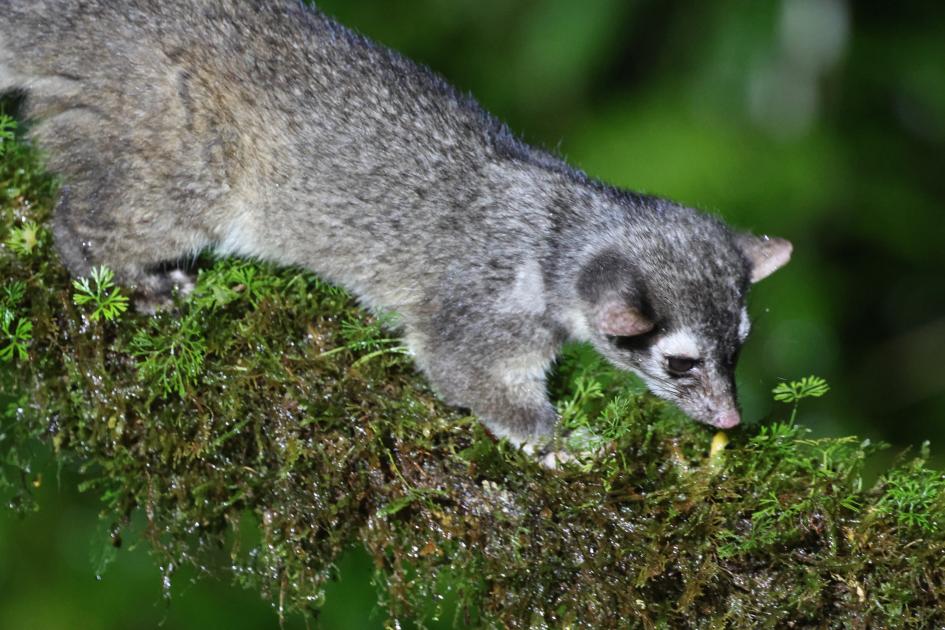
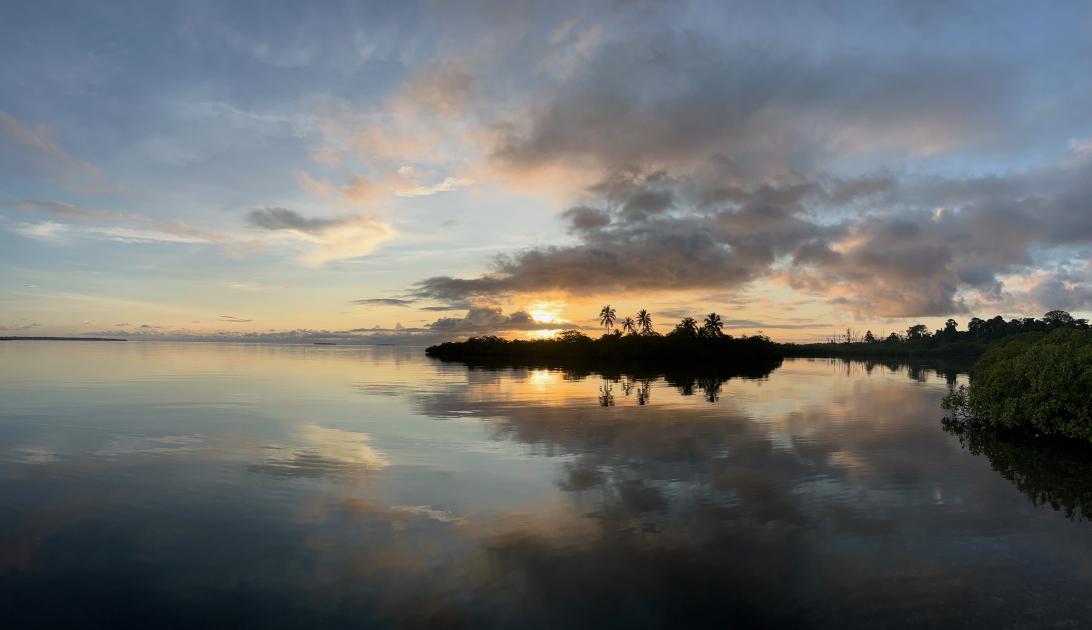
Maximum group size 10 with one leader and a local guide.
More Tours with these Leaders
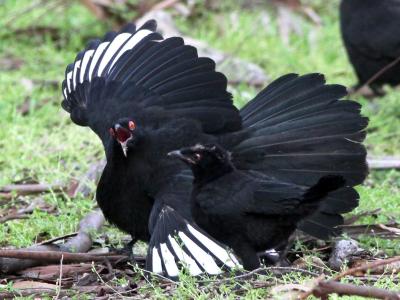
Australia: Victoria and Tasmania
Plains-wanderer, Pardalotes, and Penguins
Plains-wanderer, Pardalotes, and Penguins
Sep 16 to Oct 3 2026