China: Yunnan Province
-
Mar 6-21, 2027
Paul Holt and Wang Qingyu
Tour Price to be Determined


Tour Price to be Determined
Lying in the south-western corner of China, Yunnan Province has received little attention from birders and yet it holds some of the most exciting habitats and alluring species in the whole of Asia. Its close proximity to Myanmar (formerly Burma), good roads, often excellent hotels, and superb food combine to underpin a surprisingly comfortable tour with some really special birds.
We’ll visit several areas in western Yunnan including some close to the Myanmar border. The entire area, much of it on the Ancient Southern Silk Road, is an historical treasure trove which will surround us as we move through the region. We’ll begin in the border town of Ruili, where good quality forest supports species including Pin-tailed Green Pigeon, the sometimes split Cook’s Swift, Stripe-breasted Woodpecker, Red- and Coral-billed Scimitar-babblers, Scarlet-faced Liocichla and Pale-billed Parrotbill. We’ll then move to Yingjiang, a smaller town also close to the Myanmar border. Sought-after species here include Grey Peacock-pheasant, Great Slaty Woodpecker, Blue-naped Pitta and Collared Myna. We’ll continue to Tengchong, another historic and scenically stunning site, where we’ll focus on finding Brown-winged Parrotbill and Slender-billed Oriole.
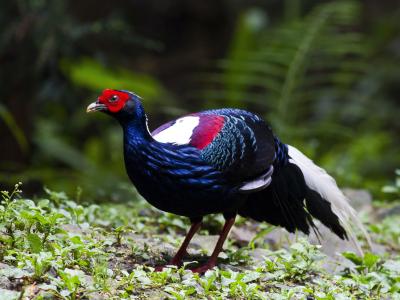
Gaoligongshan, our next port of call, was featured in the BBC’s Wild China TV series, and it’s easy to see why. Early 20th century naturalist-adventurers such as Frank Kingdon Ward explored much of this area and among the rich plant flora - the Nature Reserve boasts over 1,400 species of higher plants - we’ll search for Spot-breasted Parrotbill, Cachar Wedge-billed Babbler, Gould’s Shortwing and Black-breasted Thrush. Our final stop will be historic Lijiang, a UNESCO World Heritage site famed for its distinctive architecture. The skyline of this quaint town is dominated by Jade Dragon Snow Mountain, a year-round snow-capped peak that reaches almost 18,500 feet. Woodlands near there support another specialty, Yunnan Nuthatch. Nearby we’ll also hunt for Lady Amherst’s Pheasant, the severely threatened White-speckled Laughingthrush, Rufous-tailed Babbler and Black-bibbed Tit before heading back to Beijing.


Day 1: The tour begins this evening near Beijing's Daxing International Airport.
Day 2: We’ll fly south to Mangshi in western Yunnan. It’s unlikely that we’ll arrive in time for birdwatching. Night in Mangshi.
Days 3-4: We’ll begin by driving south from Mangshi to Ruili, a large, prosperous settlement and home of the Dai ethnic group. The import of gems, jade ware and jadeite from neighboring Myanmar, which borders Ruili on three sides, have helped create China’s largest jewel market. Many of the nearby low lying ridges are still covered in good quality forest and we’ll concentrate on finding the area’s specialties including Cook's Swift, Jerdon’s Baza, Pin-tailed Green Pigeon, Brown Wood Owl, Stripe-breasted Woodpecker, Black-throated and Rufous-necked Laughingthrushes, Scarlet-faced Liocichla, and Pale-footed Bush Warbler, as well as both Pale-billed (previously Lesser Rufous-headed) and Rufous-headed Parrotbills. With a bit of luck we might also come across a Spotted Elachura or a Spot-throated Babbler. There's a photographic blind in the forest here and we hope to be able to visit it. Nights in Ruili.
Day 5: After another morning near Ruili, we’ll drive to Yingjiang, a smaller settlement than Ruili but also nestled close to the Myanmar border. We should arrive in time to do a little around town birding, perhaps seeing River Tern, Little Pratincole and Collared Myna. Night in Yingjiang.
Days 6-7: We’ll spend two full days around this tiny border settlement giving us ample time to search for the area’s lower elevation specialties such as Grey Peacock-pheasant and Spot-bellied Eagle Owl, both genuinely rare and decidedly elusive. Others, hopefully including Blossom-headed Parakeet, Collared Falconet, Blue-bearded Bee-eater, Red-billed and Brown-crowned Scimitar Babblers, Rufous-capped and Yunnan Fulvettas, are more accessible. The forests here abound with birds and in our quest to see a representative sample, we’ll explore several forest trails and a small reserve not far from our hotel. This is the best area in the whole of China for species such as Hodgson's Frogmouth, Oriental Pied, Great and Wreathed Hornbills, and White-hooded Babbler as well as White-tailed, Sapphire and Hill Blue Flycatchers. Golden-crested Myna is also here but now requires a great deal of luck to find. There are many photographic blinds in the forest here and we plan to visit several of them. At times Myanmar will only be a stone’s throw away, and the river we’ll bird along is actually the border, so we’re sure to add species to our embryonic Myanmar list as we go.
Day 8: After a final morning near Yingjiang we’ll drive to Tengchong, an area famed for a mild climate, ancient volcanoes, and geothermal springs. It also played an important role during the Second World War when Allied pilots flew sorties over ‘the hump’, resupplying Chinese forces fighting the Japanese. We’ll spend the night in a comfortable hotel in Tengchong.
Day 9: We might be awakened by the attractive songs of Black-breasted Thrush, the first of a handful of Tengchong specialties, or a Grey Nightjar. A pleasant bird-thronged park holds our other targets, Mountain Bamboo Partridge, the localised Brown-winged Parrotbill and Slender-billed Oriole among others, and we’ll spend several hours here before heading on to Baihualing.
Our driving route takes us through spectacular deep valleys and across impressive dividing ranges. While the roads are now excellent and our progress likely rapid, this wasn’t always the case. Indeed, it’s the region’s former remoteness that has kept it as an intact and vast refuge with extraordinarily rich biodiversity. The Gaoligong range, sandwiched between the mighty Salween (Nujiang) river and neighboring Myanmar, encompasses habitats ranging from subtropical evergreen forests to snow-capped peaks and glaciers at over 20,000 feet. We’ll likely be captivated by the richness of the fabulous Gaoligong forests – forests that several early plant hunters, such as George Forrest and Frank Kingdon Ward (both immortalized by plants and birds that carry their names) explored for rhododendrons and other garden-worthy plants. We’ll spend three nights in a new and comfortable guest house on the edge of the reserve.
Days 10-11: We’ll spend two full days in the heart of Gaoligong Shan’s incredibly varied forests, time enough to find some of its avian wonders. In stands of bamboo, we’ll search for Broad-billed Warbler and Slender-billed Scimitar Babbler while deep forest gullies will hold more secretive species such as the often reticent Cachar Wedge-billed Babbler, Spotted and Grey-bellied Wren Babblers, Blue-winged and the gorgeous Red-tailed Laughingthrush. We’ll explore several forest trails, including one that was previously part of the Southern Silk Road. Other special species should include Black-headed and Blyth’s Shrike Babblers, Beautiful Sibia, Spot-breasted Parrotbill and with luck, even Gould’s Shortwing. Three tesias, Slaty-bellied, Grey-bellied and Chestnut-headed, also inhabit the mossy, lush forest. Hill and Rufous-throated Partridges are much more likely to be heard than seen while other secretive forest denizens include both Silver and Mrs. Hume’s Pheasants. There are now a series of bird blinds, constructed by enterprising locals for bird photographers. We hope to be able to visit at least a couple of these during our stay as they can afford spectacular views of a number of rarely seen east Himalayan specialties and, of course, marvelous photographic opportunities. Nights in a Reserve Guesthouse.
Day 12: After a final morning we’ll leave Baihualing and the mighty Gaoligong Mountain range for a short drive north to Baoshan. Night in Baoshan.
Day 13: Leaving Baoshan early we’ll have a half-day drive north to Lijiang where we expect to arrive in time for local birding. Originally inhabited eight centuries ago by the ethnically distinctive Naxi cultural group, Lijiang is an extremely attractive modest-sized town that was once a center for trade along the old pack horse road. Lijiang old town is famous for its orderly Naxi architecture with its distinctive system of waterways and bridges. Recently designated a UNESCO World Heritage site, Lijiang is also a booming tourist resort with equal numbers of visitors drawn to the town’s rich cultural heritage and to the nearby Jade Dragon Snow Mountain, a year-round snow-capped peak that boasts the northern hemisphere’s southernmost glacier. At almost 18,500 feet, this impressive mountain dominates the town’s skyline, and remains proudly unclimbed! Time permitting we’ll spend the late afternoon searching for Yunnan Nuthatch, previously the province’s only endemic bird, or exploring Lashihai, a bird-thronged lake a short distance to the west of town where we hope to see Falcated and Ferruginous Ducks, small flocks of Common Crane and Black-headed Greenfinch. Night in a very comfortable hotel not far from Lijiang’s historic old town.
Day 14: We’ll leave early for a site where the poorly known and globally threatened White-speckled Laughingthrush was recently discovered. It’s extremely rare and persecuted so our chances of finding one are slim but other target species in the forests will hold our interest including the fabulously inquisitive Rufous-tailed Babbler, Black-bibbed Tit, the vociferous but melancholy Black-headed Sibia, Black-streaked Scimitar-babbler, Chinese Babax, Elliot’s Laughingthrush, Rusty-capped and Spectacled Fulvettas, and White-collared Yuhina. Night in Lijiang.
Day 15: After a final morning in Lijiang we’ll fly back to Beijing. Night near Beijing Daxing International Airport.
Day 16: The tour concludes this morning with transfer back to the airport by hotel shuttle.
Note: The information presented below has been extracted from our formal General Information for this tour. It covers topics we feel potential registrants may wish to consider before booking space. The complete General Information for this tour will be sent to all tour registrants and of course supplemental information, if needed, is available from the WINGS office.
ENTERING CHINA: United States citizens will need a passport valid for at least six months from date of departure and with at least two blank pages for entry and exit stamps. A tourist visa is also required. Visa information is available from the Chinese Embassy, Washington DC at https://us.china-embassy.gov.cn/eng/ . If required by the embassy or visa-granting entity, WINGS can provide a letter for you to use regarding your participation in the tour.
COUNTRY INFORMATION: You can review the U.S. Department of State Country Specific Travel Information here: https://travel.state.gov/content/travel.html and the CIA World Factbook here: https://www.cia.gov/the-world-factbook/. Review foreign travel advice from the UK government here: https://www.gov.uk/foreign-travel-advice and travel advice and advisories from the Government of Canada here: https://travel.gc.ca/travelling/advisories.
PACE OF TOUR AND DAILY ROUTINE: This is not an easy tour. There is a fair amount of travelling and several of the days are long and tiring. There is as well a considerable amount of walking involved although none of it is particularly strenuous. Although we are in mountainous area for much of the tour there will only be a few uphill walks and these will be taken at a gentle pace. See “HEALTH”, below, for the altitudes we reach on the tour. If you have any questions about your ability to take part in any of the walks, please contact the WINGS office. The tour manager will be happy to discuss this with you.
Sunrise in western Yunnan at this time of year is at about at 7:15 am and sunset at around 6:30 pm. On a clear and cloudless day, it is usually sufficiently light to bird watch for 20 minutes either side of these times. Tour coaches are not allowed to drive before 06h00 anywhere in China. Due to the early morning bird activity, we will want to be out in the field early each day. This will occasionally mean being out at 6:00 am. Throughout most of China, hotel breakfasts are rather poor so on a good number of days we will have picnic breakfasts provided for us by our ground agent. These will usually consist of cereal (often muesli or cornflakes), yoghurt, fruit juice, instant noodles, biscuits, muffins, bread with jam or possibly honey, peanuts, sausages and boiled eggs plus tea and coffee and supplemented, where possible, by fruit, chocolate and steamed local bread.
Depending on the weather we’ll probably either have picnic breakfasts in the leader’s room or out in the field before we start our birding. We expect to have picnic lunches almost every day (on wet or very windy days we may return to the hotel for lunch) and will compile a checklist of the birds we’ve seen just before or just after dinner (usually about 7:00 pm in our hotel) and then retire early to bed (especially when we are making an early start next day).
We will occasionally have more than one vehicle with us and the emphasis will be on flexibility. We will try to make as many of our birding excursions as possible optional, so that so that anyone who is tired, or would like a break can take some time off. Essentially, we aim to provide dawn to dusk birding for those who want it and as many opportunities as possible to opt out for those who wish to pursue other interests or simply relax. Note that we are frequently moving on, and it is not always possible to take an entire day off.
HEALTH: The Centers for Disease Control and Prevention (CDC) recommends that all travelers be up to date on routine vaccinations. These include measles-mumps-rubella (MMR) vaccine, diphtheria-tetanus-pertussis vaccine, varicella (chickenpox) vaccine, polio vaccine, and your yearly flu shot.
They further recommend that most travellers have protection against Hepatitis A and Typhoid.
Please contact your doctor well in advance of your tour’s departure as some medications must be initiated weeks before the period of possible exposure.
The most current information about travelers’ health recommendations can be found on the CDC’s Travel Health website here: https://wwwnc.cdc.gov/travel/destinations/list
Malaria: Malaria exists in Yunnan Province, especially along the Myanmar border. The CDC suggests a malaria prophylaxis. Please consult your physician.
Altitude: We’ll reach a maximum altitude of just over 9000 feet on one day and much of our birding will be between 5000 and 6000 feet. We have one hotel night at about 8000 feet.
Miscellaneous: Very few biting insects are active in South China in winter, but there still may be isolated concentrations of day-flying mosquitoes at one or two sites. We recommend that you bring an insect repellent and, if you are sensitive to bites, an antihistamine. On some of the forest trails during the early part of the tour we may encounter a very few small terrestrial leeches. These are well known to travellers in Asia and are not harmful. They are found on the forest floor and the best way to prevent them from getting onto your ankles is to spray your boots with insect repellent.
Tap water is not safe to drink anywhere on the tour. Bottled water and soft drinks are widely available. We will provide bottled water in the vehicle during the day.
Smoking: Smoking is not allowed in the vehicle, at meal times or when the group is gathered together for the checklist. If you are sharing a room with a non-smoker, please don’t smoke in the room. If you smoke in the field, please stand down wind of the group. If any lodge, accommodation or location where the group is staying or is gathered has a more restrictive smoking policy than WINGS’ policy, the more restrictive policy will prevail. Note: None of the hotels that we’ll use have designated non-smoking rooms so the rooms we use might have been previously occupied by a smoker. While the bed linen will certainly be clean, cigarette odors in the bed rooms are fairly common. Note too that many Chinese men, and an increasing number of women, smoke heavily. We will not permit our drivers or locals guides to smoke in our vehicle or in close proximity to the group but we have no control over anyone else and inquisitive strangers may come up to us and smoke nearby. Moreover while we will eat most, if not all of our sit down meals in private dining rooms very occasionally we might have to eat in the common dining hall where there might be smokers. This does not happen on every tour, or even on every other tour, but it can happen.
CLIMATE: The average daytime temperatures on this tour can range from as low as 2 or 3°C (36 or 37F) to possibly as hot as 31°C (88F). Days with highs in the 70-80 F range are the norm. Humidity is usually low and conditions for birding are often ideal.
Precipitation is infrequent but possible, particularly in the Gaoligong Mountains, and as mentioned above, may fall as snow at Lijiang.
ACCOMMODATION: We stay in a variety of hotels from excellent 5-star equivalent hotels with all the amenities that you would expect from hotels of this standard such as a bar, a business centre, internet access in the rooms, a gym and an indoor swimming pool, to standard Chinese hotels where all the rooms have en suite bathrooms with western toilets, showers and 24 hours hot water. We have two three night stays at relatively simple guesthouses - all the rooms are clean and the facilities work. Please note that single rooms cannot be guaranteed everywhere – we will try our best but there simply aren’t very many rooms available in some locations.
FOOD: Chinese cuisine is well known and widely appreciated. Beer, soft drinks and green tea will be served with the meal. Western brands of alcohol are not always easily obtainable (and where they are available, they are usually expensive), so you may wish to consider bringing your own supply. The Chinese often also drink a hard liquor, bai-jiu, with the food.
The Chinese way of eating differs from that in the west in that those sitting at the table share selections of different dishes. Food is almost always plentiful. Only a small number of the restaurants that we’ll visit provide knives and forks. Instead chopsticks, often disposable wooden ones, are used.
In contrast to evening meals, typical Chinese breakfasts are disappointingly poor and unappealing to most westerners. They consist mostly of cold dishes – soya milk, steamed dumplings and rice porridge. Consequently, away from the international style hotels in Lijiang, Tengchong and Beijing where a variety of more western style dishes are available, we will, as noted above, have very few hotel breakfasts.
Drinks: Bottled water and/or a soft drink or a beer is provided at sit down lunches and dinners, as is coffee or tea.
Food Allergies/Requirements: We cannot guarantee that all food allergies can be accommodated at every destination. Participants with significant food allergies or special dietary requirements should bring appropriate foods with them for those times when their needs cannot be met. Announced meal times are always approximate depending on how the day unfolds. Participants who need to eat according to a fixed schedule should bring supplemental food. Please contact the WINGS office if you have any questions.
TRANSPORTATION: At the start of the tour we will fly from Beijing to Baoshan via Kunming while at the end of the tour we will fly from Lijiang back to Beijing. Most of our other journeys will be by a small minibus or coach.
Tour participants should be willing and able to ride in any seat in our tour vehicles.
2026 Narrative
A quick perusal of the end of tour ‘Bird of the Trip’ list gives a good indication of just how successful this year’s Yunnan tour was. The network of photographic blinds that have been so popular in Hornbill Valley near Yingjiang and in the Gaoligong Mountains on our previous tours continue to be expanded and there were now multiple offerings at both these sites. And boy did we see birds from these blinds and it’s a testimony to their success that seven of the top 10 birds in the end of trip ‘Bird of the Tour’ poll were seen exclusively from one or more of these blinds. While our blind-based encounters with Red-tailed Laughingthrush, Mrs Hume’s Pheasant and Rufous-throated Partridge came as no surprise March 2026 WAS the first time that we’ve ever seen a Cachar Wedge-billed Babbler from one and Paul, who has now been to Yunnan 21 times, had never come remotely close to seeing many of the species we encountered anywhere near as well as we did on this tour.
And then there were the bird blind back-up species – the White-crested, Black-throated, Scaly and Blue-winged Laughingthrushes; the Grey Peacock-pheasants (including a female with two diminutive chicks), the well-appreciated Silver-eared Mesias and Red-billed Leiothrix, the minlas, Scarlet-faced Liocichlas, White-cheeked Partridges and the Himalayan Shortwings. All performed superbly…
Our introduction to birding in Yunnan saw us spending our first day-and-a-half exploring a forested ridge above sprawling Ruili, a town right on the border with Myanmar. With almost 120 species logged on our very first day this was close to being the most bird-rich area of the entire tour. Highlights included up to five Cook’s Swifts (a recent split from Pacific Swift), a pair of Green-billed Malkohas, a host of raptors that included displaying Jerdon’s Baza and Crested Goshawk as well as our first Crested Honey Buzzards and only Steppe Eagle of the tour. What a start to our Yunnan birding bonanza!
We spent our second morning near Ruili in a ‘new’ photographic bird blind on that same ridge – and soon encountered its star attraction – a pair of Rufous-chinned Laughingthrushes. Other goodies here included our first Common Emerald Dove, two gaudy Common Green Magpies, a fabulously vocal party of Red-billed Scimitar Babblers, as well as our first encounters with parties of diminutive Golden and Grey-throated Babblers, a heard-only Spotted Elachura and a spectacular performance from a White-gorgeted Flycatcher.
In the late afternoon of our second day we visited an ornamental lake back in urban Ruili where a large heron and egret colony held impressive numbers of two species of cormorant, a Little Heron and even two Asian Openbills. Elsewhere in the same park we also managed to find our first range restricted Collared Mynas.
The morning of day three saw us visit Moli Tropical Forest Park where we were treated to great looks at a Banded Bay Cuckoo even before we’d entered the sanctuary. Once inside the 1.5 kilometre stretch of flat road between the entrance gate and the car park took us almost three hours to walk – but then, with distractions such as five Pin-tailed Green Pigeons, two Blue-bearded Bee-eaters, three Black-winged Cuckooshrikes, a party of three Rufous-headed Parrotbill and three White-hooded Babblers that were soon followed by a pair of Pale-billed Parrotbills it’s easy to understand why. Further into the park four Slaty-backed Forktails, a Grey-bellied Tesia, several more Streaked Wren Babblers and a very obliging Yellow-vented Warbler kept us entertained. After one of Qingyu’s splendid picnic lunches we headed on to a couple of neighbouring sites where some Ashy Woodswallows, two Wire-tailed Swallows and our first Striated Grassbird kept us enthralled while a fly-over Rosy Minivet teased. With great relief we finally we found a cooperative Speckled Piculet!
The following day was our most species rich of the entire tour – and its morning highlights included both Grey-bellied Tesia and an elusive Grey-bellied Wren Babbler, our first Brown-crowned Scimitar Babblers and a superb Small Niltava. In the afternoon we drove on, descending through Yingjiang and Hornbill Valley before climbing steeply up to the tiny settlement of Shiti where we’d be based for the following three nights. We made multiple stops on the drive, one to register at the local police station and another to look at a fledgling Spot-bellied Eagle-Owl. We’d stop there again as we left Shiti when a parent owl was also present – and what a presence it had! Other stops on our way to Shiti yielded a Mountain Hawk Eagle, a tree-top cruising Black Eagle, three Wreathed Hornbills, two Oriental Dollarbirds, our first Chestnut-headed Bee-eaters, two Collared Falconets, a pair of Crested Treeswifts and a pandoo Blue Rock Thrush right outside our accommodation!
The network of photographic blinds that have proved so popular in the Gaoligong Mountains on our previous tours have more recently been expanded and there are now almost as many in the lower elevation forests to the southwest of Yingjiang around Shiti. Sure enough the following morning had us visiting our second bird blind of the tour. Once ensconced, out strutted our first spectacular Grey Peacock-pheasant (we’d end up having seen a remarkable 10 birds and hearing at least 12 others by the time we left Shiti!) Additional highlights included another Rufous-throated Partridge, a remarkable 13 Barred Cuckoo-doves, four more Brown-crowned Scimitar Babblers, as well as our first Buff-breasted Babbler, Lesser Necklaced and White-crested Laughingthrushes of the tour. Rumbles from distant explosions way off in conflict ridden Myanmar soon turned to rumbles of thunder and shortly afterwards the heavens opened and a deluge ensued forcing us to retire early. This was the start of the rain that was to plague us for the following week – how blessed we were to be in an area with multiple bird blinds – shelters where we could stay dry and be entertained at close range. That afternoon’s blind held even more peacock-pheasants, as well as at least six Red Junglefowl, a Kalij x Silver Pheasant hybrid, our first Lesser Yellownape, a Collared Treepie and a heard-only Blue-naped Pitta. Remarkably we even managed to see a pair of Mountain Bamboo Partridges while having dinner!
Our second full day at Shiti was similarly wet but still yielded a pair of White-cheeked Partridges, a fine male Chestnut-bellied Rock Thrush and our first Asian Fairy Bluebirds and Mrs Gould’s Sunbirds. Another bird blind visit on our final morning produced another pair of White-cheeked Partridges, a thoroughbred, rather resplendent male Kalij Pheasant and our only White-tailed Flycatcher and Chestnut Buntings of the tour. All these plus some spectacular performances from bathing Rufous-headed Parrotbill, Brown-crowned Scimitar Babbler, White-hooded Babbler and Streaked Spiderhunters. As a parting gesture our local guide pointed out two Oriental Pied Hornbills as we were leaving. That same afternoon the Yingjiang river yielded the hoped for Small Pratincoles (240 of them) and a pair of River Terns.
Woken by the vocalisations of Black-breasted Thrush and Grey Nightjar outside our comfortable hotel in Tengchong the following morning, an intrepid few braved the rain and actually saw them both. Unfortunately however the deluge strengthened and our subsequent excursion into a neighbouring park was a wash-out and we were forced to find shelter in a nearby coffee shop before heading on to Baihualing. That same afternoon the exotically named ‘bird blind number 2’ yielded three species of barbet and just as many sibias and a stunning male Scarlet Finch but it didn’t really prepare us for what was to come in ‘blind number 8’ the following morning. Even before we’d entered ‘number 8’ we’d heard our primary target, the notoriously elusive Cachar Wedge-billed Babbler singing, with a pair of birds appearing, as if from nowhere just over a couple of hours later. A boy did they perform! In view for well over ten minutes they’d apparently lost all their inhibitions and even came twice more that same morning, frequently perching right out and right in front of the blind for all to admire. Brilliant and I knew then what the winner of the end of tour ‘Bird of the Trip’ would be! What a blind this was - there were birds constantly in view – be they yet another pair of Rufous-throated Partridges, a Bay Woodpecker or a Greater Yellownape or a pair of bizarre Slender-billed Scimitar Babblers. Other highlights from this spectacular blind included three Scaly, two Blue-winged, four Assam and no less than seven gorgeous Red-tailed Laughingthrushes; a Black-streaked Scimitar Babbler feeding two almost fully-grown young, another White-gorgeted Flycatcher and a Himalayan Shortwing. We hardly moved all morning but were exhausted by all the comings and goings and the endless bird activity. As if to stop us getting complacent however the rain strengthened in the afternoon and we were forced to visit yet another bird hide – to shelter more than anything. Hide 37 had rather few redeeming qualities but the same certainly couldn’t be said of the following morning’s blind. Its owner had told us that its star attraction, several Mrs Hume’s Pheasants, would appear at 9 am and sure enough they did just that with three females and eventually a showy male wandering right in bang on cue! Other highlights of this, our penultimate blind, included a host of thrushes with two White’s or Scaly, a Chinese, five Grey-winged Blackbirds and at least 15 Black-breasted Thrushes, one Eyebrowed, two Chestnut and even a Japanese Thrush! Another blind that afternoon yielded our first Fire-tailed Sunbird and only Maroon-backed Accentor of the tour…
All too soon it was time to leave Baihualing and its stunning scenery (once the cloud lifted and we could actually see it), its comfortable accommodation, abundance of delicious food and fabulous birding. We headed on to Baoshan, stumbling across a demure Brown-breasted Flycatcher at an impromptu expressway service station stop on route. The waterfowl fest that ensued once we’d reached the county seat included 11 Garganey, three resplendent Falcated Duck, both Indian and Eastern Spot-billed Ducks and a whopping 86 Ferruginous Duck while the surrounding park harboured our only Eurasian Wryneck of the tour as well as our first Clamorous Reed Warbler, Hodgson’s Redstart and White-browed Laughingthrush.
Our lengthy drive north up to our final destination, Lijiang, a town whose skyline is dominated by the 5600 metre peak of Jade Dragon Snow Mountain, has been eased considerably by the construction of another new expressway and we could now afford the time to be distracted on route by the likes of Brown-headed Gulls and three typically elusive Pallas’s Grasshopper Warbler. We’d hardly arrived at Lijiang when we found the first of the historic town’s star avian attractions - a Yunnan Nuthatch. Several sordidior Spectacled Fulvettas and Black-browed Bushtits provided some attractive back-up. Our second day’s Chinese Babax didn’t perform as well as we would have liked – but a fabulously cooperative Rufous-tailed Babbler, several inquisitive Black-bibbed and multiple more Black-browed Tits offered considerable compensation as did the seven Lady Amherst’s Pheasants, two Green Shrike-babblers, eight Southern Nutcrackers, the Buff-throated Warblers, White-browed Fulvettas, White-collared Yuhinas and Sharpe’s Rosefinches, Black-headed Greenfinches and Tibetan Serins. Somehow, we even found time for a visit to a nearby lake, Lashihai, with its Common Cranes, geese and huge numbers of coots as well as its tiny villages belonging to the ethnically distinctive Naxi cultural group. Lijiang was, as ever, a fascinating place but one that we spent too little time in before another flawless flight took us back up to Beijing.
I wrote in a recent China tour report ‘How many of us knew, in advance of our trip, quite what to expect in modern day China and how many of us went home with altered opinions as to where the Middle Kingdom’s heading? Now more than ever China’s a land of incredible contrasts and accelerating social change, a land of considerable personal wealth juxtaposed with near grinding poverty, a land of thriving elitism, rampant ambition and a populace with an enviable work ethic. Right now’s the time to visit China and we were privileged indeed to see some of the more impressive parts of it’. In these days of a major global economic downturn all this still holds true…
- Paul Holt
The birds were wonderful and the scenery terrific. The group size made the birding fun. Paul was a very capable guide and great birder. Wang Qingyu was amazing.
- Bryan S. on China: Yunnan Province
Maximum group size nine participants with two leaders. Both leaders will accompany the group irrespective of group size.
More Tours with these Leaders
Apr 18-30, 2026 • Paul Holt and a local leader