Armenia
Late Spring in Caucasia
-
Jun 1-11, 2027
Oli Reville
2027
Single Room Supplement $240


2027
Single Room Supplement $240
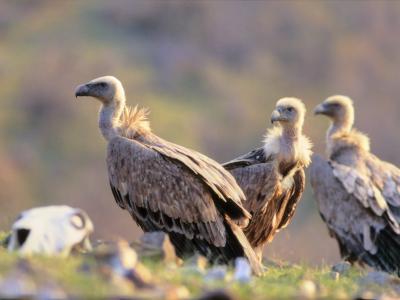
Armenia is the smallest of the three nations that make up the South Caucasus region. With a varied bird list featuring species found on the very westerly edge of their range, Armenia offers an unusual birding experience with flavors of both western and central Asia. Our targets are varied and magnificent in equal measure, and include Caspian Snowcock, Dalmatian Pelican, White-tailed Lapwing, Blue-cheeked Bee-eater, Syrian Woodpecker, Bimaculated Lark, Radde’s Accentor, Rufous-tailed Scrub Robin, White-throated Robin, Rufous-tailed Rock-Thrush, Eastern Black-eared and Persian Wheatears, Eastern Orphean, Upcher’s and Green Warblers, Mountain Chiffchaff, Eastern Rock Nuthatch, Rosy Starling, Pale Rockfinch, White-winged Snowfinch, Fire-fronted Serin, Crimson-winged Finch, Grey-necked Bunting, Bearded and Cinereous Vultures, Long-legged Buzzard, Levant Sparrowhawk, and Montagu’s Harrier. We can expect at least 200 species.
We’ll pay attention as well to Armenian nature in all its forms; we could encounter Bezoar Ibex, Caucasian (Syrian) Brown Bear, and Golden Jackal, with an outside chance of Eurasian Grey Wolf and even Caucasian (Persian) Leopard. Reptile highlights could include the fabulous Levantine Viper and we will not ignore the amphibians, butterflies, dragonflies and wildflowers.
This tour would be a excellent fit for a traveler looking for a variety of iconic birds, breathtaking landscapes, and the chance to find and photograph some of the Western Palaearctic’s most range-restricted wildlife.

Day 1: The tour begins this evening in Yerevan. Night in Yerevan.
Days 2-4: We’ll begin with a visit to the world famous Armash Fishponds. It provides an excellent introduction to the more common species found in the country as well as a number of specialties including White-headed Duck and Marbled Duck present, and it’s an excellent area for all the European herons, both Great and Little Bittern, various grebes, Pygmy Cormorant, White-winged Tern, and White Stork among others. Large groups of Rosy Starlings should be present and shorebirds such as White-tailed and Spur-winged Lapwings now breed at the site. Other species of note could include Blue-cheeked Bee-eater, Bearded Reedling, Turkestan Short-toed Lark, and Moustached, Paddyfield, and Menetries’s Warblers.
In the afternoon of day two we’ll explore the Uranots Gorge whose dry, rocky canyons hold a special collection of birds including Upcher’s and Eastern Orphean Warblers, Eastern Rock Nuthatch, Rufous-tailed Scrub and White-throated Robins, Blue Rock Thrush, four species of wheatear, Crimson-winged Finch, Fire-fronted Serin, and Black-headed and Grey-necked Buntings. We also may get the chance to observe the rare Trumpeter Finch with an outside chance of a late migrating Pale Rockfinch. Night in Chiva.
On day 3 we’ll visit the Vedi Gorge area which will give us a second chance for many of the species from yesterday plus potential new additions such as Egyptian Vulture, Long-legged Buzzard and the rare Saker Falcon.
We’ll make an early start on day 4 for our four-wheel drive ascent of Mount Gndasar where we’ll hope for high altitude specialists like Caspian Snowcock, Alpine and Red-billed Choughs, Ring Ouzel, Bearded Vulture, and Golden Eagle.
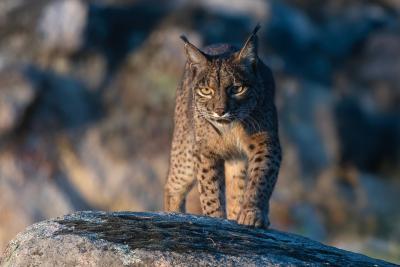
In the afternoon we’ll visit the 13th century Novarank Monastery. This stunning area is home to Bezoar Ibex, Caucasian Brown Bear, and Eurasian Lynx. Overhead Golden Eagles soar over the ancient landscape while other birds found here include Chukar, Syrian Woodpecker, three species of shrike, both Western and Eastern Rock Nuthatches, Rufous-tailed Rock Thrush and possibly Red-tailed Wheatear and Red-fronted Serin. Nights in Chiva.
Day 5: We’ll head east across the Sisian Plateau, an ancient volcanic region full of archaeological sites and home to both Rock Nuthatches plus several Wheatear species. Isolated alpine villages and flowering meadows support species like Eurasian Hoopoe, Fire-fronted Serin, Whinchat, Black Redstart, and Crimson-winged Finch.
One key site on our travels today will be Zedea Gorge. The rolling hills and valleys here are home to both Eastern and Western Rock Nuthatch, Eastern Black-eared and Finsch’s Wheatears, Upcher’s Warbler, Black-headed Bunting, White-throated Robin, Short-toed Snake-Eagle, Syrian Woodpecker, and Eastern Orphean Warbler, among others. Night in Goris.
Day 6: We’ll drive west with our first stop at a 9th century Tatev Monastery. The dramatic scenery here is shrouded in a Shiblyak and Oak-hornbeam Forest with dense green meadows dotted in between. We’ll then visit the Halidzor Observation Deck where our focus will be soaring raptors. Various vultures and eagles including Lesser Spotted Eagle, can be found here while overhead we’ll certainly detect the giant and highly vocal Alpine Swift. We’ll conclude the day with a visit to a colony of Lesser Kestrel. Night in Yeghegnadzor.
Day 7: Before breakfast we’ll visit a small private terrace, which overlooks a ravine and our best chance of spotting Caucasian Brown Bear and Bezoar Ibex. Later, on our way to Lake Sevan, we’ll pause at Selim Pass, an important trading route during the peak of the great Silk Road. Upland species along the route could include White-winged Snowfinch, Crimson-winged Finch, Twite, and Common Rock Thrush. We’ll also stop at a traditional shepherd’s village which should have good numbers of Black-headed Wagtail (subspecies feldegg) and our first chance of Bluethroat and Radde’s Accentor. Later in the day we’ll visit Lake Sevan, home to the world’s largest Armenian Gull colony where we may also find the striking Collared Pratincole, Cetti’s Warbler, and many other passerines. Night in Sevan.
Days 8-9: We begin day 8with an early morning visit to Lake Sevan to hopefully encounter species we missed yesterday. We’ll then head west to Dilijan National Park. This beautiful mixed forest is home to key targets species like Mountain Chiffchaff, Green Warbler, and Red-breasted Flycatcher but is also a great area to find many other enticing forest species including Common Quail, Common Cuckoo, Greater Spotted and Eurasian Green Woodpeckers Red-backed Shrike, Eurasian Jay, Common Redstart, Eurasian Nuthatch, Hawfinch, Eurasian Bullfinch, and even raptors like Eurasian Goshawk and Long-legged Buzzard.
We’ll devote day 9 to exploring Arpi Lake, one of many high alpine lakes in the volcanic plateau situated between Turkey and Georgia. We’ll look especially for Ruddy Shelduck, both Great White and Dalmatian Pelicans, Western Marsh and Montagu’s Harriers, Long-legged Buzzard, Corn Crake, Common Quail, and a variety of warblers, larks, pipits, and wagtails, including the brilliant Citrine Wagtail. Perhaps the most iconic bird here is the archibaldi subspecies of Common Crane, known as Transcaucasian Common Crane, a sub species whose world population totals less than 500 individuals. If time permits, we’ll also visit the ancient center of Gyumri which features fascinating architecture. Nights in Gyumri.
Day 10: We’ll return to the capital city, birding on the way. We’ll explore open farmland for Bimaculated Lark, and a visit to Mount Aragats should give us White-throated Robin, Siberian Stonechat (the variegatus subspecies commonly known as South Caspian Stonechat), and Woodlark. Raptors here could include Common Buzzard, Booted and Short-toed Snake Eagles, and Bearded Vulture. A little higher up we’ll find Radde’s Accentor, Bluethroat (of the Caucasian subspecies Magna), Common Rock Thrush, and Ring Ouzel before heading to the high alpine boulder fields where abundant Horned Lark, Water Pipit, Alpine Accentor, Black Redstart, and Twite can be found. All of these represent subspecies only found in the Caucasus region. With great good luck we might come across the striking Asian Crimson-winged Finch. Finally, and If time permits, we’ll visit the 10th century Amberd Fortress. Nights in Yerevan.
Day 11: Tour ends this morning in Yerevan.
Note: The information presented here is an abbreviated version of our formal General Information for this tour. Its purpose is solely to give readers a sense of what might be involved if they take this tour. Although we do our best to make sure what follows here is completely accurate, it should not be used as a replacement for the formal document which will be sent to all tour registrants, and whose contents supersedes any information contained here.
ENTERING ARMENIA: U.S. citizens will need a passport valid for the duration of your stay, and with at least one blank page for an entry stamp. A visa is not required for stays of fewer than 180 days. Citizens of other nations should contact the nearest Armenian Consulate for entry requirements.
It is always a good idea to take a photocopy of your passport and air ticket with you when travelling abroad. They can prove invaluable in helping you get replacements if your originals are lost or stolen. You should keep the photocopies in a separate bag to the originals.
COUNTRY INFORMATION: You can review the U.S. Department of State Country Specific Travel Information at https://travel.state.gov/content/travel/en/international-travel/International-Travel-Country-Information-Pages/Armenia.html
Review foreign travel advice from the UK government here: https://www.gov.uk/foreign-travel-advice and travel advice and advisories from the Government of Canada here: https://travel.gc.ca/travelling/advisories
PACE OF THE TOUR: This is a tour with a steady pace but with some challenges to those with limited mobility, with occasional walks over moderately rough or steep terrain. Despite covering almost all of Armenia, we do not anticipate any especially long drives, with the maximum being about 4 hours. However, there will be early starts on one or two days. On most days, we will have breakfast before heading out for the day with an optional pre-breakfast walk in some locations. Lunch is either a leisurely picnic or sometimes in a café en route to our next birding location. There are normally daily morning stops for tea, coffee or a cold drink. We usually return to the hotel at around 6:00-7:00 p.m.
Virtually all the walking is fairly easy and on good paths or tracks. There are a couple of longer walks of about 1.5 miles each. Most of the birdwatching is done within a short distance of our vehicle.
HEALTH: The Centers for Disease Control and Prevention (CDC) recommends that all travelers be up to date on routine vaccinations. These include measles-mumps-rubella (MMR) vaccine, diphtheria-tetanus-pertussis vaccine, varicella (chickenpox) vaccine, polio vaccine, and your yearly flu shot. They further recommend that most travelers have protection against Hepatitis A.
Please contact your doctor well in advance of your tour’s departure as some medications must be initiated weeks before the period of possible exposure.
The most current information about travelers’ health recommendations can be found on the CDC’s Travel Health website: https://wwwnc.cdc.gov/travel/destinations/list
Smoking: Smoking and vaping is prohibited in the vehicles or when the group is gathered for meals, checklists, etc. While in the field or traveling, use of a smokeless alternative such as nicotine gum is requested. Please do not smoke at short stops while traveling. If you smoke in the field, do so well away and downwind from the group and leave ample time between smoking and getting back into the vehicle. If you are sharing a room with a non-smoker, please do not smoke in the room. If any lodge, accommodation or location where the group is staying or is gathered has a more restrictive smoking policy than WINGS’ policy, the more restrictive policy will prevail. The leader reserves the right to modify this policy if the situation warrants it.
Miscellaneous: Tap water is safe to drink.
It may be impossible to obtain any special medications during the tour, so bring all you are likely to need with you.
CLIMATE: Temperatures on this tour will be fairly stable with day time highs reaching a maximum of 86°F (30°C). Early morning starts will see us experience temperatures of roughly 59°F (15°C). Sunshine should be plentiful and is strong in early summer so please remember sunblock for this tour. June is typically a dry month in Armenia and we shouldn’t see any significant rainfall. However please remember warm clothes and a waterproof jacket and trousers would be useful in case of inclement weather.
ACCOMMODATION: The tour stays at a number of hotels, all of which have private bathroom facilities. Some have balconies and many have good views of the Armenian countryside with birdwatching right on the doorstep.
FOOD: Breakfasts are quite varied but with the usual staple items e.g. coffee, tea, juice and toast or pastries found at most of the hotels. The further inland we travel the more local delicacies such as cheese and smoked meats appear on the breakfast menu. Lunch will often be a picnic, (provided by our guide/s), which will include a selection of fresh bread, fruit and vegetables, cheese, cold meats, olives, etc. Alternatively, we have tapas-style lunches at local bars. Evening meals are taken relatively late in Armenia (usually 8:00-9:00 p.m.) which allows us to make the most of the daylight hours for birding.
WINGS tours are all-inclusive and no refunds can be issued for any missed tour meals.
Food Allergies/Requirements: We cannot guarantee that all food allergies can be accommodated at every destination. Participants with significant food allergies or special dietary requirements should bring appropriate foods with them for those times when their needs cannot be met. Announced meal times are always approximate depending on how the day unfolds. Participants who need to eat according to a fixed schedule should bring supplemental food. Please contact the WINGS office if you have any questions.
Drinks: Bottled water, a soft drink or a beer (or wine if appropriate) is provided at meals, as is coffee or tea. All other drinks or ‘personal’ drinking water for use in your room etc. is the responsibility of the individual. We will keep bottled water on the minibus for use during the day. Bottled or filtered water may also be provided in some rooms where we stay.
TRANSPORTATION: Transportation will be by minibus driven by the leader. The leader will arrange a seating rotation. Participants should be willing and able to ride in any seat in tour vehicles.
We can't render google maps without your cookie consent. To see the map, please reset your cookies, then accept all, then reload this page.
Maximum group size 10 with one leader and a local guide.
More Tours with these Leaders
Jan 9-18, 2027 • Oli Reville and a local leader