Texas: The Rio Grande Valley in Spring
-
Apr 13-22, 2027
Ethan Kistler
Tour Price to be Determined


Tour Price to be Determined
South Texas has some of the most distinctive avifauna in the contiguous United States; no fewer than 30 species are restricted to the region. In addition, early April brings a wide array of northbound migrant passerines, raptors, and shorebirds resulting in a truly staggering bird diversity. The lower Rio Grande Valley is also well known for hosting the occasional vagrant bird and we’ll keep tabs on this during the tour so that we don’t miss anything exciting.
We’ll have a full week to explore a range of faunal regions, from the broad coastal plain with its shallow lagoons and grasslands to the scrubby mesquite/cactus forests of the drier uplands, and finally to the dense stands of sabal palm, huisache, Texas ebony, and Montezuma bald cypress that line the river itself.

Day 1: The tour begins at 6:00 pm in Corpus Christi. If weather conditions permit, we’ll visit a local park for an hour of birding before dinner. Night in Corpus Christi.
Day 2: We’ll spend most of the day at the iconic King Ranch, which is the largest ranch in the U.S. Covering 1,289 square miles; it is roughly the size of Rhode Island. Here, our main target will be Ferruginous Pygmy Owl, but we’ll also have excellent chances for other difficult species, including Tropical Parula and Northern Beardless-Tyrannulet. We’ll also get our first taste of South Texas birding with the likes of Great Kiskadees, Green Jays, Long-billed Thrashers, and perhaps Audubon’s Oriole. Raptors should be common with Crested Caracara, White-tailed Hawk, and Harris’s Hawk all likely to be seen. In the late afternoon, we’ll arrive in the Rio Grande Valley and, if time permits, we’ll bird one of the many local birding hotspots. At dusk, we’ll visit an Elf Owl stakeout. Night in McAllen.
Day 3: We’ll depart early for Bentsen-Rio Grande Valley State Park or Santa Ana National Wildlife Refuge, both of which hold the vast majority of the valley specialties. We’ll search for our first Plain Chachalaca, White-tipped Dove, Ringed and Green Kingfishers, Clay-colored Thrush, and Altamira Oriole. The hawk towers at both parks can be very productive for raptor migration, and we may spend some time observing large numbers of raptors passing overhead, most notably large kettles of Broad-winged Hawks. If we’re lucky, we may even see a Hook-billed Kite. After lunch, we’ll venture upstream to the desert chaparral of Falcon State Park. Here among the cactus and scrubby mesquite, we’ll look for a variety of desert birds not easily found in the lower valley, such as Pyrrhuloxia, along with Lark, Clay-colored, and Black-throated Sparrows. Night in Zapata.
Day 4: Today we’ll enjoy dawn chorus along a quiet road just outside Zapata, where we have an excellent chance at finding Scaled Quail, Black-tailed Gnatcatcher, and Cactus Wren among the usual suspects. We’ll then head to San Ygnacio Bird Sanctuary where an observation tower allows a good vantage point looking across the Rio Grande River into Mexico. Morelet’s Seedeater is frequently present, and we should be able to pick up Red-billed Pigeon flying along the river or even perched in a nearby tree. This area is generally quite birdy, and we’ll accumulate a decent list by the time we head for lunch. The latter half of the day will be birding other local sites where we may see Vermilion Flycatcher, Audubon’s Oriole, and migrant warblers, and also Falcon Dam to see what waterfowl and shorebirds we may find. If the Mottled Owl remains at Santa Margarita Ranch, we’ll try and visit this evening. Night in Zapata.
Day 5: This morning we’ll head to the iconic Santa Margarita Ranch, were we’ll begin the day on the bluffs overlooking the Rio Grande. This is an excellent vantage point to see Red-billed Pigeon and, with luck, Mexican Duck, Muscovy Duck, and Hook-billed Kite. Nearby, we’ll search for the breeding resident Brown Jays and Rose-throated Becards. We’ll then head back east towards McAllen, targeting any birds we need along the way. At dusk,k we’ll visit a couple of parrot roosts before retiring for the night. Night in McAllen.
Day 6: Today will begin at Estero Llano Grande State Park, where we may see close to a hundred species by the time we leave! The array of wetlands holds a good number of ducks, and we may be able to pick out a Fulvous Whistling-Duck among the masses of Black-bellied. Shorebirds and other waterbirds will be well represented, and we’ll also search for a resident Common Pauraque, which roosts around the same spot every day. We’ll then venture to the other half of the park, which consists of typical Rio Grande woodlands with orioles, migrant warblers, and valley specialties. We’ll head to the coast to explore the migration hot spot of South Padre Island. The southern part of the island is quite developed, but some small sanctuaries, several with permanent water, and several well-vegetated and little-traveled residential streets can attract literally thousands of brightly colored migrant warblers, tanagers, orioles, and grosbeaks. Such “fallouts” require the right weather conditions, but if we’re lucky enough to be there when one occurs, the spectacle is simply astonishing. We’ll also seek out shorebirds and terns, possibly including American Avocet, Marbled Godwit, Gull-billed, and Sandwich Terns, and will have plenty of time to sort through the pertinent field marks of each species present. Night in Harlingen.
Day 7: This morning we’ll visit the National Audubon Society’s Sabal Palm Sanctuary, the largest extant native palm forest in the lower Rio Grande Valley. In addition to the palms, the sanctuary’s numerous ponds, grasslands, and Rio Grande riparian forest support large numbers of area specialties, including Green Jay, Great Kiskadee, and White-tipped Dove, and one never knows what rarities might occur. If Tamaulipas Crows are present this year, we’ll visit another of the valley’s famous birding locations, the scenic, if fragrant, Brownsville dump. Several rare gulls have also been found here, but even if there are none, we should get fine views of migrant Franklin’s Gulls, at this season, especially lovely with their rosy breasts. In the afternoon, we’ll venture out to the long sand beaches of Boca Chica, where the Rio Grande empties into the Gulf of Mexico. On the way, we’ll pass through the Texas coastal plain where we hope to encounter White-tailed Hawk, Aplomado Falcon, and a host of gulls, shorebirds, and wading birds. Night in Harlingen.
Day 8: Today we’ll return to South Padre or, if migration is light, we’ll visit Laguna Atascosa National Wildlife Refuge, where bays, beaches, mudflats, and grasslands host flocks of Roseate Spoonbills and White-faced while the grassy scrub holds White-tailed Kite, Botteri’s Sparrow, and some of the largest Western Diamondback Rattlesnakes in Texas. Night in Harlingen.
Day 9: We’ll depart the valley early on our final morning and return north to Corpus Christi. Our first stop will be at Pollywog Ponds where we should be able to find some new migrants. We’ll then hop over to Mustang Island where we will bird a couple of migrant traps before arriving at the Port Aransas area. Here there are a couple of excellent birding stops, including Joan and Scott Holt Paradise Pond, which is a short boardwalk through a marsh where we may see bitterns up close and spot migrants in the trees surrounding it. Just down the road is the Leonabelle Turnbull Birding Center, which has a small section of trees that act as a migrant trap along with a nice boardwalk and observation tower overlooking a wetland chockablock full of shorebirds, ducks, rails, and more. We’ll return to Corpus Christi, and any remaining time will be spent at a couple of migrant traps in the city center. Night in Corpus Christi.
Day 10: The tour concludes this morning in Corpus Christi.
Note: The information presented here is an abbreviated version of our formal General Information for Tours to Texas: The Rio Grande Valley in Spring. Its purpose is solely to give readers a sense of what might be involved if they take this tour. Although we do our best to make sure that what follows here is completely accurate, it should not be used as a replacement for the formal document which will be sent to all tour registrants, and whose contents supersedes any information contained here.
ENTERING THE UNITED STATES: Non-U.S. citizens will need a valid passport and may need a tourist visa or visa waiver. Consult your nearest U.S. Embassy or consulate for details. Canadian citizens should carry proof of citizenship in the form of a passport or birth certificate.
COUNTRY INFORMATION: There is no U.S. Department of State Country-Specific Travel Information for the USA. You can review foreign travel advice from the UK government here: https://www.gov.uk/foreign-travel-advice and travel advice and advisories from the Government of Canada here: https://travel.gc.ca/travelling/advisories. You can access the CIA World Factbook background notes on the United States here: https://www.cia.gov/the-world-factbook/countries/united-states/
PACE OF THE TOUR: This is a relatively relaxed tour although days will be full, with departures usually around 7:30AM and return to the hotel usually by 5 PM. On a few days we will schedule a one to two hour siesta during the heat of the day. Although we spend much time on foot, our walks are at a leisurely pace and on flat terrain and we will have plenty of time to study the birds we see. There will likely be at least one (optional) night birding expedition and at least two dusk outings to look at parrot roosts and rails. Note that the published WINGS itinerary should be viewed as a general guide. The actual daily itinerary (locations and order) can change due to local birding conditions and the discovery of any special rarities.
HEALTH: South Texas presents no real hazards to the visiting birdwatcher.
Sun: In summer, which extends from April to October, the sun can be intense. A broad-brimmed hat, proper clothing and strong sunscreen lotion are important.
Insects and Arachnids: Texas has mosquitoes, ticks and chiggers. We recommend using insect repellents with a high concentration of DEET. However, care must be taken to avoid getting the DEET repellent on optical equipment as DEET dissolves rubber and plastic and can damage coated lenses. Camping supply stores and outfitters carry some reasonably effective alternatives that contain natural products and aren’t corrosive.
Smoking: Smoking is prohibited in the vehicles or when the group is gathered for meals, checklists, etc. If you are sharing a room with a nonsmoker, please do not smoke in the room. If you smoke in the field, do so well away and downwind from the group. If any location where the group is gathered has a stricter policy than the WINGS policy, that stricter policy will prevail.
CLIMATE: April temperatures can vary from the 50s F (occasionally even the upper 40s) to the upper 80s or even 90s during the day. Temperatures will be a bit lower near the coast. Wind and rain are possible anywhere.
ACCOMMODATIONS: We stay at standard motels throughout. All of our hotels offer free WIFI.
FOOD: We’ll eat in a variety of local restaurants where the food will in most cases be American standard. We will however make sure to include good selections of Tex-Mex, BBQ and seafood, all of which are excellent in the valley. Breakfasts are generally taken in our hotels (continental plus), and lunches will be in local or chain sandwich stores or cafes.
WINGS tours are all-inclusive; no refunds can be issued for any missed tour meals. While our restaurants and ground agents make every effort to insure the comfort of all participants, we cannot guarantee that all food allergies can be accommodated at every destination. Many restaurants offer set menus and are unable to accommodate all special requests within a group. Thus, participants with significant food allergies or special dietary needs should bring appropriate foods with them for those times when their needs cannot be accommodated. Our tours are carefully scheduled to insure the best possible birding experience. Meal times can generally not be adjusted; any participant who needs to eat earlier or later than the times scheduled for the group should bring supplemental food. Please contact the WINGS office if you have any questions.
Food Allergies / Requirements: We cannot guarantee that all food allergies can be accommodated at every destination. Participants with significant food allergies or special dietary requirements should bring appropriate foods with them for those times when their needs cannot be met. Announced meal times are always approximate depending on how the day unfolds. Participants who need to eat according to a fixed schedule should bring supplemental food. Please contact the WINGS office if you have any questions.
TRANSPORTATION: We will be traveling by 12 or 15 passenger window van or minivan, depending on the group size. Participants should be able to ride in any seat in tour vehicles.
2025 Narrative
We began the tour in Corpus Christi, where we quickly tracked down the long-staying vagrant Cattle Tyrant, a rare visitor that has been frequenting the downtown area for over a year. The following morning, we toured the renowned King Ranch, which provided excellent views of several key targets, including the Ferruginous Pygmy-Owl, Tropical Parula, and Northern Beardless-Tyrannulet. Heading farther south, we spent several days birding along the Rio Grande, enjoying an impressive variety of South Texas specialties. Highlights included Green and Brown Jays, Plain Chachalacas, Olive Sparrows, both Ringed and Green Kingfishers, Red-billed Pigeon, Morelet’s Seedeater, and Hook-billed Kite. A visit to the stunning Santa Margarita Ranch rewarded us with great looks at the long-staying Mottled Owl along with a breeding pair of Rose-throated Becards. Migration was a little slow this year, but between several visits to South Padre Island and the migrant traps around Port Aransas, we compiled an outstanding list of migrant warblers, vireos, thrushes, sparrows, and more.
The group gathered in the hotel lobby at 6 p.m., and we soon set off for dinner. On the way, we made a necessary detour to a rather unremarkable—but now famous—dumpster in downtown Corpus Christi, where a vagrant Cattle Tyrant has been reliably lingering for over a year. It was an excellent first bird of the trip before we settled in for a delicious seaside dinner at a local seafood restaurant.
We were up early the next morning and arrived at the King Ranch gates just after dawn. Accompanied by a ranch guide, we spent the morning exploring this vast property, which is roughly the size of Rhode Island. Our primary targets were Ferruginous Pygmy-Owl and Tropical Parula, and we were successful on both counts! In addition, we enjoyed our first taste of South Texas specialties, including White-tipped Dove, Buff-bellied Hummingbird, Northern Beardless-Tyrannulet, Tropical Kingbird, Green Jay, Black-crested Titmouse, Olive Sparrow, and Audubon’s Oriole. We also observed a Greater Roadrunner, Upland Sandpiper, Harris’s Hawk, White-tailed Hawk, Grasshopper Sparrow, and a Black-throated Gray Warbler, tallying around 70 species for the morning.
Continuing south into "the Valley," we made a productive stop at Delta Lake. Among dozens of Black-bellied Whistling-Ducks, we picked out about half a dozen Fulvous Whistling-Ducks, along with Blue-winged Teal and Ruddy Ducks. Other highlights included Long-billed Dowitchers, Gull-billed Terns, Roseate Spoonbills, a very obliging Least Bittern, and a remarkable sight of over 725 Broad-winged Hawks migrating overhead. As if the day hadn’t been full enough already, we headed out again after dinner. This time to Bentsen-Rio Grande Valley State Park to search for one of the valley’s most charming residents: Elf Owl. We arrived just before dusk to stake out its nesting cavity and were soon entertained by Chimney Swifts overhead, the boisterous calls of Great Kiskadees, and our first Clay-colored Thrush of the trip. As darkness settled in, the Elf Owl finally emerged, briefly peeking out of its cavity and offering excellent views before slipping back inside.
The following morning took us to one of my personal favorites in the Valley: Santa Ana National Wildlife Refuge. This quiet, biodiverse park is home to nearly all the iconic valley species, along with extensive wetlands that support a wide variety of waterbirds. We began at the observation tower, where we scanned the skies for raptors and tallied eight species, including Gray, Cooper’s, and Sharp-shinned Hawks, as well as a family group of Harris’s Hawks. The surrounding forests hosted rowdy flocks of Plain Chachalacas, busy Golden-fronted and Ladder-backed Woodpeckers, and a pair of Altamira Orioles perched in full view above the canopy. Several Verdins were also singing nearby.
We then moved on to the ponds, which produced our first waterfowl highlights of the trip: Northern Shoveler, Mottled Duck, Lesser Scaup, Sora, Black-necked Stilt, and Pied-billed Grebe, among others. After lunch, we began making our way upriver toward Zapata, with a productive stop at Starr County Park. There, we picked up Northern Bobwhite, Cassin’s, Lark, and Black-throated Sparrows, as well as a couple of striking Pyrrhuloxias.
After an early dinner, we made our way to the nearby Santa Margarita Ranch to try our luck with the local celebrity, the Mottled Owl. Although we planned to return in a couple of mornings, we were already treated to our first views of the resident Brown Jays before dusk. Once the sun had set, we quickly located the Mottled Owl, which gave us some outstanding, prolonged views. Dusk also brought sightings of Lesser Nighthawk, Common Pauraque, Eastern Screech-Owl (McCall’s subspecies), and Great Horned Owl. On the drive out, we picked up a Common Poorwill, rounding off a very successful evening.
At first light the next morning, we found ourselves on a quiet dead-end road at the edge of town, where we had nice looks at Ash-throated Flycatcher, Black-throated Sparrow, Cactus Wren, and Pyrrhuloxia. From there, we headed farther upriver to the San Ygnacio Bird Sanctuary. Located right along the Rio Grande, we spent a couple of hours scanning the river and surrounding habitat. Highlights included flybys of Red-billed Pigeon, Green Kingfisher, Caspian Tern, and a surprisingly inland Roseate Spoonbill. The local scrub was especially active, particularly for orioles offering great views of Orchard, Hooded, Bullock’s, Altamira, and Audubon’s Orioles, all from the comfort of the viewing platform. After lunch, we headed to a city park in Zapata to try our luck at the localized Morelet’s Seedeater. It didn’t take long before we heard one singing and then obtained excellent views. A Blue-headed Vireo was a nice migrant addition to the day list.
Our next stop was Falcon State Park, where we drove a loop along the shoreline and added Western Sandpiper, Northern Bobwhite, and multiple Savannah Sparrows. Elsewhere in the park, a butterfly garden produced a Long-billed Thrasher and Orange-crowned Warbler. Before calling it a day, we revisited the quiet dead-end road from that morning and successfully found our main target—Scaled Quail. A great way to close out the evening.
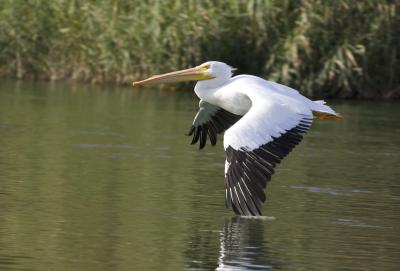
The next morning, we returned to Santa Margarita Ranch. Starting at the bluffs overlooking the Rio Grande, we enjoyed a peaceful and bird-filled start to the day. Over half a dozen Red-billed Pigeons passed by or perched in the tall trees, a group of Chihuahuan Ravens made a brief appearance, and at least two Ringed Kingfishers were seen working the shoreline. Four species of terns flew past as well, including our first Forster’s Tern of the trip. As the temperature rose, American White Pelicans and vultures began to kettle overhead, and before long, a Hook-billed Kite emerged—one of the main targets of the day.
With the kite checked off, we explored the riverside riparian area on foot. The birding stayed active with a steady stream of new species, including a nesting pair of Rose-throated Becards, a few migrant Lincoln’s Sparrows, a Black-and-white Warbler, half a dozen Summer Tanagers, and a single Varied Bunting. We also had more great looks at Morelet’s Seedeater and the continuing Brown Jays, which we found a new nest. We continued back east toward McAllen and took a short walk around Quinta Mazatlan, conveniently located near our hotel. A quick circuit produced Nashville and Wilson’s Warblers, along with a Ruby-crowned Kinglet. After dinner, we visited a couple of local parrot roosts, where we enjoyed the spectacle of 40 Green Parakeets and 8 Red-crowned Parrots settling in for the evening.
The next morning was spent at Estero Llano Grande State Park, one of the valley’s most popular and productive birding destinations. A series of ponds and a canal system held a great variety of shorebirds, including American Avocet, Long-billed Dowitchers, Least Sandpiper, and Stilt Sandpiper, as well as an excellent assortment of herons and egrets. In the forested section of the park, we encountered numerous White-tipped Doves, both Ruby-throated and Buff-bellied Hummingbirds, a well-camouflaged Common Pauraque, and a migrant Black-throated Green Warbler among many familiar species.
Later in the day, we shifted our focus to nearby turf farms, where Buff-breasted and Upland Sandpipers put on a great show. We followed it up with a well-earned and delicious lunch at a local taqueria. In the afternoon, we made our way toward the coast to check for newly arrived migrants. Our first stop was the South Padre Island Birding and Nature Center, where a Flame-colored Tanager had recently been reported. It didn’t take long to locate this rarity, feeding contentedly in a mulberry tree. While there, we also picked up Red-eyed Vireo, Baltimore Oriole, and Painted Bunting. Next door, the Convention Center offered more migrant-friendly habitat. The small patch of trees and its water drip often act as a magnet for tired birds. Here we found a Northern Waterthrush, several Tennessee Warblers, a Northern Parula, and a couple of very cooperative male Indigo Buntings.
To the north, expansive mudflats were teeming with hundreds of shorebirds, gulls, and terns. Highlights included Black-bellied and Wilson’s Plovers, Willet, Ruddy Turnstone, Sanderling, Dunlin, Least Tern, Reddish Egret, and no fewer than 115 Black Skimmers. We ended the day at the Valley Land Fun Lot, a rare undeveloped patch of habitat on otherwise built-up South Padre Island. While migration activity was relatively light, we still found a few Orchard Orioles, a Yellow-rumped Warbler, a female Rose-breasted Grosbeak, and several male Painted Buntings showing off their colors to full effect.
The following morning, we made our way to Brownsville, the southernmost point in Texas, to bird around the University of Texas Rio Grande Valley campus. A large natural area surrounds a resaca in the center of campus and occasionally hosts rarities. While we didn’t turn up anything out of the ordinary this time, we still had nice looks at Yellow-crowned Night Herons, a Ringed Kingfisher, a single Lilac-crowned Amazon, and a migrating flock of Franklin’s Gulls overhead.
Our next stop was Palo Alto Battlefield National Historical Park, which delivered a territorial Botteri’s Sparrow, along with Loggerhead Shrike, a hunting Harris’s Hawk, and a very cooperative Cassin’s Sparrow. From there, we headed back toward the coast to check for migrants on South Padre Island. En route, we made a brief stop at an Aplomado Falcon breeding site and were rewarded with views of one sitting on the nesting platform. The Valley Land Fund Lots were fairly quiet but did produce a Warbling Vireo. Further north, a return stop at the mudflats yielded two new additions—American Oystercatcher and four Marbled Godwits.
Next door, the Convention Center’s water drip was active, producing a nice variety of migrants including a Wood Thrush, a male Rose-breasted Grosbeak, and both Nashville and Tennessee Warblers. The adjacent boardwalk also turned up our first Semipalmated Sandpiper along with a good mix of other shorebirds. We wrapped up the day back inland at the Sugar House Pond, always a worthwhile stop. This visit proved especially productive, with an impressive flock of 120 American Golden-Plovers and at least three Hudsonian Godwits mixed in among large numbers of other shorebirds. At least 50 Northern Shovelers were on the water, joined by both species of whistling ducks.
We returned to South Padre Island the next morning, starting our day at the Birding and Nature Center. On the way in, we spotted the Flame-colored Tanager once again, along with a White-eyed Vireo. Luck was clearly on our side. Almost immediately after beginning our walk, we had two back-to-back highlights. First, a Brown Booby appeared resting on a distant floating platform in the Laguna Madre. Just moments later, a Parasitic Jaeger was seen harassing a group of Laughing Gulls.
Feeling elated, we continued our walk and quickly added Sora, Clapper Rail, and a flyby Merlin to the morning's list. We spent time slowly working the boardwalk, where many birds were seen at close range, including Roseate Spoonbill and Belted Kingfisher. At the Valley Land Fund Lot, a few migrants had arrived. The highlight here was a Yellow-breasted Chat, joined by both Indigo and Painted Buntings, several Wilson’s Warblers, a couple Northern Waterthrushes, and another Rose-breasted Grosbeak among others. On the drive back inland, we made a roadside stop, adding Red-breasted Merganser, Long-billed Curlew, Pectoral Sandpiper, and a dozen spinning Wilson’s Phalaropes to round out the day.
On our final day of birding, we left the Rio Grande Valley behind and headed north toward Corpus Christi. Our first stop was Pollywog Ponds on the outskirts of town, where we quickly found our target species, the Least Grebe, with four individuals present. The real highlight here was watching dozens of buntings, mainly Indigo but a few Painted, constantly kicking up in front of us as we walked the trail, reminding us that we were indeed in the middle of spring migration. Nearby, we added Monk Parakeet, Mississippi Kite, a striking male Scarlet Tanager, and several distant Seaside Sparrows to the list.
From there, we made our way to Port Aransas, where migrant activity had picked up significantly. We spent some time sitting on the lawn at the Leonabelle Turnbull Birding Center, enjoying a steady flow of warblers and other migrants coming in to the water drip beneath a line of small trees. Highlights included Eastern Wood-Pewee, three species of vireos, and eight warbler species, including our first Worm-eating Warbler among them. We then walked the boardwalk into the surrounding marshes, where we encountered a solid mix of ducks, shorebirds, and other waterbirds. The highlight here was an American Flamingo, a regional rarity that had been lingering for some time. We also picked up Northern Pintail, Green-winged Teal, and Redhead, and tallied 17 species of shorebirds.
A visit to nearby Holt Paradise proved quieter but still delivered our only Hooded Warbler and Gray-cheeked Thrush of the trip. As we made our way back toward Corpus Christi, we stopped at a second Aplomado Falcon nesting platform and were rewarded with even better views than before. Our final stop was at Packery Channel, where no fewer than eight Piping Plovers were the last new additions to our trip list.
It was an unforgettable tour—an excellent group, near-perfect weather, and one of the best species counts we've ever had on this route!
"Ethan is remarkable in his ability to find birds, identify them by sound, and set all of us up to see them. I believe that every bird on the list was seen by every one of us, a difficult task from someone who has led local bird trips. He was friendly and knowledgeable about more than birds. I enjoyed being with him for eight days."
- Peter P. on Texas: The Rio Grande Valley in Spring
The tour itinerary, above, should be viewed as a general guide. The actual daily itinerary (locations and order) can change due to local birding conditions and the recent existence of any special rarities.
Maximum group size seven with one leader.
More Tours with these Leaders
More Tours in this Region