
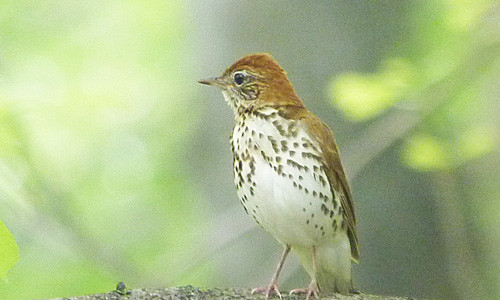
 Marvelous Wood Thrush song will be all around us. Photo: Jon Dunn
 -
Marvelous Wood Thrush song will be all around us. Photo: Jon Dunn
-
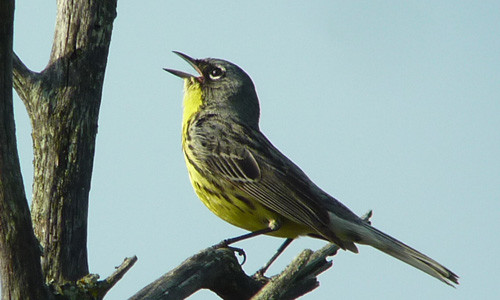
Superb views of Kirtland's Warbler are a defining moment of this tour. Photo: Jon Dunn
-
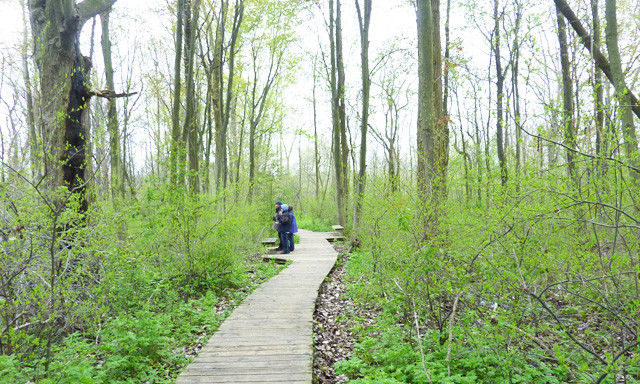
Birding along the south shore of Lake Erie is always good and often brilliant. Photo: Jon Dunn
-
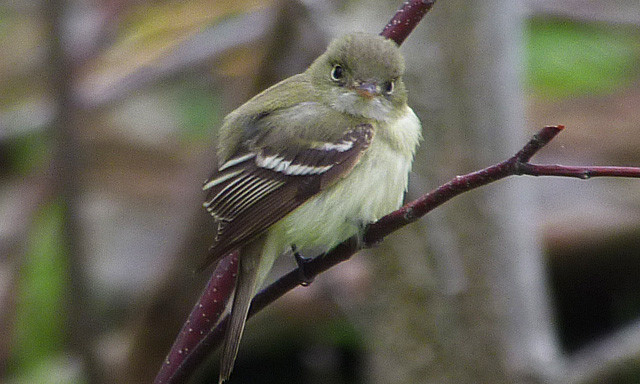
Birds are often very confiding as in the case of this Acadian Flycatcher. Photo: Jon Dunn
-
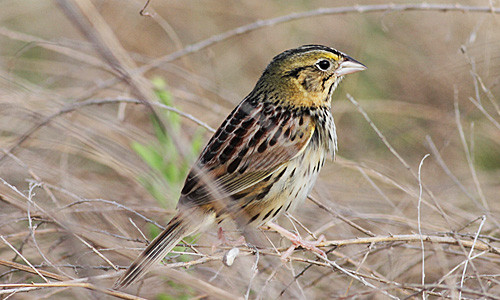
We'll explore several grassland and brushy field where Henslow's Sparrow is a prize. Photo: Brainard Palmer-Ball
-
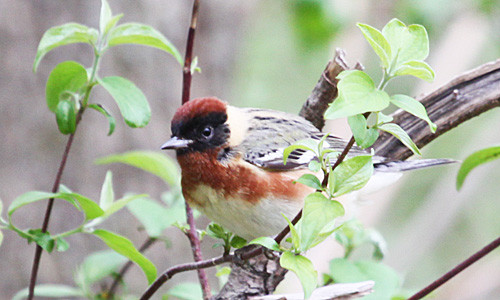
We could encounter more than 35 species of warbler including the handsome Bay-breasted Photo: Jon Dunn
-
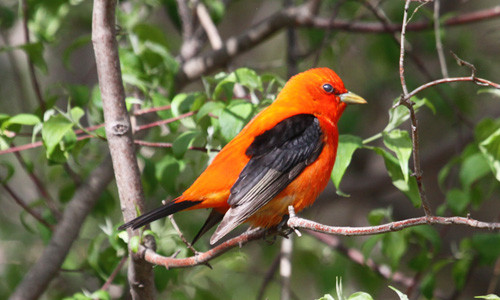
Scarlet Tanager, the iconic songbird in eastern deciduous forests. Photo: Jon Dunn
There may be no better place to witness the spring passage of songbirds than the Midwest. The three main eastern migration routes converge here and since the birds are nearing their breeding grounds the males are usually in full and vigorous song. With impressive, often spectacular numbers and diversity of migrants on the best days, the Midwest is certainly comparable to any other migration region in North America. Our tour takes in two prime locations for spring migrants, Crane Creek and the famous Magee Marsh Bird Trail at Ottawa NWR (Ohio), and Tawas Point on the west shore of Lake Huron in northern Michigan, and we also spend two full days in the Carolinian forests and grasslands of eastern Kentucky and southern Ohio, where we expect to find most of the southern breeding species. Between these sites, we should see a great majority of the eastern Neotropical landbird migrants, likely including as many as 35 species of warblers, including Swainson’s and Kirtland’s—and occasionally we see all 37 species as in 2023.
Day 1: The trip begins at 2:00 pm at our motel in Florence, Kentucky near Cincinnati, Ohio. After a quick introductory meeting, we will either visit Fernald Reserve, where we have our best chance of seeing Dickcissel at the eastern end of their regular breeding range, as well as Grasshopper Sparrow, Blue Grosbeak and Orchard Oriole. Alternatively, we might visit Capability Farm in Versailles, Indiana, an area maintained for birds which consist of both grassland and woodland habitats. The Northern Bobwhite, a declining species, is found here still in decent numbers, and we are likely to at least hear it. Henslow’s Sparrow is also possible and we found three here in 2019 and had good views of one in 2023. Night in Florence, Kentucky.
Days 2: We’ll depart early for the Red River Gorge east of Lexington, Kentucky in Daniel Boone National Forest, a breathtakingly beautiful place with its limestone and sandstone rock formations, some of which cross the Red River – all in a heavily forested environment. Along the way, we’ll drive through Kentucky’s “Blue Grass” and the fabled horse farms. Red River Gorge holds a few pairs of Swainson’s Warblers, here at the northern edge of their range, as well as many of the more southern warblers such as Blue-winged, Yellow-throated, Cerulean, Pine, Worm-eating, and Hooded and Louisiana Waterthrush. There is always the remote chance of seeing Ruffed Grouse. Acadian Flycatcher and Eastern Phoebe also breed here. The forest is noted, too, for its variety of butterflies, notable among them the striking Zebra Swallowtail, which should be numerous if the weather is warm and sunny. Heading north in the afternoon we’ll stop at an industrial park in a reclaimed strip mine in Greenup County, Kentucky, not far from Portsmouth where Henslow’s Sparrow still breeds along with Grasshopper Sparrow and species such as Prairie Warbler, Yellow-breasted Chat, Blue Grosbeak, Grasshopper Sparrow and maybe Dickcissel. Night in Portsmouth.
Day 3: We’ll spend much of the day in the beautiful and extensive Shawnee Forest close to Portsmouth, where nearly all of the southern Carolinian specialties are found in good numbers - Cerulean and Kentucky Warblers are almost common here – and we’ll probably find any we missed yesterday.
If we haven’t connected with Henslow’s Sparrow, we may try checking the fields in Adams County again on our second morning, or we may end up there late in the day in an early evening attempt for Chuck-will’s-widow, here at the regular northern end of its breeding range. Night in Portsmouth.
Day 4: We’ll depart for Crane Creek and the famed Magee Marsh Bird Trail on Lake Erie, and should arrive in time for some late afternoon birding at this premier location. By then the crowds of birders from earlier in the day should have diminished. Along the way, we may stop near Scioto Trail State Forest near Chillicothie whose forested ridges have many breeding species and can be full of migrants. Chillicothe was Ohio’s first capital from 1803-1810 and was again the capital from 1812-1816. Night in Oregon.
Days 5-6: Crane Creek and the Magee Marsh Trail are Ohio’s best migration spots. The spectacle is similar to the one at Pelee, but here the concentrations of migrants don’t seem to be as weather-dependent, and even on slower days there are usually plenty of birds. The narrow strip of woods along the lake is more open than at Pt. Pelee National Park in extreme southern Ontario, and migrants are delightfully visible. Here we can usually count on finding more secretive species such as Mourning Warbler, we typically encounter an American Woodcock or two sauntering and bobbing through the wet leaf litter. Here we have our best chance of Connecticut Warbler, although the odds are only about 10%, and it may be just heard. It is by far the hardest of the 37 species of wood warblers we hope to encounter during our tour.
Adjacent Ottawa National Wildlife Refuge has a variety of waterbirds, including shorebirds if water levels are appropriate, and the adjoining woods attract migrants. If we tire of migrants, the woodlands around Toledo have a number of breeding birds, including Acadian and Willow Flycatchers and Blue-winged and Pine Warblers; and nearby Oak Openings has breeding Lark Sparrows, their only regular location in the eastern Midwest. Red-headed Woodpecker breeds here too and this might be our only encounter with this striking and declining species. A few Summer Tanagers at the north end of their breeding range have recently summered here. Nights in Oregon.
Day 7: After a final morning of birding at Crane Creek, we’ll drive north to Tawas City, Michigan. Night in Tawas City.
Days 8-10: One of Michigan’s best migration spots, Tawas Point has harbored an astonishing variety of rarities. In 2017 a Fork-tailed Flycatcher remained for two days and in 1995 we had a White-collared Swift. The narrow peninsula is lightly covered with tree clumps and bushes that can be full of migrants given the right winds, and since vegetation is so low, the birds are often more visible. A long sandy spit usually hosts a variety of shorebirds, sometimes including Piping Plover, which has nested here in recent decades if the lake water levels aren’t too high. In 2023 most of us had good views of a singing male Connecticut Warbler at the tip of Tawas Point.
One of the real pleasures of Tawas Point is the absence of crowds of birders which can at times overwhelm the boardwalk at Magee Marsh, and even if there are few migrants, the Tawas area is rewarding and stunningly beautiful with the waters of Lake Huron on all sides and a picturesque historical lighthouse. Nearby marshes support American and possibly Least Bitterns, Sora and Virginia Rail, and further afield near Au Gres, Yellow-headed Blackbird, and in some years Sedge Wrens. Abandoned fields host Clay-colored Sparrows alongside many Bobolinks. We may also stop at Rifle River State Recreation Area. Yellow-bellied Sapsuckers breed here, as do a few warblers including Golden-winged, Mourning, and Canada. Even Kirtland’s Warbler has nested here in recent years in a young jack pine stand within 30 minutes of our motel! Nights in Tawas City.
Day 11: After a final day of birding around Tawas Point, we’ll drive west and south towards Detroit, stopping at one or more spots along the way, notably at Nyanquing Point State Wildlife Area. Night in Romulus, near Detroit.
Day 12: The tour concludes this morning in Romulus.
Updated: 29 January 2024
Prices
- 2024 Tour Price : $4,450
- Single Occupancy Supplement : $950
- (2025 - Not Yet Determimed)
Notes

Questions? Tour Manager: Sara Pike. Call 1-866-547-9868 (US or Canada) or (01) 520-320-9868 or click here to email.
* Tour invoices paid by check carry a 4% discount. Details here.
Maximum group size 7 with one leader, 10 with two leaders.