
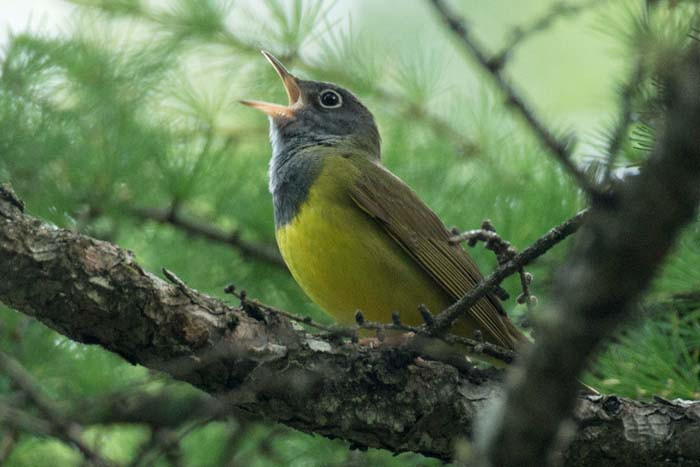
 A Connecticut Warbler sings from almost overhead in a tamarack bog. Image: Chris Wood
 -
A Connecticut Warbler sings from almost overhead in a tamarack bog. Image: Chris Wood
-
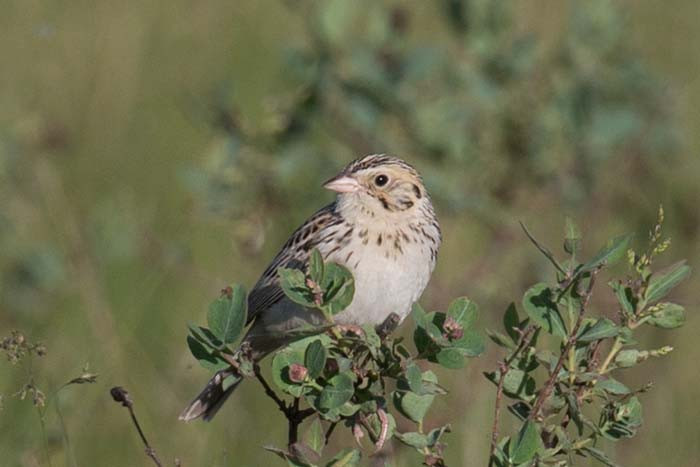
A Baird's Sparrow pauses in plain sight between bouts of its tinkling song. Image: Chris Wood
-
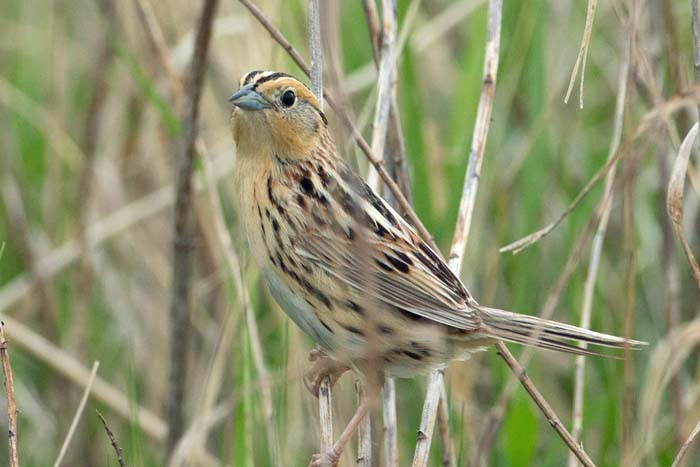
The subtly lovely LeConte's Sparrow whose song has been described as "an inaudible hiss." Image: Chris Wood
-
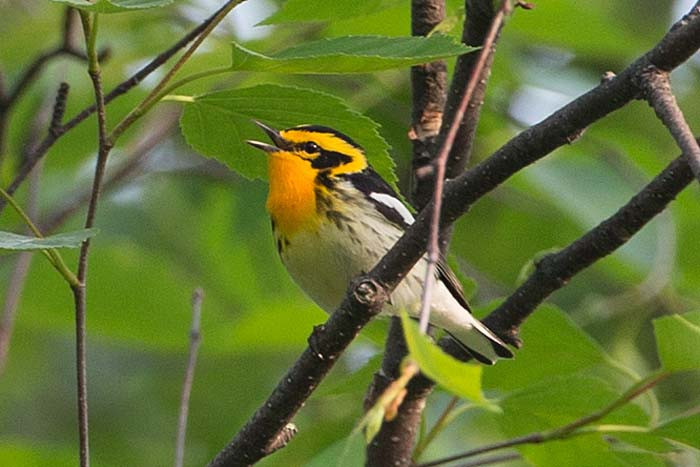
The stunning Blackburnian Warbler is one of more than 25 warbler species possible on the tour. Image: Chris Wood
-
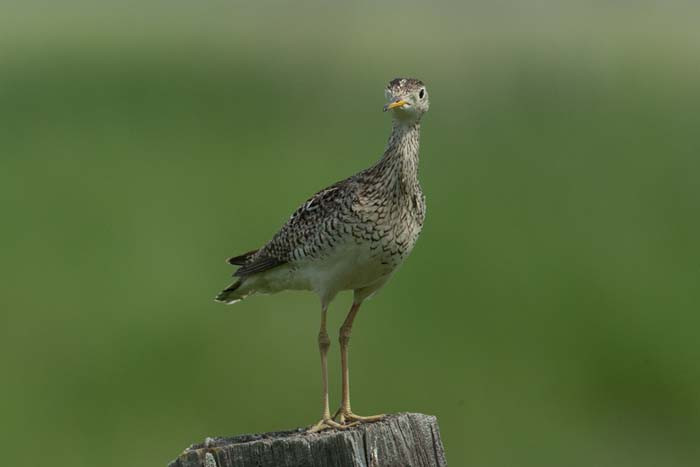
Upland Sandpiper is a visual and aural presence in the North Dakota grassland. Image: Chris Wood
-
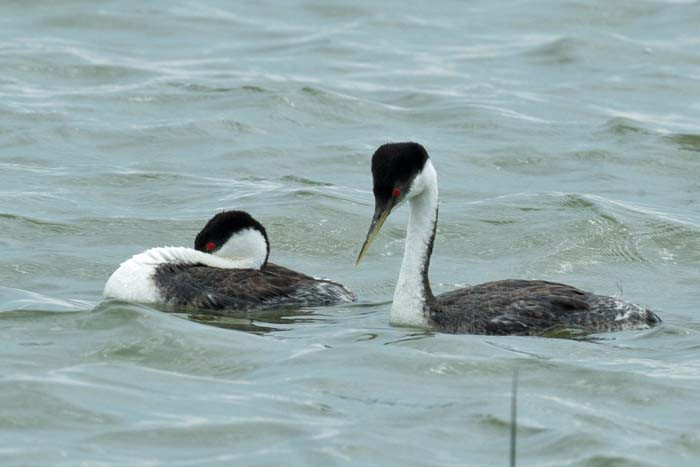
Western Grebes are a striking feature of the larger prairie potholes and lakes. Image: Chris Wood
-
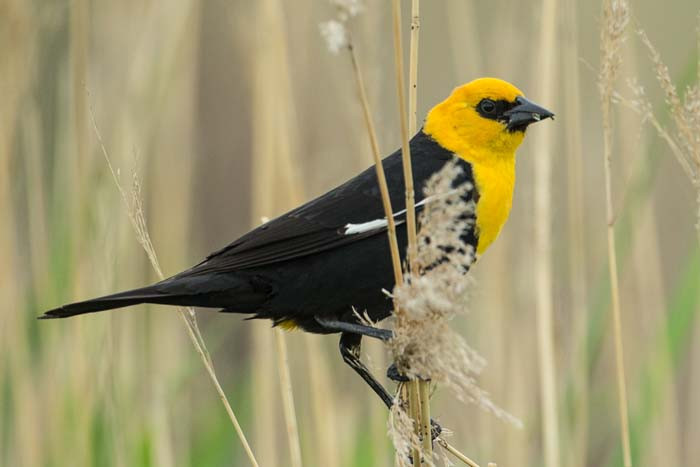
Yellow-headed Blackbird has a brilliant head and squeeky-hinge voice. Image: Chris Wood
The wonders of the breeding season in Minnesota and North Dakota could well be the best kept secret in all of birding—and with our small group size, we plan to keep it that way! June landscapes are as lush as the birds are conspicuous. From boreal forests to aspen parkland and the grasslands and prairie potholes of North Dakota, this trip covers some of the richest breeding locales in all of North America.
We’ve recorded over two dozen species of ducks and half a dozen grebes, often with adorable babies. Seventeen species of sparrows are possible, including many of the most difficult species to detect in all of North America. The subtle songs and muted plumages of Baird’s, Henslow’s, Nelson’s, and LeConte’s Sparrows are always among the highlights. But perhaps more than any other group, it is the wondrous warblers that draw us time and again to the region. We typically record at least twenty-five species, and unlike watching warblers during migration, our views are often leisurely and prolonged: imagine scope views of Golden-winged or Mourning Warbler, and Connecticut and Canada Warblers singing from near your feet! We are also on the southern boundary for nesting Great Gray Owls, and we’ll spend an evening or two driving the quiet roads in search of this enigmatic species. On another evening, we’ll visit an extensive sedge meadow to listen for what is certainly a good candidate for the most enigmatic species in the country: the nearly mythical Yellow Rail. With great luck, we may even see one. Perhaps best of all, almost the entire tour takes place far from the hustle and bustle of the city, giving us ample time to enjoy the tranquility of the northern forests and prairie potholes and the tremendous birdlife that calls this region home.
Day 1: The tour begins at 6:00 pm at our hotel near the Minneapolis-St. Paul International airport. Night in Bloomington.
Hard to imagine anything that would improve this tour. Perfect! Evan was without a doubt one of the best tour leaders I’ve been with, possibly the best. Sara was great with details and follow-up.
Jeffrey Culler, June 2018
Day 2: Starting in the Twin Cities allows us a morning to look for birds with more southern affinities—species that are pulled north along the Mississippi and Minnesota Rivers. The winding trails of William O’Brien State Park offer a wonderful opportunity to explore this avifauna that we won’t see later on in the tour including Acadian Flycatcher, Blue-gray Gnatcatcher, Wood Thrush, Blue-winged and Hooded Warblers, Eastern Towhee and Field Sparrow. In recent years Henslow’s Sparrow and Cerulean Warbler have been found in small numbers and we’ll hope to see both of these avian gems. A number of productive regional and county parks and nature centers throughout the greater Twin Cities area will give us additional options for birding before we leave in the afternoon for Duluth. Night in Duluth.
Days 3-4: The northwoods of Minnesota are comprised of a rich variety of habitats from jack pine stands to tamarack bogs, from spruce woodlands and alder swamps to hardwood forests, interspersed here and there with sedge meadows and cattail marshes. From our convenient location in the Twin Ports (Duluth and Superior) we’ll head out looking for such highly prized species as Connecticut Warbler, Yellow-bellied Flycatcher and Great Gray Owl.
We’ll spend one morning along the edges of bogs and coniferous forests, where the woods are alive with warbler songs including Mourning, Canada and Blackburnian. Haunting songs of White-throated Sparrow, Hermit Thrush, Veery and Winter Wren echo from inside the bog, while Blue-headed Vireo and Purple Finch often sing nearby. Just north of Duluth is the southwestern limit of Black-throated Blue Warbler, and we’ll search for it along the little-visited portions of Lake County, where we also have a slim chance of finding Philadelphia Vireos. Also in the forests of Lake County, we have excellent chances for Tennessee, Cape May, and Bay-breasted Warblers, all of which are birds of the true Boreal.
Of course, no visit to the Duluth area would be complete without a trip to the Sax-Zim Bog. This is prime habitat for Connecticut Warbler and we’ll concentrate on finding this species. Other summer residents include Boreal Chickadee, Canada Jay, Olive-sided Flycatcher and Golden-winged Warbler. Displaying Bobolink, Eastern Kingbird, Brewer’s Blackbird and perhaps Upland Sandpiper will give us our first taste of the grassland species that we’ll see in abundance later in the trip. We’ll also make an evening excursion to look for Great Gray Owl and we’ll hope to encounter Moose, Fisher, River Otter, Beaver and if we are truly lucky, a wolf. Nights in Duluth.
Day 5: We’ll keep our morning options open and look for species that we haven’t yet encountered. We may visit nearby Rice Lake National Wildlife Refuge, whose deciduous woodlands and scrubby grasslands hold species such as Black-billed Cuckoo, Eastern Wood-Pewee, Great Crested Flycatcher, Scarlet Tanager, Rose-breasted Grosbeak and Clay-colored Sparrow. In the afternoon we’ll make our way to Grand Forks in time to rest up before an evening in search of the enigmatic Yellow Rail. There are a number of locations for this species in this part of the country and, with some luck and current local information, we can hope to at least hear its distinctive call. Nelson’s Sparrows should also be present in numbers and become more vocal at dusk. Night in Grand Forks.
Day 6: We’ll likely do some local birding around Grand Forks in the morning, perhaps finding some lingering shorebirds at Kellys Slough National Wildlife Refuge, or Red-headed Woodpecker and songbirds along the Red River, before making our way on county roads towards Jamestown. We may pass through Arrowwood National Wildlife Refuge, just to the north of town, where we will hope to find Grasshopper Sparrow, Upland Sandpiper, and perhaps more migrant shorebirds. Late in the afternoon we’ll drive to Jamestown, North Dakota. Night in Jamestown.
Day 7: Today we’ll explore the remarkable freshwater marshes and lush prairies of Kidder County. In the marshes and sloughs the guttural pumping calls of American Bitterns and the cacophony of “song” produced by colonies of Yellow-headed Blackbirds fill the air; Black and Forster’s Terns wheel about over their nests among the cattails, and small flocks of Franklin’s Gulls fly between marshes; Ruddy Ducks, one of more than a dozen species of waterfowl that breed here, engage in their unusual courtship displays while Willets, Marbled Godwits and Wilson’s Phalaropes dart back and forth across the meadows; and American White Pelicans and Eared, Western and a few Clark’s Grebes dot the scattered alkaline lakes. This early in the season there are often still some northbound shorebirds including White-rumped Sandpipers. Piping Plovers are sporadic but possible.
In the prairies Chestnut-collared Longspur and Grasshopper, Vesper and Savannah Sparrows will be common and we’ll listen for the tinkling song of Baird’s Sparrow and the elaborate flight song of Sprague’s Pipit. We’ll also hope to see Dickcissel and Lark Bunting although the numbers of these nomadic birds vary from year to year. These open expanses also attract Northern Harrier and Red-tailed, Swainson’s and Ferruginous Hawks, and each year seems to bring a surprise or two. We’ll have a good chance as well for Sharp-tailed Grouse and we’ll scan roadsides for Gray Partridge. Night in Jamestown.
Day 8: This morning we’ll have the option of revisiting the prairies north of the towns of Tappen and Dawson looking for species we may have missed the day before, or concentrating on more intimate looks at species of particular interest. Or, perhaps we’ll decide to head east to explore the prairies of western Minnesota en-route to the Twin Cities where Greater Prairie-Chicken is possible. After lunch we’ll begin our drive east toward Minneapolis and if time permits, we may do some target birding before reaching our hotel. Night in Bloomington.
Day 9: The tour concludes this morning in Bloomington.
Updated: 22 September 2023
Prices
- 2024 Tour Price : $3,450
- Single Occupancy Supplement : $650
- (2025 - Not Yet Determimed)
Notes

Questions? Tour Manager: Sara Pike. Call 1-866-547-9868 (US or Canada) or (01) 520-320-9868 or click here to email.
* Tour invoices paid by check carry a 4% discount. Details here.
This tour is limited to seven participants with one leader.