
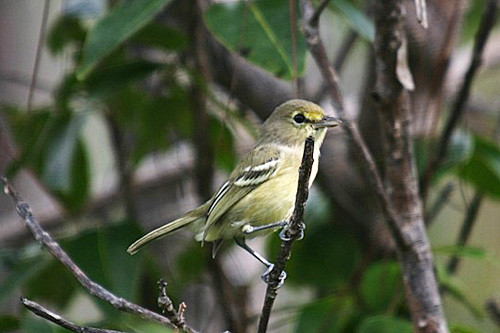
 Although we can't expect Caribbean strays, there are often one or two around South Florida in April, like this Thick-billed Vireo.
-
Although we can't expect Caribbean strays, there are often one or two around South Florida in April, like this Thick-billed Vireo.
-
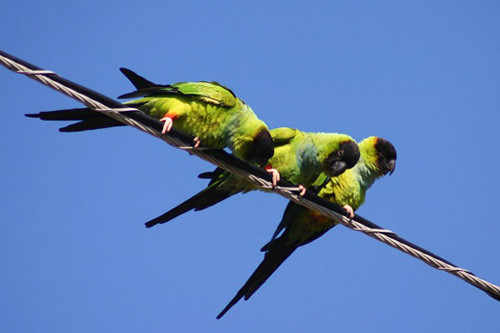
We’ll take in a host of “countable” exotic species that now call South Florida home, including the garrulous Black-hooded Parakeet.
-
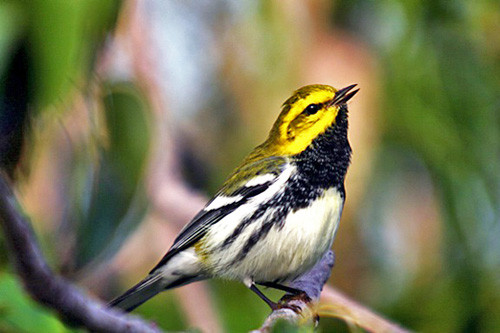
Our tour is timed to experience spring migration in action, with dozens of migrant species like Black-throated-Green Warbler moving north.
-
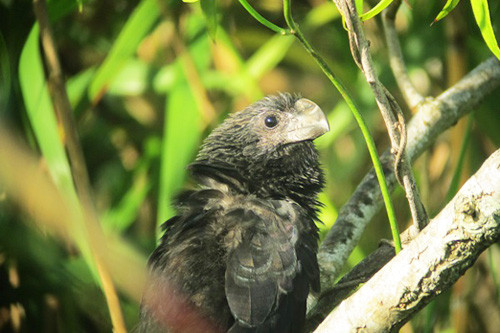
Although no longer routine in South Florida, Smooth-billed Ani is a good indicator of the strong Caribbean influence on the state's avifauna.
-
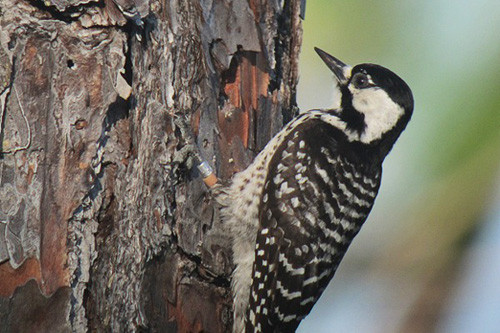
The endangered Red-cockaded Woodpecker is confined to the open pine forests of the Southeastern United States, but populations in central Florida are doing well.
-
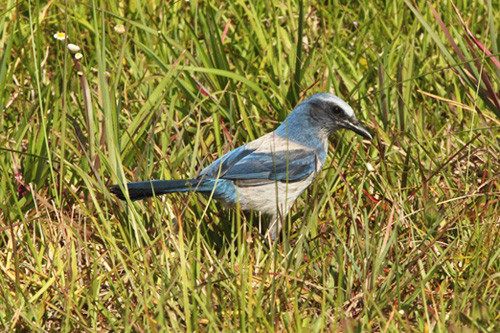
We’ll seek out the often very confiding Florida Scrub-Jay, a Florida emdemic.
-
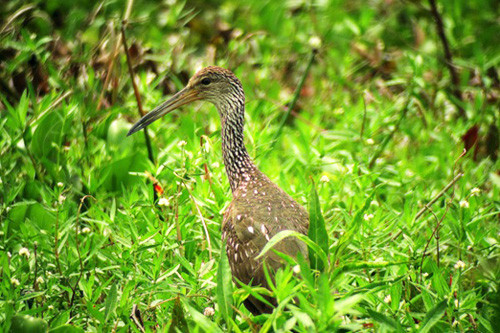
Although widespread in the New World tropics, Florida holds almost all the Limpkins in the U.S.
-
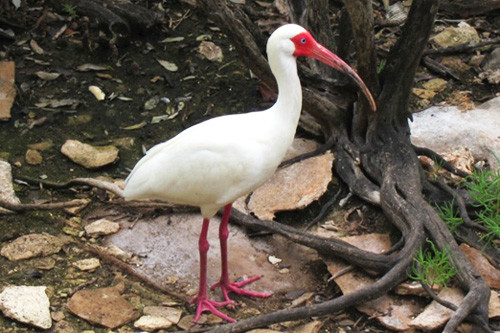
South Florida is justifiably famous for its array of attractive waterbirds, such as this White Ibis in full breeding splendor.
Late April is a wonderful time to visit South Florida. Migrants augment the resident birds, and all of South Florida’s special breeding birds have arrived. We’ll visit the most interesting habitats on the southern end of the peninsula including upland pine forests, the stunning Florida Keys, the Big Cypress Preserve, shallow sandy lagoons of the southwest coast, and the Everglades National Park.
The Keys are at their best at this time of year, and we’ll explore areas known to us looking for the sought-after southern Florida specialties such as Mangrove Cuckoo, Black-whiskered Vireo and White-crowned Pigeon. We’ll also take a day trip to the fabulous Dry Tortugas. Even though we’ll have just four and a half hours on Fort Jefferson, it’s enough time to appreciate the magnificent seabird colony and see most of the birds for which the area is justly famous. On good years the thickets and isolated trees around the fort can be filled with resting migratory birds, an excellent complement to the thousands of Sooty Terns and Brown Noddies wheeling overhead. We’ll conclude in the Miami area, where elements of a huge parrot fauna, and several other exotic species have become naturalized. Add in the chance of a vagrant from the Caribbean, and it’s easy to see why South Florida in late April is so appealing.
Day 1: The trip begins at 6 p.m. this evening in the lobby of our hotel near Southwest Florida International Airport, Fort Myers.
Day 2: We’ll leave early for Port Charlotte and the Babcock-Webb Wildlife Management area, a large tract of Slash Pine and marsh whose inhabitants include the celebrated pinewoods trio of Red-cockaded Woodpecker, Brown-headed Nuthatch, and Bachman’s Sparrow. Sandhill Cranes nest in the area, and roadside ditches sometimes hold King Rail. Here too will be singing Eastern Towhees, Brown Thrashers, Eastern Bluebirds and Eastern Meadowlarks, none of which are common further to the south. Just a bit north, on the outskirts of Punta Gorda, several clusters of the curious and social Florida Scrub-Jays have prospered for years and we’re almost certain to find them. It’s hard to know exactly how much time it will take to find and fully absorb these four North American endemics. If we accomplish our goals with dispatch, we may travel further north to the managed wetlands called the Sarasota Celery Fields, where we should encounter our first Limpkin among the many wading birds, and to Fort Desoto, where given the right weather thick woods and fruiting mulberry trees can be filled with migrating songbirds. Nearby the fort we can look for Nanday Parakeets, which reach their peak density around the cities of Tampa and Saint Petersburg. Night in Fort Myers.
Day 3: We’ll start the day visiting a nearby freshwater marsh a few miles inland that typically supports a healthy population of Limpkin and good numbers of Snail Kites that typically forage along the irrigation canals. Afterwards we’ll likely stop in near the coast to look at a colony of Burrowing Owls and then, if the tide conditions favor us, will stop at Bunche Beach; a well-known wader area that supports a nice array of shorebirds and herons at low tide. Later we’ll drive across the peninsula, stopping at the Big Cypress Preserve, a delightful sanctuary with an elevated winding boardwalk through stands of tall Bald Cypress to a sawgrass marsh. The huge Cypress trees lend a somewhat primeval feel, and although the preserve is an experience as much as a birding spot, we hope to find Pileated Woodpecker, and a collection of warblers perhaps including Yellow-throated and Northern Parula on territory. After lunch, we’ll drive south and east across the northern Everglades to Florida City and the gateway to Everglades National Park. If time allows, we’ll visit the neighborhood around the Kendall Baptist Hospital to look for Red-whiskered Bulbul, Spot-breasted Oriole and Egyptian Geese and Muscovy Duck. Night in Florida City.
Day 4: On day four we will visit the Everglades National Park, spending the morning on the main park road in to Flamingo, stopping at such well-known places as Anhinga Trail, where the common glades residents are often just a few feet off the boardwalk, and Mahogany Hammock with its collection of tropical hardwood trees, colorful land snails, and often a collection of migrant warblers. At Flamingo, we’ll scan mudflats for shorebirds and terns, possibly including Marbled Godwit and Gull-billed Tern among many others. Eco Pond, a few hundred feet from the end of the road, has a small island favored by roosting waterbirds often including Roseate Spoonbill and White Ibis, and the pond itself often has a surprise or two. For the past several years small numbers of Shiny Cowbirds have frequented the parking lot area, and with luck we’ll have excellent views of this scarce invader from the Caribbean. With real luck we may also encounter an American Crocodile or West Indian Manatee lurking around Florida Bay.
We’ll return to Florida City midday, then make the incredibly scenic, if slow, 120-mile drive to Key West, making a few stops along the way before arriving in the late afternoon. We’ll eat dinner early, then venture out again at dusk to look for and listen to Antillean Nighthawk. Night in Key West.
Day 5: We’ll sail at 8:00 am for the Tortugas aboard the Yankee Freedom III. Our route will take us swiftly and directly to the Tortugas, where we’ll arrive in the late morning. We’ll have about four hours to watch the great Sooty Tern and Brown Noddy spectacle, to look for Black Noddy and other rarities, and to thoroughly search Fort Jefferson for migrants that can include thrushes, buntings, orioles, and up to 20 species of warblers. The Tortugas inevitably produce surprises: Cave Swallows around the battlements of the fort, perhaps a Chuck-will’s-widow inside the old powder magazine, or a Short-eared Owl perched in one of the trees on the parade ground. For those interested it is possible to borrow snorkel gear from the ferry and take a dip into the rich waters around the fort during our stay on the island.
On the way back to Key West we’ll look for Masked Boobies and also check the buoys for loafing Brown Boobies or Roseate Terns. The trip to and from the fort crosses a deepwater channel where we might also see Bridled Terns, Northern Gannet (making for a three Sulid day), and with some luck jaegers or even an Audubon’s Shearwater. We’ll return to Key West in the late afternoon arriving around 5:00 pm for a great seafood dinner by the harbor. Night in Key West.
Day 6: Among the principal landbird attractions of the Lower Keys, White-crowned Pigeon and Black-whiskered Vireo are widespread and conspicuous. Mangrove Cuckoo, however, is neither, and we’ll spend the morning checking several locations looking for this handsome bird. In some years we’ve had good views of cuckoos within just 15 minutes of exiting our vehicles; in others it requires a lot of patience. We’ll continue up the Keys, stopping at shorebird roosts or migrant traps along the way. As the tour winds down, we’ll search for any rarities that might be present in the area, or end the day watching parrots fly to roost in Miami. Night in Miami.
Day 7: This will be a flexible day. We’ll look for species that we might have missed, and will have time to track down any reported rarities in the greater Miami area. We generally stop in at one of the excellent wetland parks near Loxahatchee, to enjoy the full array of breeding herons, anhingas and cormorants that tamely breed along the boardwalks. Seeing these birds in their full breeding dress is an amazing experience, and with some careful scrutiny we might pick out a nesting pair of Least Bitterns or Purple Gallinules amongst the throngs. We’ll almost certainly use some of the day to track down remaining “countable” exotics like Gray-headed Swamphen, Scaly-breated Munia, and Mitred and Yellow-chevroned Parakeets, and also visit one or more of the excellent migrant traps along the coast for a last look at assorted warblers, vireos, thrushes or cuckoos that might be resting after their journey across the Caribbean. Night in Miami.
Day 8: The tour concludes this morning in Miami.
Updated: 10 September 2023
Prices
- 2024 Tour Price : $3,490
- Single Occupancy Supplement : $850
- (2025 - Not Yet Determined)
Notes

Questions? Tour Manager: Sara Pike. Call 1-866-547-9868 (US or Canada) or (01) 520-320-9868 or click here to email.
* Tour invoices paid by check carry a 4% discount. Details here.
This tour is limited to 7 participants with one leader.