Taiwan
-
Apr 17-29, 2027
Paul Holt and a local leader
2027
Single Room Supplement $680


2027
Single Room Supplement $680
Early Portuguese sailors dubbed Taiwan “Isla Formosa”—the beautiful island—and although the title was abandoned some time ago in favor of the Chinese name, Taiwan is still a strikingly attractive island with some spectacular mountain scenery. Sitting astride the Tropic of Cancer, less than 250 miles from north to south and no more than 100 miles wide, Taiwan boasts impressive geographic and ecological diversity. A dramatic mountain range forms the island’s backbone and is flanked either side by a broad, flat coastal plain that is warm and humid.
Amazingly, few Western birders have experienced Taiwan’s rich bird life. We’ve been missing out, as many of the species are generally far easier to see here than in most other Asian countries. Moreover, Taiwan is an affluent nation with a good tourist infrastructure and road network, and traveling around is genuinely easy. Most important, Taiwan boasts an impressive array of 32 endemic species that include Taiwan Yuhina, Collared Bush Robin, White-eared Sibia, Steere’s Liocichla, and the more recently split Taiwan Cupwing, Taiwan Shortwing and Black-necklaced Scimitar Babbler.
Endemic birds are not all that Taiwan has to offer, however. The island is the winter home of the bulk of the tiny world population of Black-faced Spoonbill, and we expect to see a few lingering birds. The tour’s timing, at the height of the northbound spring migration, means that we’re also sure to find a decent number of East Asian migrants. We also stand a very good chance of seeing that most elusive of Asian birds, Fairy Pitta.


Day 1: The tour begins this evening at our hotel in Taipei. Night in Taipei.
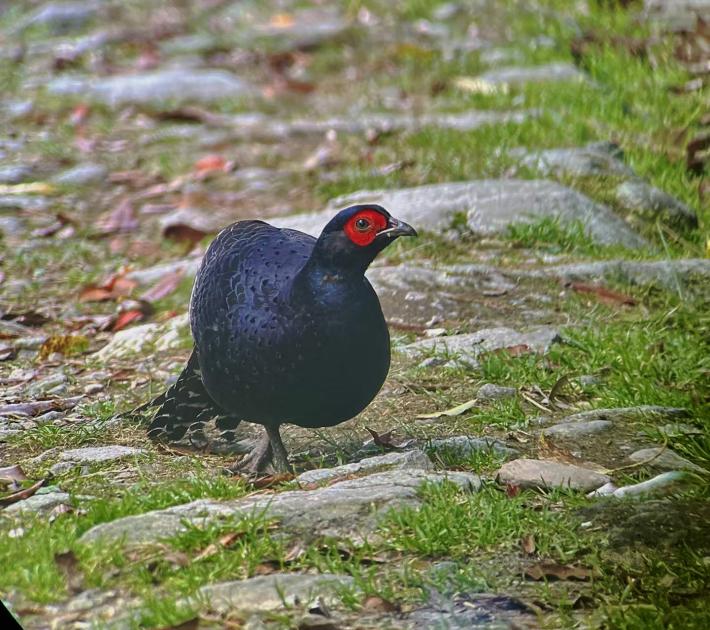
Day 2: After breakfast, we’ll travel a short distance to the Taipei Botanical Gardens for an introduction to Taiwan’s more common birds. These are sure to include Swinhoe’s White-eye and Light-vented Bulbul, and this site is also one of the best for both Taiwan Barbet and Malayan Night Heron. We should be able to find at least one of the latter stalking earthworms somewhere in the small gardens. A pair of Crested Goshawks also breed in the park most years. From there we’ll drive southwest, away from Taipei and up into the hills at Da Syue Shan (literally “Big Snow Mountain”). Even though this site holds most of the island’s endemic birds, we’ll make several stops en route, perhaps to search for Black-necklaced Scimitar Babbler or Taiwan Hwamei, but we should still arrive in time to explore some of this excellent reserve. The endemic Swinhoe’s Pheasant is relatively easy to see here, but its rarer cousin, and Taiwan’s national bird, Mikado Pheasant, can be challenging. Night just outside Da Syue Shan Forest Recreation area.
Days 3-4: We’ll spend the following two days at Da Syue Shan searching for species such as White-bellied Green Pigeon and endemics such as Taiwan Bamboo Partridge, the startled-looking Yellow Tit, Taiwan Bush Warbler, Taiwan Scimitar Babbler, Grey-cheeked Fulvetta, Rufous-crowned, Rusty, and White-whiskered Laughingthrushes, Steere’s Liocichla, White-eared Sibia, Taiwan Vivid Niltava, Taiwan Yuhina, Taiwan Rosefinch, and Flamecrest.
Even with all these endemic species to search for, we won’t neglect the endemic subspecies Dusky Fulvetta or regional specialties such as Little Forktail.
Day 5: Depending on what we’ve seen at Da Syue Shan, we’ll have the choice of leaving early or late in the day. Our next destination will be Cingjing, which at 5,640 feet is ideal as a base for searching again for several of Taiwan’s higher-elevation specialties, such as Taiwan Bullfinch or Taiwan Hwamei, that might have eluded us so far. All three of Taiwan’s endemic game birds occur near Cingjing, and we’ll probably spend some of our time quietly walking various trails through the bird-rich temperate forests in our quest to see them all.
The spectacular Swinhoe’s Pheasant is the easiest to see, the elusive Taiwan Partridge undoubtedly the most difficult, and while Mikado Pheasant isn’t common, we have lots of time. Several of the species we searched for at Da Syue Shan also occur here, while more site-specific specialties include the enigmatic Taiwan Cupwing and Taiwan Barwing. Night in Cingjing.
Day 6: We’ll leave Cingjing early today and drive up the Central Cross Island Highway and over the Hehuanshan Pass, which at 10,728 feet is the highest road pass in East Asia. Target species here include Collared Bush Robin, Flamecrest, and the recently described Taiwan Bush Warbler and Taiwan Bush Robin. The higher-elevation patches of bamboo hold good numbers of Taiwan Fulvettas and a few Golden Parrotbills, though we’ll need a fair amount of luck to connect with the latter. Other target species include the endemic form of Alpine Accentor, Taiwan Rosefinch, and both Brown and Taiwan Bullfinches. Descending the eastern side, we’ll travel slowly through Taiwan’s premier tourist attraction, the spectacular Taroko Gorge, before reaching the coast near Hualien. Along the way we’re sure to come into contact with Styan’s Bulbul, Taiwan’s most threatened endemic, before we reach our hotel in Taitung where we spend the night.
Day 7: This morning we’ll take a two-and-a-half-hour journey on a large passenger ferry to Lanyu, or Orchid, Island, a volcanic jewel located off Taiwan’s southeastern corner. Safety concerns mean that we aren't always allowed out on deck but species that we’ve seen from the ferry on past trips include Streaked Shearwater, Bulwer’s Petrel, Long-tailed Jaeger, Bridled Tern and Red-tailed Tropicbird. Still inhabited by some 2000 Yami aborigines, whose culture is closer to that of the Philippines and Pacific islands than it is to China, Lanyu is radically different from mainland Taiwan. Birds we’ll be looking out for on Lanyu itself include the endemic Taiwan Green Pigeon and endemic forms of Ryukyu Scops Owl, Brown-eared Bulbul, and Lowland White-eye. Night on Lanyu.
Day 8: Lanyu Island is also home to small numbers of both Philippine Cuckoo Doves and Japanese Paradise-flycatchers. In addition, we’re sure to come across numerous migrants at this time of year, anything from a Little Curlew to a gorgeous Ruddy Kingfisher or Narcissus Flycatcher. We’ll spend the early morning on Lanyu before taking the ferry back to the mainland. Night in Kenting.
Day 9: After some more birding close to Kenting we’ll drive to Budai. We’ll spend the night there, but not before we’ve started our search for more shorebirds.
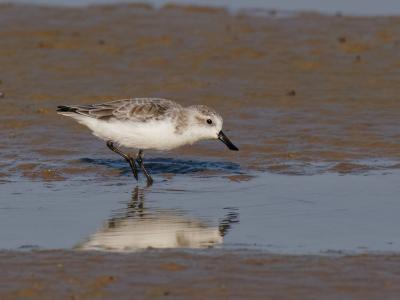
Day 10: We’ll spend much of the morning traveling slowly along the southwest coastline, stopping at numerous sites to search for waders and terns. One of our main targets is Black-faced Spoonbill: the bulk of the tiny world population of this endangered species winters in Taiwan, and a few lingering birds should still be present. Other species here should include a host of waders such as Eastern Curlew, Terek Sandpiper, Grey-tailed Tattler, Great Knot, Long-toed Stint, and Sharp-tailed Sandpiper. With luck, we might be able to find a Chinese Egret or, if we’re extremely lucky, even a Spoon-billed Sandpiper. In the afternoon, we’ll swing away from the coast and head inland to Alishan. The enterprising proprietor of our comfortable home-stay hotel here has constructed a couple of bird blinds in the forest, and this site is now the best in the world for viewing Taiwan’s most elusive endemic bird, Taiwan Partridge. Night at Alishan.
Day 11: In the morning we’ll spend more time at Alishan before either returning to the coast to search for more shorebirds or heading up into the mountains for more forest birding. There are a couple of recent records of Chinese Crested Tern here, but realistically we have only a very slim chance of connecting with one of these increasingly rare birds. In the afternoon we’ll head north, spending the night in a hotel at Douliou.
Day 12: Accompanied by a local naturalist, we’ll make an early morning visit to Pillow Hill near Douliou with the aim of finding the gorgeous and elusive Fairy Pitta, a few pairs of which breed here. With the help of a scientist who has been studying these birds we should be able to find at least one individual before we drive back to Taipei, stopping for any birds we may see along the way. Night in Taipei.
Day 13: The tour concludes this morning in Taipei.
Note: The information presented here is an abbreviated version of our formal General Information for this tour. Its purpose is solely to give readers a sense of what might be involved if they take this tour. Although we do our best to make sure that what follows here is completely accurate, it should not be used as a replacement for the formal document which will be sent to all tour registrants, and whose contents supersedes any information contained here.
ENTERING TAIWAN: U.S. citizens should have a passport valid for at least the duration of their stay in Taiwan and with at least one blank page for an entry stamp. Tourist visas are not required for stays of fewer than 90 days.
COUNTRY INFORMATION: You can review the U.S. Department of State Country Specific Travel Information here: https://travel.state.gov/content/travel.html and the CIA World Factbook here: https://www.cia.gov/the-world-factbook/. Review foreign travel advice from the UK government here: https://www.gov.uk/foreign-travel-advice and travel advice and advisories from the Government of Canada here: https://travel.gc.ca/travelling/advisories.
PACE OF TOUR: There is a reasonable amount of travelling, but the days are not unduly long or overly tiring. Nevertheless a modest degree of fitness is recommended. Please note that on this tour we are frequently moving on and only spend more than one night at one hotel – the one at Da Syue Shan. That means that we are not able to make very many of the early morning excursions optional and in recent years as few as three of these have been optional. Nearly all the forest trails that we will walk on are fairly flat – most are in fact rather wide, un-surfaced old logging roads, and none are particularly steep. We might go off road onto short, rougher tracks on a couple of occasions at Da Syue Shan, once or twice on Lanyu and perhaps again when we’ll search for Fairy Pitta near Douliou on the last full day of the tour. We do not expect these walks to be long ones and we will go slowly.
Due to the early morning bird activity in many of the areas, we will want to be out in the field early each day. This is particularly important in our quest to see both of Taiwan’s endemic pheasants. This might mean that on two or three days we will leave our hotel at about 4:30 am in order to be in a good area shortly after dawn. We anticipate that a more typical departure time will be about 5:15am. Chinese/Taiwanese breakfasts are not particularly appealing to most western palates, and on most days we will have picnic-style breakfasts of more western items in the field. These will normally consist of cereals and milk, yogurt, fresh fruit, bread and jam, juice, tea and coffee. These will usually be eaten close to the vehicle ‘out in the field’ but on a couple of occasions will be eaten in our hotel lobby.
HEALTH: The Centers for Disease Control and Prevention (CDC) recommends that all travelers be up to date on routine vaccinations. These include measles-mumps-rubella (MMR) vaccine, diphtheria-tetanus-pertussis vaccine, varicella (chickenpox) vaccine, polio vaccine, and your yearly flu shot.
They further recommend that most travelers have protection against Hepatitis A.
The most current information about travelers’ health recommendations can be found on the CDC’s Travel Health website here: https://wwwnc.cdc.gov/travel/destinations/list
Elevation: Taipei is at low altitude as are many of the birding sites that we will visit on this tour. However near the start of the tour we will venture into the high mountains that form the north-south oriented back bone of Taiwan. The highest accommodation that we will stay in is at Da Syue Shan and is at 2200 meters (7220 feet). One one or two days we will venture higher at Da Syue Shan, probably going up as far as 2560 meters (8400 feet). We will go even higher than this during our time at Cingjing and will venture up the Wuling Pass on Hehuan Shan Mountain in the spectacular Taroko National Park. At 3275 metres (10,740 feet) the pass, the highest road pass in east Asia, will be the highest elevation that we will visit.
Motion Sickness: We’ll be three hours on a ferrycrossing between Lanyu Island and Taitung.
Smoking: Smoking is prohibited in the vehicles or when the group is gathered for meals, checklists, etc. If you are sharing a room with a nonsmoker, please do not smoke in the room. If you smoke in the field, do so well away and downwind from the group. If any location where the group is gathered has a stricter policy than the WINGS policy, that stricter policy will prevail.
Miscellaneous: Biting insects are not numerous but can occur locally. Mosquitoes can be locally common especially in the plains of Taiwan around Fuyuen, Taidong and on Lanyu Island. They do not carry malaria and insect repellent should provide adequate protection.
Tap water is not safe to drink but bottled water and soft drinks are readily available, and hot, boiled water (for coffee or tea) is available in some of our hotel rooms.
CLIMATE: At least in Taipei and the lowland coastal areas that we’ll visit it is likely to be warm, with temperatures ranging from 20-32°C (70-88°F) during the days and cooler, perhaps down to 18°C (64°F), at night. It will be slightly hotter and definitely more humid on Lanyu, an island that we visit for parts of two days and one night. In the mountains it will be noticeably cooler with temperatures possibly dropping almost as low as 8°C (46°F) at night. Several of our early mornings here might also be chilly. Rain is typically infrequent throughout the tour but is still a possibility – it rained at least once every day of the 2012 and 2024 tours, and occasionally rained very hard. It is perhaps most likely in the hills at Da Syue Shan, near Cingjing or at Alishan but cannot be discounted anywhere.
ACCOMMODATION: Our hotel in Taipei is of a good international standard with private bathrooms, and other facilities that you would normally expect such as gift shops in the lobby, business centres and in-room facilities for making international phone calls etc. Our others hotels are standard with clean rooms, each with an en suite bathroom with a western toilet and shower.
Our Lanyu Island accommodation is perhaps the poorest that we use but all the rooms are clean and all have en suite facilities with a bath, shower and a western toilet. However the hotel is a bit shabby and run down. We’ll spend just one night here.
Internet Access: Taiwan has excellent internet coverage and there is free wifi-internet access in most of our hotels as well as in several restaurants and café’s on Lanyu Island. The hotels in Taipei, Taitung, Tainan and Douliou also have free-to-use computers with internet access in either their lobby or business centre.
FOOD: Everyday food in Taiwan is mostly very similar to that of mainland China and is what most westerners would regard as ‘Chinese food’. The cuisine is well-known and widely appreciated. Beer, soft drinks and green tea will be served with the food. Unlike in mainland China and Hong Kong, the Taiwanese rarely drink hard liquor, bai-jiu, with their food. Western brands of alcohol are not always easily obtainable (and where they are available, they are usually expensive), so you may wish to consider bringing your own supply.
The mainland Chinese and Taiwanese way of eating differs from that in the west in that a selection of different dishes are shared by those sitting at the table. Food is almost always plentiful. Few of the restaurants we will visit provide knives and forks. Instead chopsticks, often disposable wooden ones, are used. If you are not used to eating with chopsticks, we suggest you start practicing right away or bring your own cutlery.
WINGS tours are all-inclusive and no refunds can be issued for any tour meals participants choose to skip.
Drinks: Bottled water is always available, and fruit juice, soft drinks or a beer are normally provided at sit down lunches and dinner, as is coffee or tea. All other drinks or ‘personal’ drinking water for use in your room etc is the responsibility of the individual. Bottled water will be available in our tour vehicles.
Food Allergies/Requirements: We cannot guarantee that all food allergies can be accommodated at every destination. Participants with significant food allergies or special dietary requirements should bring appropriate foods with them for those times when their needs cannot be met. Announced meal times are always approximate depending on how the day unfolds. Participants who need to eat according to a fixed schedule should bring supplemental food. Please contact the WINGS office if you have any questions.
TRANSPORT: Transportation throughout most of the tour is by a small bus or larger coach. Some of the bus rides may last for up to seven hours, but we will, of course, make regular stops along the way to stretch and to bird watch. Participants should be willing and able to ride in any seat in tour vehicles.
We’ll also have a three hour boat trip from Lanyu Island back to Taitung via a daily passenger ferry service to and from the island. They use a large, stable ship that can hold 250 passengers.
Near Alishan we’ll have a short, ten-minute, drive in a small 4-wheel drive van owned and driven by the proprietor of the guest house that we will stay at. This vehicle is small but perfectly acceptable for a journey as short as the one we will go on.
We can't render google maps without your cookie consent. To see the map, please reset your cookies, then accept all, then reload this page.
2026 Narrative
We’ve now run this tour 15 times and five species have won the end of tour Bird of the Trip poll - Swinhoe’s Pheasant’s won six times, Fairy Pitta four, Mikado Pheasant (Taiwan’s National Bird) three with Taiwan Partridge and Collared Bush Robin both winning just once! This year we’d had great looks at two separate females but had failed to find a male Swinhoe’s Pheasant and that species stumbled in the blocks leaving only two species in the running. We’d had some stunning looks at an incredibly confiding pair of Mikado Pheasants on both of our days close to the road end at Da Sue Shan – but that was early in the tour and experience has shown that species seen towards the end of the trip often fare better in the poll. Our Fairy Pitta encounter was on the penultimate day of the trip and, being fresh in people’s minds undoubtedly helped elevate its ranking. That said it wasn’t all plain sailing – we’d heard but failed to see the pitta on our first afternoon near Pillow Hill but returned to that very same site the following morning and watched one, for the best part of an hour, at close range as it gathered nesting material! Our 2026 tour gave us our best views ever of both of these top-ranking species! Coming in third were the pair of Little Curlews that Neil spotted from the coach, while fourth place was shared by a pair of Rusty Laughingthrushes (a species we’d spent a while trying to find but one that then sang its heart out at almost point blank range) and Taiwan Bamboo Partridge. We’d already had tantalising encounters with the latter species – had heard them vocalising at close range on four dates and been teased with glimpses on two of those but again it was the Pillow Hill lowland forest where our patience was finally rewarded. There a bird spent almost 10 minutes, right out in the open, alarm calling at a feral cat!
As usual, the tour started well with a visit to the Botanical Gardens in the heart of downtown Taipei. We’d come here to see the park’s Malayan Night Herons and weren’t disappointed encountering a handsome adult within 15 minutes of entering. An insanely cooperative bird, we watched it searching for earthworms around the park’s lawns. Shortly after that, we found a Crested Goshawk sitting in its nest. The views of that we’re quite in the same league as those of the heron – we could see little more than the tip of its tail poking over the edge of the nest, but we’d improve on them with a prolonged performance from a displaying pair later on the tour. Many people’s favourite Botanical Gardens bird was our first and arguably one of the island’s smartest endemics, Taiwan Barbet – and they were everywhere! We’d move on from there to a similarly immaculate park in the city’s suburbs where we’d no sooner entered that the hoped for Taiwan Blue Magpies performed as too did a bathing Taiwan Whistling Thrush. Then moving south we had a hearty lunch in the Tai’an services before heading up and into the foothills near Dasyueshan. That forest recreation area, with its old growth, mossy forests is a fabulous destination to visit on a birding tour. Holding all bar two of the island endemics and most of its specialities, this year we were blessed with near perfect weather and some fantastic encounters with many of our target species. Ornithological highlights of our first afternoon at lower elevation just outside the park including a pair of displaying Mountain Hawk-eagles in the air together with three Crested Honey-buzzards, a close range Grey-chinned Minivet, four Collared Finchbills and a superbly vociferous but rapidly declining Taiwan Hwamei. Our first Savanna Nightjar showed reasonably well close to our hotel later that evening…
We headed into Dasyueshan Park proper the following morning, making multiple stops as we drove higher and higher. New birds came thick and fast - the first stop produced our first White-bellied Yuhina and a couple of White-bellied Green Pigeons as well as some distant Silver-backed Needletails and three obliging Taiwan Scimitar Babblers; the second our first Rufous-faced Warblers; the third a flock of Taiwan Yuhinas, a soaring Besra and two Chestnut-bellied Tits (a recent split from Varied). Our fourth stop of the morning failed to produce the hoped for Swinhoe’s Pheasants but did yield our first White-eared Sibias, Taiwan Vivid Niltavas, White-tailed Robin and endemic insperatus subspecies of Green-backed Tit while our fifth stop of the morning, just beyond one of the road’s tunnels, produced an inquisitive pair of endemic Yellow Tits and some rather less cooperative Steere’s Liocichlas as well as a heard-only Rusty Laughingthrush. A couple more White-bellied Green Pigeons graced the entrance gate car park and entertained us through lunch. Not much further on the stake-out Little Forktail miraculously appeared as if from nowhere, but then promptly disappeared, just as mysteriously a short while later. We spent much of the afternoon on a couple of trails near the Kilometre 50 road end car park. Despite almost tripping over several endemic White-whiskered Laughingthrushes the day’s undoubted highlight was the fabulously cooperative pair of magnificent Mikado Pheasants that we eventually walked away from. Other goodies in that area included a superb Taiwan Cupwing encounter, a couple of mouse-like Taiwan Bush Warblers and our first ptilosus Coal Tits. It was here too that some of us saw Taiwan Fulvetta and heard our first Brown Bullfinch… The accommodation at Dasyueshan had been recently revamped and the restaurant was under new management – and massively better for it while a brief night walk after dinner gave us great looks at a couple of White-faced Flying Squirrels, Taiwan Serow and a diminutive Reeve’s Muntjac. Unfortunately, however, true to form, the local Mountain Scops Owl, just wouldn’t perform.
The following morning we shared breakfast with parties of inquisitive White-whiskered Laughingthrushes and our lunch site with several Collared Bush Robins. What’s more we were serenaded throughout the picnic by the incredible songs of a number of Yellowish-bellied Bush Warblers. Exploring higher elevations it didn’t take us long to find more Taiwanese endemics – the diminutive Taiwan Fulvetta, the recently split Taiwan Bush Robin and gorgeous Flamecrest. Other highlights of that, our second full day at Dasyueshan, included superb looks at several Southern Nutcrackers, an Oriental Cuckoo that came right in and sat right up, three Mikado Pheasants (the same pair as the previous day plus a separate male), and a party of five busy Taiwan Barwings. Lower down on the approach road we found a roving flock of Rufous-crowned Laughingthrushes and even managed to stumble across a covey of three Taiwan Partridges but for many the day’s highlight was our final encounter – the one with a superb pair of superbly vocal Rusty Laughingthrushes.
Moving on the following morning, we finally found a Swinhoe’s Pheasant, a fine female, and a noisy Large Hawk-cuckoo while the lowland forest around the Dizang Temple, Puli yielded the hoped for ardens subspecies of Maroon Oriole, another female Swinhoe’s Pheasant and a couple more Taiwan Blue Magpies. Climbing back up into the mountains the sprawling tea estate behind our hotel in Cingjing yielded the hoped for Black-streaked Scimitar Babblers, but our frustrations with the heard-only bamboo partridges continued…
Dense low cloud accompanied us as we climbed the Hehuanshan Pass the following morning and we thought that our chances of finding the area’s Taiwan Bullfinches had gone…but they hadn’t and the poor visibility probably allowed us to get closer than we’ve ever done before! Moving even higher we found our only Alpine Accentor of the tour in the car park right at the summit of East Asia’s highest road pass before descending on the eastern side of the col. Another stop amidst an extensive stand of bamboo close to the Xiaofengkou Rest Area produced six more Taiwan Rosefinches, one male sporting three colour bands on its legs. Yenhui’s efforts uncovered that it had been banded, as an adult, at that same site 4.5 years earlier on September 16, 2021! The weather rapidly improved as we descended and wove our way down through the spectacular Taroko Gorge.
It was a long drive south through Hualien, livened a little by repeated looks at Common Pheasants, Eastern Spot-billed Ducks, the occasional Swinhoe’s Bulbul and crossing the Tropic of Cancer. Mr Wang excelled and delivered us safely to our comfortable hotel in Taitung. The following day’s ferry crossing to Lanyu, or Orchid Island, offered only slim pickings ornithologically but the same certainly can’t be said of the island itself. That was superb! Spending just over one full day actually on Lanyu we had plenty of time to explore the beaches, forests and shoreline of this fabulous tropical paradise and were soon enjoying views of several Chinese Egrets and Oriental Pratincoles as well as multiple Brown-eared Bulbuls and Lowland White-eyes. The Philippine Cuckoo-doves, Taiwan Green Pigeons, and Japanese Paradise Flycatchers took a tad more effort – but were well worth it. Perhaps our longest-lasting avian memory from Lanyu will be the views we all had of the endemic botelensis subspecies of Ryukyu Scops Owl – surely one of the easiest owls on the entire planet! Two nice meals that included flying fish for a few, a fascinating cultural tour around a traditional aboriginal village and multiple more birds including a few terrestrial migrants with modest numbers of Brown Shrikes, a lone Ashy Minivet and a remarkable nine Grey-streaked Flycatchers ensued but for many it was the shorebird fest, with superb looks at Great Knot, Sharp-tailed and Terek Sandpipers, Red-necked Stint, Greater and Siberian Sand Plovers, that really got pulses racing. The afternoon ferry back to the main island was an improvement on the outward leg and produced good looks at a couple of Brown Boobies and multiple Streaked Shearwaters.
Although the Zhiben wetland on the edge of Taitung yielded our first looks at several Black-naped Orioles, Oriental Skylarks and Brown-throated Martins, we’d improve on all of them later...Leaving all the Styan’s Bulbuls behind we headed on, shifting back over to the west coast. Our next stop on Yenhui’s thoughtful itinerary was the Linhousilin Forest Park in Pingtung where a more cooperative Black-naped Oriole and an enchanting roosting family of Collared Scops Owls entertained. From there were continued north with Hulupi Natural Park in Tainan duly delivering the hoped for Pheasant-tailed Jacanas. A nest-sitting male Greater Painted-snipe, our first Medium Egret (unfortunate name but a great bird) , our first Asian Glossy, Black-collared and Chestnut-tailed Starlings providing a well-appreciated supporting cast. An impromptu pair of Little Curlews, spotted from the moving vehicle on route to Cigu, and sharing a field with several Oriental Pratincoles were our next highlights and an unexpected bonus. Cigu itself yielded our first ‘mainland’ concentration of shorebirds including over 50 Red-necked and two Little Stints as well as a remarkable 88 lingering, Black-faced Spoonbills. The day’s final stop, Budai Wetland Park, kept up the momentum with a few more shorebirds plus two skulking Cinnamon and a solitary Yellow Bittern. Seafood was on the menu that evening, rightly so as we spent the night in the Ocean Hotel.
An impressive post-roost movement of over 1200 Whiskered Terns over the hotel kicked off the following morning in fine style and then we headed back to a slightly different part of yesterday’s Budai Wetland. With Black-faced Spoonbill having been nailed the previous day our focus could shift whole heartedly to the area’s shorebirds and today between Budai, the Jishui and Bazhang River estuaries we packed ‘em in logging an impressive 28 species of wader and some superb numbers of a good many of them. Highlights included 1030 Pacific Golden and 260 Siberian Sand Plovers, both Far Eastern and Eurasian Curlews, both species of knot, 380 Broad-billed and 615 Curlew Sandpipers, three more Little Stints and six Grey-tailed Tattlers. All too soon however it was time to start heading back inland. We stumbled at the first hurdle in our quest to find Striped Prinia but scored superbly at our second attempt on route to an early dinner. From there we transferred to a couple of smaller vehicles to access the Firefly Homestay where an evening Northern Boobook performed as well as could be expected. Unfortunately the same couldn’t be said for the two Mountain Scops Owls that refused to come close enough to be seen.
Having already seen Taiwan Partridge, the Firefly’s star avian attraction, and rather than visit the homestay’s bird blind we instead returned to the central mountains in search of other species. Focusing on the modest number of species that we’d missed or only had poor looks at earlier, we soon found the hoped for Russet Sparrow; a habitual, sunshine-shunning skulking Taiwan Shortwing; a fabulously inquisitive endemic robustipes (strong footed) subspecies Brown-flanked Bush Warbler and a flock of six Golden Parrotbills. Unfortunately the elusive endemic uchidai subspecies of Brown Bullfinch was nowhere to be seen, or heard…
Moving on we spent the afternoon back in the lowlands near Pillow Hill, Douliou. Famed as the best place on the planet to see Fairy Pitta we heard four of them as well as four Taiwan Bamboo Partridges, but failed to see any! Nevertheless, we were confident that we’d remedy that the following morning, and we were correct and while we only saw one pitta, boy didn’t we see it well. A stunner, we watched it for the best part of an hour as it collected, sometimes ambitiously large, items and assembled a nest. Ba Si Dong, literally eight coloured thrush, is the Chinese name for this fantastic avian delight, and what a gem it was! That wasn’t the end however, as only a couple of hundred metres away one of the morning’s vocal bamboo partridges finally gave itself up, sitting right out alarm calling at a cat! Stunning, simply stunning!
Our final target was Oriental Stork – a pair had built a nest and hatched three chicks – on a pylon not far from Douliou. We shared them and that site with about 40 welcoming local bird photographers.
By the end of the tour we’d driven a whopping 1100 miles and seen 31 of the island’s 32 endemics with only the ever elusive Taiwan Thrush eluding us. More than that we’d had great looks at almost all of the species, including many of the island’s often secretive gamebirds. Taiwan Partridge was seen well and early on during the trip giving us some much needed flexibility later; we’d also seen three Mikado and two Swinhoe’s Pheasants and encountered Taiwan Bamboo Partridges on five dates! We’d explored a large proportion of the Beautiful Island (Isla Formosa), enjoyed some stunning scenery from bamboo-clad mountain slopes to coastal mudflats and salt pans, had some fabulous mammal encounters, and eaten some delicious food.
This year the weather cooperated superbly, and while the endemic fauna of this fascinating island is certainly the key attraction for many visiting birders, they’re far from the entire picture. Other of the island’s diverse avian delights that we revelled in included the uncomfortably rare, but recently increasing, Black-faced Spoonbill; some incredibly confiding, Malayan Night Herons, and a remarkable 34 species of shorebird. And then there was the Ryukyu Scops Owl, the prolonged looks at both Mikado Pheasant and Fairy Pitta, and the White-faced Flying-Squirrels. There had been so many highlights.
This was a fantastic tour. Paul couldn’t have been better. Best eyes and ears I’ve ever experienced and a will to get everyone to see each bird.
- Hank K. on Taiwan
Paul Holt is an excellent leader. He combines superb knowledge of the birds with tireless energy in seeking them out and a great sense of humor.
- David H. on Taiwan
Paul's expertise is second to none. His ability to identify multiple birds at the same time by calls made from a distance is phenomenal. He is open, friendly and approachable and did his utmost to ensure that every member of the group 'got onto' every bird. I also must mention that the local guide, Yenhui was outstanding. His knowledge of the sites and birds was essential to the success of the tour.
- Stef M. on Taiwan
Paul's expertise is second to none. His ability to identify multiple birds at the same time by calls made from a distance is phenomenal. He is open, friendly and approachable and did his utmost to ensure that every member of the group 'got onto' every bird. I also must mention that the local guide, Yenhui was outstanding. His knowledge of the sites and birds was essential to the success of the tour.
- Stef M. on Taiwan
We can assist with booking extra nights at our Taipei hotel upon request.
Maximum group size 8 with 2 leaders.
More Tours with these Leaders