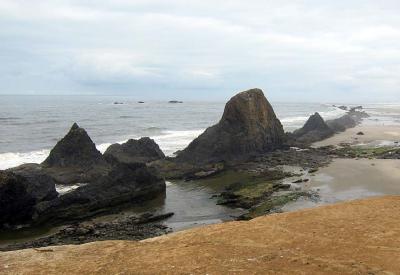
Mexico: Baja California's Cape Region
-
Feb 21 to Mar 1 2026
Rich Hoyer
2026
Single Room Supplement $730


2026
Single Room Supplement $730
The Cape Region of southern Baja California is in some ways a familiar place. Many of the area’s plants and animals are also found in California or the Sonoran Desert of Arizona and west Mexico, but there are obvious differences, and those differences have attracted natural historians for decades. There are many endemic plants and animals, among them four currently recognized bird species and a number of distinctive subspecies, some likely to be split in the future. The tropical habitats of the southern peninsula are also a major wintering area for birds from western North America, and the nearshore waters are rich and diverse. In our quest for the Cape Region’s specialties, we’ll be entertained by the spectacles of mixed flocks of wintering passerines, multitudes of shorebirds, and even some seabird watching, but the tour highlight for some will be the side trip to commune with the Gray Whales of Magdalena Bay.
This is a complete natural history tour, with a focus on the birds but with attention paid to the plants, reptiles, mammals, and insects of the Cape Region.


Day 1: The tour begins at 6:00 pm in the lobby of our hotel in San José del Cabo, Mexico.
Day 2: We’ll bird the estuary of San José where a shallow, meandering freshwater creek meets the sea in an ever-changing delta only a few hundred yards across. In a region beset by an often very extended dry season, the creek is a veritable oasis. Being so close to human populations always results in unanticipated changes in the nature of the marsh vegetation, but there are usually a few Belding’s Yellowthroats in the stands of giant bullrush and cattails, and sometimes they can be abundant. The shallows also host ducks such as Cinnamon and Blue-winged Teal, several herons and egrets including Reddish Egret, Common Gallinule, and Pied-billed Grebe. A look over the ocean often results in Magnificent Frigatebird and Brown Pelican, and Heermann’s Gull is usually present. Later we’ll visit nearby desert, home to California Scrub-Jay, Blue-gray Gnatcatcher, Verdin, and possibly Gray Thrasher. We’ll spend the rest of the day checking areas with larger trees in search of wintering migrants, and we’ll likely get our first views of Xantus’s Hummingbird. Night in Los Barriles.
Day 3: We’ll depart very early for the northern foothills of the Sierra La Laguna, traveling a road that reaches an elevation of about 2500 feet. We’ll search for several endemic forms (many likely true species) that prefer the oak woodlands and even some that occasionally descend from the higher elevation pine-oak. Among birds we should see are California Towhee, the pale “San Lucas” American Robin, the dark-eyed “Narrow-fronted” Acorn Woodpecker, the “Viosca’s” Band-tailed Pigeon, without a tail band, and the not-so-different Warbling Vireo. If we’re very lucky, we could see the endemic subspecies of White-breasted Nuthatch, Oak Titmouse, and Spotted Towhee, but the one that is most likely is the relatively common “Cape” Northern Pygmy-Owl with its slightly higher-pitched and faster-paced song. Wintering Cassin’s Kingbird occurs here, and the woodland is home to many wintering passerines such as a few Black-and-white and abundant Black-throated Gray Warblers. If the weather is sunny, this is also a good spot for the highly colorful San Lucan Rock Lizard and the endemic Cape Spiny Lizard. After lunch, we’ll return to our hotel and sea watching which might reveal Brown Booby and the ever-present Magnificent Frigatebird. Night in Los Barriles.
Day 4: We’ll have a relaxed morning in the deserts and estuaries on the Gulf of California coast. The desert here has abundant Bursera microphylla trees which provide food for wintering Gray Vireo and Ash-throated Flycatcher, while resident California Quail, Greater Roadrunner, Costa’s Hummingbird, Loggerhead Shrike, Cactus Wren, California Gnatcatcher, and Black-throated Sparrow are possible. We might stumble into flocks of wintering Brewer’s and Clay-colored Sparrows almost anywhere, and some years Lark Bunting is numerous. After lunch we’ll continue, with a birding stop or two, to our next hotel on the charming waterfront in La Paz, with nothing scheduled for the rest of the afternoon. Night in La Paz.
Day 5: We’ll spend a very full but slow-paced morning in the La Paz area, including some of the best shorebird mudflats in western Mexico. Numbers of Least and Western Sandpipers, Willet, Long-billed Curlew, Marbled Godwit, and Wilson’s, Black-bellied, and Semipalmated Plovers winter here, and a full complement of herons and egrets is possible. The nearby sewage ponds and well-watered agricultural fields hold Black-bellied Whistling-Duck, Crested Caracara, American Avocet, Black-necked Stilt, Vermilion Flycatcher, and American Pipit among many other birds, keeping us busy for the rest of the day. For obvious reasons, Peregrine Falcon and Merlin also consider this a great place to spend the winter. The area is also notable for the list of vagrants that have been discovered here, and we’ll make an attempt to see any that have been reported, or perhaps we’ll find our own. We’ll have a break after lunch during which birders might spot a Blue-footed Booby patrolling the harbor waters across the street from our hotel while others might choose a stroll in the shopping district. There will be an optional late afternoon outing to the nearby mudflats and mangroves, or perhaps a return to the sewage ponds. Night in La Paz.
Day 6: We’ll have the first part of the day to bird near La Paz, venturing a bit farther afield to the north of town where a giant cactus grove is home to both Gila Woodpecker and Gilded Flicker. Farther north, the rocky shore should have American Oystercatcher, Yellow-footed Gull, and Brandt’s Cormorant while patches of mangrove might harbor Ridgway’s Rail, the lovely Mangrove Yellow Warbler, and Northern Waterthrush. The nearby dwarf desert with fascinating plant forms will draw our attention, and Tiger Whiptail and Zebra-tailed Lizard will tease us as they dart away. If there are any flowers, some interesting butterflies such as Mexican Giant and Hepburn’s Metalmarks and the snazzy Silver-banded Hairstreak could occur. We’ll depart right after lunch to make the three- and one-half-hour drive across the Baja California Peninsula to Puerto San Carlos, a Pacific Coast fishing village on Magdalena Bay. Night in Puerto San Carlos.
Day 7: We’ll take a four-hour boat trip on the bay during which we may get extremely close to Gray Whales, an experience not soon forgotten. It’s about an hour’s boat ride to the mouth of the bay where the whales tend to congregate as they arrive from their summer feeding and gestation areas as far north as the Chukchi and Beaufort seas off northwestern Alaska. Sometimes loafing, sometimes in active courtship and mating, they often approach the boats out of curiosity. Plenty of birds will be seen along the way with Royal Tern, Brandt’s Cormorant, Western Gull, and Brown Pelican in amazing abundance. After the boat ride and perhaps some mangrove birding, we’ll make the long drive back south, ending the day in the lush oasis of Todos Santos on the west side of the peninsula. Night in Todos Santos.
Day 8: We’ll have an easy day of birding near Todos Santos. Palm oases, hedgerows, parks and agricultural fields can hold concentrations of wintering birds, such as warblers, sparrows, buntings, and orioles, and in the process, we might discover a fun vagrant. We’ll also be back in the range of Xantus’s Hummingbird and Belding’s Yellowthroat, so we might have a chance to reacquaint ourselves with these endemics. Night in Todos Santos.
Day 9: We’ll have a very relaxed final morning, with some birding within walking distance of our hotel, such as at the nearby beach where we often see Humpback Whales breaching in the distance. In late morning we’ll make the 80-minute drive to the Los Cabos airport where the tour ends around noon in time for your mid-afternoon international departure.
Note: The information presented here is an abbreviated version of our formal General Information for Tours to Mexico: Baja California. Its purpose is solely to give readers a sense of what might be involved if they take this tour. Although we do our best to make sure that what follows here is completely accurate, it should not be used as a replacement for the formal document which will be sent to all tour registrants, and whose contents supersedes any information contained here.
ENTERING MEXICO: Mexico requires a valid passport for entry by US citizens. Citizens of other countries may need a visa and should check their nearest Mexican embassy. Your passport should be valid for at least six months after the date the tour ends. Tourist cards are required and are obtained upon entry at the border customs.
LEAVING MEXICO: For those flying into Mexico, the tourist tax is included in your flight ticket by the airline. For those entering by land, the tourist permit must be paid for at a bank before exiting the country; this can usually be done at the border when you get the permit.
COUNTRY INFORMATION: You can review the U.S. Department of State Country Specific Travel Information here: https://travel.state.gov/content/travel.html and the CIA World Factbook here: https://www.cia.gov/the-world-factbook/. Review foreign travel advice from the UK government here: https://www.gov.uk/foreign-travel-advice and travel advice and advisories from the Government of Canada here: https://travel.gc.ca/travelling/advisories.
CLIMATE: The southern Baja California Peninsula is usually warm and dry in early February. Early mornings are pleasantly cool, and rain is possible but very unlikely.
HEALTH: No specific inoculations are necessary, although up-to-date tetanus protection is always a good idea. Special medications may be unavailable so bring enough to cover your particular needs for the entire trip. We have found that with careful eating habits, intestinal problems can be largely avoided. Bottled water is provided in most of our hotels, and the leader will have it available for refilling personal bottles where this isn’t the case.
Don’t forget that the sun in Mexico can be very intense. Please bring adequate protection, including a sun hat and a strong sun screen of at least 15 rating.
Biting insects and arachnids are seldom a major nuisance; during this season chiggers and mosquitoes are all but non-existent.
Please note that any health/medical information contained herein is gleaned by WINGS from websites that are dedicated to traveler’s health issues. Advisories and recommendations by agencies such as the CDC can and do change frequently. We urge you to consult with your physician. The most current information about travelers’ health recommendations can be found on the CDC’s website here: https://wwwnc.cdc.gov/travel/destinations/list
PACE OF THE TOUR: As with all tours in the tropics, we’ll try to be in the field around dawn, which means daily starts about 6:00 a.m. on most days; some a little earlier or later. All days will include one to two hours at the hotel before dinner or after lunch with optional late afternoon outings.
Walking is mostly along roads and wide trails that are level to gently sloping, with the possibility of some short stretches of steeper gradients. We’ll also occasionally be walking off the road and trails in wide washes, with some small boulders to navigate. Good foot gear is essential, and many people find a collapsible hiking stick invaluable for walking over rough ground and down rocky sides of washes. Since birding often involves standing still for periods, some people like to have a small travel stool to sit on.
FOOD: Baja California is on the leading edge of Mexico’s “food revival,” and restaurants here take full advantage of an abundance of fresh local seafood, artisan olive oils, gourmet breads and pastries, organic produce, mussel farms, premium coffee beans, and high-quality local cheese. Most breakfasts and one lunch will be picnics, with remaining lunches and all dinners in restaurants. Despite common perception, spicy food is easy to avoid in Mexico.
ACCOMMODATIONS: Our hotels offer standard amenities.
DRESS: Informal throughout.
TRANSPORTATION: Transportation during the tour is by van.
SMOKING: Smoking and vaping is prohibited in the vehicles or when the group is gathered for meals, checklists, etc. If you are sharing a room with a non-smoker, please do not smoke in the room. If you smoke in the field, do so well away and downwind from the group. If any lodge, accommodation, or location where the group is staying or is gathered has a more restrictive smoking policy than the WINGS policy, the more restrictive policy will prevail.
2019 Narrative
Gorgeous weather, delicious food, amazing scenery, and a great group were highlights of this year’s Baja California tour. The Gray Whale experience on Magdalena Bay was also particularly memorable, as was a peaceful walk in a stark desert shaped by fascinating limberbushes and elephant trees. Non-bird critters were also wonderful, with spectacular Yellow Angled-Sulphurs bounding by, a highly sought after Tezpi Dancer on the very first day, and a most adorable Coast Horned Lizard hiding in plain sight. We saw all of the endemic birds that we expected (only the newly split Baird’s Junco being out of reach), including some that may eventually be split, such as the Northern (Cape) Pygmy-Owl that was being harassed by a Xantus’s Hummingbird. A leucistic Xantus’s Hummingbird earlier the same day was also a very special sighting. While Belding’s Yellowthroat and Gray Thrasher were additional endemics, ranking higher were our experiences with a pair of Ridgway’s Rails that wandered out into the open, a Greater Roadrunner than approached our group within a few yards, a flock of thousands of wheeling Western Sandpipers, and a subtly beautiful Clay-colored Sparrow that with careful study stood in contrast with nearby Brewer’s Sparrows. Colorful Hooded Orioles, a stunning male Varied Bunting, and a Lazuli Bunting coming down for a drink were further favorites.
The first morning’s walk at Estero San José began with a Cooper’s Hawk scaring up the abundant Hooded Orioles and House Finches, but soon we were at the water’s edge looking at several Cinnamon-rumped Seedeaters and an obliging Belding’s Yellowthroat. An Osprey devouring a fish looked over a marsh that held the odd combination of Common Raven amongst many Black-crowned Night-Herons. Before lunch we worked up a very busy mob of birds, one of which was a stunning male Varied Bunting. During lunch, which we would remember for the amazing lobster tacos, a female Xantus’s Hummingbird came down to sample some ash from an old wood fire grill. Birds were sparse at the tiny reservoir called Boca de la Sierra, but an Osprey seemed out of place there, and Baja Bluet, Tezpi Dancer, and Giant Darner were write-ins on our odonate list.
Our full morning in the Serra de Laguna was very productive. The ghostly leucistic Xantus’s Hummingbird was the only real surprise, and the Northern (Cape) Pygmy-Owl was the best prize of the morning. We got lucky to see just one each of the endemic subspecies of Band-tailed (Viosca’s) Pigeon and American (San Lucan) Robin, while Acorn (Narrow-fronted) Woodpecker was unusually abundant and conspicuous. Cassin’s Kingbird, with close comparison of Western Kingbird was a great lesson in ID. A tire blowout on the way back added less than 30 minutes to our drive, and getting a newer and better replacement vehicle was probably worth the hassle in the end.
A group of Common Ravens cavorted and vocalized entertainingly during our entire walk among the limberbushes and elephant trees of the low, coastal desert south of Los Barriles. A Gray Vireo finally appeared, and a Costa’s Hummingbird fed from the Adam’s Trees by the car. The walk to the Eureka marshes was very productive, adding several ducks and shorebirds, but the highlight here was the Greater Roadrunner that appeared from the bushes and proceeded to walk right up to us as we froze in silence. It was also relaxing to just watch the Magnificent Frigatebirds wheeling about on the late morning breeze. The drive to La Paz was punctuated by a quick stop at the rock figs of San Bartolo, where a Plumbeous Vireo was a new bird for the master list. We arrived at our hotel in La Paz via some back neighborhood streets, as the Carnival celebrations were well underway, occupying the entire waterfront.
Loud music into the wee hours didn’t make for much sleep for many of us, but we still charged forward in the morning. Meeting young ornithology student was a highlight of our morning amongst throngs of shorebirds at the Ensenada La Paz mudflats. Our timing with the high tide was fortunate, and we coincided with his attempt to document how many of last year’s 6000 tagged Western Sandpipers had returned (he estimated about half). We helped him by adding a few sightings of our own. Wilson’s Plovers and Gull-billed Terns were other nice birds on the mudflats, and our shorebird tally totaled 15 species. Magnificent Frigatebirds were also a highlight today, with two perched very close on power lines as well as many wheeling about as we had lunch in sight of the bay. The sewage ponds were full of birds, including a few American Avocets – one in full toast-headed breeding plumage was quite beautiful. We finished the morning with a very quick and productive stop by some red mangroves where Mangrove Warbler came in for great views.
The carnival stages had been dismantled, so we set out to the north after having had our first good sleep in two nights. Bird action on the straights between Espiritu Santo and the point north of La Paz was very low, but on the shore we enjoyed a handsome pair of Yellow-footed Gulls (and others were courting by repeatedly carrying and dropping bits of flotsam). A pair of animated American Oystercatchers were very vocal, while Brown Pelicans in their stunning breeding colors were in comparison perfectly staid. A lone Loggerhead Shrike by the car was our only one, and just after we had a wonderful close encounter with Black-throated Sparrow, we spotted a Coast Horned Lizard right on the roadside, hoping to be invisible. The blooming shrubs and abundant butterflies was quite an entertaining show. Then came the long drive to Puerto San Carlos, at the end of which was a pair of lovely Ridgway’s Rails walking along the edge of the mangroves.
The full morning on Magdalena Bay was punctuated by a Gray Whale swimming right under our boat, while perhaps up to 15 were within a quarter mile, sometimes surfacing close by, and at least six showing their flukes for photos. A single Humpback Whale was in amongst them for much of the morning as well. A Bald Eagle from the very small local breeding population (and the only one in Mexico) was an excellent spot by Laurel before we disembarked for what would be our best lunch of the tour – amazingly fresh spiny lobster (Panulirus inflatus to be exact) being the local specialty. Several wintering Brant and a few adult plumaged Heermann’s Gulls were other memorable birds on the boat ride.
A couple easy morning strolls in the lush coastal scrub of Todos Santos was quite productive. Gorgeous Scott’s Orioles were in evidence, a Gray Thrasher posed beautifully on a fence post, a Xantus’s Hummingbird fed from cactus flowers right in the garden, and a proud California Quail sang from a tall perch, long enough to obtain a sweet video. And then suddenly this warm, lovely vacation was over as we made the scenic drive back to San José del Cabo.
- Rich Hoyer
Rich has such a deep knowledge of general natural history, not just birds, and a sense of delight in everything we saw. In addition, he is just an all-around nice, helpful person, which made it a really special experience to be able to travel around with him. Plus he can change a flat tire like a boss and was completely calm and in control during what could have been a rather frightening and unpleasant experience. And he drove all the way back to Cabo to pick up a new vehicle for us in the middle of the night when the rental company failed to show up with a new vehicle. There's no way to avoid things like that, and the sign of a really top-notch guide is the ability to deal with unforeseen circumstances with competence and grace, which Rich exceeded.
- Lisa S. on Mexico: Baja California's Cape Region
Maximum group size seven with one leader.
More Tours with these Leaders
Brazil: Marvelous Mato Grosso
The Pantanal, Chapada dos Guimarães, and Cristalino Jungle Lodge
The Pantanal, Chapada dos Guimarães, and Cristalino Jungle Lodge
Jul 20 to Aug 3 2025 • Rich Hoyer