Costa Rica in July
-
Jul 2028
Scott Olmstead
Tour Price to be Determined


Tour Price to be Determined
Costa Rica packs more biodiversity within its borders than seems possible. A central spine of mountain ranges creates contrasting Pacific and Caribbean slopes, while ocean currents and prevailing winds create a drier north and wetter south. This complex geography produces an off-the-charts species richness for a country of its size. When you combine the abundant birdlife with the well-developed tourism infrastructure, the result is a seemingly infinite variety of birding locations that can be visited with logistical ease. One of the greatest challenges with planning a birding trip to Costa Rica is deciding where to go! On this trip we’ll concentrate on exploring the country’s north, with visits to such famous birding destinations as Rancho Naturalista, La Selva Biological Station, and Monteverde. Midsummer is a fascinating time in Costa Rica: rain can be frequent but falls mostly later in the day or at night, and temperatures are quite a bit cooler than in the spring; it’s the post-breeding season for most birds, meaning our trip coincides with peak numbers; finally, the press of tourists is much reduced from the peak winter season.

Day 1: The tour begins this evening with an introductory meeting followed by dinner at our hotel just outside San José. Night in Heredia.
Day 2: We’ll depart the San José metropolitan area early and bird our way toward Rancho Naturalista, our base for the next three nights. Stops along the way will give us a chance to get to know many of the common birds of Costa Rica’s Central Valley like Lesson’s Motmot, Common Squirrel-Cuckoo, Barred Antshrike, Orange-billed Nightingale-Thrush, and Chestnut-capped Warbler. We'll also make an attempt to see the endemic and localized Cabanis's Ground-Sparrow. After arriving at our lodge we’ll look to see if the lovely Snowcap is visiting the flowering shrubs around the cabins. Night Rancho Naturalista.
Days 3-4: We have two full days to take advantage of the many birding sites located in close proximity to Rancho Naturalista, including the lodge property itself. On one morning we’ll begin the day on the deck listening to the dawn chorus and watching birds such as lanky Gray-headed Chachalacas, noisy Chestnut-headed Oropendolas, and colorful Collared Aracaris visit the feeders below while the hummingbird feeders at eye level are abuzz with the activity of White-necked Jacobins, Green-breasted Mangos, and others. One day we’ll set out very early to visit a nearby site with extensive forest where we should find a wide variety of foothill species, including Tawny-crested Tanager, White-ruffed Manakin, Rufous Mourner, and Ashy-throated Chlorospingus. Several antbirds are possible, with Spotted, Bicolored, Dull-mantled and Zeledon’s among the options. With luck we might even see something truly rare and elusive like a Lanceolated Monklet or Yellow-eared Toucanet. We’ll also bird a picturesque river valley close to the lodge where mixed flocks often include Black-and-yellow and Emerald Tanagers, and the one-of-a-kind Sunbittern can often be found foraging right at the edge of the road. A unique feature of Rancho Naturalista are the hummingbird bathing pools where one can watch Crowned Woodnymphs, Purple-crowned Fairies, and Snowcaps dipping into the creek below. We will certainly spend a little time exploring the trails at Rancho, which begin right outside our rooms and can produce forest species like Fawn-throated Foliage-gleaner, Red-throated Ant-tanager, Black-capped Antthrush, and the local Tawny-chested Flycatcher, sometimes found right around the lodge but can be quite shy. Nights at Rancho Naturalista.
Days 5-6: After another chance to enjoy the activity at the feeders from the balcony of our lodge, we’ll descend the Reventazon Valley to the Caribbean lowlands and towards the Sarapiquí region. We’ll visit local artist and naturalist “Cope,” who has turned his home into a miniature wildlife refuge featuring very productive fruit and hummingbird feeders often loaded with Red-legged Honeycreepers and Orange-chinned Parakeets, and a beautiful water feature sometimes visited by a pair of Russet-naped Wood-Rails. We’ll also spend some time searching with Cope for roosting owls; Crested and Spectacled Owls are both possible. The main event of our time in the lowlands will be La Selva, a biological station operated by the Organization for Tropical Studies. This roughly 1,400-acre reserve is adjacent to Braulio Carrillo National Park and is managed as a natural research laboratory. About 475 species of birds have been recorded at La Selva, and although we'll only see a fraction of that number in a one-day visit, we’ll certainly experience the avian richness of the region. La Selva is an excellent place to see Great Tinamou, Rufous and Broad-billed Motmots, Keel-billed and Yellow-throated Toucans, Black-crowned and Fasciated Antshrikes, Slaty-tailed and Gartered Trogons, Snowy Cotinga, Great Green and Scarlet Macaws, Stripe-breasted and Black-throated Wrens, and Chestnut-colored, Cinnamon, and Rufous-winged Woodpeckers, among many, many others. Our visit to La Selva will be an especially memorable part of the trip. We’ll also take a boat trip on the Sarapiquí River to look for kingfishers, tiger-herons, and the uncommon and timid Sungrebe. Nights in the Sarapiquí region.
Day 7: We’ll have another morning to look for odd and ends that we haven’t seen yet in the Sarapiquí region before heading up into the mountains, driving alongside a dramatic valley where Short-tailed and White Hawks are regularly seen. We’ll visit a middle-elevation site with feeders that attract crowd-pleasers like Prong-billed Barbet, Northern Emerald-Toucanet, Silver-throated Tanager, and hummingbirds such as Brown Violetear, Coppery-headed Emerald, and the flashy Violet Sabrewing before settling into our hotel for one night. Night in Vara Blanca.
Day 8: This morning’s birding in the Vara Blanca/Poasito area will offer refreshingly cool temperatures and the chance to see some high-elevation species that won’t be available anywhere else on the tour. The birding starts right on the grounds of our hotel, where we can find Ruddy-capped Nightingale-Thrush, Yellow-thighed Brushfinch, Slaty Flowerpiercer, and the skulky Silver-throated Tapaculo, among others. In patches of cloud forest on the slopes of Poás Volcano we’ll search for mixed flocks that can include Spot-crowned Woodcreeper, Flame-throated Warbler, Yellow-winged Vireo, and the endearing Collared Redstart. Among the new hummingbirds available here are Purple-throated Mountain-gem, Lesser Violetear, and Talamanca, Fiery-throated, Stripe-tailed, Scintillant, and Volcano Hummingbirds. Both Long-tailed and Black-and-yellow Silky-flycatchers are possible. In the afternoon we’ll travel west to Monteverde in the Tilarán Mountains — the longest drive of the trip at close to four hours — arriving in time for dinner. Night in Monteverde.
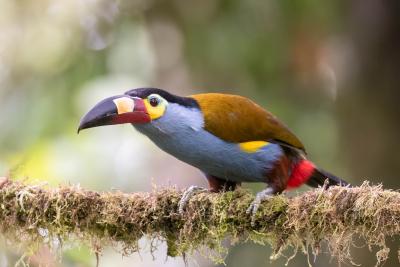
Days 9-10: We’ll have two full days to explore the varied habitats around Monteverde, one of Costa Rica’s original ecotourism destinations. Situated almost right on the continental divide, here we can find a fascinating mix of species from different regions within a relatively small area. One morning we’ll visit the lush, windswept forests of the Santa Elena Cloud Forest Reserve. Here we’ll target typical cloud forest species like Ruddy Treerunner, Spangle-cheeked Tanager, Gray-breasted Wood-Wren, Red-faced Spinetail, Slaty-backed Nightingale-Thrush, and Costa Rican Warbler. If we are lucky we might spot a Buff-fronted Quail-Dove, Highland Tinamou, or covey of Black-breasted Wood-Quail crossing the trail. We’ll also hit the productive middle-elevation Curi-Cancha Reserve, a great location to look for the iconic Resplendent Quetzal, though it is always hit-or-miss at this time of year. Mixed flocks at Curi-Cancha can contain Slaty Antwren, Plain Antvireo, Spotted Barbtail, Eye-ringed Flatbill, and Olivaceous and Spotted Woodcreepers. Fruiting trees may attract Golden-browed Chlorophonia, Elegant Euphonia, Mountain Thrush, and Scarlet-thighed Dacnis. Monteverde is one of the best places to find the Three-wattled Bellbird, a strange member of the cotinga family with an ear-shatteringly loud voice, and we’ll be sure to make a special effort to see this species. One afternoon we’ll visit a drier forest where we might find Long-tailed Manakin, Ruddy Woodcreeper, White-eared Ground-Sparrow, and Rufous-and-white Wren. Nights in Monteverde.
Day 11: For our last day we’ll leave Monteverde and head down into the Pacific lowlands to visit a coastal site where we could find a variety of shorebirds on their southbound migration. The woodland here can produce many species typical of the Costa Rica’s dry northwest, such as Black-headed Trogon, Turquoise-browed Motmot, Orange-fronted parakeet, White-lored Gnatcatcher, Banded Wren, Streak-backed Oriole, and Cinnamon Hummingbird. We’ll have lunch on the road and leave time for one more birding stop where we might turn up Nutting’s Flycatcher, Stripe-headed Sparrow, Ferruginous Pygmy-Owl, or perhaps even a Lesser Ground-Cuckoo or Pearl Kite. By late afternoon we’ll be back to the San José area and ready to check into our hotel for the final night of the tour. Night in Alajuela.
Day 12: Departures from SJO.
Note: The information presented here is an abbreviated version of our formal General Information for this tour. Its purpose is solely to give readers a sense of what might be involved if they take this tour. Although we do our best to make sure what follows here is completely accurate, it should not be used as a replacement for the formal document which will be sent to all tour registrants, and whose contents supersedes any information contained here.
ENTERING COSTA RICA: U.S. citizens entering by air need a U.S. passport valid for at least six months after the date the tour ends and with at least one blank page for an entry stamp. A tourist card is required and will be issued by your arriving airline. Citizens of other countries may need a visa and should check their nearest Costa Rican embassy.
Proof of Covid vaccination and valid Yellow Fever vaccination is required if you are arriving from a country where the disease is a risk. See http://wwwnc.cdc.gov/travel/yellowbook/2014/chapter-3-infectious-diseases-related-to-travel/yellow-fever#1948 for more information.
COUNTRY INFORMATION: You can review the U.S. Department of State Country Specific Travel Information here: https://travel.state.gov/content/travel.html.
Review foreign travel advice from the UK government here: https://www.gov.uk/foreign-travel-advice and travel advice and advisories from the Government of Canada here: https://travel.gc.ca/travelling/advisories.
PACE OF THE TOUR: Breakfast time varies from around 6:00am to around 7:00am, depending on which lodge or hotel we’re staying at and what our plan is for the morning's birding. Most days, we’ll do some pre-breakfast birding from around 6:00 to 7:00, followed by a sit-down breakfast, followed by more birding until lunch, and another outing in the afternoon. On at least one morning, we’ll make an earlier start and take a packed breakfast to eat on the bus or at our birding site. On the longer travel days, during which we’ll be making birding stops from the vehicle most of the day, we may arrive at our hotel around dark, a tiring pace for some. Depending on the weather and the group's interest, there may be a few optional night birding forays by foot and/or bus. On most days we'll have around an hour off at the rooms before checklist and dinner.
The longest birding walks can be around 2-3 miles (3.2 – 4.8 km) round trip, but at a slow pace that will take most of the morning. Much of Costa Rica is rugged and mountainous, so be prepared for some uphill and downhill walking on roads and trails. Rancho Naturalista and Poás Volcano Lodge have trails that can be steep, muddy, and slippery in short sections; although we do not walk rapidly they can be difficult for those whose legs, knees, and feet are not in good shape and for those with balance problems. Some of the birding sites in Monteverde also have trails that may be steep in places but not muddy. Good foot gear is essential, walking sticks (with wrist straps) are recommended. We often walk very slowly on roads and trails, spending much time standing and watching mixed flocks; some find portable collapsible stools a relief during periods when we are standing in one spot for more than a few minutes.
On our afternoon birding location on Day 5, where we will look for roosting forest owls, requires walking on a very muddy trail (sometimes 6-12” of muddy water!). For this, we highly recommend bringing rubber boots. There are boots available to borrow at the site, but sizes are limited and anyone with very larger or very small feet will almost certainly be more comfortable bringing their own. Even though we only visit here for a couple hours, we feel that it’s worth taking up some extra space and weight in your luggage with comfortable rubber boots. Those who don’t wish to walk this trail will have the option to stay back at a comfortable spot with chairs and enjoy watching bird feeders.
HEALTH: The Centers for Disease Control and Prevention (CDC) recommends that all travelers be up to date on routine vaccinations. These include measles-mumps-rubella (MMR) vaccine, diphtheria-tetanus-pertussis vaccine, varicella (chickenpox) vaccine, polio vaccine, and your yearly flu shot.
They further recommend that most travelers have protection against Hepatitis A and Typhoid.
Malaria: Malaria risk is very low in Costa Rica but has shown a modest increase since 2016. Please consult your physician.
Zika: This virus is expanding northward from tropical South America into the northern Caribbean and the southern United States and health authorities are still trying to gauge its full impact. Couples who expect/hope to become pregnant should consult their physician. The virus is transmitted by mosquitos of the genus Aedes, a day-flying mosquito typically found near people in crowded urban environments that have only a minimum of public services like sanitation, window screens, and drainage; in other words locations that aren’t on most tour itineraries. WINGS tours spend most of their time in natural areas where the Aedes aegypti mosquito is altogether absent.
Yellow Fever: There is no Yellow Fever in Costa Rica.
Please contact your doctor well in advance of your tour’s departure as some medications must be initiated weeks before the period of possible exposure.
The most current information about travelers’ health recommendations can be found on the CDC’s Travel Health website here: https://wwwnc.cdc.gov/travel/destinations/list
Elevation: Sea level to roughly 8,000 feet (2450 meters) on one day.
Insects: Many potential health problems can be prevented by adequate protection against insects. Even when mosquitoes may be sparse, biting gnats and chiggers can still be a nuisance. To be protected, bring plenty of repellent and wear long sleeves and pants when in the field. Insect repellent comes in many forms; a pump spray, cream, or wipes are your best options. Please avoid aerosol sprays, which can result in uncontained dispersion of repellent into the rainforest, can be bothersome to others in your party, and are frowned upon by many Costa Ricans working in the ecotourism industry.
Smoking: Smoking and vaping is prohibited in vehicles or when the group is gathered for meals, checklists, etc. If you are sharing a room with a non-smoker, please do not smoke in the room. If you smoke in the field, do so well away and downwind from the group. If any location where the group is gathered has a stricter policy than the WINGS policy, that stricter policy will prevail.
Miscellaneous: We do not often encounter snakes and take time to observe them whenever possible; most are not venomous, and venomous ones are not aggressive; in any event, because snakes, biting ants, and other surprising critters can be encountered at any time, a small flashlight or headlamp is a necessity for navigating the paths between your rooms and dining areas at each lodge in the evenings. At times we will be remote, and while the lodges have emergency medical supplies, professional medical assistance will be several hours away from some of them.
One can never completely escape the risk of parasites or fungal infections. Please consult with your physician. Drinking water is well-purified throughout most of Costa Rica. Filtered or bottled water is also available.
CLIMATE: Costa Rica’s climate varies with elevation. Temperatures will range from the 50s °F in the mountains to as high as the low 90s (but more typically low 80s) at lower elevations. San José, at an elevation of 3,800 feet (1160 m), can be cool, with evening lows in the upper 60s. Those of you arriving in the evening will want to wear a light sweater. There will almost certainly be some rain and, at higher elevations, temperatures will be cool, and mist and/or rain is possible. Some tours experience more rain than others, especially in the eastern lowlands. Note that in the warm, very humid lowlands, raincoats may produce as much moisture inside as they protect you from on the outside. Because of these conditions, an umbrella is a necessary birding accessory.
ACCOMMODATIONS: Our hotels and lodges are always comfortable, usually the best available. All of our lodges have private bathrooms with hot water and electricity. Bathrooms have tubs or showers or both. As is typical in the tropics, occasionally, small lizards, amphibians or unusual insects may visit a hotel room, especially in the lower elevations. At several of our lodges, the rooms are separate from the reception/dining area. Distances aren’t far, but please be prepared for the possibility of walking a few hundred feet to your room, possibly involving some stairs. Help is always available with luggage.
FOOD: Food in Costa Rica is not known for being distinctive but it is consistently very good and not remotely spicy. Fresh fruit, green vegetables, and tasty main dishes are served at our hotel restaurants and are safe to eat. A well-liked staple for breakfast is gallo pinto, a mix of rice and beans, though cereals, eggs, and fresh fruit are also available. A popular dish is the casado, with sides of beans, rice, plantain, and salad accompanying one's choice of meat or a vegetarian protein option.
Drinks: Bottled water and/or fresh juice is provided at lunch and dinner, as is coffee or tea. WINGS will also pay for one beer, wine, or soda at dinner if you like. Tap water is drinkable in most or all of our lodges, but if not, they will have either filtered or bottled water available. Our vehicle will also have a large jug of bottled water so we recommend bring a good quality refillable water bottle and keep this topped up.
Food Allergies / Requirements: We cannot guarantee that all food allergies can be accommodated at every destination. Participants with significant food allergies or special dietary requirements should bring appropriate foods with them for those times when their needs cannot be met. Announced meal times are always approximate depending on how the day unfolds. Participants who need to eat according to a fixed schedule should bring supplemental food. Please contact the WINGS office if you have any questions.
TRANSPORTATION: We will be traveling by comfortable, air-conditioned van or minibus for the whole tour. Some roads are quite bumpy, potholed, and/or winding; anyone susceptible to motion sickness should bring an appropriate remedy. Participants should be able to sit in any seat in our vehicles.
Costa Rica in July
We can't render google maps without your cookie consent. To see the map, please reset your cookies, then accept all, then reload this page.
2026 Narrative
With this year’s first running of our newly redesigned Costa Rica in July tour, we proved once again that the North American summer is a great time to visit this Central American biodiversity hotspot. Yes, it’s the “green season” and accordingly we did experience some rain, but it didn’t impact our birding all that much and after all, moisture is part of what makes the tropical forests of Costa Rica so lush and diverse. Our itinerary took us across the northern part of the country from the Central Valley down to the Caribbean lowlands, up to the slopes of Poás Volcano in the highlands, and across to the Tilarán Mountain Range in the northwest of the country, with just a taste of the dry northwestern lowlands mixed in to add more variety. Our group got along swimmingly and worked together to get each other on the birds, of which we recorded over 300 species with ease. Highlights included coveted regional endemics like Three-wattled Bellbird, Snowcap, Buff-fronted Quail-Dove, and Tawny-chested Flycatcher, along with more widespread Neotropical favorites like Sunbittern, Crested Owl, Great Curassow, Keel-billed Toucan, Montezuma Oropendola, Scaled Antpitta, and Lesson’s Motmot. We tallied 27 species of hummingbirds, four motmots, four toucans, six owls, 12 wrens, and 20 species in the tanager family. What a haul! Of course, along the way we also enjoyed delicious Costa Rican food, the warm hospitality of local staff and guides, and the services of our excellent driver Enrique. Finally, let’s not forget the amazing wildlife beyond the birds, including memorable sightings of Mantled Howler Monkeys, an amusing Hoffman’s Two-toed Sloth, adorable Honduran White Bats, two remarkable species of poison-dart frogs, and a record five species of snakes seen well. Thanks for joining me on this marvelous visit to the magical birding destination that is Costa Rica. ¡Pura vida!
Day 1: We started things off with our late afternoon introductory meeting and a cooperative Mottled Owl roosting behind the hotel, followed by a wonderful welcome dinner.
Day 2: On our first full day we worked on getting familiar with the garden birds of the Central Valley, first on the grounds of our hotel, then at a park near the colonial city of Cartago. Highlights included a pair of Barred Antshrike, flashy Gray-cowled Wood-Rails, and a normally secretive Orange-billed Nightingale-Thrush that we spotted bathing in a stream. We next swung by the central park of a nearby small city where we found roosting Tropical Screech-Owls and a sleepy American Barn-Owl, as well as a large statue of the endemic and localized Cabanis’s Ground-Sparrow, which proved to be foreshadowing for our next stop in the nearby farming community of Ujarrás. There we were fortunate to observe a pair of this specialty of the Central Valley as they foraged in a chayote plantation. For lunch we visited a beautiful restaurant in a coffee plantation, which also turned out to be quite birdy and we added several new species, including Common Squirrel-Cuckoo, Brown Violetear, and Golden-hooded Tanager. Later on we had time for a bit of wetland birding at the Angostura Reservoir near Turrialba with waterbirds like Northern Jacana, Southern Lapwing, and Black-bellied Whistling-Duck, as well as a few Snail Kites busily cruising above the marshy habitat. Toward the end of the afternoon we checked into our accommodations at Rancho Naturalista, and gathered for the first of many enjoyable family-style meals.
Day 3: Our morning began with coffee on the deck with the numerous White-necked Jacobins, Crowned Woodnymphs, and a few Bronze-tailed Plumeleteers, followed by some birding on the forest trail behind Rancho; Dull-mantled Antbird and Fawn-throated Foliage-gleaner were among the species that showed well. After breakfast we headed to the nearby San Antonio de Platanillo area for the rest of the morning, where the top highlight by far was seeing at least three Sunbitterns in the wet, grassy areas beside the road. They flashed the hidden eyespots on their wings, gave their melancholy whistled calls, and hunted butterflies. One of these majestic birds even disappointed us by comically choosing to forage in a pile of manure! After lunch at the lodge we took a little down time, then birded our way down the driveway, spotting White-collared Manakins as they bounced around their lek, and Montezuma Oropendolas doing their ridiculous displays, pitching forward while giving their gurgling, swooshing song. We also got our first sighting of the charming Snowcap, a hummingbird that is a must-see at Rancho.
Day 4: Today was our earliest start of the trip, rising before first light for an hour-long drive to the famous El Copal reserve with our local guide Meche. After the logistics of shuttling up the driveway in a 4x4 taxi, we settled in for a somewhat chaotic breakfast on the observation deck. Chaotic because it was hard to eat our delicious breakfast burritos because there was so much activity on the feeders and in the surrounding Miconia trees! The tanager bonanza included Speckled, Emerald, Bay-headed, and Silver-throated Tanagers, as well as Ashy-throated Chlorospingus, while outrageously-colored Keel-billed Toucans tried to steal the show. Later on a couple of rare treats appeared: first the dainty yet striking Black-and-yellow Tanager and then the hulking Blue-and-gold Tanager. Walking on the trails the birding was more challenging, and we worked hard to see forest species like Black-headed Nightingale-Thrush, White-ruffed Manakin, and Checker-throated Stipplethroat. But in fact one of the best sightings turned out to not even be a bird, but a gorgeous and intricately-patterned Eyelash Palm Viper spotted as it was warming up on a log. After lunch we waited out an impressive rainshower and then birded a little more before returning to Rancho, capping off our visit to El Copal with a handsome Laughing Falcon that our driver Enrique located near where our mini-bus was parked. We made it back to Rancho with just enough time for those who wanted to check the activity at the hummingbird pools in the order near the lodge, while others birded from the lodge deck.
Day 5: Our final morning at Rancho featured some real highlight birds like the understated Tawny-chested Flycatcher, a local specialty with a limited range almost entirely contained in the borders of Costa Rica. Then after breakfast we hiked up one of the trails from the lodge with Meche to see a normally-reclusive Thicket Antpitta that has become habituated to worm-feeding. The rest of the morning was spent driving down to the hot and steamy Caribbean lowlands for a visit with Cope, a local artist and naturalist who has transformed his home into a magical oasis for birds in the middle of a densely built neighborhood. We ate lunch by Cope’s fruit feeders while watching the antics of Orange-chinned Parakeets and a seemingly endless parade of three species of dazzling honeycreepers. A gaudy Russet-naped Wood-Rail strolled by, while a couple of juvenile Giant Cowbirds begged for food from the Montezuma and Chestnut-headed Oropendolas. Cope also took us out to the nearby patch of forest that he knows well and showed roosting Spectacled and Crested Owls, a Great Potoo, and a family of tiny and adorable Honduran White Bats roosting beneath a leaf. At the end of the afternoon before checking into our jungle hotel, we stopped at a tree by the roadside where Enrique knew that macaws might be coming in to roost and sure enough we were treated to the magnificent sight of about 20 Scarlet Macaws flying in pair by pair, as well as smaller groups of Red-lored and Mealy Amazons. The action continued right through until after dinner, when our evening ritual of reviewing the bird list for the day was interrupted by another guest announcing he had spotted a snake — it turned out to be a beautiful Costa Rica Coral Snake!
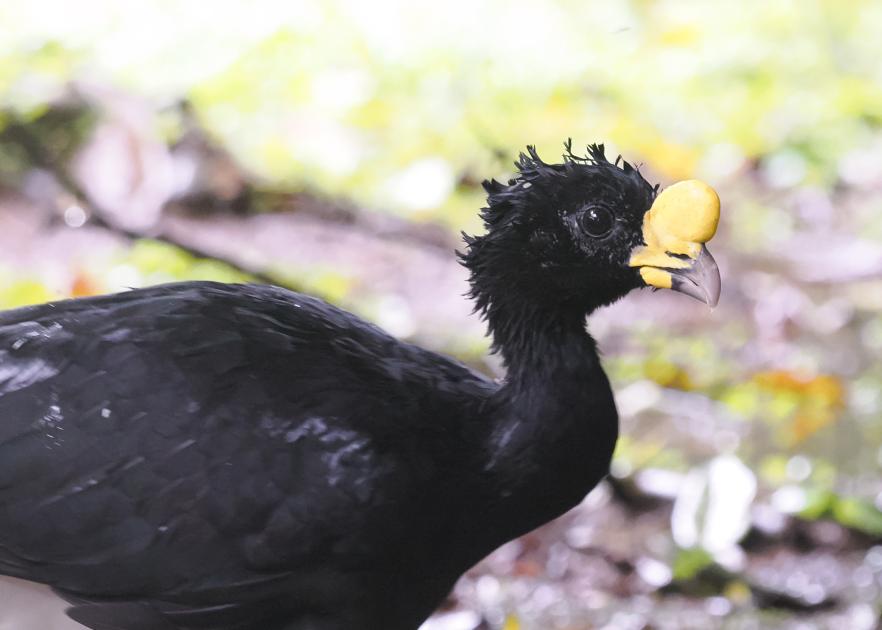
Day 6: This was the day of our long-awaited visit to La Selva Biological Station, a famous birding site and also the setting for many studies of tropical forest ecology. Upon arrival we were immediately greeted by our local guide for the morning Joel and our first Yellow-throated Toucan. The birding was action-packed, and before we had even made it out of sight of the parking area we were sifting through an impressive mixed flock with Eye-ringed Flatbill, Bright-rumped Attila, Stripe-breasted Wren, Black-crowned Antshrike, and a fast-moving group of Dusky-faced Tanagers. Rufous-tailed Jacamar and White-whispered Puffbird showed nicely nearby, and a pair of Fasciated Antshrikes gave us glimpses as they moved through dense vine tangles above us. A Snowy Cotinga obliged us by sitting in a treetop by the river for a somewhat distant study in the scope, while in the forest interior we got great views of Pale-billed Woodpecker and Slaty-tailed Trogons. By late morning we ventured across the river, noting a large and very healthy-looking American Crocodile as we traversed the suspension bridge, and continued to turn up new birds on the other side, including White-ringed Flycatcher and both Cinnamon and Rufous-winged Woodpeckers. Finally rain rolled in late in the morning, and after waiting out one shower under the roof of one of the classroom buildings we returned to the dining hall for lunch and another downpour. When the rain let up we ventured out one more time, and lucked into an impressive Great Curassow strolling through the clearing. After La Selva we headed for the Sarapiquí River for some birding by boat. Noisy Great Green Macaws, a Ringed Kingfisher, an excitable group of White-fronted Nunbirds, and a handsome Bare-throated Tiger-Heron were all nice, but were upstaged by an amazing observation of a Hoffman’s Two-toed Sloth spotted as it was moving through low branches by the river. Red-eyed Treefrogs and an Emerald Basilisk after dinner at the hotel capped off a memorable day.
Day 7: We started with pre-breakfast birding around the hotel grounds, headlined by the best views yet of Red-throated Ant-Tanagers, a shy Lineated Woodpecker that stayed partly hidden in the treetops, a cooperative Long-billed Hermit, and a stately Rufous Motmot that posed for a great study. Stunning Crimson-collared Tanagers appeared at the fruit feeder during breakfast, and then it was time to head upslope. A walk on a quiet road in the foothills was not as birdy as we might have hoped, but did produce some new species like Blue-black Grosbeak and the tiny Scale-crested Pygmy-Tyrant. Lunch was a huge success, when we stopped at a small outdoor cafe with fruit and nectar feeders. Before and during our meal we were entertained by Northern Emerald-Toucanets, a variety of tanagers, and both Red-headed and Prong-billed Barbets. Hummingbirds included Violet Sabrewings and Coppery-headed Emeralds, among the largest and smallest hummingbirds we would see during the tour, both completely dazzling in their own way. Stops at higher elevations in the afternoon gave us our first encounters with mountain birds like Common Chlorospingus, Tufted Flycatcher, Purple-throated Mountain-gem, and Volcano Hummingbird, as well as a very cooperative Bicolored Hawk that gave us fantastic views. After arrival at our lodge in the highlands our owling excursion did not prove successful, but we enjoyed our first starry sky of the trip before dinner.
Day 8: We started by birding around the lodge, with Black-faced Grosbeak, Mountain Thrush, a stately Black Guan, and a somewhat cooperative Silvery-fronted Tapaculo among the new additions to our trip list. The remainder of the morning was spent birding the highland forests along the road to Poás National Park. In this novel habitat new species were numerous, and included Black-billed Nightingale-Thrush, Yellow-winged Vireo, Large-footed Finch, Black-and-yellow Silky-flycatcher, and Sooty-capped Chlorospingus, and the showy Fiery-throated Hummingbird, all regional endemic species found only in the highlands of Costa Rica and western Panama. Lunch at a local restaurant was a total cultural experience, with the local specialty strawberry juice on the table and the World Cup semifinal between Argentina and England on TV. The afternoon brought our longest drive of the tour, to Monteverde. Roadwork interrupted the traffic flow and prolonged the trip even more, but in one of the slowdowns we managed to spot multiple Turquoise-browed Motmots perched on utility wires and the roadside earth banks.
Day 9: For our first morning in the Monteverde area we visited the Santa Elena Reserve, without a doubt the lushest, most moss-covered cloud forest of the trip. The weather made birding difficult at times, with gusty wind in the canopy and some periods of light rain. We worked hard for all the birds we saw, and there were some great sightings, like Buff-fronted Quail-Doves walking on the forest floor and Sooty-faced Finch and both Slaty-backed and Ruddy-capped Nightingale-Thrushes in the understory. Mixed flocks were tough to come by but we did find a couple, and managed to tease out Costa Rican Warblers, Spotted Barbtails, Spangle-cheeked Tanagers, and adorable Collared Whitestarts. In the afternoon we birded an open area nearby, adding several new species, including Vaux’s Swifts zipping overhead, Bronzed Cowbirds doing their strange helicoptering displays, and White-throated Magpie-Jays moving through the treetops.
Day 10: Our second full day in Monteverde featured an amazingly productive visit to Curi-Cancha Reserve. One of the most enduring memories will surely be the Three-wattled Bellbird giving its ear-shattering “bonk” vocalization from a favorite perch inside the forest. The opportunity to watch this strange creature channel all of its energy into its impressive proclamation is a major highlight of a visit to Costa Rica this time of year. In addition, we spent time at the hummingbird garden and studied dozens of individuals of nine species as they competed for nectar. We spent quite a bit of time staking out a favorite fruiting tree, hoping for a quetzal sighting, but alas it was not to be. The consolation prize was a pair of Golden-browed Chlorophonias blending into the canopy. A family of roosting Mottled Owls captured our attention for a while, and we managed to see several other species that were new for our trip, including Rufous-and-white Wren, White-naped Brushfinch. Plain Antvireo, and Olivaceous Woodcreeper. After lunch at the reserve we went back out on the trails with a tip from another guide, and found a charming Scaled Antpitta on a nest. Later in the afternoon we visited another nearby reserve where we saw more bellbirds and spotted an Orange-billed Nightingale-Thrush singing in the understory.
Day 11: Our last full day! We left the windy and wet weather of Monteverde behind and drove down to the coast, where we found a variety of waterbirds in the salt evaporating ponds and shrimp farms of Punta Morales. Even in mid-July local residents like Roseate Spoonbill and Black-necked Stilts are joined by some migratory shorebirds, with Hudsonian Whimbrels and a single Stilt Sandpiper being among the visitors that day. In the trees above us we added some characteristic birds of Costa Rica’s dry northwestern region like Orange-fronted Parakeet, White-lored Gnatcatcher, Northern Scrub-Flycatcher, Cinnamon Hummingbird, and Scrub Euphonia. Next we headed for our lunch stop at El Ceibo, suffering another not-as-lengthy delay while passing through the construction zone, but still arriving in time for a delicious home-cooked meal! Of course there was birding to be done there as well, with Ferruginous Pygmy-Owl and Black-headed Trogon being a couple of the top standouts. Black Spiny-tailed Iguana was also a favorite. Then before we knew it we were headed back to San José and our final night of the tour. We said goodbye to Enrique (about a minute away from the hotel!) and at dinner we reminisced about the sightings of the trip. As voted on by the group, the top bird of the trip was Three-wattled Bellbird, totally fitting considering the amazing observations we had. Thanks for the company and the memories, everyone!
Scott knows everything and is more than generous in sharing his enthusiasm for birds and many other creatures. His never ending patience and kindness was monumental. I don't know how he could be any better!
- Sandie Z. on Costa Rica in July
Scott is a brilliant guide - knew all the birds both visually and by call/song recognition. Obviously it is difficult to please all birders at the same time as there is a range of experience but none of our group had ever been birding in Costa Rica...I definitely appreciated Scott’s efforts to make sure that we saw all the obvious birds plus many others of interest. Thoroughly enjoyable trip and Scott had a wonderful patient manner.
- William T. on Costa Rica in July
Every aspect of the tour was well-planned and accommodating...Every hotel had something special about it and all were comfortable with helpful staff. I LOVED the interior of Poás Volcano Lodge and the dining room, food, and staff of Fondavela. The birds at Bougainvillea were a great start to the tour and the owner of Hotel Robledal gave us a very unexpected, welcome tour of the hotel grounds and surrounding area. The food/serving family-style and eating al fresco were very enjoyable. The grounds at Selva Verde provided great non-birding discoveries.
- Diane F. on Costa Rica in July
This tour is limited to eight participants with one leader.
More Tours with these Leaders