Arizona: Second Spring
-
Jul 23 to Aug 3 2025
Jake Mohlmann
-
Jul 23 to Aug 3 2026
Jake Mohlmann
2025
Single Room Supplement: $1,150
2026
Tour Price to be Determined


2025
Single Room Supplement: $1,150
2026
Tour Price to be Determined
Southeastern Arizona, especially from late spring through the summer, and ranks among the favorite of North American birdwatching destinations. In this varied region, where mountain ranges rise like islands above the surrounding deserts and grasslands, northern birds follow the coniferous zones of the peaks southward and overlap with subtropical species that reach their northernmost outposts in Arizona’s mountain canyons. As a result, the diversity of breeding birds is remarkable. By early August the summer monsoon rains have usually arrived, and these typically brief showers bring notable changes. During this “second spring” the vegetation becomes green again, temperatures drop from early summer highs, and there is a resurgence of birdsong and activity. Birding in Arizona is excellent throughout the summer months, but we favor late July and early August because it offers ideal opportunities to study grassland sparrows, increased chances of seeing rarer hummingbirds and the potential for early fall migrants and uncommon to rare species from Mexico. With the monsoon in full swing, we should also see a wide variety of reptiles, and butterflies should be near their peak abundance.
Apart from our time in Tucson and the Santa Cruz Valley, our tour takes place in the southeast Arizona highlands above 4,000 feet, where the days are cooler, the surroundings greener, and life in general more vibrant.
A delightful feature of this tour is our lodging. We make a special effort to stay in local lodging, where our group will have easy access to feeder watching and be close to many birding hotspots.


Day 1: Our trip begins at 6:00 pm in Tucson. Night near the Tucson Airport.
Day 2: The Santa Catalina Mountains form Tucson’s northern border. Along the road that snakes its way to the top, at around 9,000 ft., we’ll experience a wide range of habitats, each with a new set of birds. At lower elevations, among masses of huge Saguaro cacti and in the oaks of the Upper Sonoran zone, we’ll look for Gila Woodpecker, Black-throated Sparrow, and Scott’s Oriole. As we move higher we should have a good chance of encountering Mountain Chickadee, Pygmy Nuthatch, and a variety of warblers including Virginia’s, Orange-crowned (Rocky Mountains/Great Basin subspecies orestra), Grace’s and Red-faced. Hummingbird feeding stations attract Broad-tailed and Rivoli’s, and we’ll be looking overhead for Zone-tailed Hawk. Greater Pewee, and Olive Warbler (in it’s own family) are also possibilities, although the latter species has been more difficult in recent years. On the other hand, a pair of rare Short-tailed Hawks have been present recently and we may have a chance of seeing them as they soar over the ridges. In the afternoon we’ll drive south to Madera Canyon, stopping near the San Xavier Mission to try to locate the endemic small subspecies of Purple Martin (hesperia) over the Saguaro cactus stands before continuing to the Santa Rita Mountains and the Santa Rita Lodge, where we’ll spend two nights. The first-rate feeders here attract many species, occasionally including even rare Mexican species such as Berylline Hummingbird or a Plain-capped Starthroat. Broad-billed Hummingbird is abundant. Arizona Woodpecker, Mexican Jay, Bridled Titmouse, and Hepatic Tanager also visit the feeders, and Sulphur-bellied Flycatcher is usually about the rooms or across the street. Owling farther up the canyon might produce Whiskered Screech-Owl and possibly Mexican Whip-poor-will and Elf Owl, although by this time frame they have become largely silent (particularly the Elf Owl.) There is also a good chance of seeing the distinctive White-nosed Coati, and in recent years even a Ringtail has been hanging around in the evenings at the lodge. Night at the Santa Rita Lodge, Madera Canyon.
Day 3: There are many superb birding areas in and near Madera Canyon. At nearby Florida and Box Canyons, Bell’s Vireo and Varied Bunting are usually present, and we have a good chance for Northern Beardless-Tyrannulet. Sometimes the rare Five-striped Sparrow is present as well. Formerly, the rare and localized Black-capped Gnatcatcher occurred here too, but after a hard winter freeze a few years ago they have essentially vanished from Southeast Arizona. We’ll return to Madera Canyon through grassland usually full of singing Botteri’s Sparrows, and in some summers perhaps Cassin’s Sparrows will be present as well. Resident Rufous-winged Sparrows are found not far away and we will likely look for them on our way to dinner in the evening.
Madera Canyon itself is full of birds. The desert at the lower edge hosts many species like Curve-billed Thrasher and Canyon Towhee. A few Lucy’s Warblers, a common breeder, may still be present (this species in an early fall migrant) and in the community garden in Green Valley we might find Costa’s Hummingbird and Black-tailed Gnatcatcher. While commuting we’ll keep a watchful eye out for the extraordinary Antelope Jackrabbit. Higher up in the oaks we should see Dusky-capped Flycatcher and Hutton’s and Plumbeous Vireos, and sometimes a rarity is present in the canyon or up one of the trails, such as a Flame-colored Tanager or even with great luck an Aztec Thrush (most Arizona records are in August). In most years a pair of Elegant Trogons are present, although finding one is difficult if the male is not vocalizing. Night at the Santa Rita Lodge, Madera Canyon.
Day 4: After a final morning of birding around Madera Canyon we’ll drive south to Tumacacori, birding along the Santa Cruz River, where among the many Summer Tanagers and Cassin’s Kingbirds, Rose-throated Becards have recently been found nesting. At present, this is the main nesting locality in the United States. Other birds we might see here include Brown-crested Flycatcher and Abert’s Towhee. Farther south, at Rio Rico, we have an excellent chance of locating Tropical Kingbird, and here and elsewhere we should encounter Gray Hawk. Thick-billed Kingbird is likely in the Patagonia area, and a few Violet-crowned Hummingbirds are usually at the Paton’s feeders (Tucson Audubon Sanctuary) in town. Interestingly, we often see our only Black Vultures of the tour here. In 2022 Mississippi Kite nested in Patagonia. If there is time, we may stop at Patagonia Lake for Neotropic Cormorant and a variety of other species, including Yellow-billed Cuckoo, Vermilion Flycatcher, and sometimes Black-capped Gnatcatcher, though not in recent years. At the nearby water treatment plant, various ducks are often present, including Black-bellied Whistling-Duck and Mexican Duck. Night in Tubac, AZ.
Day 5: Today is flexible. If we have seen Five-striped Sparrow we may head west to the Avra Valley where in the saguaro washes a few Ferruginous Pygmy-Owls are still found. Purple Martins will be present and there is a good chance of finding Gilded Flicker. If we haven’t seen Five-striped Sparrow we’ll leave early for California Gulch, on the Mexican border west of Nogales. The approaches to this wild and beautiful canyon are good spots for Montezuma Quail and Varied Bunting. Five-striped Sparrow nests here, and with luck the birds will be vocal and visible. At this time of year the Gulch should have water (perhaps quite a lot of water!), attracting species such as Northern Beardless Tyrannulet and Hooded Oriole. Night in Tubac, AZ.
Day 6: This morning is flexible, depending on our ornithological objectives. We may visit Patagonia Lake if we haven’t been there previously, or possibly return to Tumacacori. On our way east to the Huachuca Mountains, we’ll stop in the Sonoita Grasslands for the newly split (from Eastern Meadowlark) Chihuahuan Meadowlark, Cassin’s and perhaps Grasshopper Sparrow. We sometimes see a few Pronghorn. As we approach Sierra Vista, we’ll watch for Swainson’s Hawk. We’ll arrive at our inn, our home for the next three nights, late in the afternoon. Night at the Casa de San Pedro near Sierra Vista.
Days 7–8: We’ll spend two full days in the Huachuca Mountains, which host a varied avifauna including a selection of hummingbirds unrivaled anywhere in the United States. We are likely to see 10 or more species (we have seen up to 14) in Miller Canyon and at feeders in Ash Canyon and elsewhere, probably including Violet-crowned, Lucifer, Broad-tailed, and possibly White-eared. In some years both Berylline and Plain-capped Starthroat have occurred, and we’ll look for them if they’re around.
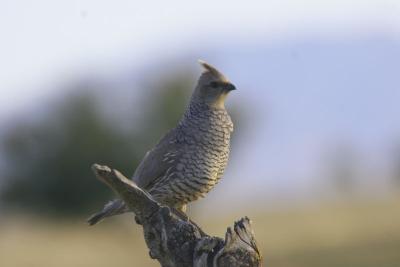
Our birding schedule is highly flexible depending on what birds, including rarities, are about. We’ll likely spend part of one day in Miller Canyon, studying hummingbirds and walking the trails. In some years, though recently absent, a pair of Spotted Owls has been present. We may also visit Ramsey Canyon, world famous for hummingbirds. Tufted Flycatchers have nested up-Canyon, and if they return we’ll offer the option of making the four-mile round trip hike to see these charming little wanderers from northern Mexico…unless of course the road-accessible ones found in 2017 at Reef Campground at the top of Carr Canyon also return. One afternoon we’ll likely visit feeders in Ash Canyon, known for attracting Lucifer Hummingbirds, especially late in the day. In addition, the grounds of our inn offer excellent birding with numerous feeders. Yellow-billed Cuckoos can often be seen on the grounds. The feeders attract many Gambel’s Quail and often Abert’s Towhee and Bronzed Cowbird (subspecies milleri in which the females are gray). Hummingbirds including migrant species, in som years Calliope Hummingbird is present. Chihuahuan Meadowlarks are found in the adjacent grasslands and Scaled Quail are nearby in Hereford. In 2023, Montezuma Quail were frequenting the roadside margin in Coronado National Monument and we will carefully search for them if they are being seen. In the evenings Lesser Nighthawks are often flying about under the lights and Barn and Great Horned Owls are possible, too. Nights at the Casa de San Pedro near Sierra Vista.
Day 9: This morning’s itinerary is flexible, depending on what we may have missed in the Huachucas. After an early picnic lunch we’ll drive east to the wetlands at Whitewater Draw in the Sulphur Springs Valley. Depending on water levels, waterbirds can be numerous, and we should see migrant Lazuli Buntings and perhaps Lark Buntings. In 2018, a Groove-billed Ani summered here. A few of the recently re-split Mexican Duck can be found here. Later we’ll drive to around the south end of the Chiricahua Mountains stopping to study Chihuahuan Ravens along the way, and into magnificent Cave Creek Canyon. Night at Cave Creek Ranch in Portal, Arizona.
Day 10: The Chiricahuas are famed for their beautiful landforms and numerous habitats, accessible by a road system running from low desert to fir forest at 9,000 feet. Mexican Chickadee is the only species here that we definitely won’t see elsewhere. Sadly, they seem to have declined in recent years, likely as a result of recent large fires. Beyond Mexican Chickadee, the Chiricahuas are an excellent back-up for higher elevation birds such as Greater Pewee and Olive and migrant Hermit Warblers. Cave Creek and South Fork Canyons will also offer locations for Elegant Trogon. Birds are abundant in the Portal area, and while the species mix will be much the same as earlier, the desert below is now the Chihuahuan rather than Sonoran, which means some important changes in subspecific diversity. In particular, the Curve-billed Thrashers (celsum subspecies of the curvirostre group) will look and, especially, sound somewhat different from birds we will have seen earlier to the west (palmeri), and recent studies have determined that they are also genetically quite different. The always secretive and elusive Crissal Thrasher is found in this area along with a very few Bendire’s Thrashers. There is the possibility of seeing Scaled Quail as well, and Chihuahuan Ravens are fairly common. Our friends in Cave Creek Canyon feed hummingbirds, and in some years we see our largest numbers here. These should include Blue-throated Mountain-gem and sometimes Lucifer or Violet-crowned Hummingbirds, and southbound Calliopes are present. We’ll spend at least one evening listening and looking for nightbirds. Common Poorwill is not uncommon near Portal, and depending on our success in the Santa Rita Mountains or near Patagonia, we may explore the canyon in search of owls. Western Screech will be the most likely new owl, but perhaps we will locate an Elf Owl too, if it vocalizes. While driving through the canyons we’ll be carefully looking for encounters with the nearly always elusive Montezuma Quail. Night at Cave Creek Ranch in Portal, Arizona.
Day 11: After a last morning in the Chiricahuas, perhaps including a visit to Pinery Canyon on the west side of the divide, we’ll descend the west slope and continue toward Tucson. We’ll stop at the ponds at Willcox, where we expect a variety of migrant shorebirds including Baird’s Sandpiper and Wilson’s Phalarope, and if there is time perhaps also at St. David, where a few Mississippi Kites breed. Night near the Tucson Airport.
Day 12: The trip concludes this morning in Tucson with departures and no birding activities planned.
Note: The information presented here is an abbreviated version of our formal General Information for Tours to Arizona. Its purpose is solely to give readers a sense of what might be involved if they take this tour. Although we do our best to make sure that what follows here is completely accurate, it should not be used as a replacement for the formal document which will be sent to all tour registrants, and whose contents supersedes any information contained here.
ENTERING THE UNITED STATES: Non-U.S. citizens will need a valid passport and may need a tourist visa. Consult your nearest U.S. Consulate for details. Canadian citizens should carry proof of citizenship in the form of a passport or birth certificate. U.S. citizens should bring some form of identification such as a driver’s license.
Please note that non-US citizens are required by law to carry passports/visas or Green Cards with them at all times. We suggest you carry these documents with you in your day pack or some place that is easily accessible (not locked in your luggage). Because of proximity to the US-Mexico border, US Border Patrol checkpoints will be encountered on the roads and foreign nationals may be required to produce passports or Green Cards.
Fort Huachuca - Non U.S. citizens will need a military approved escort to bird Fort Huachuca. This location is often the only location where we encounter Elegant Trogon. We will try to find an appropriate escort, but should no such escort be available, we will try to schedule suitable alternative birding for any participants denied access to Fort Huachuca.
US residents with a social security number and government-issued picture ID, will be pre-vetted for entry to Fort Huachuca (the US Army base in Sierra Vista, AZ, and a half-day stop on the tour).
PACE OF THE TOUR: Early mornings are always the best time for birding activity, and we will often be out in the field by 6:30am, sometimes preceded by a drive of 30 minutes or so. Breakfast will usually be at 6:00, except at Casa de San Pedro where it will be later, perhaps as late as 8:00 a.m. Daily temperatures are often very warm in the lowlands, and when possible, we will try to schedule a siesta during the hottest portion of the day. Lunches will be a combination of picnic lunches and sandwich shops.
Much of the birding will be on roads and wider trails. During our time in the Huachuca Mountains, depending on the rarities or scarce residents (e.g. Spotted Owl) that are present, we may go on several (perhaps three) hikes of up to four miles (round trip); these involve elevation climbs of over 1000 feet. On a few nights, we will have optional owling and night bird excursions after dinner. When possible, we’ll schedule about an hour of free time before dinner.
HEALTH: Arizona presents no real hazards to the visiting birdwatcher but certain factors must be considered. The sun is intense in July.
Sun and Dehydration: A broad-brimmed hat, proper clothing and a strong sun screen lotion are essential.
Spiny Plants: The most common injury results from spines penetrating light weight shoes. Almost every desert plant in Arizona is armed with thorns or spines and we recommend tough canvas or leather shoes of at least ankle height and tough (and preferably cool, light weight) trousers (and of course vigilance…) as the best safeguards.
Elevation: Much of our birding is at elevations between 4000 and 9000 feet, and while we normally do not schedule anything strenuous at the higher altitudes, anyone with known cardiac or respiratory problems should consult his or her doctor before scheduling the trip. We do two hikes at an elevation of between 6000 and 7000 feet but we take it at a very slow pace.
Smoking: Smoking is prohibited in the vehicles or when the group is gathered for meals, checklists, etc. If you are sharing a room with a nonsmoker, please do not smoke in the room. If you smoke in the field, do so well away and downwind from the group. If any location where the group is gathered has a stricter policy than the WINGS policy, that stricter policy will prevail.
Miscellaneous: Rattlesnakes are not a hazard but one always needs to use common sense and be alert in desert areas. We actively look for reptiles and feel lucky to see one rattlesnake per trip. Scorpions are nocturnal and rarely seen, and the tarantulas often seen on the highways are not dangerous.
Chiggers or biting insects will likely be encountered occasionally in moist areas or especially (for chiggers) in areas of grass after the monsoons have started, and we suggest bringing insect repellents with a high concentration of DEET.
CLIMATE: Temperatures rise steadily from March through June with little rain, although rain and anomalously cool temperatures are possible beginning in July. The monsoons usually start in July and should be at their peak in early August. Temperatures, even in the lowlands, are much reduced from June. Much of the most interesting summer birdwatching is in the deep mountain canyons between 4000 and 6000 feet where warm days and cool nights are the rule. At the elevations where we spend most of our time, the daytime highs average in the 90°s F and nighttime lows average about 60-65° F, although we do spend some time at lower elevations.
ACCOMMODATIONS: We stay at standard motels, one elegant bed & breakfast, and one rustic lodge/cabins on this tour. Except for Portal, our accommodations have pools. All our lodgings have WiFi although may be limited in Portal.
At Portal, (where we stay for two nights) we stay in a Ranch House and various cottages or connected rooms. The Ranch House has 4 bedrooms (each with two beds) with two shared bathrooms. The make-up of the tour participants may require some single participants to share a room and bathrooms on these two nights.
FOOD: Food on the tour is southwestern standard except for the very fine breakfasts and any catered dinners we might have at Casa De San Pedro B&B. WINGS tours are all-inclusive and no refunds can be issued for any missed tour meals.
Food Allergies / Requirements: We cannot guarantee that all food allergies can be accommodated at every destination. Participants with significant food allergies or special dietary requirements should bring appropriate foods with them for those times when their needs cannot be met. Announced meal times are always approximate depending on how the day unfolds. Participants who need to eat according to a fixed schedule should bring supplemental food. Please contact the WINGS office if you have any questions.
TRANSPORTATION: We will be traveling by 12 or 15 passenger window van or minivan, depending on the group size. Participants should be able to ride in any seat in tour vehicles.
Arizona: Second Spring
2024 Narrative
In Brief:
We just wrapped up our ever-popular annual southeast Arizona "Second Spring" tour, and by all accounts it was a fantastic success! Set during the monsoon rains of late summer, this period is often thought of as a repeat of spring as the plentiful rains will make the arid browns turn green again, with many plants blooming and several species delaying their breeding cycles to these life-enriching conditions. We tallied in a great haul of birds with 184 species recorded with rarities like Short-tailed Hawk, Rose-throated Becard, Five-striped Sparrow and Thick-billed Kingbird among many other expected SEAZ specialties like Red-faced Warbler, Elegant Trogon, Gray Hawk, Botteri's Sparrow, Varied Bunting, Sulfur-bellied Flycatcher and Painted Redstart. Among the twelve species of hummingbird we saw, White-eared, Beryline and Lucifer were definite standouts! Fall migration was kicking into full swing while we were there as well, with flocks of Hermit Warblers and Western Wood-Pewees moving through the canyons, and 17 species of shorebirds observed along with migrant waterbirds like Cinnamon Teal, White-faced Ibis and Forster's & Black Terns. A visit to this naturalist's paradise brings a wide array of plants and animals to enjoy from the blooming salvias and cactus; gorgeous insects like the Arizona Sister butterfly and the emerald-colored Glorious Scarab Beetle; to critters like White-nosed Coati and Merriman's Kangaroo Rat and the amazing diversity of herps such as Black-tailed Rattlesnake, Desert Kingsnake and the endangered Chiricahua Leopard Frog. A full accounting of the birds recorded on this year's tour can be found here- https://ebird.org/tripreport/264770
In Full:
Our tour began in Tucson, where our group met up for a get-to-know-one-another dinner at a delicious Mexican restaurant. As we were walking in, a brilliant Vermilion Flycatcher flew into a shrub next to the door- a sign of all the good birds that lay in store for this gang! The next morning, we headed straight up to one of my more favorite birding locations in the region. Mount Lemmon is a pretty classic habitat ecology model of the concept of elevational life zones. Starting out in the lowland Sonoran desert, one goes through multiple biomes as they gain elevation. From desert, to shrub-scrub to oak forest to pine woodlands to Douglas fir coated peaks, it's similar to the changes one would experience going north in latitude. We certainly experienced this change in birdlife, with us having nice looks at Black-throated Sparrow among the saguaro cactus, to a great experience with a Black-chinned Sparrow higher up in the manzanita scrub before we settled down in the pine-oak forest, seeing our first Acorn Woodpeckers, Mexican Jays and Bridled Titmice. Still we were on Lemmon to specifically target warblers and that meant going up to the doug-fir forest. We hadn’t even gotten out of the van before a birder flagged us down to tell us there was a Short-tailed Hawk perched just up the road a little ways! We quickly scrambled out and sure enough, there was a freshly-minted juvenile Short-tailed Hawk perched in a pine snag! A very rare breeder in the mountains of south Arizona, the species does not nest every year here! We did end up doing well for warblers here, with several great looks at birds like Red-faced Warbler, Virginia’s Warbler and migrant Hermit Warblers. We had several Mountain Chickadees, this is the southern end of their range in Arizona on this mountain. And in addition to the Short-tailed Hawk, we had a great look at a Zone-tailed Hawk and a pair of Peregrine Falcons flying overhead. Lemmon is always such a great time, but eventually we had to pull ourselves away to start driving to the Santa Rita Lodge where we would be staying the next few nights in this rustic mountain canyon with fantastic birding just outside our doorstep! This was made evident by the pair of Whiskered Screech-Owls that were singing away above the lodge, and a few folks even got looks at them!
We arose bright and early the next day to hike up Madera Canyon. It was delightfully birdy the entire time we were out. Mixed flocks of Bridled Titmice and Painted Redstarts accompanied us along the trail, and although they took a little more effort to see, perseverance eventually yielded great looks at a family of Sulphur-bellied Flycatchers foraging high in the sycamore trees. But our quarry was a special bird and one that I was unsure if we would encounter or not. But after a couple hours up the trail, we were treated to an adult male feeding its offspring! A spectacular bird to see, I was thrilled that we were able to get such great looks at this hard to find species here on only our second morning of birding! As we rolled down the canyon we stopped by a set of feeders, hoping to connect with a rare Berylline Hummingbird that had been seen here. We didn't have any luck with the hummer, but much to our delight, had another Elegant Trogon from the creek. We then flipped around and headed down the canyon into a desert flat. Here among the saguaros, we had a couple of specialists of this unique plant. Gilded Flickers make their homes here and while it took a while to find this desert dweller, when we did, they came with a small flock of Purple Martins, using the old flicker holes in the giant cactus for nesting sites. This desert martin is likely a cryptic species, nesting not in colonies but in single pairs unlike populations in eastern North America. We spent some more time that afternoon just hanging out at our lodge, the feeders there were host to a large gathering of hummingbirds, mostly Broad-billed hummers, but several Black-chinned Hummingbirds present as well. We attempted to look for owls that night but a storm blew up just as we started to bird. We did encounter a group of students black-lighting for scarab beetles so that was a pretty cool experience for everyone.
We arose bright and early the next morning to head to the austere Box Canyon. Dryer than Madera, lacking extensive forests, Box Canyon is host to a few rare shrub desert birds that require a little work and good luck to encounter. Luck was indeed with us though as we had in-your-face looks at Five-striped Sparrow. This handsome and large sparrow is only found in a couple of rugged canyons in Arizona being primarily a Mexican resident. Another great bird we encountered that just barely slips over the border were a pair of nesting Thick-billed Kingbirds. This glorious looking flycatcher can only be found nesting in a handful of creek drainages in the entire US, so we were pretty pleased to have such good looks at this target species. We had a few other nice birds this morning; looks at a Rock Wren, Blue Grosbeak and Hooded Orioles were all great, while we also heard our first Scott’s Oriole and Gray Hawks here. We then headed back to Madera Canyon to try again for the Berylline Hummingbird. Much to my surprise I spotted the active nest of the Berylline with a nearly grown juvenile in it! Trying to give it a wide berth, I set up a scope so we could look at the nest from a good distance. However the adult ended up coming in several times to the feeders allowing us for a nice experience with this emerald-colored jewel! We returned to our lodge for some more feeder birding and rest from our busy morning, although it ended up being pretty exciting with a gorgeous looking Black-tailed Rattlesnake roaming the grounds. For our post-siesta evening birding we went down to the Santa Cruz river corridor, which ended up being a really nice study in flycatcher diversity. There were several Vermilion Flycatchers along with a Black Phoebe, but particularly nice were a trio of kingbird species- Western, Cassin’s and the highly localized Tropical Kingbird. Overhead a stream of Brown-headed Cowbirds were going to their night roost, peppered with a handful of Yellow-headed Blackbirds. Another nice flyby was a pair of Black-bellied Whistling Ducks.
We started out doing some lowland birding in the desert scrub and saw our only Greater Roadrunner of the tour. We also had our first Abert’s Towhees and Inca Doves of the tour. We then headed off to Montosa Canyon, a beautiful rocky canyon that is always a lovely place to bird. We had a few quick looks at a male Varied Bunting but it was skulky and did not show well. However a couple of Bell’s Vireos gave a great look as did another Five-striped Sparrow. We then headed back to the Santa Cruz River and had our first Rufous-winged Sparrows of the trip. This is a sonoran desert speciality, and has a limited range so tracking one down is always a priority. Yellow Warblers and Yellow-breasted Chats were singing away in the riparian woodlands although they were hard to spot in the dense vegetation. For our afternoon, we headed out to the remote and stunningly beautiful Atascosa Highlands. This rugged landscape is full of canyons and although our time here just scratched the surface of this region. At a small spring in Pena Blanca Canyon was full of birds including Yellow-billed Cuckoo, Lucy’s Warblers, Lucy’s Warblers and Phainopeplas. Higher up on the dry grasslands, we had a fantastic look at a Rufous-crowned Sparrow.
This next morning we headed out from the Santa Cruz valley to start moving west across to the Sierra Vista area. This ended up being a really dynamic day of birding and we had barely pulled out the driveway before having a Gray Hawk catch a lizard right in front of the van! We then drove down to Nogales to bird a small park on the edge of the city. We had several Mexican Ducks but the real show was the large flock of migrant Lazuli Buntings. 20-30 of these beautiful birds were feeding in the grassy edges of the ponds and we were even treated to a pair of male Painted Buntings, a rare migrant to Arizona. We then went to one of my favorite places in all of Arizona, the Paton Center for Hummingbirds. This former private residence turned into an Audubon sanctuary is one of the best places in the country to see the tropical-looking Violet-crowned Hummingbird of which we saw a few different individuals among the throngs of Broad-billed Hummers. Both Summer Tanagers and Yellow-breasted Chats came in for bites at the feeders and when we wandered down the creek a delightful flock of birds were drinking and bathing in the water, Blue Grosbeaks, Lesser Goldfinches, a couple Lucy’s Warblers and a surprising pair of a Indigo Bunting and Varied Bunting! I've never had the bunting sweep before so this was rather exciting! And then we went up to a nearby canyon where a female Rose-throated Becard was tending to a nest. We found the nest easily enough, a large structure of woven grass, leaves and debris. It took longer to get good looks of this tropical bird but eventually everyone had a nice look and even a few photos of the becard. We then had a great lunch at the Gathering Grounds, my favorite little restaurant in Patagonia. And while we dined, we were treated to repeat good looks of a Mississippi Kite hunting over the town square! After lunch we started to bird the Sonoita grasslands to look for some of the breeding sparrows that delay their nesting until the second spring rains. Among the many migrant Lark Sparrows roaming the grasslands, we found Grasshopper, Cassin’s and Botteri’s Sparrows. We had some great looks, particularly of the Botteri’s. Adding to the experience was a powerful monsoon storm over the Santa Ritas! One of the many incredible views this beautiful land has to offer! We successfully stayed a step ahead of the rain, and got to our next lodging, a delightful B&B under the shadows of the next set of Sky Islands we would be birding the next few days, the Huachucas.
We went up the very scenic Miller Canyon the next morning in an attempt to find a family of Flame-colored Tanagers that had spent the summer here. But sadly they proved to be elusive and we did not connect with them. Still Miller Canyon is a wonderful place to bird and we had lots of Black-headed Grosbeaks, a fantastic time with a Red-faced Warbler and our first looks at a Grace’s Warbler. Very exciting was our only Calliope Hummingbird, foraging for insects hidden in the needle clusters of a douglas fir! At the start of the trail was a nice hummingbird feeder set up where we had in-your-face look at Rivoli’s, Violet-crowned and Black-chinned Hummers. We took an afternoon siesta at the B&B but the devotees meandered about enjoying the numerous Cactus Wrens and Lazuli Buntings. Also, our first Common Ground-Doves of the tour were trotting around under the feeders. That evening we went to the Ash Canyon Bird Sanctuary. Like the Paton Center, this location was formerly a private residence turned into a public destination. And like the Paton Center, the focus here were hummingbirds. Among the throng of Anna’s Hummers, we looked for and had excellent looks at the brilliant-colored Lucifer Hummingbirds. This site is undoubtedly the most regular place in the US to see this tiny but fierce bird.
We spent the next morning in Ramsey Canyon; without a doubt, this lovely and serene place is one of the crown jewels of The Nature Conservancy. Having long-been preserved, I am always struck by the amount of huge trees here, sycamores and cypress that reach for the skies. In turn, due to the high quality of the habitat here, I find that it’s a delightful place to bird, and everytime I bring a group here, it's always a highlight of the tour. We slowly meandered up the trail; Painted Redstarts were delightfully abundant here- always an engaging bird to see! Western Tanagers were also common, clearly a migratory push had brought numerous individuals into the canyon this morning. Mournful Western Wood-Pewees and squeaky-voiced Sulphur-bellied Flycatchers were heard overhead nearly the entire hike. But there was a flycatcher in particular that we had that was of great interest and lifer for many. The tiny Buff-breasted Flycatcher is a rare breeder in southern Arizona and while typically found at higher elevations, one had been hanging out in the canyon. It was furtive, taking a while to get a good look at, but everyone did get to know this sweet-faced bird before the morning was done. Another thrilling sighting was in the form of Kenn and Kim Kaufman leading their own birding walk up the canyon. Kenn, a renowned author and birder is actually a former WINGS guide himself and it was a real treat getting a chance for folks to meet him on the birding trail! Finally when we returned to the visitor center at the beginning of the preserve we picked up one last new species for the trip. A female Blue-throated Mountain-Gem, the largest hummingbird in the US, had constructed a nest under the rain-gutter of the visitor center and was incubating, allowing everyone to get a good look. Our afternoon birding wasn’t nearly as dynamic, but we did enjoy our time wandering the San Pedro House, seeing Vermilion Flycatchers, Blue Grosbeaks and lots of Broad-billed Hummingbirds. On the drive to dinner, we pulled over to watch a handful of Lesser Nighthawks coursing over the desert scrub foraging on aerial insects. And when we arrived at the restaurant, not only did an encroaching evening monsoon storm make for powerful sunset skies, we had both Botteri’s Sparrows and our first Chihuahuan Meadowlarks singing away at the incoming rain.
We arose the next to leave our bed and breakfast and start the trek over to our final destination for this rambling adventure to the Chiricahua Mountains. But first we would spend our morning birding the town of Wilcox, where a large wastewater treatment pond attracts huge amounts of shorebirds to what is the only water around for many many miles! We also birded the old Wilcox Cemetery where in the scrub brush of the desert we would score two very notable birds: the secretive and highly desired Crissal and Bendire’s Thrasher. It definitely took some scrouging but everyone got good looks at both species! A handful of Western Kingbirds and Ash-throated Flycatchers were also present and overhead Swainson’s Hawks and our first duck-voiced Chihuahuan Ravens. And over at the large marshy pool dubbed Lake Cochise, a plethora of shorebirds were present for us to pick through. Hundreds of Wilson’s Phalaropes were present, and a large flock of American Avocets and Black-necked Stilts were a delight! Many Baird’s, Least and Western Sandpipers were present, with smaller numbers of Stilt Sandpipers, Yellowlegs, Pectoral Sandpipers and a Semipalmated Sandpiper. Other waterbirds present included our first Great Blue Herons, Cinnamon and Blue-winged Teal, and most exciting a quartet of Black Terns! There weren’t many songbirds present, but a female Painted Bunting was a good find! We finally tore ourselves away to go get a terrific lunch at a Mexican restaurant and continue with the long drive to Portal. We finally arrived late afternoon and got settled into the Cave Creek Ranch, our lodging for the next couple nights. Everyone had their own apartment in these cute rustic cabins. We had a little bit of turnaround time and then on our way to dinner we stopped at local guide Dave Jasper’s home to check out his awesome feeder set-up. We only could stay for a short while but it was per-minute, some of our most productive birding of the tour! The feeders were host to a large flock of Gambel’s Quail, and there were several sparrows present including Canyon Towhee, Black-throated Sparrow and Rufous-winged Sparrow. Woodhouse’s Scrub Jay was our first of the tour, and definitely our best look at a Scott’s Oriole. Particularly educational was the mixed flock of Northern Cardinals and Pyrrhuloxias, easy enough when it comes to the adult males, but the young birds shockingly hard to differentiate. We had dinner at the always great Portal Store, and then in the fading light, drove up into Cave Creek Canyon, hoping to stir up a Montazuma Quail. This was not to be, but it did have us out at dusk, perfectly timed to hear a pair of Mexican Whip-poor-wills sounding off in the scrub oaks. We dropped some folks off for bed but half of us continued on to do a little road-cruising for some of the interesting animals that live in the area. We had a fantastic look at a Great Horned Owl, and a good haul of snakes, a beautiful Desert Kingsnake, and a large Western Diamond-backed Rattlesnake were real highlights! Tired and happy after such a great day, we finally fell into bed to rest up so we could explore this wild mountain range in the morning!
We started out the next day cruising the desert flats below town, where good visuals were had of Chihuahuan Raven and Swainson’s Hawk. But the prize of the lowlands was a very cooperative Scaled Quail perched up on a fencepost; we couldn't have asked for better views! We then headed up to the ghost town of Paradise; during the mining heyday, this was a thriving town, but now only six permanent residents reside year-round here. Two of them were Jackie and Winston Lewis, our hosts for the morning at the George Walker House, a historic home turned B&B. Jackie was catering for us for the rest of the weekend and with their awesome feeder setup, we had headed to their place in the hills for breakfast. There over a delicious home-cooked meal, we watched their feeders. A host of hummingbirds of multiple species came in, and we enjoyed a point-blank look at an Arizona Woodpecker. (A real treat was when an old male Coati came in and we had great views!) But the bird that we really were hoping for kept us waiting for a long time was a gorgeous male White-eared Hummingbird, a rare visitor from Mexico. It was worth a wait though, and the bird came in a couple times allowing for good looks and some photos! We then started to trek up into the high mountains to look for a few speciality species. Birding was good on the way up, with handfuls of Plumbeous Vireos, Painted Redstarts and Yellow-eyed Juncos were along the road. Upon getting up to 8000 feet, we were among douglas firs and ponderosa pines and started to find some fun warbler flocks, mostly Hermit Warblers, but one flock gave us a quick look at a female Olive Warbler. For whatever reason, this species has been tough to come by in recent years. We had a nice picnic lunch break, with Western Bluebirds, Steller’s Jays and a couple more Buff-breasted Flycatchers to keep us company. And afterwards we meandered over to Barfoot Park where we had a great flock of birds, including Greater Pewee, Grace’s Warblers, Band-tailed Pigeons, and our only Mexican Chickadees of the trip! Feeling successful and wanting to keep the good times rolling, we dropped down into Pinery Canyon where a sleepy pair of Spotted Owls made for a fantastic crescendo for the day! Content and full of birds, we slowly rolled down the canyon back to our lodge where Jackie would arrive with our dinner. However, the van had been acting goofy that afternoon, and although we arrived just fine, I was nervous about trying to drive the next day for our final morning of birding, let alone back to Tucson. So while the gang celebrated a participant’s birthday, I started to coordinate with the office to figure out a plan B for our van…..
Thankfully, we were able to not miss much of a beat, when none other than Wings Managing Director, Matt Brooks, arrived the next morning with another van to extract us from Portal! Hurray! We even got in a great morning of birding, and Matt a rare chance to go birding for work! We went up to the Southwest Research Station, a station that attracts biologists from all over to study the amazing ecosystem of the Sky Islands. Here at their hummingbird setup, we had several Blue-throated Mountain-Gems and Rivoli’s Hummingbirds as well as another rare Berylline Hummingbird. And of course no trip to the Chirichuas can be complete until one takes a hike up the south fork of Cave Creek Canyon. This gorgeous canyon is a biological preserve and is one of my most favorite hikes in the country! It was a little quiet in the late morning warmth, but as we walked back to the car, we had a real surprise when we discovered not one, but TWO male Elegant Trogons having a very vocal dispute over territorial boundaries! This allowed for an extended study and photo session of some of the prettiest birds in these mountains, a species that serves as a gateway to the American tropics for many birders! With that, it was time to go back to the lodge and pack up to head back to Tucson. We did make a second stop on the way back at Willcox again to see if any new waterbirds had dropped in and were treated to a few goodies in the form of a Long-billed Curlew and a couple of Red-necked Phalaropes as as well as a Forster’s Tern! With that it was time to call it good and Matt dropped us off back at the Tucson hotel where we started this grand adventure where we ordered take-out italian dinner and counted up the bird list for the tour- a most excellent 184 species of birds, and celebrated an fantastic tour with a truly amazing group of people. This will be a tour I will fondly remember for a long time!

Single rooms or rooms with en suite facilities may not be available for the nights in Portal, AZ. See Tour Information for details.
Maximum group size seven with one leader.
More Tours with these Leaders
Arizona and Utah
Fall Migration in the Canyonlands
Fall Migration in the Canyonlands
Sep 2-14, 2025 • Jake Mohlmann