
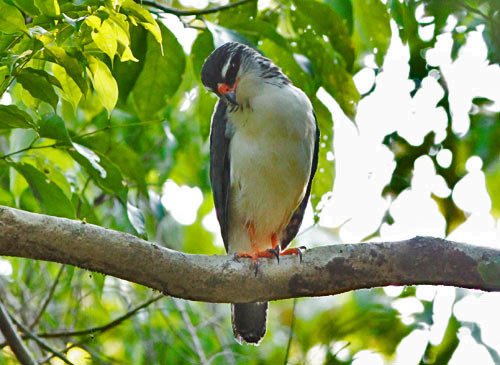
 One of the scarcer and more beautiful birds of prey possible on our tour is the White-browed Hawk.
Photo: Rich Hoyer
One of the scarcer and more beautiful birds of prey possible on our tour is the White-browed Hawk.
Photo: Rich Hoyer -
One of the scarcer and more beautiful birds of prey possible on our tour is the White-browed Hawk. Photo: Rich Hoyer
-
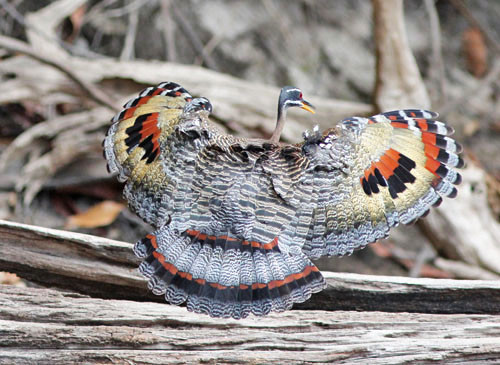
Though it is a common bird, seeing a Sunbittern’s spectacular wing pattern well takes preparation and patience. Photo: Rich Hoyer
-
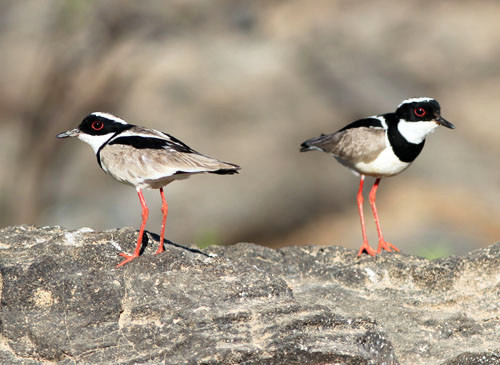
Pied Lapwings are one of the most striking species of shorebird in South America. Photo: Rich Hoyer
-
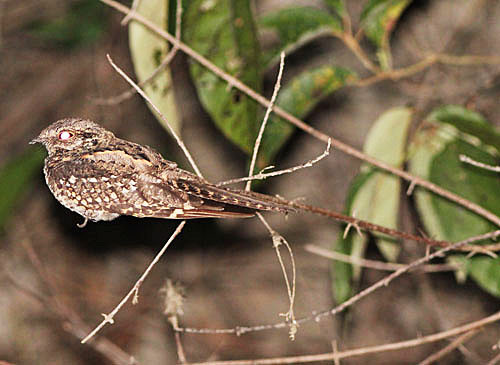
Our nighttime boat trip could yield any number of surprises, such as this male Ladder-tailed Nightjar. Photo: Rich Hoyer
-
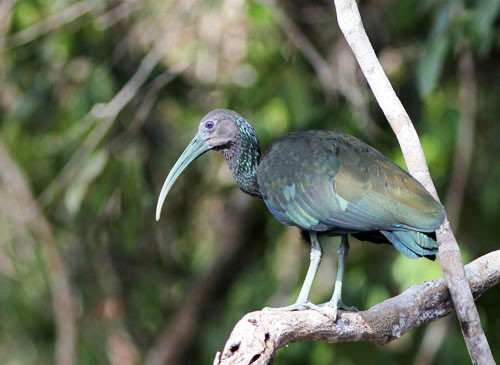
A Green Ibis in full sun is a sight to behold. Photo: Rich Hoyer
-
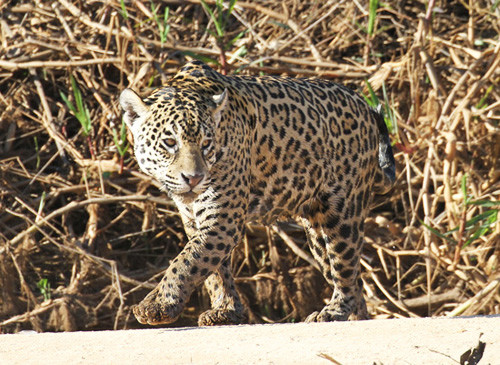
The Jaguar: perhaps the most charismatic creature we have a reasonable chance of seeing in the Pantanal. Photo: FabriceSchmitt
-
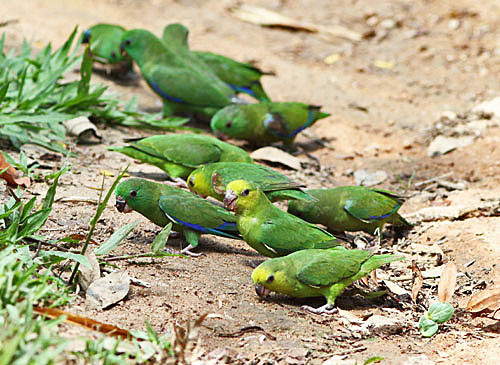
Adorable Dusky-billed Parrotlets sometimes come to feed on minerals at our hotel grounds. Photo: Rich Hoyer
-
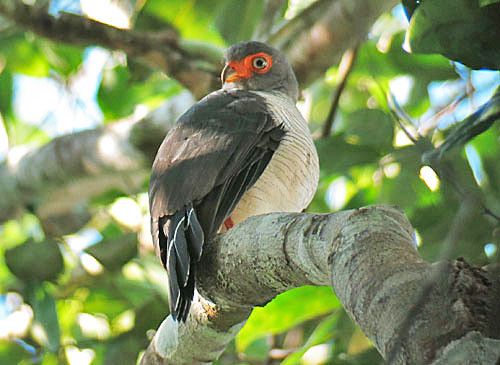
The Cryptic Forest-Falcon was described just 15 years ago based on observations made on birds at Cristalino Jungle Lodge. Photo: Rich Hoyer
-
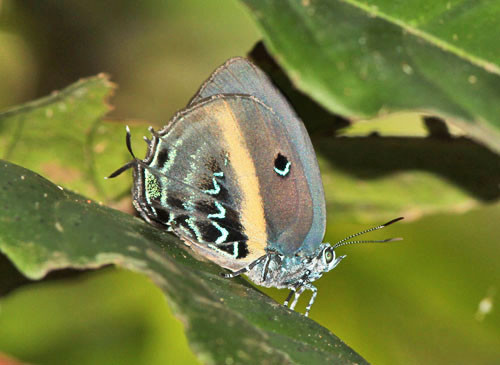
The stunning Comet Hairstreak is but one of hundreds of species of butterflies we could see in the Amazon rainforest. Photo: Rich Hoyer
-
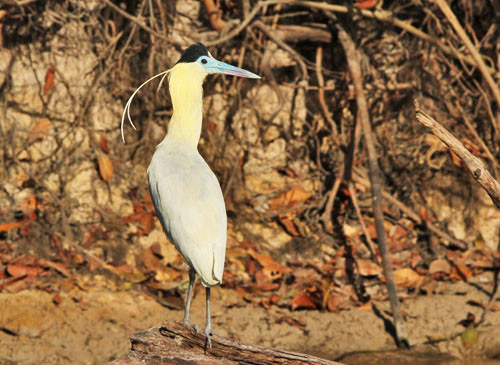
We should see the handsome Capped Heron on several days in the Pantanal and along the Cristalino River. Photo: Rich Hoyer
-
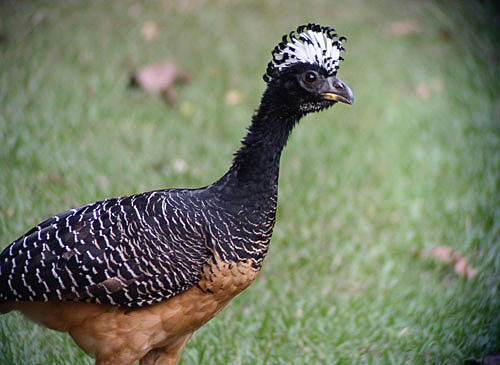
A quintessential Cristalino experience is having a Bare-faced Curassow walk past your cabin. Photo: Rich Hoyer
Use a map to trace the geographical center of the South American continent and you will find yourself pointing at the Brazilian state of Mato Grosso. Straddling the continental divide between the Amazon and Plata river basins, this amazingly diverse state provides the easiest and best access to the largest variety of habitats on the continent. Just a century ago this was a very remote and rugged territory, but a major airport in Cuiabá and highways in all directions have made it an ecotourism hotspot and the best region for a single trip to Brazil. By visiting three major ecoregions—the cerrado, the Pantanal wetlands, and the Amazon rainforest—we’ll be exposed to a remarkable variety of tropical bird families, including cracids, parrots, toucans, woodcreepers and ovenbirds, antbirds, and cotingas.
We’ll start at a national park only an hour and a half from the Cuiabá airport, giving us a chance to settle in. The Chapada dos Guimarães, at the western edge of the Brazilian Plateau, is a flat-topped escarpment providing access to the seasonally dry woodland, grassland, and scrub called cerrado, an ecoregion almost endemic to east-central Brazil. Our brief sojourn in this habitat will complement the rest of the trip with several unique species and striking scenery.
We’ll then move to Cristalino Jungle Lodge, a famous and upscale lodge that gives us the best access to the fabled Amazonian rainforests of Brazil—not via the Amazon River itself but on its uppermost tributaries, far from that fluvial mega-highway that has been a conduit for commerce for centuries. We’ll arrive at Cristalino through the “back door” of Alta Floresta, relishing the pristine setting along the Cristalino River and marveling at the mixed-species flocks in the forest: how can so many birds appear (and disappear) so quickly? The rare treat of being able to observe cotingas and canopy flocks at eye level from the lodge’s two free-standing towers will make canopy birders of us all.
We’ll close with five days in the Pantanal, the world’s largest freshwater wetland complex, where an eye-popping multitude of waterbirds will compete for our attention with many other species, including the striking Hyacinth Macaw. The nearly mythical Jaguar is seen along the Cuiabá River and we’ll take at least three boat trips up the river and side channels where in recent years there have been sightings of multiple Jaguars.
This ornithological, indeed natural history extravaganza, combined with comfortable accommodation situated close to our birding sites, an excellent infrastructure of lodges, friendly people, and superb food, sets the stage for one of the best birding experiences imaginable.
Iguaçu Falls Extension: With a height of up to 270 feet and a width of 1.7 miles, the 275 drops of Iguaçu Falls may be the most impressive falls in the Americas. Iguaçu has the sixth-greatest average annual flow of any waterfall in the world, with an average rate of 61,660 cubic feet per second. However, it is not only a scenic place; it is also a wonderful birding destination. We’ll spend a day at Iguazú National Park on the Argentina side, enjoying both the falls and the birds, and then explore the surrounding area and its avifauna with two more days of birding.
Main Tour:
Day 1: The tour begins around midday with lunch in Cuiabá followed by the drive to our lodge in the Chapada dos Guimarães National Park. Uniquely located on an inholding within the park boundaries, Pousada do Parque has trails through the woodland as well as a short and stable canopy tower where we’ll watch the sunset before searching for Little Nightjar, Common Pauraque, and Tropical Screech-Owl. Night at Pousada do Parque.
Days 2-3: We’ll have two bird-filled days in the Chapada dos Guimarães and surrounding areas. We’ll spend one morning in a cerrado area of short woodland on red sandy soils searching for target birds such as White-banded and White-rumped Tanagers, Collared Crescentchest, Curl-crested Jay, and Chapada Flycatcher, a species described only in 2001. Another drive will have us looking for Red-legged Seriema, Greater Rhea, and Red-winged Tinamou, and we could get lucky with both White-eared and Spot-backed Puffbirds. Positioning ourselves for the midmorning soar, we could see such stunning raptors as White Hawk, Gray-headed Kite, Ornate Hawk-Eagle, or King Vulture. Another highlight will be our visit to a spectacular waterfall where we hope to see Red-and-green and Blue-winged Macaws along with Great Dusky Swifts returning to their cliffside roost sites. Crested Black-Tyrant is sometimes found here as well. Finally, we’ll spend some time in the habitats reachable on foot from our lodge, where we’ll look for Large-billed Antwren, Planalto Slaty-Antshrike, Planalto Hermit, and many other species. Nights at Pousada do Parque.
Day 4: After breakfast we’ll spend a relaxed morning birding on the grounds of our hotel, cleaning up on any species we might have missed. This may be our only chance for Southern Antpipit. Soon it will be time to return to Cuiabá for our noontime flight to Alta Floresta in the southern Amazon Basin. Here we’ll feel as though we have entered a different world. The transfer to Cristalino Jungle Lodge is merely an hour by dirt road and an additional 15 minutes by boat—a short trip for the transformation from extensive ranch lands and forest fragments to countless hectares of unspoiled rainforest (a transformation made possible only in the last 40 years). As we settle into our rooms, we’ll see if any of the trees are fruiting, and attracting Spix’s Guans, tanagers, or any number of aracari species. Night at Cristalino Jungle Lodge.
Days 5–8: The bird list for Rio Cristalino and the surrounding area has recently breached 600 species—a higher diversity than for any similarly sized area in the world—and the many furnariids, antbirds, and flycatchers combine with such locals as Crimson-bellied Parakeet, Striolated Puffbird, Tooth-billed Wren, and Kawall’s Parrot to have us wanting to bird from dawn to dusk and beyond. We’ll spend our days walking trails near the lodge, surveying the canopy from one of the 170-foot towers, and exploring the riverine forest by boat.
Any trip along the river can hold numerous surprises, and our introduction to the Amazonian forest could include Scarlet, Red-and-green, or Blue-and-yellow Macaws flying overhead, an Amazonian Umbrellabird crossing the river in front of us, Red-throated Piping-Guans perched high in trees, or, with incredible luck, a tapir taking a cooling swim in the river.
With luck we may encounter an ant swarm, allowing us to watch at close range such species as Bare-eyed Antbird, Black-spotted Bare-eye, or even White-chinned Woodcreeper. We’ll pause for breaks during the heat of the day and for the incredibly delicious food provided by the staff, not to mention the absolutely authentic caipirinhas, the Brazilian national cocktail, which tastes its best in the tropical lowlands.
We’ll quickly realize that four days, four weeks, or even four months would not allow us to absorb all that the lower Amazon Basin has to offer. Nights at Rio Cristalino Lodge.
Day 9: After a final morning birding this superb area, we’ll say a sad farewell and take a last boat trip along the Cristalino River to meet our transport to Alta Floresta for our afternoon flight to Cuiabá. From there we’ll settle down for the bus ride south to Poconé, where we’ll connect with the Transpantaneira Highway. Not a highway by modern definition, this is actually a raised dirt track that crosses part of the world’s largest freshwater wetland, the Pantanal, which covers approximately 90,000 square miles across Brazil, Bolivia, and Paraguay. The Transpantaneira extends for 90 miles to Porto Jofre, with excellent roadside birding over its entire length. Once we’ve reached our lodge in the northern part of the Pantanal, we’ll have dinner and mentally prepare for the exciting birding that awaits us in the next days. Night at Aymara Lodge.
Day 10: We’ll have all day to bird the dry gallery forest trails and open grounds around our lodge, and we’ll be stunned by how different the surroundings are from the rainforest we’ve just left. For one, most of the birds are out in the open, but the sounds and feel of the habitat will be utterly new as well. The dawn chorus of Chaco Chachalacas, Plumbeous Ibis, Buff-necked Ibis, Thrush-like Wrens, and Great Kiskadee around our lodge is unforgettable, but it is the stunning Hyacinth Macaw, the world’s largest parrot, that will likely be the star of the morning—a family group often hangs out right near our rooms. Other special birds here include Red-billed Scythebill, Pale-crested Woodpecker, Mato Grosso Antbird, and White-lored Spinetail. The mammals are exciting as well. We’ll take a drive after dark with hopes of bumping into Giant Anteater or South American Tapir, but there are multiple species of armadillo, Crab-eating Fox, and three species of deer. Several nightbirds are even more likely, including Mottled and Striped Owls. Night at Aymara Lodge.
Day 11: We’ll have another early morning at our lodge, perhaps walking a trail where Helmeted Manakin and Undulated Tinamou can be found, and we might get lucky with Black-bellied Antwren or Buff-bellied Hermit, both of which are scarce residents. We’ll then drive a few hours south to the terminus of the Transpantaneira Highway at Porto Jofre. Along the way we’ll see some fine birds: Black-capped Donacobius, Yellow-billed and Large-billed Terns, and several species of kingfisher, heron, and ibis will keep us alert and excited. Night at Porto Jofre.
Days 12-13: We’ll rise early for a delightful sunrise on the peaceful river and greet the day with multitudes of birds and animals as we take our first boat ride up the Cuiabá. We may be lucky enough to catch sight of an early-rising Jaguar this morning as we carefully search every shaded hideout under the riverine vegetation; or we might just spot one basking on an open sandbar or swimming across the river. But more likely we’ll first see the more common Giant Otter, and birds will certainly be in evidence. Cocoi, Capped, and Rufescent Tiger-Herons are hard to miss, though we’ll have to search harder for Boat-billed Herons in the dense foliage. Pied Lapwings and Large-billed Terns perch on sandbars around many river bends. There are passerines and other landbirds as well, with Lesser Kiskadees catching insects at the water’s edge, local Ashy-headed Greenlets in mixed flocks, and Striped Cuckoos singing from exposed perches; our morning’s boat ride could easily tally 75 species in a short time. Still, with patience we’ll have excellent chances of seeing Jaguar, if not on the morning boat ride then on the afternoon excursion to the same areas.
We’ll have another morning on the river, but if we’ve had our fill of Jaguars, we’ll spend the second afternoon birding along the southern Transpantaneira for the likes of Scarlet-headed Blackbird, Southern Screamer, Rufous Cacholote, Yellow-chinned Spinetail, Gray-breasted Crake, and many other species. As dusk falls, Nacunda Nighthawks and Band-tailed Nighthawks adorn the skies. Nights at Porto Jofre.
Day 14: We’ll depart early this morning to bird the central section of the Transpantaneira, stopping when necessary for the spectacle of herons, ibises, Jabirus, Sunbitterns, and parrot flocks along the road. We’ll stop for lunch at the Pixaim River before completing the drive to Cuiabá. Night near Cuiabá airport.
Day 15: The main tour ends this morning with flights home.
Iguaçu Falls Extension:
Day 15 (Day 1 of the Extension): In the morning, those going on the extension will fly from Cuiabá to Foz do Iguaçu, landing on the Brazil side of the falls but crossing by bus to the Argentinean side (where the spelling changes to Iguazú), from where we’ll base our birding for the next days as there is better access to habitat and more impressive views of the falls than on the Brazilian side. After lunch at our hotel we’ll bird the hotel grounds, looking for Yellow-fronted Woodpecker, Thrush-like Wren, and our first Green-headed Tanagers. In the evening we’ll visit the Jardín de los Picaflores, where Black Jacobin, Versicolored Emerald, Black-throated Mango, Gilded Hummingbird, Swallow-tailed Hummingbird and others will be buzzing around the feeders. Night in Puerto Iguazú, Argentina.
Days 16-18: On one day we’ll make an early departure for the Iguazú National Park. Before visiting the falls themselves, we’ll bird the first hours of the day in the periphery of the park, looking for Robust Woodpecker, Spot-backed and Tufted Antshrikes, Creamy-bellied Gnatcatcher, Yellow Tyrannulet, Green-headed Tanager, and the superb Chestnut-bellied Euphonia. When the temperature begins to rise we’ll head toward the falls, where we’ll have our lunch. We’ll spend the rest of the day enjoying the falls and its refreshing spray but also the other wildlife usually seen here, such as South American Coati and Black-and-white Tegu.
On the other days we’ll be able to return to the more remote parts of the national park, but we’ll also leave very early one morning to arrive at Urugua-í Provincial Park at dawn for a chance to look for the rare Black-fronted Piping-Guan. We’ll spend the rest of the morning on the trail system looking for Surucua Trogon, Red-breasted Toucan, Ochre-collared Piculet, Large-tailed Antshrike, Bertoni’s and Dusky-tailed Antbirds, Speckle-breasted Antpitta, Ochre-breasted Foliage-gleaner, Drab-breasted Pygmy-Tyrant, Swallow-tailed Manakin, Riverbank Warbler, Chestnut-headed Tanager, and so many more.
On both days we’ll either have a picnic lunch in order to bird farther afield or have a late lunch back at our hotel, followed by an afternoon walk nearby for any birds we might be missing. Nights in Puerto Iguazú, Argentina.
Day 19: After some possible early birding near the hotel, the extension ends with transfers back to the Foz do Iguaçu airport (Brazil side) for flights home.
Updated: 03 January 2024
Prices
- 2024 Tour Price : $9,190
- Single Occupancy Supplement : $1,090
- Iguaçu extension : $2,050
- Extension Single Supplement : $350
- 2025 Tour Price Not Yet Known
- 2026 Tour Price Not Yet Known
Notes

Questions? Tour Manager: Matt Brooks. Call 1-866-547-9868 (US or Canada) or (01) 520-320-9868 or click here to email.
* Tour invoices paid by check carry a 4% discount. Details here.
This tour is limited to 8 participants with one leader.