
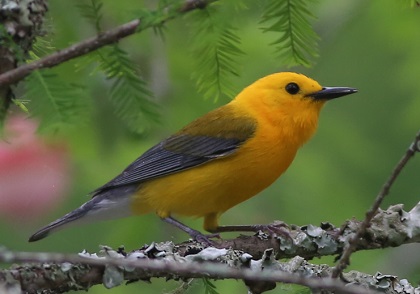
Scissor-tailed Flycatchers are spectacular and widespread along the Upper Texas Coast. Photo: Stéphane Moniotte
There may be no better birdwatching in North America than what one may encounter on the northwestern shores of the Gulf of Mexico in spring.
Between mid-March and mid-May, masses of passerines wing north from their wintering grounds and a significant percentage of them pass through this corridor. Add to this both migrant and resident waterbirds including large numbers of herons and spoonbills, shorebirds of 30 or more species, and a profusion of gulls and terns, and it’s no wonder this area is as famous as it is.
Less predictable is what the weather can do to this migration pipeline. If the weather is fair or the winds blow from the south, the countless thousands of migrant thrushes, vireos, warblers and buntings that reach the coast after completing their lengthy trans-Gulf of Mexico migration move along and disperse among the more suitable forests in the interior. But, if they encounter rain or strong north winds before or as they reach the coast, large numbers may drop into the first isolated clumps of vegetation. Called a “fall out,” this phenomenon constitutes one of the great visible migration spectacles in North America and if it occurs during our stay, we’ll alter plans if necessary to bear witness.
Though the migrants alone would draw birdwatchers to this area, the area is rich in resident bird life, as well: nearby pine woods and cypress swamps are home to some of North America’s most sought-after breeding birds. Texas in April is simply full of birds.
Day 1: The tour begins this evening with a 6 pm meeting at our hotel near George Bush Intercontinental Airport, Houston. Night in Houston.
Day 2 – We’ll travel to Jasper, Texas, and the Angelina National Forest for a night. A few Red-cockaded Woodpeckers occur here and this afternoon we’ll look for them and their fellow North American endemic Brown-headed Nuthatch. Nearby at Boykin Springs, Louisiana Waterthrush breeds in some years and area parks are home to Red-headed Woodpecker, Yellow-throated and White-eyed Vireos, Northern Parula, and Yellow-throated, Prothonotary, Swainson’s, Worm-eating and Kentucky Warblers among others. We’ll also look for breeding Prairie Warblers (a local breeder in east Texas) and watch the skies for Red-shouldered and Broad-winged Hawks and Mississippi Kites. We sometimes see a Swallow-tailed Kite, too. Night in Jasper.
Days 3-6: After searching for Bachman’s Sparrows in Angelina National Forest early this morning when their lovely song makes them easier to find, and perhaps do a bit more searching for warblers, we’ll leave the Jasper area for Winnie, our base for explorations of the Upper Texas and Louisiana coasts. These days will be varied and, we hope, spectacular. The central focus will be Sabine Woods and High Island, celebrated land bird migrant traps but ones that require special weather to produce a major fall-out of birds. If we’re lucky, cuckoos, thrushes, vireos, warblers of 25 or more species, tanagers, buntings, and orioles will fill these small woods and provide a memorable birdwatching experience.
As High Island and Sabine Woods tend to have more migrants in the afternoon, we’ll spend several mornings looking at water birds. The heronry at nearby Smith Oaks offers intimate looks at nesting Roseate Spoonbill, Snowy and Great Egrets; mudflats and beaches can hold thousands of herons, gulls, terns, and shorebirds of up to 20 species including Piping and Wilson’s Plovers, often American Oystercatcher, and sometimes thousands of brilliant American Avocets. Flooded rice fields near Winnie can host large numbers of shorebirds, including American Golden-Plover and Pectoral Sandpiper, often joined by Buff-breasted Sandpipers and sometimes White-rumped Sandpiper and Hudsonian Godwit. The wonderful marshes at Anahuac National Wildlife Refuge are recovering from the hurricanes in 2017, and are home to both Fulvous and Black-bellied Whistling-Ducks, Least Bittern, White-faced Ibis, Clapper and King Rails, and Purple Gallinule. There are a few small woodland patches around the marsh that can be good for migrant landbirds.
On one day we’ll visit Cameron Parish in southwestern Louisiana to Johnson’s Bayou and a normally uncrowded Baton Rouge Audubon Society woodlot that captures migrants in the same way as High Island and Sabine Woods. On another day we will drive the coast of the Bolivar Peninsula, stopping in marshes and at beaches to sift through gulls, terns, and shorebirds, as well as look for coastal specialties like Nelson’s and Seaside Sparrows and scan the skies for hunting White-tailed Kites. Nights in Winnie.
Day 7: After a final full day in the field on the Upper Texas Coast, we’ll return to Houston via the Trinity River bottoms where we sometimes find a Swallow-tailed Kite. Night in Houston.
Day 8: The tour concludes this morning in Houston.
Updated: 22 May 2023
Prices
- 2024 Tour Price : $2,990
- Single Occupancy Supplement : $550
- 2025 Price Not Yet Available
Notes

Questions? Tour Manager: Greg Greene. Call 1-866-547-9868 (US or Canada) or (01) 520-320-9868 or click here to email.
* Tour invoices paid by check carry a 4% discount. Details here.
Maximum group size seven with one leader.