
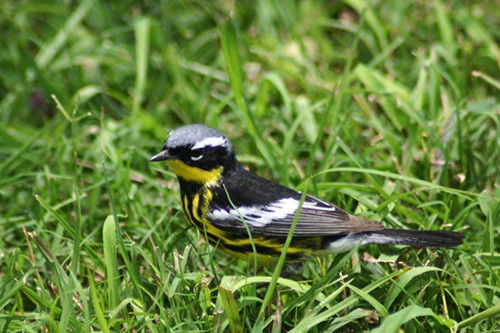
 The tour is timed such that we are often able to catch a wide array of migrant passerines, here a Magnolia Warbler, in coastal migrant traps.
-
The tour is timed such that we are often able to catch a wide array of migrant passerines, here a Magnolia Warbler, in coastal migrant traps.
-
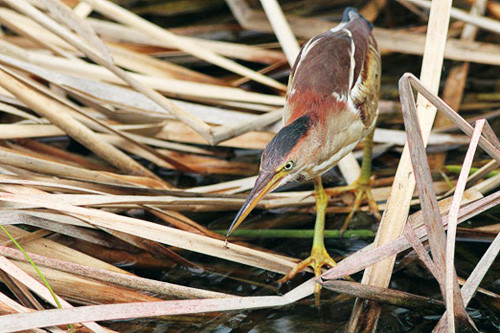
Marshes along the coast often support visible Least Bitterns hunting amidst the cattails.
-
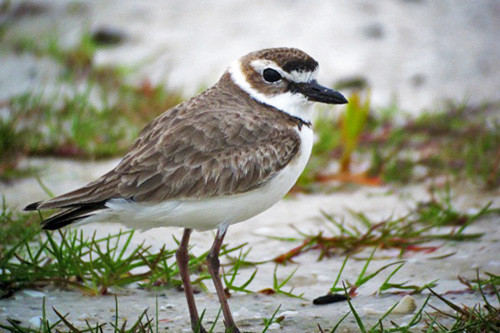
The sandy beaches and inland lagoons of the coast support huge numbers of local and migrant waders such as this attractive Wilson’s Plover.
-
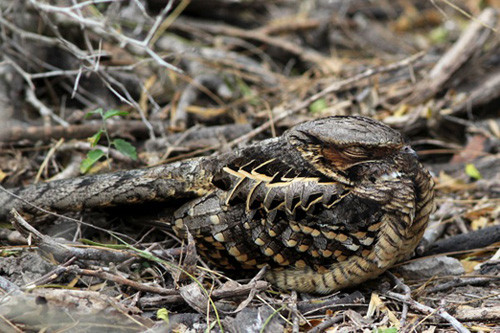
Careful scanning in the more open understorey might reveal a cryptic but beautiful Common Pauraque on a day roost. Photo: Gavin Bieber
-
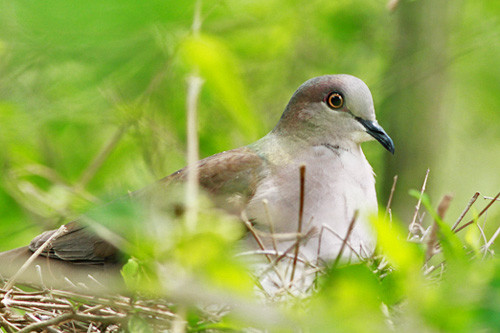
In April many of the local birds are immersed in breeding activity; here a White-tipped Dove incubates its clutch of eggs. Photo: Gavin Bieber
-
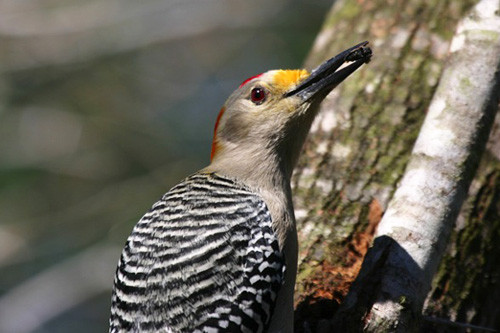
The attractive and noisy Golden-fronted Woodpecker is abundant throughout the valley. Photo: Gavin Bieber
-
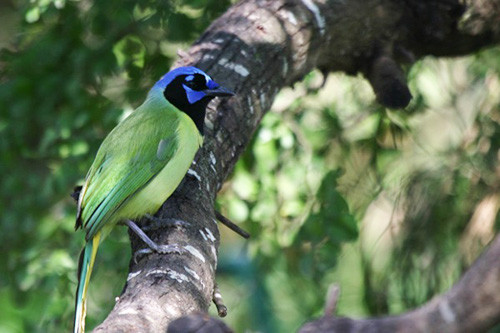
Perhaps the marquee local species, the Green Jay can be common but furtive in April. Photo: Gavin Bieber
South Texas has some of the most distinctive avifauna in the contiguous United States; no fewer than 30 species are restricted to the region. In addition, early April brings a wide array of northbound migrant passerines, raptors, and shorebirds resulting in a bird diversity that is truly staggering. The lower Rio Grande Valley is also well known for hosting the occasional vagrant bird and we’ll keep tabs on this during the tour so that we don’t miss anything exciting.
We’ll have a full week to explore a range of faunal regions, from the broad coastal plain with its shallow lagoons and grasslands, to the scrubby mesquite/cactus forests of the drier uplands, and finally to the dense stands of sabal palm, huisache, Texas ebony, and Montezuma bald cypress that line the river itself.
*Pre-Tour Extension 2024: A total solar eclipse is well worth experiencing and where better to do so than the Texas Hill Country with the likes of Golden-cheeked Warblers and Black-capped Vireos? This eclipse is conveniently occurring just an hour from San Antonio and this tour was created as a pre tour extension to compliment the South Texas spring migration tour. Not only will we target these two Hill Country specialties, but we’ll also spend time birding the area seeing a host of other species not typically seen further south during the main tour. This is an opportunity you don’t want to miss with the next total solar eclipse in the continental U.S. occurring in 2045!
Pre-Tour Extension
Day 1 (April 6): Pre-Tour Extension begins at 6:00 pm in San Antonio. Night in San Antonio.
Day 2: West of San Antonio, we’ll visit a couple of different habitats in search of the two main specialties of the Texas Hill Country. In the mixed Juniper and oak woodland, we’ll pursue the Endangered Golden-cheeked Warbler, while nearby shrubby oak hillsides host the beautiful Black-capped Vireo. We’ll also keep an eye out for Zone-tailed Hawk, Woodhouse’s Scrub-Jay, Rufous-crowned Sparrow, and Bushtit among others.
Night in San Antonio.
Day 3: This morning we’ll keep flexible depending on what we have seen and if anything of interest has been reported. We’ll either bird around San Antonio or head over to Kerrville early in anticipation of the afternoon total eclipse. While reveling in the eclipse, we’ll take note of the surrounding birdlife. Daytime birds typically go silent and perhaps we’ll hear some crepuscular or nocturnal birds’ call. After the eclipse, we’ll slowly make our way back to San Antonio. Night in San Antonio.
Day 4: Depart home or continue to Corpus Christi for the start of the main departure.
Main Tour
Day 1 (April 9): The tour begins at 6:00 pm in Corpus Christi. If weather conditions permit, we’ll visit a local park for an hour of birding before dinner. Night in Corpus Christi.
Day 2: We’ll spend most of the day at the iconic King Ranch, which is the largest ranch in the U.S. Covering 1,289 square miles; it is roughly the size of Rhode Island. Here our main target will be Ferruginous Pygmy-Owl but we’ll also have excellent chances for other difficult species including Tropical Parula and Northern Beardless-Tyrannulet. We’ll also get our first taste of South Texas birding with the likes of Great Kiskadees, Green Jays, Long-billed Thrashers, and perhaps Audubon’s Oriole. Raptors should be common with Crested Caracara, White-tailed Hawk, and Harris’s Hawk all likely to be seen. In the late afternoon, we’ll arrive in the Rio Grande Valley and, if time permits, we’ll bird one of the many local birding hotspots. At dusk, we’ll visit a Green Parakeet roost. Night in McAllen.
Day 3: We’ll depart early for Bentsen-Rio Grande Valley State Park, which holds the vast majority of the valley specialties. We’ll search for our first Plain Chachalaca, White-tipped Dove, Ringed and Green Kingfishers, Clay-colored Thrush, and Altamira Oriole. The hawk tower can be very productive for raptor migration, and we may spend some time observing large numbers of raptors passing overhead, most notably large kettles of Broad-winged Hawks. If we’re lucky, we may even see a Hook-billed Kite. After lunch, we’ll venture upstream to the desert chaparral of Falcon State Park. Here among the cactus and scrubby mesquite, we’ll look for a variety of desert birds not easily found in the lower valley, such as Black-throated Sparrow, Pyrrhuloxia, and Lark, Clay-colored, and Black-throated Sparrows. Night in Zapata.
Day 4: Today we’ll enjoy dawn chorus along a quiet road just outside Zapata, where we have an excellent chance at finding Scaled Quail, Black-tailed Gnatcatcher, and Cactus Wren among the usual suspects. We’ll then head to San Ygnacio Bird Sanctuary where an observation tower allows a good vantage point looking across the Rio Grande River into Mexico. Morelet’s Seedeater is frequently present, and we should be able to pick up Red-billed Pigeon flying along the river or even perched in a nearby tree. This area is generally quite birdy, and we’ll accumulate a decent list by the time we head for lunch. The latter half of the day will be birding other local sites where we may see Painted Bunting, Vermilion Flycatcher, and migrant warblers. If time permits, we’ll return to Falcon Dam to see what waterfowl and shorebirds we may find. Night in Zapata.
Day 5: We’ll devote the morning searching for any species we may have missed before working our way back towards the east. The rest of the morning will be spent at Estero Llano State Park where we may see close to a hundred species by the time we leave! The array of wetlands holds a good number of ducks, and we may be able to pick out a Fulvous Whistling-Duck among the masses of Black-bellied. Shorebirds and other waterbirds will be well represented, and we’ll also search for a resident Common Pauraque, which roosts around the same spot every day. We’ll then venture to the other half of the park, which consists of typical Rio Grande woodlands with orioles, migrant warblers, and valley specialties. Night in McAllen.
Day 6: Today we’ll head to the coast to explore the migration hot spot of South Padre Island. The southern part of the island is quite developed, but some small sanctuaries, several with permanent water, and a number of well-vegetated and little-traveled residential streets can attract literally thousands of brightly colored migrant warblers, tanagers, orioles, and grosbeaks. Such “fallouts” require the right weather conditions, but if we’re lucky enough to be there when one occurs, the spectacle is simply astonishing. We’ll also seek out shorebirds and terns, possibly including American Avocet, Marbled Godwit, Gull-billed, and Sandwich Terns, and will have plenty of time to sort through the pertinent field marks of each species present. After a seafood dinner on the island, we’ll venture out to a nearby marsh at sunset to watch for emerging rails and, with some luck, perhaps a Purple Gallinule or Least Bittern. Night in Harlingen.
Day 7: This morning we’ll visit the National Audubon Society’s Sabal Palm Sanctuary, the largest extant native palm forest in the lower Rio Grande Valley. In addition to the palms, the sanctuary’s numerous ponds, grasslands, and Rio Grande riparian forest support large numbers of area specialties including Green Jay, Great Kiskadee, and White-tipped Dove, and one never knows what rarities might occur. If Tamaulipas Crows are present this year, we’ll visit another of the valley’s famous birding locations, the scenic, if fragrant, Brownsville dump. A number of rare gulls have also been found here, but even if there are none, we should get fine views of migrant Franklin’s Gulls, at this season especially lovely with their rosy breasts. In the afternoon we’ll venture out to the long sand beaches of Boca Chica, where the Rio Grande empties into the Gulf of Mexico. On the way, we’ll pass through the Texas coastal plain where we hope to encounter White-tailed Hawk, Aplomado Falcon, and a host of gulls, shorebirds, and wading birds. Night in Harlingen.
Day 8: Today we’ll return to South Padre or, if migration is light, we’ll visit Laguna Atascosa National Wildlife Refuge where bays, beaches, mudflats, and grasslands host flocks of Roseate Spoonbills and White-faced while the grassy scrub holds White-tailed Kite, Botteri’s Sparrow, and some of the largest Western Diamondback Rattlesnakes in Texas. Night in Harlingen.
Day 9: We’ll depart the valley early on our final morning and return north to Corpus Christi. Our first stop will be at Pollywog Ponds where we should be able to find some new migrants. We’ll then hop over to Mustang Island where we will bird a couple of migrant traps before arriving at the Port Aransas area. Here there are a couple of excellent birding stops including Joan and Scott Holt Paradise Pond, which is a short boardwalk through a marsh where we may see bitterns up close and spot migrants in the trees surrounding it. Just down the road is the Leonabelle Turnbull Birding Center, which has a small section of trees that act as a migrant trap along with a nice boardwalk and observation tower overlooking a wetland chockablock full of shorebirds, ducks, rails, and more. We’ll return to Corpus Christi and any remaining time will be spent at a couple of migrant traps in the city center. Night in Corpus Christi.
Day 10: The tour concludes this morning in Corpus Christi.
Updated: 20 July 2023
Prices
- 2024 Tour Price : $3,590
- Single Occupancy Supplement : $650
- Solar Eclipse Extension : $1,190
- Extension Single Occupancy Supplement : $310
- 2025 Price Not Yet Available
Notes

Questions? Tour Manager: Greg Greene. Call 1-866-547-9868 (US or Canada) or (01) 520-320-9868 or click here to email.
* Tour invoices paid by check carry a 4% discount. Details here.
Maximum group size seven with one leader.
The tour itinerary, above, should be viewed as a general guide. The actual daily itinerary (locations and order) can change due to local birding conditions and the recent existence of any special rarities.