
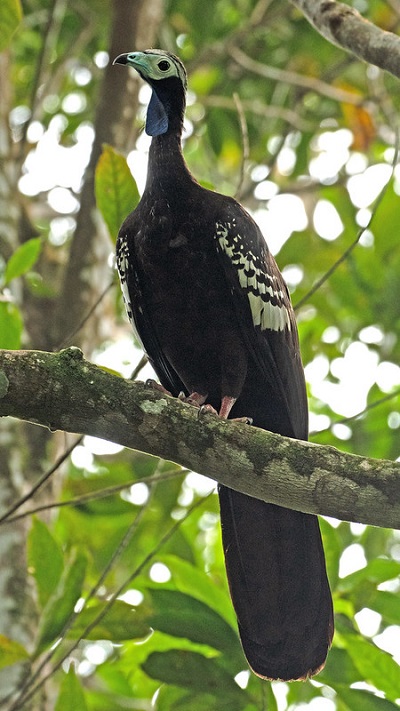
Trinidad Piping Guan is a highlight of the tour. Photo: Pete Baum
Lying just off the coast of Venezuela, the island of Trinidad shares much of its birdlife with the nearby continent. A large percentage of South America’s avian families are represented but without the confounding variety of species encountered on the mainland. For this reason, combined with its pleasant island atmosphere, its logistical accessibility (English is the official language), and world-renowned accommodations, Trinidad has long been considered the destination for fostering an understanding of Neotropical birds.
While on the island we’ll visit the famous Asa Wright Nature Centre, which perhaps needs no introduction. At this former coffee plantation now invaded by rainforest and converted into a first-rate eco-lodge, we’ll be sure to devote ample time to simply enjoying the grounds and the view from the veranda, letting the dazzling array of birdlife come to us. Visiting the feeders daily are perhaps 10 or more species of hummingbird, including Tufted Coquette; honeycreepers; and several species of tanager. Bearded Bellbirds can be seen from the lodge, as well as Channel-billed Toucan, nesting Crested Oropendolas, manakins, several species of swift, and a variety of tropical raptors, among many others. The grounds are also home to a colony of Oilbirds, one of the most accessible colonies in the world of this spectacular and enigmatic bird. We’ll also pick a day for a spectacular boat trip through Caroni Swamp out to a roost of Scarlet Ibis, herons, and egrets numbering in the many thousands.
Once hunted to near-extinction, the Trinidad Piping Guan has been the focus of considerable local conservation efforts. The bird has responded well to this effort and has been slowly increasing in numbers and visibility. We will make a special effort to find this bird along the northern coast of Trinidad at Grand Riviere.
A short plane ride from Trinidad will take us to the island of Tobago, Trinidad’s smaller, more Caribbean, and (perhaps) even fairer sister. Based at another scenic and bird-rich eco-lodge, we’ll have the opportunity to search for a number of species not present on Trinidad, while enjoying beautiful sand beaches, rainforest, and a short boat ride to Little Tobago Island, where swarms of seabirds—including frigatebirds, Red-tailed Tropicbirds, and boobies—build their nests. Tobago is also an excellent island for vagrants, of either New World or Old World origins.
Few tours combine relaxed pace, comfortable lodgings, and relatively little travel with such an intense tropical birding experience.
Day 1: The tour begins mid-afternoon at Trinidad’s Piarco International Airport, where you will be met and transferred to our hotel in Talparo, on the rainforest’s edge. Nestled within a lush garden, this will be our base for our first two nights in Trinidad. Night near Talparo.
Day 2: We’ll kick off the birding with a visit to the verdant Maracas Valley. Known as the hummingbird mecca of Trinidad, we may see up to 14 species of hummingbirds up close as we explore the tropical garden, which hosts delights such as the ornate Tufted Coquette, the stunning Ruby-topaz Hummingbird, and the distinct White-necked Jacobin.
Following lunch, we’ll take a very short drive over to the world-renowned Caroni Swamp, the second-largest mangrove wetland in Trinidad & Tobago. Transferring into a private flat-bottomed boat,we will delve into the heart of the spectacular mangrove forests. Snaking through narrow watercourses among these tranquil and tangled mangroves, we’ll look for Straight-billed Woodcreeper, Silvered Antbird, Black-crested Antshrike, American Pygmy and Green Kingfishers, and Herons of every possible description. In the skies above, we may be treated to a selection of Trinidad’s extensive variety of raptors including Short-tailed Hawks, Long-winged Harriers, Plumbeous Kites, Gray-lined Hawks, and Bat Falcons. We may even spot a sleeping Silky Anteater coiled up on a branch along the way.
When the sun begins to dip lower in the sky, we’ll emerge out into an open expanse of water, greeted by the sight of dozens of American Flamingos feeding. Cattle, Great and Snowy Egrets, along with Tricolored Herons and Little Blue Herons arrive and proceed to decorate the emerald-colored mangrove islands.
As evening sets in, we’ll be in a great place to witness one of Trinidad’s famous natural spectacles: the flight of Scarlet Ibis, herons, and egrets, thousands strong, coming to roost in the mangroves of Caroni. We’ll enjoy dinner on a private cruise through the swamp to finish out the day. Night near Talparo.
Days 3: This morning we’ll work our way through picturesque rural villages and peaceful farm roads on our way to an area characterized by pockets of wetlands and pastures bordered by mangroves. This hodgepodge of habitats hosts a wide variety of species including Ruddy-breasted Seedeater, Striped Cuckoo, Pinnated Bittern, Yellow-chinned Spinetail, Limpkin, Spotted Tody-Flycatcher, Yellow-hooded Blackbird, Red-breasted Meadowlark and Masked Yellowthroat. Wattled Jacana, Ringed Kingfisher, White-headed Marsh Tyrant, Purple Gallinule, Striated Heron, Black-bellied Whistling-Duck, and Black-tailed Tityras are all possible as well.
In the afternoon we’ll work our way towards an extensive tidal mudflat along the west coast of the island. Impressive numbers of Yellow-billed and Large-billed Terns are usually around, and we’ll also keep an eye open for Collared Plovers among other shorebirds. This area of Trinidad has hosted several vagrants, and we’ll keep an eye out for wayward shorebirds and gulls and perhaps the rare Rufous Crab-Hawk, a resident that has been recorded along this stretch of coastline.
In the late afternoon we’ll check into the recently reopened, refurbished, and world-renowned Asa Wright Nature Center, our comfortable base for the next three nights. Night at Asa Wright Nature Center.
Days 4-5: The first morning at Asa Wright can be almost overwhelming to the senses. Excellent birding can be had right from the lodge’s famed veranda. As we sip coffee or tea, we’ll enjoy close encounters with many of the 25 or more species that regularly visit the feeders here, including several species of colorful tanagers as well as hummingbirds. The veranda also offers a spectacular view over the surrounding forest, where many other species not prone to visit the feeders can be spotted in the first rays of sun lighting the treetops, including Bearded Bellbird or perhaps even Ornate Hawk-Eagle. Still more species can be seen by taking short walks on the grounds or along the narrow entrance road to the lodge. We may witness the exuberant displays of Golden-headed and White-bearded Manakins; three species of trogon are also possible.
One of the main attractions at Asa Wright is the deep fissure known as Dunton Cave. Along the way we’ll keep an eye out for the non-bird denizens of the forest here such as Red-rumped Agouti and Golden Tegu Lizard. The main attraction here though is the bizarre Oilbird, which takes of residence in the cave. This is one of the most accessible Oilbird locations in the world and we’ll enjoy face-to-face views with this monotypic species.
The next morning will take us farther into the majestic forest of the Northern Range along the Blanchisseuse Road, where we’ll look for Black-faced Antthrush, Speckled Tanager, and Golden-crowned Warbler, among many others. We’ll keep an eye to the sky for raptors, including the beautiful White Hawk.
Lunch will find us in the charming village of Brasso Seco and will be followed by a cacao demonstration (featuring samples!) from one of the local farmers belonging to a community initiative. Here, surrounded by cacao trees, we may also be joined by Turquoise Tanager, Lineated and Chestnut Woodpeckers, and Green Hermit. Afterwards, we’ll continue through the mountains to Morne la Croix where Rufous-tailed Jacamar, Yellow-rumped Cacique, Yellow-headed Caracara, Crested Oropendola and Long-billed Gnatwren are possible. Settling down with tea and cakes (or a home-brewed rum punch if you prefer), we have the pleasure of watching dazzlingly colorful Blue-headed Parrots fly into their roosts.
Following a delicious meal, we’ll go on a night walk through the lush forest where we’ll try to encounter nocturnal species such as Trinidad Chevron Tarantulas, Coral Snakes, Spectacled Owls, Tropical Screech-Owls, and Tailless Whip Scorpions. Nights at Asa Wright Nature Center.
Day 6: On our final morning at Asa Wright, we’ll revel in the incredible dawn chorus and enjoy the myriad of species that come into the feeders and numerous flowering plants and trees that surround the lodge’s verandah. The extensive property hosts several forest-dwelling species, and we’ll target any remaining species we haven’t yet seen. We’ll pay a visit to leks tucked away in the forest, where the Golden-headed and White-bearded Manakins will be entertaining us with their territorial displays, which is always a sight to be had! A final stroll along the Discovery Trail will hopefully unearth some treasured gems such as Gray-throated Leaftosser and Black-faced Antthrush. Our walk culminates at a reliable spot for up-close sightings of the remarkable Bearded Bellbird - an unforgettable encounter.
In the afternoon we’ll depart Asa Wright and head to the quaint fishing village of Grand Riviere on Trinidad’s rugged and dramatic north coast. Here, we will search for the endemic Trinidad Piping Guan (known locally as Pawi). This is the only reliable site remaining on Earth for encounters with a bird that once numbered many thousands of individuals, but that has been hunted relentlessly and now teeters on the verge of extinction. We’ll make a few birding stops along the way but upon arrival at Grand Riviere our main focus for the afternoon will be searching for the guan among the wild nutmeg trees, which provide their preferred food. The birding is excellent here and the afternoon may reveal 60 or more species.
Having hopefully found the Pawi, we will check into our hotel in time for dinner. The stretch of unspoiled quartz-rich sand in front of the hotel is one of the most important nesting grounds for the Leatherback Turtle in the world, and boasts hundreds of sightings during the months of March to August. With luck, we will bear witness as these gargantuan prehistoric marine reptiles haul themselves up the beach, clambering over one another, to lay their eggs along this protected coastline. Night in Grand Riviere.
Day 7: This morning, we will have a second chance of viewing the Piping Guan, particularly if we did not see it in the previous afternoon. The surrounding area, nestled in a large cacao estate, should be active with birds feeding on the wild nutmeg trees and we’ll keep an eye out for Little Tinamou, Smooth-billed Ani, White-tipped Dove, White-flanked Antwren, Purple, Red-legged and Green Honeycreepers, Pale-breasted Spinetail, and a host of hummingbirds.
After lunch we’ll have a more relaxed afternoon enjoying the tranquility of our surroundings and searching for any species we may still be missing. Night in Grand Riviere.
Day 8: Following breakfast, we will depart for the 2-hour ride to the airport and our short flight to Tobago, where we’ll transfer to our lodgings at Cuffie River Nature Retreat located on the edge of the historic Main Ridge Forest Reserve. Geologically, culturally, and ornithologically distinct, Tobago is quite different than its larger neighbor Trinidad and this will be quite evident on our arrival. Along the way we’ll visit a small mangrove where White-fringed Antwren and the endemic “Tobago” subspecies of Scrub Greenlet can be found. We’ll again find ourselves living amid excellent habitat, and our new home offers chances for Ruby-topaz Hummingbird, Trinidad Motmot, and Common Potoo, among a host of others. Night at Cuffie River Nature Retreat.
Days 9-10: From our base at Cuffie, we’ll explore the island paradise of Tobago. For one morning we will explore the Gilpin Trace, a magnificent piece of pristine forest draped in mosses and lianas. We visit a little-known lek for Blue-backed Manakin and delight in the acrobatic antics of this beautiful species. Here we may also encounter, among others, Plain Antvireo, Olivaceous Woodcreeper, Stripe-breasted Spinetail, Yellow-legged Thrush, and the near-endemic White-tailed Sabrewing. Elsewhere we’ll be in search of other species not found on Trinidad, including Rufous-vented Chachalaca, Striped Owl, White-fringed Antwren, and Red-crowned Woodpecker. The late afternoon is yours to stroll the grounds and surrounding trails or select a favorite perch either on the front or rear main balcony from which to enjoy sightings of an incredible array of hummingbirds - including the aforementioned Sabrewing. Over 100 species have been spotted in this forest, so we’ll have much of the day searching for them.
As sunset approaches, flocks of parrots, parrotlets, and noisy chachalacas break the silence as they return to their evening roosts. After dark we’ll search for the tiny White-tailed Nightjar, a near-endemic which can be found right on the property.
For our second day on Tobago, we’ll drive along the scenic coastline towards the seaside town of Speyside. Here we’ll trade our vehicle for a glass-bottomed boat to take a short ride out to Little Tobago Island. The island, one of the country’s most significant wildlife sanctuaries, boasts one of the largest seabird colonies in the entire Caribbean and upon approach from the boat numerous seabirds should already be visible wheeling and cavorting over the waves. As we disembark from the jetty, we will begin our ascent into the dry tropical forest. Here the spectacular tropical scenery is enhanced by a great show of nesting seabirds. Red-billed Tropicbirds, Brown and Red-footed Boobies, and Magnificent Frigatebirds whirl about, and we may even spot an Audubon’s Shearwater out over the sea. These encounters are interspersed with regular sightings of Bridled, Sooty, Roseate and Royal Terns as well as Brown Noddies.
We’ll return to Tobago for lunch, and afterwards we’ll have the afternoon to explore more of the tropical gardens of our accommodation and the busy feeding frenzy at the bird feeders. Nights at Cuffie River Nature Retreat.
Day 11: After breakfast, we’ll transfer to the airport for our return 20-minute flight from Tobago to Trinidad and onward journey home.
Updated: 19 April 2024
Prices
- 2024 Tour Price : $5,990
- Single Occupancy Supplement : $920
Notes

Questions? Tour Manager: Stephanie Schaefer. Call 1-866-547-9868 (US or Canada) or (01) 520-320-9868 or click here to email.
* Tour invoices paid by check carry a 4% discount. Details here.
Maximum group size 10 with one leader (and local guides).