
 One of the largest flying birds in the world, a Kori Bustard strides across the grasslands of northern Tanzania. Photo by Steve Rooke
 -
One of the largest flying birds in the world, a Kori Bustard strides across the grasslands of northern Tanzania. Photo by Steve Rooke
-
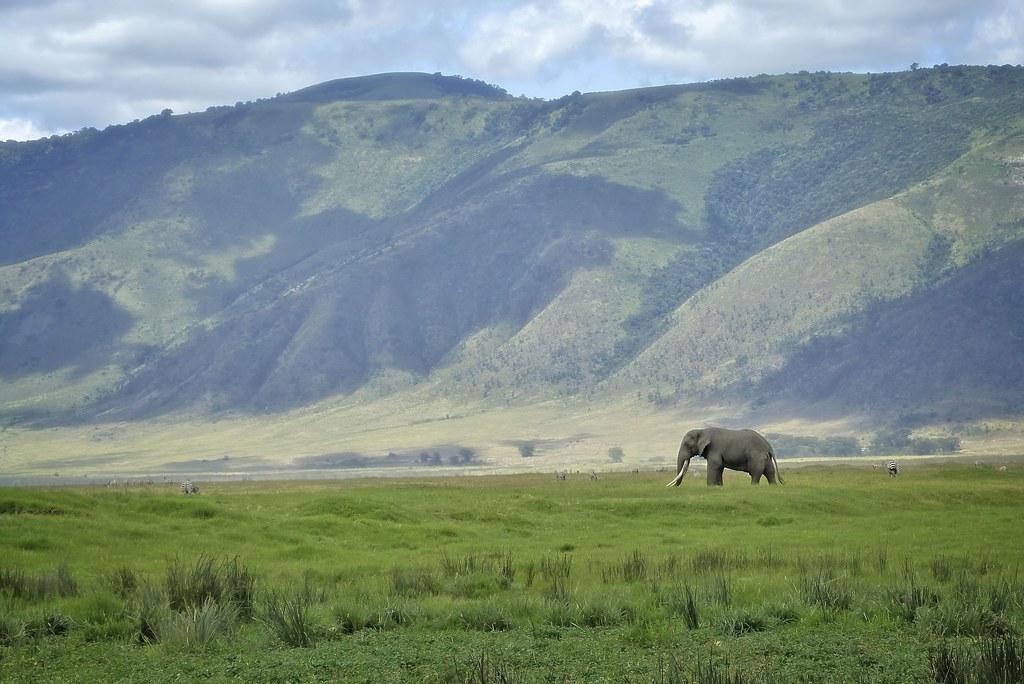
African Elephant. Photo by Debbie Hilaire
-

African Open-billed Stork. Photo by Debbie Hilaire
-
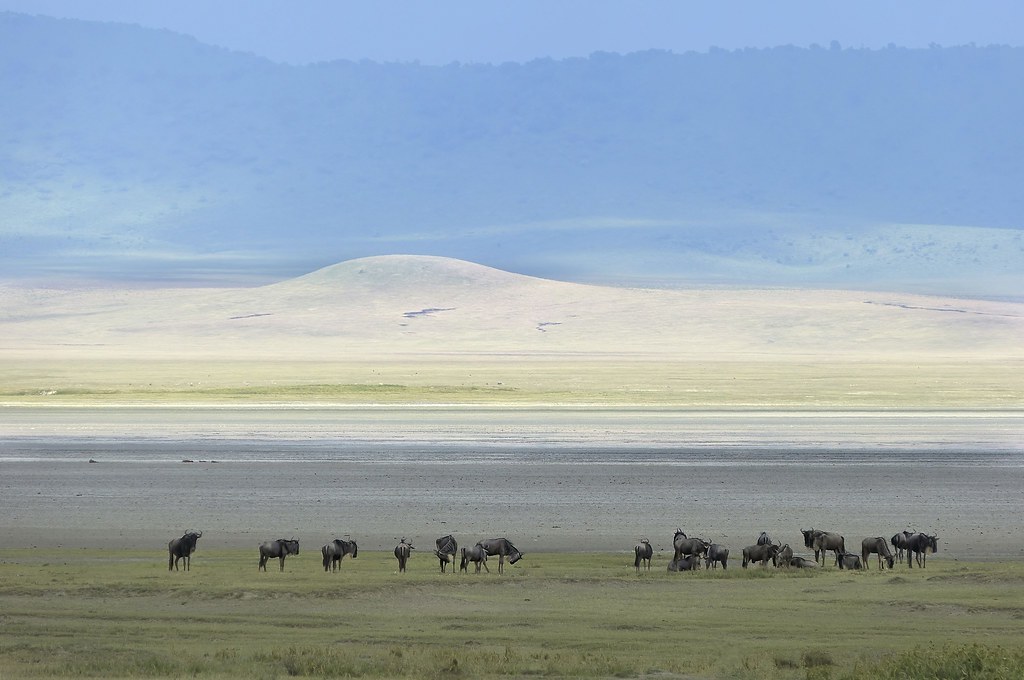
Wildebeest. Photo by Debbie Hilaire
-
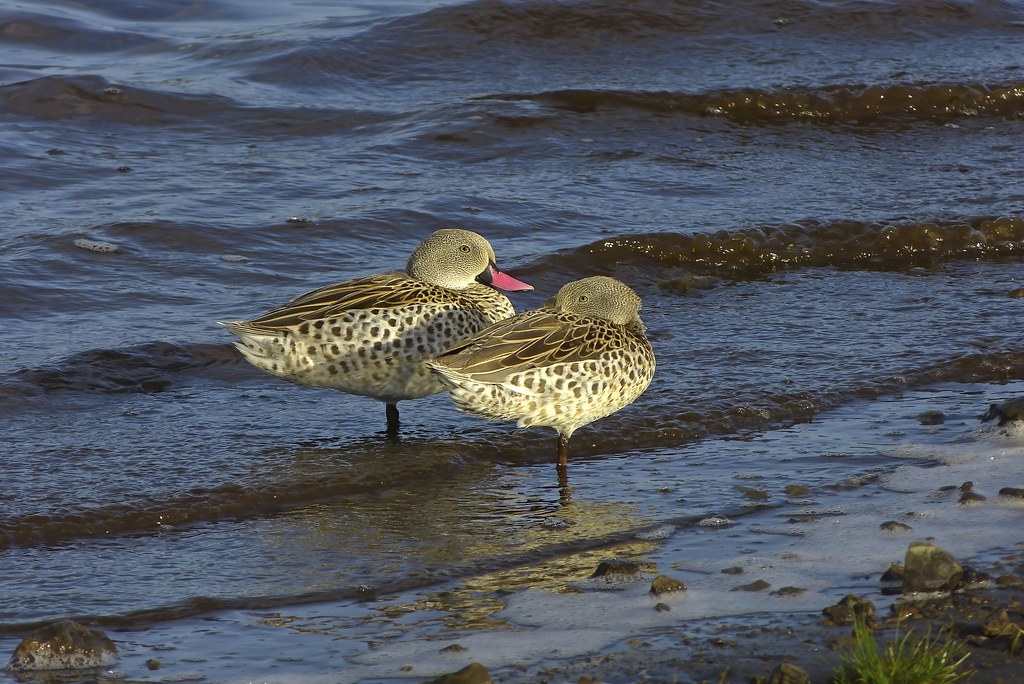
Cape Teal. Photo by Debbie Hilaire
-

Lesser Flamingos. Photo by Debbie Hilaire
At the time of independence, Julius Nyerere, the first president of Tanzania, was well aware of the global significance of his young nation’s wealth of wildlife, and made great efforts to ensure its security. Consequently almost one quarter of the country is today well maintained within national parks and various types of wildlife reserve. The most famous of these are in the north and they have become the framework for what has become a classic safari, our continuously refined and updated WINGS Tanzania bird-and-mammal watching tour.
We’ll begin at a fold in the densely forested slopes of Mount Meru, an elegantly chiseled pyramid of a (dormant) volcano standing in the lee of the taller, more famous yet often somehow less daunting Mount Kilimanjaro. After spending our first two nights here at an historic lodge we’ll descend toward East Africa’s Great Rift Valley through the unique baobab savanna of Tarangire National Park. We’ll visit the modest Lake Manyara National Park on the floor of the Great Rift Valley before climbing once again into cooler montane elevations, ascending via a zig-zag road up the steep western wall of the rift to the edge of the mighty escarpment and a small town called Karatu on the approaches to two of the most fabled tapestries within the wondrous gallery of East Africa’s wildlife destinations, the captivating beauty that is Ngorongoro Crater, and the all embracing grasslands and woodlands of the seemingly infinite Serengeti National Park.
After nine days of exploration in this contiguous “two park wildlife haven” we’ll draw our safari to a close, passing two peaceful nights at a very relaxed lodge on the tranquil, papyrus-fringed shoreline of Africa’s greatest lake Nyanza-Victoria before flying back east, from the nation’s second city of Mwanza, to Kilimanjaro International Airport. A final night passed at the remarkably bird-rich KIA lodge will be followed by a morning’s birding in the dry acacia bush of the nearby Maasai steppe.
This by-now classic safari bird and mammal tour (it was conceived in 2010) of fifteen field days should yield well over five hundred bird species together with what must be an almost unrivalled list of seventy-plus mammal species seen. It therefore provides both a perfect “faunal introduction” for any first time visitor to East and Central Africa as well as a reminder to repeat visitors that a visit here is one of if not our planet’s great natural history experience. Furthermore the majority of these birds and mammals may be observed at close range and with little effort from our fully-customized safari vehicle, and hence watched very well indeed.
Day 1: Upon arrival at Kilimanjaro International Airport, you will be transferred for a two night stay to a nearby and delightful historic lodge situated near the principal gate of Arusha National Park on the southern slopes of Mount Meru. We should have time to walk around the well-timbered grounds studded with old growth evergreen trees and a variety of exotic flowering shrubs and search for local bird specialties along the bubbling trout stream beside which the lodge is situated. We will certainly recognize that we really have arrived in “the old continent” with breeding African Black Duck and African Jacana on the lake, African Goshawk and delightfully duetting African Fish Eagles in the trees, the mellow hoots of African Wood Owl at night, and the chip notes of African Yellow Warblers in the morning. Night near Meru.
Day 2: The wonderful wildlife sounds of tropical Africa will wake us early. We’ll likely spend a breakfast hour observing new sights around the lodge grounds and be greeted by some of the more common birds of the region. However, we’ll devote today to an exploration of nearby Arusha National Park. Once inside we’ll find ourselves among a wealth of birds: evocatively named species, such as Hadada Ibis, the Hamerkop, Giant Kingfisher, Emerald-spotted Wood-dove, White-fronted Bee-eater, Yellow-breasted Apalis, Red-winged Starling, Tropical Boubou, Black-backed Puffback, Chin-spot Batis, Kilimanjaro White-eye, and a variety of glittering sunbirds including Variable, Collared, Scarlet-chested, Bronze, Amethyst, and the less iridescent Eastern Olive Sunbird.
We may encounter our first large African mammals as soon as we enter the park. Typically the first will be Maasai Giraffe quickly followed by African Buffalo, Eastern Bushbuck, Plains Warthog, Common Zebra, and Common Waterbuck. Further inside, within the moist evergreen forest, primates may perform. The magnificent black and white Guereza Colobus in the canopy and dainty Blue (or Gentle) Monkeys in the undergrowth frequently forage together with troupes of the near ubiquitous Olive Baboon. Hiding on the dappled floor of this magnificent evergreen forest, we may also find the tiny Suni, a woodland antelope often in close proximity to the somewhat larger and brightly bay-colored Harvey’s Duiker. If we are exceptionally lucky, we might catch sight of a carnivore, perhaps a Leopard or its smaller cousin the delightful pointy-eared Serval.
There will be much to see during our day here. We’ll pay particular attention to the skies, searching for the monkey-eating African Crowned Eagle, and to the canopy of the evergreen forest where hard-to-see Hartlaub’s Turacos shout-out with their gruff voices. A good variety of swifts nest within this park, particularly within the towering ramparts of Mount Meru itself. We should find both Nyanza and Horus together with a few individuals of the two larger montane species Alpine and Mottled. Hopefully the enigmatic Scarce Swift will appear as well.
In the park and its forests, there are several pigeon species: Speckled, Eastern Bronze-naped and African Olive Pigeons, Red-eyed and Lemon Doves, and Blue-spotted Wood-dove; at least five cryptic greenbul-brownbul species, and four more splendid looking Afrotropical starlings including the rare and remarkable black-and-white Abbott’s Starling.
We’ll encounter a completely different community of birds in the drier and more open areas, especially around the Momella lakes, including the recently split Sentinel Lark, the rare Pangani Longclaw, the scarce Little Rockthrush, skulking African Moustached, Broad-tailed Grass and Cinnamon Bracken Warblers, confusingly similar looking Trilling, Rattling, Singing and Siffling Cisticolas, and the gloriously golden, range-restricted Taveta Weaver.
Many centuries ago great boulders hurtling-out from a cataclysmic “Mount Helen’s” type of eruption within Mount Meru impounded tiny montane streams wherever the boulders landed in the foothills. This has led to the formation of numerous ponds and small lakes. Most of these are today somewhat brackish and together they support a healthy non-breeding population of both African species of flamingo. These waterbodies often provide us with good views of the elusive Greater Painted Snipe and numerous other migrant shorebirds. Certainly we should see the stiff-tailed Maccoa Duck here together with Grey Teal and a sizeable flock of Southern Pochard. There will be large rafts of Little Grebe and in the surrounding brackish rush-land Sacred Ibis, Blacksmith Lapwing, Pied Avocet and Black-winged Stilt. Night near Meru.
Day 3: We’ll depart early in order to easily skirt the southern edge of Arusha city on the new ring road, before descending gently westwards to the drier savanna of Tarangire National Park. As soon as we are within the park, the scene is dominated by majestic ‘upside-down’ baobabs that rise out of the acacia thorn bush. This vista provides a perfect backdrop for the large herds of African Savanna Elephant who stroll between them. Other fascinating mammals that share this habitat range from carnivores such as the African Lion, Spotted Hyena, and Black-backed Jackal to Kirk’s Dik-Dik, Dwarf and Banded Mongoose, Impala, Fringe-eared Oryx, Bohor Reedbuck, Scrub Hare, the amazing and strictly nocturnal Spring Hare, and with luck a Crested Porcupine. The large grounds of our accommodation blend into the surrounding savanna with no fence or other impediment to the free ranging of the wild animals. Such an area within a “game park” is bound to attract a great variety of birds. At this lodge the selection is superlative. Less intensive grazing around the buildings themselves ensures that there is usually a plethora of both seed eating and insectivorous passerines, especially warblers, weavers, bishops, mannikins and finches. And the endemic Ashy Starlings frequently walk into the lodge’s restaurant. The ‘peacefulness’ immediately around the lodge encourages owls and nightjars to come and roost here too. Night inside Tarangire National Park.
Day 4: We’ll spend another exploring Tarangire as it is so exceptionally bird-rich. We should see Maasai Ostrich, Rüppell’s and hopefully the now critically endangered White-headed Vultures, the delightfully unique Secretary Bird, lots of Crested Francolin, both Yellow-necked and Red-necked Spurfowl, frequent White-bellied and the scarce Hartlaub’s Bustards, comically ostentatious White-bellied and Bare-faced Go-away Birds, tame Black-faced Sandgrouse, cryptic Water Thick-knees, Crowned Lapwing and Three-banded Plover, Lilac-breasted Roller (probably the most photographed bird in Africa), Green Wood-Hoopoe and Abyssinian Scimitarbill, Bearded, Nubian, Eastern Grey and Cardinal Woodpecker, the unbelievably clown-like Red-and-Yellow Barbet, Spot-flanked Barbet and Red-fronted Tinkerbird, White-browed Coucal, African Hoopoe, Foxy Lark, Magpie Shrike, Northern White-crowned Shrike, and the endemic Yellow-collared Lovebird. This is good habitat for African Hawk-Eagle and the handsome Bateleur, who will share the wide savanna sky with Black-chested Snake-Eagle, numerous resident Tawny Eagles, and many African White-backed Vultures. Mottled Spinetails, Mosque Swallows and Fork-tailed Drongos will swoop around the crowns of the baobabs, while in the shorter trees and scrub below we may find Striped and Grey-headed Kingfishers, the Silverbird, White-browed Scrub-Robin, Purple Grenadier, Green-winged Pytilia, White-bellied Canary, and with luck, an approachable trio of roosting Bronze-winged Coursers. Among the Red-billed and White-headed Buffalo Weavers the similar-sized yet endemic Rufous-tailed Weaver remains very common in Tarangire. While we should see a good selection of arriving or departing migrants, birds from farther south (the Afrotropical migrants) or much farther north (the Palearctic migrants) could range from Dwarf Bittern, Rufous-bellied Heron and Striped Crake to Sooty Falcon, Steppe Eagle, Eurasian Rock Thrush, and Red-backed Shrike. Night inside Tarangire National Park.
Day 5: No doubt somewhat reluctantly we must leave Tarangire behind. After a drive of about an hour, and at the base of the western wall of the Great Rift Valley, we’ll divert south into the relatively compact Manyara National Park and visit its well-watered forests, before returning into the highlands by late afternoon. We’ll be stopping for the night at Tloma Lodge, above the town of Karatu.
The ground water forest of Lake Manyara supports a host of bird species and we’ll be keeping a look-out for Eastern Crested Guineafowl, Hildebrandt’s Francolin, Palm-nut Vulture, Purple-crested Turaco, Crowned and Silvery-cheeked Hornbills, Broad-billed Roller, Sulphur-breasted Bush-shrike, Eastern Nicator, Grey-olive and Yellow-bellied Greenbul, Collared Palm-Thrush, White-browed Robin-chat, Ashy Flycatcher, Familiar Chat, Montane Wagtail, Southern Black and Yellow-crowned Bishop, Holub’s Weaver, Eastern Paradise Whydah, and Peter’s Twinspot, among others. After a picnic lunch overlooking Lake Manyara we’ll make our way slowly through the forest back to the main gate and exit the park before sunset. We’ll then climb the 1,500 meters of the western wall of the Great Rift Valley into the town of Karatu to our super comfortable lodge, near to the boundary of the extensive hill forests of Endoro. Night near Karatu.
Day 6: Tloma is situated on the edge of the extensively forested Crater Highlands, and this morning we’ll be able to explore these wooded environments on foot while we search for Ayres’s Hawk-Eagle, Narina Trogon, Grey and Purple-throated Cuckoo-shrikes, Black-throated Wattle-eye, the dazzling Black-fronted Bush-shrike, retiring African Hill Babblers, the exquisite White-tailed Blue Flycatcher, the expertly ventriloquial Grey-capped Warbler, skulking Red-capped Robin-chat, Oriole Finch and the dapper Grey-capped Nigrita, among others.
After a sit-down lunch at Tloma we’ll continue our ascent by road into the Crater Highlands, to what is probably Africa’s most compelling wildlife destination — the breathtakingly beautiful Ngorongoro Crater. The sides of this vast caldera are covered by a mosaic of highland grass and woodland, and as we begin to climb we’ll stop to look for some of the birds that have made this area their home. These may include the secretive African Snipe, showy Red-collared Widowbirds, the males resplendent in full breeding plumage, and perhaps some Jackson’s Widowbirds at a lek. Striking male Yellow Bishops may be in display, buzzing around over the grass, and pied African Stonechats and Streaky Seed-eaters will share the bush tops with Eastern Double-collared and gloriously iridescent Malachite Sunbirds.
Our lodge is in woodland and bush near the crater rim, and we may arrive in time for a walk among the grounds where we may find Schalow’s Turaco, Golden-winged and Tacazze Sunbirds, and family parties of the exuberant Hunter’s Cisticola. This is also a wonderful place to see raptors, including scarcities such as African Marsh Harrier and the far more widespread Augur, Steppe and Mountain Buzzards, birds who sail on the updrafts from the side of the crater, giving eye-level views as they hang there motionless. Night at Rhino Lodge.
Day 7: The Ngorongoro Crater is unique…a place that has to be seen to be believed as words alone could never do it justice. Leaving our lodge on the rim early in the morning, we’ll drive down into what was once the fiery heart of a volcano. Today this huge natural amphitheater has a much more peaceful atmosphere. It’s a place where huge herds of Wildebeest and Common Zebra together with many thousands of gazelles - Thomson’s and somewhat fewer Grant’s - hundreds of Eland and scores of Coke’s Hartebeest feed contentedly, or at least as contentedly as the ever-present Lions will allow. Although the elderly African Savanna Elephants who retire down here and the ‘thirty something’ rigorously protected Black Rhinoceros are far less concerned about any of the four-legged predators.
The bird life of the crater varies according to the season, but during our visit we normally see over one hundred species, including Blue-billed and Red-billed Teal, Yellow-billed Duck, Grey Crowned Crane, Shelley’s Francolin, White and Abdim’s Storks, Lappet-faced Vulture, Dusky Turtle Dove, Black-bellied and Kori Bustards, Whiskered and White-winged Terns, Long-toed and Spur-winged Lapwings, Double-banded Courser, Fischer’s Lovebird, Grey-rumped Swallow, Fischer’s Sparrow-Lark, Sentinel and Red-capped Larks, Pectoral-patch and Winding Cisticolas, Capped Wheatear, Northern Anteater Chat, Long-billed Pipit, and Rose-throated Longclaw among many others. Night at Rhino Lodge.
Day 8: Leaving Ngorongoro Crater and the moist highlands, we’ll continue westwards to the very edge of the vast Serengeti National Park and into the open woodlands around the brackish Lakes Ndutu and Masek. In this part of Africa mammals are constantly on the move, and with luck we’ll intercept the large migratory herds of Wildebeest and Common Zebra. There will be all kinds of other wildlife to look for as well, ranging from Bat-eared Foxes in the shorter grassland to Common Genets around the lodge restaurant at night. At Lake Ndutu we’ll observe both Greater and Lesser Flamingos dabbling in the shallower water where the lovely Cape Teal appear to drift between their legs. Along the saline lake edge we should find the range restricted Chestnut-fronted Plover among plentiful Black-winged Stilt, Ruff, Curlew Sandpiper and Little Stints. and in the cropped grassland the increasingly scarce Black-winged Lapwing together with Kittliz’s Plover and Two-banded Courser. Even far away from water Gull-billed Terns will fly past us scouring the plains in search of grasshoppers and dung beetles, while Montagu’s and Pallid Harriers, two snake-eagle species and Bateleurs, Lappet-faced, African White-backed, Ruppell’s and Hooded Vultures circle in the vastness of the Serengeti sky. Night near Ndutu Lake.
Day 9: We’ll spend all day in the calcium-rich, close-cropped, short-grass plains and acacia woodlands on the Ndutu Important Bird Area where the eastern Serengeti National Park lies contiguous with the Ngorongoro Conservation Area. We may opt to take a picnic lunch in order to better investigate parts of this remote area, stopping to observe whatever might catch our attention. As well as further opportunities to study the many mammals which we have already seen, we may concentrate upon finding a family party of hunting Cheetahs. There is a very good chance of unanticipated encounters with both Lions and Leopards. Of course we should also meet with lots of new birds for our list: Spotted Eagle Owl, Pearl-spotted Owlet, flocks of chuckling Chestnut-bellied Sandgrouse, dainty Temminc’s Courser, Usambiro Barbet, hopefully cuckoos galore Common, African, Didric, Klaas’s, Great Spotted, Levaillant’s and Jacobin (!), Red-fronted Barbet, Isabelline and Northern Wheatears, Cardinal Quelea, and Green-winged Pytilia, among many others. Our stay here in such a classic East African setting will we expect be one of the tour’s many highlight, significantly enhanced by being able to sit around the campfire at night listening to the nearby laughing wails of Spotted Hyena, the territorial grunting of Impala and the laughing of the Common Zebra. Night near Ndutu Lake.
Day 10: There will be time for early morning birding close to our lodge before breakfast, and then we’ll continue westward across the southern part of the Serengeti into the center of this vast national park. Here we’ll enter the Africa of what might be every foreign tourist’s initial imaginations: a wide-open landscape of waving yellow and green grasses, dotted with flat-topped acacias and punctuated by isolated crystaline hills (granitic inselbergs or koppies - long eroded rocky outcrops - where herds of large mammals and big soaring birds can appear almost anywhere.
We’ll be looking for a variety of species, including Coqui Francolin, the endemic Grey-breasted Spurfowl, Greater, African (rufescens) and Lesser Kestrel, Amur Falcon, Kori and Harlaub’s Bustards, the truly archaic-looking Southern Ground Hornbill, Brown Parrot, Yellow-throated Sandgrouse, Northern White-tailed, Short-tailed and Somali (Athi) Short-toed Larks, Plain-backed and Red-throated Pipits, Grey-crested Helmet-shrike, Rufous Chatterer, Black-lored Babbler, Red-faced Crombec, Karamoja Apalis, Desert Cisticola, Buff-bellied Penduline-Tit, Black-faced Waxbill, Speke’s Weaver, and Straw-tailed and Steel-blue Whydahs.
Among the many mammal species we’ll hope to see are Cheetah and Leopard, antelope such as Defassa Waterbuck, the chestnut Topi, the shy and retiring Steinbok, and the beautifully delicate Oribi, while Spotted Bush and Rock Hyrax and Klipspringer may be found in the koppies. Herds of Hippopotamus certainly will be wallowing noisily, at least by day, safe in the scattered muddy pools.
Our first night here likely will be at a small and very secluded tented camp, near to a low hill of white stones called “Maui Maupe” in Swahili. This location is only 20 kilometers from Seronera, the administrative hub of the park. At night though, in the sublime space of the Serengeti, the sounds of various frogs and crickets will mingle with the strange cries of galagos (bush-babies) and the whistles, hoots and shrieks of an owl species, or three! All of which experienced together may help to conjure a superb sense of solitude, or something indescribable, an ineffable timeless wilderness feeling that is only possible on an African safari. Night at a tented camp near Seronera, the hub of the park.
Day 11-12: These days of our journey will demonstrate why the Serengeti ecosystem arguably remains the greatest wildlife destination left on earth. Throughout our time within the contiguous ecosystems of the Ngorongoro Conservation Area and Serengeti National Park, we’ll make morning and late-afternoon game drives from our accommodation out into wide grassy valleys of surprisingly narrow rivers. We’ll visit watering locations where storks, cranes, crakes, and rails haunt secluded corners, while woodpeckers, kingfishers, orioles and gonoleks frequent the undisturbed (at least by modern man) riparian woodlands.
Setting out we’ll travel north far across the Serengeti, from Seronera in the center, to the northernmost borderland which is adjacent to Kenya’s famous Maasai Mara Reserve. All the while we’ll be among the bird and mammal communities of many of the species already indicated.
We very much hope that at some point we’ll be able to insert ourselves into the indescribable magic of being within “The Great Migration”, in the rivers of gently grunting wildebeest and laughing zebra on the move, fidgeting mammals these, as if they are always nervously mindful of the attendant large carnivores!
After completing our transect we’ll sleep (for two nights) at an exceptionally beautiful and luxurious lodge on a high ridge close to the Mara River. This is a far moister environment than anything we have encountered since leaving Lake Manyara. Therefore, there should be plenty of new bird species for our bourgeoning list such as Grey Kestrel, Dark Chanting Goshawk, Harlequin Quail, Senegal and African Wattled Lapwing, Lesser Moorhen, Little Buttonquail, Eastern Grey Plantain-eater, Greater Honeyguide, Miombo Wren-warbler, Green-capped Eremomela, Black-backed Cisticola, Sooty Chat, Greater Blue-eared Glossy Starling, Yellow-spotted Petronia, and Golden-breasted and Cinnamon-breasted Bunting.
Taken as a whole, this sojourn will doubtless demonstrate why the Serengeti ecosystem arguably remains the greatest terrestrial wildlife destination left on Earth. Nights in the Northern Serengeti.
Day 13-14: After a second early morning around our lodge we’ll depart for the seclusion of Speke Bay Lodge for a two-night stay. Traveling along the Grumeti River of the western corridor we’ll stop to look for huge Nile Crocodiles, relics from a seemingly distant era, and of course there will be plenty of birds to see on the way. In particular we’ll search for Grey-crested Helmet-shrike and Karamoja Apalis. The quiet backwater of Speke’s Bay on the southeastern shore of Lake Victoria will provide us with an introduction to several West African bird species, and once there we’ll spend the late afternoon on foot, birding in the lush grassland along the lake shore and beside the fringing papyrus beds. Right within the grounds we can find Heuglin’s (Three-banded) Courser and Square-tailed Nightjar roosting quietly in the shade, while brightly colored Slender-billed and Yellow-backed Weavers feed among the flowers as Angola Swallows and African Paradise and Swamp Flycatchers dart after insects. The well-vegetated parts of the lake shore attract large numbers of African Open-bill Storks, Striated Heron, and huge flocks of Whiskered and White-winged Black Terns, while wintering Common Greenshank, Ruff, Wood, and Common Sandpipers forage along the lodges narrow sandy beach. Nights at Speke Bay Lodge.
Day 15: In the first part of the morning we’ll continue our investigation of the lovingly protected 100 acres of lodge grounds and the lake shore. New species may include Verreaux’s Eagle Owl, Eurasian Nightjar, African Pygmy Kingfisher, Blue-headed Coucal, Black-headed Gonolek, Red-chested Sunbird, and Northern Brown-throated Weaver. No birder’s visit to Africa would be complete without an examination of those puzzling cisticolas: today, finally we may find time to sort out the Rattling from the Zitting and the Winding from the Red-faced. Later in the morning we’ll make the short journey to Mwanza for the domestic flight back to Kilimanjaro. Night near Kilimanjaro International Airport on the edge of central Tanzania’s Maasailand.
Day 16: On this last day of the safari we’ll explore some extensive dry Acacia-Commiphora bush-land that typifies what has become known as the Maasai steppe, a huge semi-arid plateau that constitutes the central zone of Tanzania. Here we may pass some seasonal wetlands, stopping wherever we wish in order to explore this and the intriguing savanna habitats, potentially on foot. With much of the tour having been spent in National Parks where we needed to remain in the vehicle, being out and about in the habitat might be a novel experience. As we wander through this dry habitat we’ll be looking for some special birds, many of them dry-country specialties that we may not have seen earlier in the tour. These will include Buff-crested Bustard, the strikingly patterned White-headed Mousebird, Pink-breasted Lark, the Scaly Chatterer, a scarce and skulking babbler, and the prinia-like Red-fronted Warbler. The soft-toned Fischer’s Starling should be seen, a bird in complete contrast to one of our principal targets the utterly scintillating Golden-breasted Starling, surely the most flamboyant of the African starlings. Other special birds could include the diminutive Pringle’s Puffback, pairs of delightful Pygmy Batis, which usually are to be found foraging very near the ground, active colonies of Black-headed Social Weavers, the Southern Grosbeak Canary, and the somewhat elusive Somali Golden-breasted Bunting.
We’ll also be hoping to see species that are winter visitors or passage migrants to the Maasai steppe from their breeding grounds in Western and Central Asia; birds such as the Pied Wheatear, Irania, Eurasian Rock Thrush, Eastern Olivaceous, Upcher’s and Barred Warblers, as well as Red-tailed (Turkestan) Shrike. We’ll return to our hotel, close to Kilimanjaro International Airport, by mid-afternoon where the tour officially ends with a cooked lunch, a refreshing shower, and change of clothes before we transfer the very short distance to the airport in time for our evening flights home.
Created: 19 February 2024
Prices
- November 2024 Tour Price : $11,490
- Single Occupancy Supplement : $820
- March 2025 Tour Price : $11,850
- Single Occupancy Supplement : $890
Notes

Questions? Tour Manager: Stephanie Schaefer. Call 1-866-547-9868 (US or Canada) or (01) 520-320-9868 or click here to email.
* Tour invoices paid by check carry a 4% discount. Details here.
Maximum group size six participants with one leader.