Sri Lanka
-
Feb 8-23, 2027
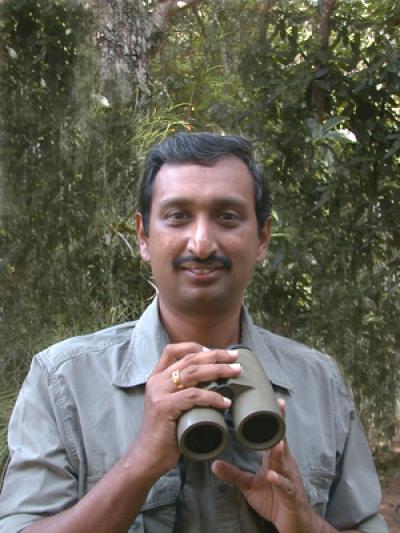
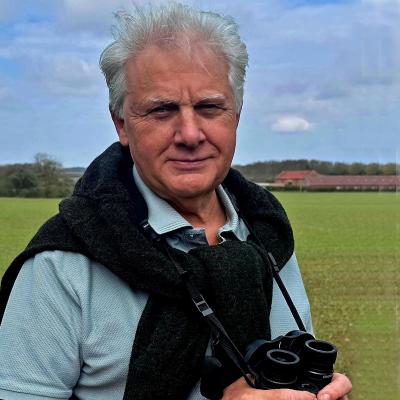
Deepal Warakagoda and Steve Rooke
-
Feb 2028
Deepal Warakagoda and Steve Rooke
2027
Single Room Supplement $1,090
2028
Tour Price to be Determined


2027
Single Room Supplement $1,090
2028
Tour Price to be Determined
Early travelers romantically named Sri Lanka ‘the teardrop of India.’ Just 270 miles long and 140 miles wide, the island does indeed look like a tear fallen from the face of the subcontinent to become petrified in the Indian Ocean. Having, in reality, risen from the sea millions of years ago and subjected in the interim to much geological upheaval, Sri Lanka has developed into a magical land of mountains, gently undulating hills, open plains, and lush valleys, with countless rivers dotted with beautiful waterfalls, many hidden beneath dense rainforest.
For birdwatchers, remote islands have the added attraction of endemic species that have evolved during centuries of isolation. Sri Lanka is no exception with 35 unique birds, and we’ll endeavor to see them all. In addition, a large number of northern migrants winter on the island, joining many resident species, some of which are difficult or impossible to see on the usual birdwatching circuits of India. We should add that Sri Lanka has a rich cultural history that will surround us while we bird, and a famously hospitable people.

Day 1: The tour begins this afternoon at our hotel in Colombo with a short pre-dinner walk around the grounds in search of our first Sri Lankan birds, which could include Asian Koel, Yellow-billed Babbler, White-bellied Drongo, Red-vented Bulbul, and Brown-headed Barbet. We’ll stay out as dusk falls to look for two owls, Brown Boobock and Indian Scops Owl. Night in Colombo.
Days 2-3: After breakfast we’ll drive to Sigiriya, a 600-foot-high, wide pinnacle of rock rising out of the jungle and perhaps the most striking natural sight on Sri Lanka. We have the afternoon and all of the next day to explore this area including our hotel grounds where we could find Ceylon Grey Hornbill and a selection of woodpeckers such as the striking Red-backed Flameback, or the massive Stork-billed Kingfisher.
A series of ancient ruins, most of which have been swallowed by the jungle, can be found around the base of the imposing rock and will host our birding efforts. We’ll wander the extensive network of tracks and roadways in search of Crimson-fronted Barbet, Blue-faced Malkoha, Banded Bay and Drongo Cuckoos, Indian Pitta, Ceylon Woodshrike, Large and Black-headed Cuckooshrikes, Golden-fronted Leafbird, Orange-headed Thrush, Indian Black and Indian Blue Robins, Jungle, Ashy, and Grey-breasted Prinias, Green and Large-billed Leaf Warblers, Asian Brown and Brown-chested Flycatchers, and Brown-capped Babbler. This is also a great place to see, and hear, the endemic Sri Lanka Shama, perhaps the most beautiful song of any bird on the subcontinent. We’ll stay out until dusk to look for night birds, notably Oriental Scops, Brown Fish, and Forest Eagle Owls, and Jerdon’s Nightjar. Nights in Sigiriya.
Day 4: We’ll travel to Kandy, home of traditional Sri Lankan culture and nestled in the lush hill country. For birds we’ll need venture no further than the secluded grounds of our accommodation, an utterly delightful hotel set away from the town with grounds that are visited by a range of species. We’ll spend the afternoon in this peaceful setting looking for Sri Lanka Scimitar Babbler, gaudy Orange Minivets, Tickell’s Blue Flycatcher, and Pale-billed Flowerpecker among others. We’ll also hope to add to our growing list of night birds with Brown Wood Owl. Night in Kandy.
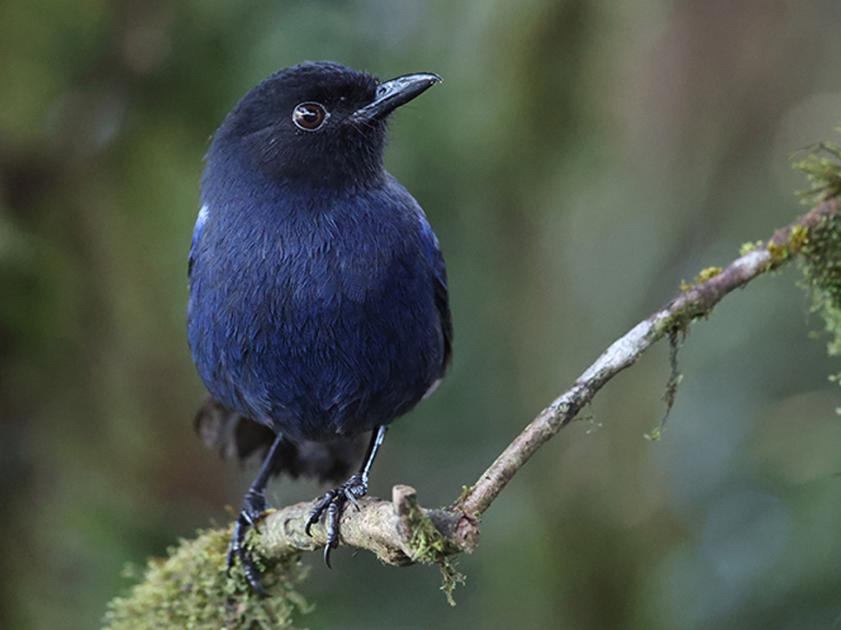
Days 5-6: We’ll continue our journey into the highlands and the old colonial town of Nuwara Eliya which appears to have been lifted straight out of the English Lake District. Here we’re in the heart of Sri Lanka’s hill country and tea-growing region. In the formal shrubbery and flower beds of Victoria Park in the heart of the town we should see Forest Wagtail, Indian Pitta and the striking Pied Thrush. Higher up on the Horton Plains we’ll enter a strange landscape of dense cloud forest and open grassy plains. This can be good for raptors including the increasingly rare Jerdon’s Baza. Perhaps easier to find will be Hill Swallow, Yellow-eared Bulbul, Sri Lanka Bush Warbler, and Sri Lanka White-eye, among others. We should also see, and hear, our first Sri Lanka Jungle Fowl. We’ll be on the look out for Gray-headed Canary Flycatcher, and Kashmir and Dull Blue Flycatchers, but the real prize of our visit to this region will be the elusive Arrenga, or Sri Lanka Whistling-thrush, one of the rarest birds on the island, and perhaps one of the most difficult to find. Nights in Nuwara Eliya.
Days 7-9: Leaving the cool hill county, we’ll drive south into the dry lowlands and the village of Tissa, famous for its large tank (or reservoir) and ancient huge domed dagoba (Buddhist shrine). The drive will take us past many rice paddies which should be alive with Great White, Little, and Cattle Egrets, along with Medium Egret and the odd Asian Openbill. Tissa will be our base for investigating the birdlife of Yala National Park and the surrounding bush country, wetlands, reservoirs, coconut groves and gardens.
Our time will be split between the national park and its surrounds where wetlands in particular can be very rewarding. We’ll have the best part of a day to explore inside Yala where we’ll switch to open-sided, safari-style jeeps which make seeing the many birds and mammals much easier. We should get good views of White-bellied Sea and Grey-headed Fish Eagles while other highlights could include Rosy and Brahminy Starlings, Jacobin Cuckoo, Coppersmith Barbet, hordes of Asian Green and Blue-tailed Bee-eaters, Crested Tree Swift, Indian Roller, Indian Silverbill, Plain and Jungle Prinias, Blyth’s Reed Warbler, and Jerdon’s Leafbird. We will not ignore the mammals and while the dense bush and forest can make them hard to see, we have a very real chance of encountering a Leopard (Yala is reputed to hold the highest concentration of Leopards in Asia) or Sloth Bear as well as lots of Chital (Spotted Deer), Sambar, Tufted Grey Langur, and of course Asian Elephants.
The many open muddy lagoons should be full of shorebirds such as Tibetan Sand, Kentish and Pacific Golden Plovers, Marsh, Wood and Curlew Sandpipers, Little and possibly Temminck’s Stints, Greenshank, Redshank, and Black-tailed Godwit to mention a few and over the years this region has turned up some rare shorebirds so almost anything is possible. This is a good place to see both the delightful Small Pratincole and the hulking Great Thick-knee as well as numerous Whiskered, White-winged Black, Little, Gull-billed, and Caspian Terns, and perhaps a Brown-headed Gull or two.
Away from the national park we’ll have much to look at. At the coast we’ll stand on the edge of the Indian Ocean looking for more terns notably Great and Lesser Crested. The more overgrown wetlands can be full of lush reedbeds and strewn with white water lilies and crimson lotus flowers. This is perfect habitat for the more secretive species including the diminutive Yellow Bittern as well as both Black and Cinnamon Bitterns. Eastern Purple Swamphens stomp through the vegetation and we’ll search for the elusive Watercock. Other highlights could include Pin-tailed Snipe, Greater Painted-snipe, White-breasted Waterhen, Lesser Whistling Duck, Cotton Pygmy Goose, Garganey, and Pheasant-tailed Jacana. Noisy Clamorous Reed Warblers will be singing from the reed tops and both Baya and Streaked Weavers should be busy collecting nesting material. Sparkling Common Kingfishers will be darting back and forth, and the larger White-throated Kingfisher should also be present. We’ll stay out until dusk one night to look for Indian Nightjar and a visit to a grove of coconut trees should give us both White-naped Woodpecker and Jungle Owlet. Nights in Tissa.
Day 10: Leaving Tissa we’ll drive to another national park at Udawalawe. We should reach our hotel in time for lunch and spend the afternoon visiting the Park, established to protect the forest catchment of a large reservoir. It’s home to good numbers of waterbirds and mammals and once again we’ll switch to open-sided jeeps and drive around searching for birds. These should include the distinctive Sri Lankan form of Crested Hawk-eagle as well as Barred Buttonquail, Lesser Adjutant, Malabar Pied Hornbill, Plum-headed Parakeet, Orange-breasted Green Pigeon, Sirkeer Malkoha, and Jungle Prinia. We can test our identification skills by sorting out Blyth’s and Paddyfield Pipits and look for Jerdon’s Bushlark. We may also come across the stunning white form of Asian Paradise Flycatcher, the males sporting imposssibly long tail streamers. We can also expect close encounters with some of the many wild Asian Elephants that inhabit the park. Night in Udawalawe.
Day 11: We’ll make a pre-breakfast visit to a local site to look for Coppersmith Barbet, Yellow-crowned Woodpecker, Jerdon’s Leafbird, Small Minivet, Ashy-crowned Sparrowlark, Oriental Skylark, and Yellow Wagtail. Later we’ll journey west into the island’s wet zone and our comfortable hotel in Weddagala close to the Sinharaja rainforest. After lunch at the hotel we’ll explore the hotel grounds, where we expect to find some of the island’s endemics, such as Layard’s Parakeet along with Yellow-fronted Barbet, as well as Orange and Small Minivets, Bar-winged Flycatcher-shrike, and many others of interest. Night in Weddagala.
Days 12-13: These two days are set aside for exploring Sinharaja’s rainforest in the heart of the wet zone. The forest reserve’s extensive bird list includes most of the country’s endemics, and we have a good chance of seeing the majority of them, although some are easier to find than others. One morning we’ll visit a bird blind where we should get unparalleled views of Sri Lanka Spurfowl, normally very hard to see in the forest, despite hearing them call seemingly everywhere we go. They will be joined by Sri Lanka Junglefowl and perhaps Emerald Dove and Sri Lanka Woodpigeon. This is also a great place to see Sri Lanka Hanging Parrot, Sri Lanka Hill Myna, and Black-capped and Black (Square-tailed) Bulbuls.
We’ll hope to encounter a “bird wave”, a noisy mixed species feeding flock which suddenly surrounds us with new birds. Typically they are made up of Ashy-headed Laughingthrush, Orange-billed Babbler, Malabar Trogon, Sri Lanka Drongo, Black-naped Monarch, Small Minivet, and White-browed and Yellow-browed Bulbuls but they often also contain endemics such as the stunning Red-faced Malkoha or White-faced Starling. By contrast, quiet and stealth is needed as we walk the wide trails through the forest to look for Sri Lanka and Spot-winged Thrushes, and Green-billed Coucal.
We’ll hope to see two special owls at their daytime roost, the distinctive Sri Lanka Bay Owl and the diminutive Serendib Scops Owl. The endemic scops owl is a very recent discovery, found by our tour leader Deepal in 2001 and officially described to science in 2004. The WINGS group that year were in fact the first tour group to see the bird, and we have managed to see it on every tour since then. Given the long history of ornithology on Sri Lanka, it is remarkable that this bird remained hidden for so long. Getting to see these birds can involve a fairly steep uphill trail but the rewards are worth it. It should be an easier walk to get to see another night bird at its daytime roost – the bizarre Sri Lanka Frogmouth.
Two other colorful gems we hope to find are the exquisite endemic Sri Lanka Blue Magpie and the glittering Black-backed Dwarf Kingfisher. More color will be added by the many stunning butterflies floating along the trails. Sinharaja will undoubtedly be a highlight of the tour. Nights in Weddagala.
Day 14: Our final location is Kitulgala, on the banks of the River Kelani. Famous as the location for the filming of The Bridge on the River Kwai, our hotel is located on the riverbank, and we should arrive in time to spend the afternoon birdwatching on the grounds and in some adjacent forest. We stand a good chance of finding Black-throated Munia, along with a Slaty-legged Crake, a bird that is notoriously easy to hear but very hard to see. There should be Layard’s Parakeets in the hotel garden and we have another chance here to see the endemic Chestnut-backed Owlet as well other endemics and rainforest species we may have missed at Sinharaja. Scanning the surrounding hills from the hotel grounds may reveal raptors such as Rufous-bellied Eagle, Crested Honey Buzzard, Crested Serpent Eagle, and Shikra. Nights in Kitulgala.
Day 15: After another birding session in the morning at Kitulgala we’ll travel back to Colombo, arriving there sometime in the afternoon. Night in Colombo.
Day 16: The tour concludes this morning in Colombo.
Note: The information presented below has been extracted from our formal General Information for this tour. It covers topics we feel potential registrants may wish to consider before booking space. The complete General Information for this tour will be sent to all tour registrants and of course supplemental information, if needed, is available from the WINGS office.
ENTERING SRI LANKA: A passport valid for at least six months beyond your date of entry and with at least one blank page for an entry stamp is required for entry into Sri Lanka. U.S., Canadian, and U.K. citizens visiting Sri Lanka must have either an Electronic Travel Authorization (ETA) or a visa to enter the country, as well as an onward ticket and proof of sufficient funds. Yellow fever immunizations are needed if arriving from an infected area.
Citizens of other countries may need a visa and should check their nearest Sri Lanka embassy.
SRI LANKA COUNTRY INFORMATION: You can review the U.S. Department of State Country Specific Travel Information here: https://travel.state.gov/content/travel.html. Review foreign travel advice from the UK government here: https://www.gov.uk/foreign-travel-advice and travel advice and advisories from the Government of Canada here: https://travel.gc.ca/travelling/advisories.
PACE OF TOUR: This tour is generally not physically demanding other than during our time at Sinharaja. Up to then we are mostly birding along relatively level paved roads or tracks. We have three nights at Sinharaja and being hill country there is inevitably some uphill walking. A lot depends on where the birds are that we want to see. In particular to get to the Serendib Scops Owl and the Sri Lanka Bay Owl requires a strenuous uphill walk through dense forest along a basic trail. This involves climbing over rocks and vegetation in places. Walking poles or sticks are very useful here. Coupled with the humidity this can be a tough half hour until we reach more level ground. We do however go very slowly and we think this can be tackled by anyone with a reasonable degree of fitness.
There are some very long days on this trip that comprise of an early start and a late finish if we stay out to look for night birds. Combined with the heat and humidity that can be quite tiring so we do try to have a break during the heat of the day if we have had an early start and/or a late finish. On the days we stay out to look for owls, we may need to go straight into dinner when we return to our accommodation rather than have a break for a shower etc.
Most journeys travelling from one accommodation to another are around 3 to 4 hours long, so we typically leave after breakfast to arrive for lunch, or after lunch to arrive for dinner.
At Sigiriya, it is possible to climb the extensive steps up the famous rock to see the frescoes painted on the rock face and the remains of the fortress at the top. There will be a charge for this and the visit would have to be made during one of the birding excursions. The tour leader would not accompany you.
Bathroom Breaks: Away from accommodation such as hotels and guest houses there are limited options for bathroom breaks. However, we usually manage to find a restaurant to stop at along the way that allows us to use their facilities. Being a well-populated country, bush stops are rarely possible.
HEALTH: The Centers for Disease Control and Prevention (CDC) recommends that all travelers be up to date on routine vaccinations. Please consult your doctor about the necessary medications you might need.
The most current information about travelers’ health recommendations can be found on the CDC’s Travel Health website at https://wwwnc.cdc.gov/travel/destinations/traveler/none/sri-lanka .
Sri Lanka is generally a clean country and levels of hygiene around food preparation are high. Stomach upsets are very rare. We advise however not to drink tap water and we provide plenty of bottled water on the tour bus. However, we suggest bringing anti-diarrhoea medicine such as Imodium just in case. Gatorade or other electrolyte-replacement drinks in powder form are also worth bringing as they replace the vital salts and minerals lost during a bout of diarrhoea. Almost all of the places we stay also include complimentary bottled water in the rooms. Being a hot and humid destination it is important to stay well hydrated.
Smoking: Smoking or vaping is prohibited in the vehicles or when the group is gathered for meals, checklists, etc. or when we are out birding together in the field.
Leeches: On some of the forest trails during the latter part of the tour we may encounter a few small terrestrial leeches. These are well known to travellers in South East Asia and are not harmful. They are found on the forest floor, and the best way to prevent them from getting onto your ankles is to spray your boots with insect repellent that contains DEET. Be careful, however, to ensure that your boots will not be damaged by the chemicals in the repellent, which is mildly corrosive to rubber and some synthetic materials. Canvas and especially suede ‘desert’ boots are not affected and are ideal for spraying with repellent.
The other widely used technique is to use a pair of 'leech socks'. These are made from material such as densely woven cotton and come above the ankles onto the calf. They should have a drawstring at the top to hold them in place. These can also be sprayed with repellent (which leeches hate) and pretty well guarantees that the little beasts will not get through to bare skin! You can make your own or they can be obtained from our local ground agent – please notify the WINGS office in advance if you would like our ground agent to provide these. The number of leeches varies according to how wet or dry it has been and it’s possible we will not encounter very many, but it’s good to be prepared.
Miscellaneous: Biting insects are not numerous but may occur locally: insect repellent will provide adequate protection. There is no Malaria on the island but Dengue Fever is present, although not widespread.
Finally, be sure to bring adequate supplies of all personal medication, as it is not possible to buy most drugs from pharmacies without a doctor’s prescription.
CLIMATE: Sri Lanka enjoys a tropical climate. The northeast monsoon will just be finishing when we arrive so some rain can be expected. At this time of year rain showers rarely last more than an hour or two but can be very intense. Most of the time the weather will be hot with temperatures averaging around a day-time maximum of 31°C (87°F) and night-time lows of 23°C (73°F). This will vary according to our elevation and we can expect a couple of colder mornings and evenings in the highland areas. The humidity will also vary being as high as 80% in some parts of the wet zone but lower in the dry zone. It can be potentially cool during our day on Horton Plains.
ACCOMMODATION: We will be staying in a variety of hotels and rest houses – all with modern facilities including swimming pools at some places. Some have an eco-friendly, rustic, retreat-like feel amongst natural settings all served with typical Sri Lankan hospitality. All rooms have en suite facilities, hot water, and air-conditioning fans. Our hotel near Sinharaja rainforest has a private, open-air shower in each room, and shutters (no glass) on the windows.
Internet: Most of the hotels we visit have wireless internet, mainly in common spaces such as dining and reception areas. Mobile phone coverage is good.
FOOD: Sri Lankan food consists of a variety of dishes served in individual bowls buffet-style from which you help yourself. Although spices are widely used, only a few of these are very hot. The leaders will advise if you are in doubt. Vegetarians are well catered for. Western or ‘Continental’ food is served some days and is usually available as an option. Although not world-renowned like Indian cuisine, Sri Lankan food is tasty, fairly varied and hygienically prepared. Traditionally Sri Lankans eat with their fingers, but cutlery is provided for visitors! For some reason Sri Lankans rarely serve food piping hot, other than soups, and many of the dishes are often just lukewarm.
Drinks: Bottled water and/or a soft drink or a beer is provided at lunch and dinner, as is coffee or tea. All other drinks or ‘personal’ drinking water for use in your room and during the day is the responsibility of the individual.
Food Allergies/Requirements: We cannot guarantee that all food allergies can be accommodated at every destination. Participants with significant food allergies or special dietary requirements should bring appropriate foods with them for those times when their needs cannot be met. Announced meal times are always approximate depending on how the day unfolds. Participants who need to eat according to a fixed schedule should bring supplemental food. Please contact the WINGS office if you have any questions.
TRANSPORTATION: Transportation between sites is by air-conditioned coach. However, at some of the National Parks we travel around the park in large jeeps (open-sided with canvas roof). The leader will organise a seating rotation system on the coach. Participants should be able to ride in any seat in our tour vehicles.
2026 Narrative
Warm, humid air surrounded us as we ventured out for our first birding on the 2026 Sri Lanka tour. We were in the hotel grounds in Colombo where we caught up with some of the common birds that we would go on to see again throughout the trip. However great views of two owls - Brown Boobok and Indian Scops Owl - were certainly a highlight and set the tone for the rest of the tour. This was picked up at Sigiriya where a pair of Oriental Scops Owls and a Jerdon’s Nightjar continued the night birding success. The huge rock rising out of the jungle at Sigiriya dominated the skyline over the next few days as we explored the forest that surrounded its base.
Highlights here included perched Indian Pitta and Sri Lanka Shama, Chestnut winged Cuckoo, Drongo Cuckoo, numerous Alexandrine Parakeets, and Asian Brown and Brown-chested Flycatchers. Even the hotel grounds and surrounding areas have us some good birds including Orange-headed Thrush, Stork-billed Kingfisher, Changeable Hawk Eagle, Large Cuckoo-Shrike and Yellow-eyed Babbler.
A visit to a nearby tank provided a change of scene and of the birds as the open water, strewn with lotus and water lily flowers held striking Pheasant-tailed Jacanas, Lesser Whistling Ducks, and a pair of Cotton Pygmy Goose. Away from the water there was plenty to see in the surrounding countryside with Blue faced Malkoha playing their usual game of hide and seek. Jerdon’s Bushlark, and Grey-breasted, Plain, and Ashy Prinia, were somewhat easier to see, while Small Minivets and Jerdon’s Leafbird lit up the canopy along with White-browed Fantail, Common Iora, Purple-rumped Sunbird, Indian Black Robin, and White-rumped and Black-headed Munias. The crops here attracted lots of Baya Weavers and some Sri Lanka Swallows skimming over the seed heads while a pair of Asian Green Bee-eaters perched for the scope.
We spent our final evening here along the canal, this time in search of Brown Fish Owl. We had just about given up hope of seeing one when one appeared right by the roadside, a fitting end to our time at Sigiriya. The wooded hills close to the ancient city of Kandy was our next stop and here a pair of Brown Wood Owls added to our growing owl list. We also caught up with our first Sri Lanka Hanging Parrots and Sri Lanka Scimitar Babblers. Climbing up into the mist-shrouded Highlands we reached Nuwara Eliya, famous as the gateway to Horton Plains.
Birding locally increased our endemic count with a brief Sri Lanka Whistling thrush, Dull Blue Flycatcher, Yellow-eared Bulbul and Sri Lanka White-eye while the town rubbish tip gave us Kashmir Flycatcher, Velvet fronted Nuthatch, Gray-headed Canary Flycatcher and a surprise in the form of Sykes’s Warbler, a rare winter visitor from Central Asia. Our drive up to the Horton Plains was in dense low cloud and light drizzle. We did not hold out much hope of any birding but our first stop turned up a pair of Sri Lanka Wood Pigeons. A very obliging Sri Lanka Bush Warbler was at our second stop and by the time we reached the welcome coffee stop the sky was starting to clear. We cruised around this strange landscape of open grassland and dense cloud forest where birds included Steppe Buzzard, Hill Swallow, Paddyfield Pipit, and Pied Bush Chat.
Yesterday’s brief views of the Sri Lanka Whistling Thrush did not prepare us for our encounter today with this notoriously difficult skulker. Patience at a small pool rewarded us with prolonged ‘scope views of a perched male which then dropped to the ground to catch a frog which it proceeded to eat. If that was not enough it was joined by a female! A truly memorable sighting. Back down in the town the well-laid out gardens of Victoria Park were where we found the striking Pied Thrush and Indian Pitta, along with several Forest Wagtails, all giving great views, and a small nearby wetland held a pair of the rare Indian Spot-billed Ducks.
Leaving the cool highlands we dropped down to the warm dry country and our next stop at Tissa. From here we accessed Yala National Park as well as birding many of the pools and wetlands outside the park. This rich mosaic of habitats gave us some great birding and the highlights were many. Inside the Park we had close encounters with White-bellied Sea Eagles, Gray-headed Fish Eagles, Malabar Pied Hornbills, hordes of Blue-tailed and Asian Green Bee-eaters, Barred Button Quail, Marshall’s Iora, Brahminy Starling, Orange-breasted Green Pigeon, Jacobin Cuckoo, and Indian Roller.
Shorebirds were everywhere and in good numbers. The list was long but included Tibetan Sand, Kentish, and Pacific Golden Plovers, hordes of Little Stints, Wood, Marsh and Curlew Sandpipers, Greenshank, Redshank, Small Pratincole, Eurasian Curlew, and Whimbrel. The Bundala wetlands were simply alive with birds. There were hundreds of Great and Little Egrets and a few Intermediate Egrets, smart Painted Storks, Glossy Ibis, Spot-billed Pelicans, Painted Snipe, Pintail Snipe, some puzzling Yellow Wagtails, Yellow Bittern and a brief Back Bittern, Baya and Streaked Weavers, Lesser Whistling Ducks, Garganey, lots of Purple Gallinules – the list went on and on and it was difficult to tear ourselves away from all of this avian splendour. It seemed that everywhere we looked there we new birds and even a small garden in Tissa gave us a pair of White-naped Woodpeckers at a nest hole.
But new habitats and new birds awaited us in Uda Walawe National Park. Famous for its Asian Elephants, which we saw a few of, we also found perhaps the best bird in the park – Sirkeer Malkoha. Other avian delights here included White-bellied Sea Eagle eating a large fish, a couple of Changeable Hawk Eagles, a stunning white morph Asian Paradise Flycatcher, several Brown Shrikes, great views of Coppersmith Barbet, some obliging Jerdon’s Bushlarks, Blyth’s Pipits, and Indian Roller.
The drive to Sinharaja took us through some dramatic hill country scenery which looked good for raptors and indeed proved to be so with Legge’s Hawk Eagle, Black Eagle and Rufous-bellied Eagle. We also had stunning views of White-faced Starling and caught up with Plum-headed Parakeets at a tea plantation. The mist-shrouded forest of Sinharaja Forest Reserve and surrounding areas was our home for the next few days. Some effort was required to get to see Sri Lanka Bay Owl and then the Serendib Scops Owl at their daytime roost. The Sri Lanka Spurfowl was much easier to see, as were the Sri Lanka Junglefowls, Emerald Dove and Sri Lanka Wood Pigeon at a location that also provided a good breakfast. It is always exciting to connect with a bird wave – a mixed species feeding flock. The first one we encountered held lots of Ashy-headed Laughing thrushes, Orange-billed Babblers, Sri Lanka Drongo and two Red-faced Malkohas, perhaps the most attractive of the endemics.
The main path into Sinharaja proved to be excellent for seeing the endemic Sri Lanka Thrush (formerly Scaly Thrush) and Spot-winged Thrush, along with another Indian Pitta. We had seen 33 of the 35 endemics and the last two, Green-billed Coucal and Chestnut-backed Owlet, both led us a merry dance until we finally had them perched and in the scope. Elsewhere in the area we saw Sri Lanka Blue Magpie, Sri Lanka Hanging Parrots, Layard’s Parakeets, Sri Lanka Hill Myna, and two cute Oriental Dwarf Kingfishers.
Our final destination was Kitugala where sadly unseasonable heavy rain badly affected our birding. However we did manage to add some new birds in the form of Black-throated Munia, Lesser Yellow-naped and Brown-capped Pygmy Woodpeckers, while also getting good views of Layard’s Parakeets, Chestnut-headed Bee-eater, Green Warbler, Stork-billed Kingfisher, and Velvet fronted Nuthatch. We could all hear the Slaty-legged Crake calling but the bird steadfastly refused to show itself. However fantastic views of Chestnut-backed Owlet in the hotel grounds was a fitting end to the tour – well almost. A roadside stop on the way back to Colombo had us looking at a kettle of raptors which included a Rufous-bellied Eagle, Changeable Hawk Eagle, Shikra, and 2 Oriental Honey Buzzards.
Sri Lanka once again showed itself to be a superb birding destination with something new to see at every turn. Besides managing to see all 35 of the endemic species and seeing them well (no mean feat) we also enjoyed the famous Sri Lankan hospitality and came home with some wonderful memories.
- Steve Rooke
Really, not a thing could improve this journey! Deepal’s knowledge and experience with the birds of Sri Lanka are beyond compare. He found all the endemics and many regional specialties, sometimes with excruciating effort, and always confirming each birder had satisfactory looks. Lodging and meals were the best each locale had to offer. Additionally, various cultural and historical moments were at least noted.
- Peter D. on Sri Lanka
Deepal is an excellent leader and a pleasure to travel with. He made sure everyone saw every bird possible. He was very concerned with everyone's safety and comfort wherever possible. How he found all those birds is amazing to me!
- Laura P. on Sri Lanka
Deepal was awesome, he really made extraordinary efforts for us to have the maximum experience. We were fortunate to have him as our guide!
- William J. on Sri Lanka
It was such an honor to be with the man who discovered the Serendib Scops Owl and had part of authoring the 2 best current bird books for Sri Lanka. He was good at getting everyone onto the birds and encouraged me to take more looks through the scope and really enjoy the birds while the others were taking photos. He is not the see it and run type guide. Sometimes we spent time waiting for the bird he expected to show up- and it usually did. He was happy to answer questions about Sri Lanka and help us appreciate the history and culture. The best guide for Sri Lanka!
- Sylvia A. on Sri Lanka
Maximum group size five with one leader or eight with two leaders.
More Tours with these Leaders
South Africa: The West
Kalahari to the Cape
Kalahari to the Cape
Aug 25 to Sep 10 2026 • Steve Rooke