Romania
Birds and Medieval Monasteries
-
Aug 16-25, 2026
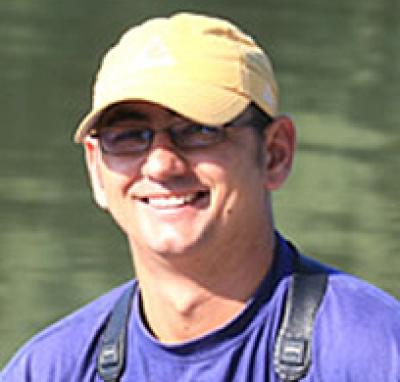
Tudor Blaj
-
Aug 2027
Tudor Blaj
2026
Single Room Supplement $710
2027
Tour Price To Be Determined


2026
Single Room Supplement $710
2027
Tour Price To Be Determined
The remote province of Bucovina in the north of Moldavia is a land in a time warp. Far from the rush of the 21st century, White Storks follow black-clad nuns as they scythe hay while Black Redstarts sing from nearby monastery rooftops. These beautiful monasteries, founded in the 16th century, are remarkable enough to distract the most ardent of birdwatchers from matters avian; the condition of their frescoes, covering the entire walls both inside and out, can only be described as miraculous. We’ll combine relaxed visits to these rural monasteries with birdwatching nearby among remarkably rich forest, hay meadows, and hill villages. On the second part of the tour we’ll spend three nights afloat on a modern houseboat in the Danube Delta, the largest wetland reserve in Europe, followed by an exploration of the western edge of the Asian Steppe.
This unique tour combines some of Europe’s more elusive birds—Pygmy Cormorant, Pallid Harrier, Dalmatian Pelican, Pied Wheatear, Sombre Tit, and many more—with the medieval landscape of one of the most attractive areas of eastern Europe, the Carpathians and their foothills. This tour is tailor-made to appeal to a variety of interests: the villages, mountains, and hayfields of Bucovina are notably rich in flowers and butterflies, as well as rural traditions in dress, farming practice, and building. We have chosen our accommodations so that those who would prefer to study the human history of the area rather than its wildlife can do so—right outside the door.

Day 1: The tour begins this evening at Bucharest airport. Once everyone has gathered, we’ll check in for our internal flight to Suceava. From Suceava’s airport we’ll drive directly to the Sucevita Valley, where we’ll spend the next three nights. We’ll be based in a very comfortable family-run chalet beside steep, flower-filled hay meadows on the edge of primary forest. Grey-headed and Black Woodpeckers, Fieldfare, and Dipper are present here, and we might even see Spotted Nutcracker from our bedroom windows. Night in Sucevita.
Day 2: This morning we’ll explore one of the many forested valleys, and later in the day we’ll visit the fortified monastery in the village. As Sacheverell Sitwell, visiting in the 1920s, wrote: “This first view of the painted church of Sucevita is among the most impressive revelations of the whole Byzantine world.” In the cool of the late afternoon we’ll search for Red-breasted Flycatcher, various woodpeckers, and other woodland birds in the surrounding forest. Night in Sucevita.
Day 3: Pre-breakfast birding around our hotel could produce six species of tit, Hawfinch, and Grey Wagtail. Later we’ll drive up to a wooded pass at 4000 feet in search of Collared Flycatcher, Crossbill, Crested Tit, and maybe even Hazel Grouse and White-backed Woodpecker. If conditions are favorable, a raptor viewpoint on the edge of the forest will give us a good chance of seeing Montagu’s Harrier, Honey Buzzard, Lesser Spotted and Booted Eagles, and Goshawk. We’ll continue to Moldovita Monastery, remarkable for its eyewitness battle scene of the Turkish siege of Suceava Fortress. After a picnic lunch we’ll explore a second tributary valley leading from Sucevita. Night in Sucevita.
Day 4: Once we leave Sucevita, we’ll have the option of visiting two more 16th-century painted monasteries—Voronet and Humor—but en route we’ll make many birding stops for a range of species, from Red-footed Falcon and Lesser Spotted Eagle to Whinchat and Great Grey and Red-backed Shrikes. In the afternoon we’ll reach Neamt Monastery. Built in the 12th century and the oldest monastery in Moldavia, it resembles a fortress with high stone walls. The orchard nearby is a good spot for woodpeckers (Black, Green, Grey-headed, Great Spotted, Lesser, and Syrian). We’ll spend the night at a charming guesthouse that usually has Serin and Tree Sparrow on its the grounds. Night in Agapia.
Day 5: After breakfast we’ll visit the nearby Agapia Monastery. Built in the 17th century, its outer plain whitewashed walls belie the splendor to be found inside. Nicolae Grigorescu, the country’s foremost painter, stayed at Agapia for two years and painted the interior frescoes, a visual feast of rich and colorful images. Later in the day we’ll continue our journey southeast toward the Danube Delta. As we travel through the rolling medieval strip fields of Moldavia, we may see roadside Short-toed and Booted Eagles, Crested Lark, Roller, Bee-eater, and Golden Oriole. At Tulcea we’ll board our private houseboat in time for dinner, with an evening cruise to a convenient mooring spot. With luck we’ll see the first of the usual delta species as flocks of Glossy Ibis and Night Herons fly to and from their roosts. Night on the houseboat.
Days 6–7: Our next two days will be spent exploring the heart of the delta. The exact locations we’ll visit will depend on the water levels at the time but are likely to include large areas of freshwater surrounded by reedbeds hosting thousands of Ferruginous Ducks and perhaps White (and the occasional Dalmatian) Pelicans. Little Egrets and Whiskered Terns will be almost constant companions. Squacco, Night, and Purple Herons are abundant, and we’ll see the occasional Little Bittern. Marsh Harriers will be frequent, while White-tailed Eagle, though less common, is likely. We should also see Red-necked and Black-necked Grebes, together with good numbers of waterfowl and Pygmy Cormorants. In the stands of willow and poplar that grow above the reeds and along the banks we can expect to find Hobby, Roller, Hoopoe, Penduline Tit, Kingfisher, and much more, while any muddy edge may hold Little or Spotted Crake.
The pleasure of relaxing under the canopy of the observation deck, sipping endless tea or coffee (or even the occasional beer or soft drink) and gliding past a succession of exciting birds, cannot be overemphasized. Nights on the houseboat.
Day 8: We’ll drive a short distance from Tulcea to Celic Dere Monastery (a good site for Sombre Tit and Syrian and Middle Spotted Woodpeckers), then south to Enisala and across the Gura Dobrogea plateau looking for larks, Tawny Pipit, and Isabelline Wheatear continuing to the gorge at Cheia Dobrogea. This is a fine area of rocky steppe adjoining oak forest. Pied and Eastern Black-eared Wheatears breed here, and other species in the area could include Levant Sparrowhawk, Booted and Imperial Eagles, Little Owl, and three harrier species (Hen, Pallid, and Montagu’s). We’ll drive to Vadu, where we’ll spend the night at a peaceful guesthouse with excellent home cooking. Night in Vadu.
Day 9: A pre-breakfast visit to the oil refinery pools has in past years provided an assortment of rare waders (Broad-billed, Marsh, and Terek Sandpipers) plus Spotted Redshanks, Curlew Sandpipers, and Paddyfield Warblers and Bearded Tits in the reedbed. The pools at Vadu could hold Red-necked Phalarope, Temminck’s Stint, and Collared Pratincole while the beach (an excellent spot for a swim in the Black Sea) usually has good numbers of Kentish Plover and Sanderling. We’ll then explore the coast around Histria and its reserve on Grindul Saele adjoining Lake Sinoie. Both species of pelican, Spoonbill, Spotted Crake, Short-toed Lark, and Paddyfield Warbler are all possible here. Histria is also the oldest settlement in Romania, inhabited for 1300 years, and we’ll spend some time at the ruins and excellent museum there. Night in Vadu.
Day 10: After some birdwatching at the oil refinery pools we’ll return to Bucharest airport where the tour concludes this afternoon.
Note: The information presented here is an abbreviated version of our formal General Information for Tours to Romania. Its purpose is solely to give readers a sense of what might be involved if they take this tour. Although we do our best to make sure what follows here is completely accurate, it should not be used as a replacement for the formal document which will be sent to all tour registrants, and whose contents supersedes any information contained here.
ENTERING ROMANIA: Citizens of most countries, including the United States, Canada, and the United Kingdom, will need a passport which is valid for three months beyond the intended date of departure and with at least two blank passport pages. A visa is not required for stay of less than 90 days.
COUNTRY INFORMATION: You can review the U.S. Department of State Country Specific Travel Information here: https://travel.state.gov/content/travel.html. Review foreign travel advice from the UK government here: https://www.gov.uk/foreign-travel-advice and travel advice and advisories from the Government of Canada here: https://travel.gc.ca/travelling/advisories.
PACE OF TOUR AND DAILY ROUTINE: Some of the walks – a few over moderately rough terrain - can be a mile or two long at most, but our vehicle is never far away if anyone wants to return early or sit out any particular walk. Most mornings will have optional pre-breakfast birding, and on some days, we’ll stay out taking a picnic lunch.
There are several long drives, but there will be comfort and birdwatching stops en route. Many of the smaller country roads have not been well-maintained and as a result are quite bumpy.
HEALTH: The Centers for Disease Control and Prevention (CDC) recommends that all travelers be up to date on routine vaccinations. These include measles-mumps-rubella (MMR) vaccine, diphtheria-tetanus-pertussis vaccine, varicella (chickenpox) vaccine, polio vaccine, and your yearly flu shot.
They further recommend that most travelers have protection against Hepatitis A.
Please contact your doctor well in advance of your tour’s departure as some medications must be initiated weeks before the period of possible exposure.
The most current information about travelers’ health recommendations can be found on the CDC’s Travel Health website at http://wwwnc.cdc.gov/travel/destinations/traveler/none/romania .
Smoking: Smoking is prohibited in the vehicles or when the group is gathered for meals, checklists, etc. If you are sharing a room with a nonsmoker, please do not smoke in the room. If you smoke in the field, do so well away and downwind from the group. If any location where the group is gathered has a stricter policy than the WINGS policy, that stricter policy will prevail.
Food Allergies / Requirements: We cannot guarantee that all food allergies can be accommodated at every destination. Participants with significant food allergies or special dietary requirements should bring appropriate foods with them for those times when their needs cannot be met. Announced meal times are always approximate depending on how the day unfolds. Participants who need to eat according to a fixed schedule should bring supplemental food. Please contact the WINGS office if you have any questions.
CLIMATE: Daytime temperatures normally vary from 15°C to 28°C (60°F to 80°F) but can, and do, reach 40°C (100°F). Evenings and pre-breakfast birding sessions are cooler. It is possible that we may encounter some rain; however, the area is one of the driest in Europe, receiving a very low annual rainfall.
ACCOMMODATION: Romania is possibly the poorest country in Europe and has an infrastructure more comparable to many third-world countries. Even so, all our hotels and the houseboat will have private en-suite facilities (toilet, shower or bath, etc.).
FOOD: A typical breakfast consists of omelettes, bread and jam, curd cheese and ham, washed down with herb or china tea, or coffee. A picnic is usual at lunchtime, with local salami, pâté, ham, feta cheese, tomatoes, and cucumbers. We make a special effort over our picnics. Dinner is usually a three-course meal; soup is the usual starter. The abundance and quality of fish is another attraction of being in the delta, and our diet while afloat will reflect this.
The boat crew are keen fishermen, and fish are bartered from the villages we pass. There are a number of Romanian desserts - small doughnuts with sour cream and fruit jam is always a favorite. Various cakes or pastries or perhaps pancakes with fruit compote and sour cream may be served or fresh fruit. Coffee or tea is always served.
Drinks: Bottled water and/or a soft drink or a beer is provided at lunch and dinner, as is coffee or tea. Bottled water is available in our vehicles during the day. All other drinks or ‘personal’ drinking water for use in your room is the responsibility of the individual.
TRANSPORTATION: Our transport will be minibuses or small coaches with trailers for luggage. The leader will arrange a seating rotation. Participants should be able to ride in any seat in tour vehicles.
2019 Narrative
The tour began with a meeting at the airport after my colleague Cristi picked up some of the participants from a couple of hotels in Bucharest. This was followed by a quick dinner in a restaurant nearby before we took a short flight (1 hour) to Suceava – and that’s where I met the group. We then drove to our comfy accommodation where we spent 3 nights.
We kept the second day of our trip relaxed, given our late arrival the previous evening. So, after a leisurely breakfast, we had a morning outing around Sucevita Monastery which produced our first special bird (Nutcracker) not more than 100 metres from our accommodation, and then just when we started walking along a stream we had our Dipper. The trip up the valley also revealed a good selection of passerines (a good comparison between Marsh and Willow Tits for example). Close to lunchtime, when bird activity started to get quiet, we visited to the beautiful Sucevita Monastery - the largest and the last built of the painted Monasteries. Lunch in the hotel restaurant followed by a siesta break, and then an evening outing near the hotel in the old forests of firs, beech and spruce, was rather quiet.
The next day, still in Sucevita, we had a pre-breakfast trip that produced some really good views of a mixture of warblers and tits, as well as a nice Red Squirrel within the grounds itself. After breakfast we headed for some altitude on the Obcina Mare ridge and we spent the morning with a nice stroll followed by a picnic with a view. Probably one of the best migration days for passerines was had just being in the spot - with good numbers of three species of Flycatcher: Spotted, Red-breasted and Collared; eventually good views of Crested Tit and Black Redstarts, and also a very friendly Black Woodpecker which flew around us a couple of times. On the way down, a small hay meadow showed us our first Red-backed Shrike and a really nice Hoopoe. We made a visit to the Moldovita Monastery and to the workshop of Glicheria, ‘the egg painting lady’, and then headed back to our hotel for dinner and to complete our checklist.
On Day Four, after an early pre-breakfast walk to see different tits, Goldcrest and Nutcracker, then a good meal, we started our journey south. On the way to the beautiful little monastery of Humor we had good views of a couple of Lesser Spotted Eagles, Great Grey and Red-backed Shrikes, Turtle and Stock Doves. After visiting Voronet Monastery (the Sistine Chapel of the East) which was, as usual, a bit busy but rewarding, we had our picnic on the banks of the Moldova River and there we had a watched a Sparrowhawk overhead. The Monastery grounds proved to be as good a birding location as ever, with various woodpeckers and flycatchers around us.
Our accommodation for the night in Agapia was welcoming as ever, and in the morning we left very early to visit the local monastery and its workshops. After that a long drive, a picnic stop on the banks of a pond allowed us to see a confiding Osprey. We later arrived at Galati for our first encounter with the famous Danube River, at the ferry crossing. Another hour and a half later and we were enjoying watching the birds from the Ponton deck with a beer on the side, or a gin & tonic, or a soft drink depending on the taste. In the evening our first dinner onboard was something to remember.
The next couple of days were very much a repetition of each except some of the birds were different. Pre-breakfast birding from the deck, breakfast, small boat outings along the smaller channels of the Delta, back onto the Ponton, lunch, birding from the deck with the Ponton moving along the river, evening outings in the small boats, back to the Ponton for dinner.
We had Little Crake, a few Dalmatian Pelicans, and a lot more (almost 2000) White Pelicans, Greylag Geese, various ducks, terns (Whiskered, White Winged, Caspian, etc.), all the herons, all the grebes, and White-tailed Eagles. The number of different species was not as striking as the number in which each species was present.
On Day 8, we came off the Ponton after breakfast and started our onward journey early, thanks to all participants being on time. This gave us time to do some good birding along the winding road down to the southern end of the Danube Delta Biosphere Reserve in Vadu. The first stop was in Babadag Forest near Celic Dere where we had a variety of woodpeckers (Grey-headed, Syrian, and Great Spotted), and lots of Hawfinches. Then the target species showed up and displayed to us all - Sombre Tit. The next planned stop, the Byzantine Fortress of Enisala, produced a nice Isabelline Wheatear. Later we drove through the rolling steppe and had excellent views of steppe specialities such as Tawny Pipit, Short-toed Lark, craggy-areas specialities such as Eastern Black-eared and Pied Wheatears. For those who had already seen Western Black-eared Wheatear elsewhere, this was an easy armchair tick as here this species is officially Eastern. The afternoon was had watching a raptor display with Montagu’s Harrier, Long-legged Buzzard, and Booted Eagle. This was a good migration day which made it one which had the biggest list.
Day 9 was the day for looking for waders, ducks, and some steppe birding. The morning on the Black Sea shore and the drive there through the marshes was really good with a selection of waders including Broad-billed Sandpiper, Collared Pratincole, then, after our picnic, we visited the Greek ruins in Histria and were rewarded when visiting the museum by finding a bush which had at least 3 species of warblers flitting around.
Day 10 was a travel day back to Bucharest Airport but not before seeing our first Little Owl en route. Also on the way back we made another stop at the beautiful Refinery Pond which revealed a new bird for the trip: Bar-tailed Godwit.
At the end of our tour of Romania we could boast about a very impressive total list of 172 species; one being seen for the first time. That is indeed impressive considering the trip has been running for more than 16 years. Oh, and we managed to see all the species heard…eventually. Thanks to all the participants and their keen eyes we managed to spot all these birds.
- Tudor Blaj
Tudor was exceptional - great birder and an ambassador for Romania.
- Kelly C. on Romania
This tour is offered every other year on even-numbered years.
Maximum group size ten with one leader.