Puerto Rico
-
Mar 1-7, 2027
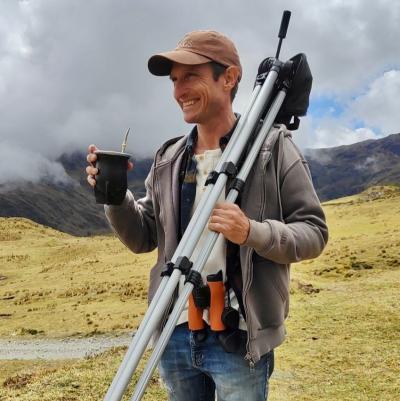
Roland Rumm
-
Mar 2028
Roland Rumm
2027
Single Room Supplement $690
2028
Tour Price To Be Determined


2027
Single Room Supplement $690
2028
Tour Price To Be Determined
Puerto Rico, once a Spanish colony and now a U.S. territory and popular holiday destination, provides an easy week-long getaway for the visiting birder. With excellent roads providing convenient access to its many forest reserves, Puerto Rico offers some of the most enjoyable birdwatching in the Caribbean. We’ll look for all the island endemics and the more than two-dozen Caribbean specialties, visiting every habitat from the windswept elfin-woods of Maricao to the bird-rich thorn scrub of the Susúa Dry Forest region.
For those interested in a longer Caribbean adventure, this tour can be combined with the Dominican Republic.

Day 1: The tour begins this evening in the lobby of our San Juan hotel. Night in San Juan.
Day 2: We’ll have an early hotel breakfast before departing for Rio Abajo State Forest. The mature woodlands in this preserve offers some of the best birding the island has to offer, with a good chance for many of the island’s endemics, and our best chance for the endangered Puerto Rican Parrot. The parking area often bustles with birds, including Puerto Rican Oriole and Puerto Rican Euphonia, among many others, and we stand a good chance of seeing the endemic subspecies of Broad-winged Hawk on late morning thermals. Later, we’ll head for Cambalache State Forest, one of the largest lowland forest tracts on the north shore of the island. Along its trails we’ll look for the beautiful Puerto Rican Bullfinch, whose calls are very similar to Northern Cardinal, and here too we should find the exquisite Puerto Rican Tody and the entertaining Puerto Rican Lizard-Cuckoo. We’ll also look for Puerto Rican Spindalis, the sprightly Adelaide’s Warbler and Puerto Rican Vireo. We’ll eat lunch with the birds before we begin our drive west. We’ll stop at a few wetlands that typically hold an assortment of waders and waterfowl, and often a surprise or two, then pause at a cliffside overlook where White-tailed Tropicbird should be conducting courtship flights in the bay below. This is also one of the best areas on the island to see the endangered Puerto Rican Harlequin Butterfly, an endemic species of checkerspot. In the late afternoon we’ll arrive at our comfortable lodging, a historic hotel in the highlands near Maricao. Night in Maricao.
Day 3: We’ll have an early morning walk on the hotel trails followed by coffee and breakfast. We’ll spend most of the day in the lush montane landscapes of Maricao State Forest, and in other protected areas along the mountainous central road. Two endemic hummingbirds occur here; the Puerto Rican Emerald and impressive Green Mango. In addition, Puerto Rican Tanager and Loggerhead Kingbird (a distinctive, endemic subspecies) are likely. The star attraction, however, is the recently discovered (1971) Elfin Woods Warbler. It can be hard to see well as it is very active and reclusive but if we persevere, it generally reveals its secrets. After a picnic lunch, and depending on the time, we may do more birding and/or have a bit of time off at our wonderful accommodation. If we still need to find Puerto Rican Owl we’ll go out after dinner. Night in Maricao.
Day 4: We’ll rise early for a Sabana Grande panaderia (bakery) breakfast followed by a short drive to the Susúa State Forest where we’ll hope to connect with Key West Quail-Dove, Lesser Antillean Pewee, and other dry forest species. In the afternoon we’ll descend to the lowlands to look for waterbirds and have our first shot at the endangered Yellow-shouldered Blackbird before reaching our wonderful seaside hotel. In the evening we’ll visit Laguna Cartagena NWR where we’ll scrutinize several wetlands looking for rare species such as West Indian Whistling-Duck, Yellow-breasted Crake, and Masked Duck. After dinner, we’ll search for Puerto Rican Nightjar. Night near La Parguera.
Day 5: We’ll bird the lowlands of the Southwest, including a trip to Rice Tech for a chance at exotic species as well as native grassland birds and shorebirds; a visit to Cabo Rojo for scenic ocean views and birds of the mangroves; and another stop at Laguna Cartagena. In the evening we’ll look for the “Caribbean” Short-eared Owl at a secret spot. Night near La Parguera.
Day 6: We’ll return to San Juan, stopping along the way to look for the globally scarce Plain Pigeon and Antillean Crested Hummingbird. At our final stop, we’ll search a local community garden and plant nursery for Green-throated Carib. Night in San Juan.
Day 7: The tour concludes this morning in San Juan.
Note: The information presented below has been extracted from our formal General Information for this tour. It covers topics we feel potential registrants may wish to consider before booking space. The complete General Information for this tour will be sent to all tour registrants and of course supplemental information, if needed, is available from the WINGS office.
ENTERING PUERTO RICO: Puerto Rico is a United States territory, with no special entry requirements for U.S. citizens.
Travelers from outside the U.S. will need a valid passport valid for at least 6 months past your arrival date in Puerto Rico) and a visa or visa waiver if applicable, Non-US citizens will have to clear US customs and immigration either enroute to Puerto Rico at your first US arrival city or upon arrival into San Juan.
COUNTRY INFORMATION: You can review the U.S. Department of State Country Specific Travel Information here: https://travel.state.gov/content/travel.html. Review foreign travel advice from the UK government here: https://www.gov.uk/foreign-travel-advice and travel advice and advisories from the Government of Canada here: https://travel.gc.ca/travelling/advisories.
PACE OF THE TOUR: This tour has daily starts between 6:30 and 7:00am, and siestas on some afternoons. Many meals will be taken in the field with one picnic breakfast and two picnic lunches, returning to the hotel between 4 and 5 p.m. before dinner. There will be at least one (likely two) after dinner excursion for night birds. The elevations are minimal (below 3000 feet, with many days at sea level), and trails are smooth and straightforward. Much of the birding is along roadsides, and the walks are less than 1.5 miles in duration.
HEALTH: The Centers for Disease Control and Prevention (CDC) recommends that all travelers be up to date on routine vaccinations. These include measles-mumps-rubella (MMR) vaccine, diphtheria-tetanus-pertussis vaccine, varicella (chickenpox) vaccine, polio vaccine, and your yearly flu shot.
They further recommend that most travelers have protection against Hepatitis A and Typhoid.
Please contact your doctor well in advance of your tour’s departure as some medications must be initiated weeks before the period of possible exposure.
Specialized medications may be difficult to obtain locally and we advise bringing all you will need with you.
The most current information about travelers’ health recommendations for Puerto Rico can be found on the Centers for Disease Control’s Travel Health website at http://wwwnc.cdc.gov/travel/destinations/traveler/none/puerto-rico. Please contact your physician if you have questions about travel to Puerto Rico.
Malaria and Chikungunya: Malaria and other tropical parasites are not common in Puerto Rico, but mosquitos in the country (more prevalent in the wet season) have been known to transmit Dengue Fever and (as of 2016) a few cases of Chikungunya and Zika. We typically encounter very few mosquitoes during the tour. Please consult your physician for their specific recommendations.
Altitude: The highest elevation we visit is just over 3,000 feet above sea level, and most of the birding is conducted at or very close to sea level.
Smoking: Smoking is prohibited in the vehicles or when the group is gathered for meals, checklists, etc. If you are sharing a room with a nonsmoker, please do not smoke in the room. If you smoke in the field, do so well away and downwind from the group. If any location where the group is gathered has a stricter policy than the WINGS policy, that stricter policy will prevail.
Miscellaneous: We typically encounter very few biting insects during the course of the tour. We recommend using insect repellents with a high concentration of DEET. Like most islands in the Caribbean, there are no chiggers in Puerto Rico.
CLIMATE: The days are generally quite warm (in the 80’s F), and summer clothes are suitable year-round. Please be prepared for the possibility of cool, damp (or rainy) weather in the mountains. Light rain is always a possibility (although rare in March) so bring along a rain jacket or umbrella just in case. The March sun can feel intense, so a good broad-brimmed hat and sunglasses can be useful.
ACCOMMODATIONS: During the tour we’ll stay at three separate hotels. The San Juan hotel which we use on the first and last nights is close to the airport and a standard higher-end US style hotel. For our second and third nights we stay at a beautiful property in the highlands of Maricao situated next to a coffee plantation, and minutes from great birding. In La Parguera we’ll stay at a fabulous hotel with a beautiful outdoor dining area and pool, and who are very accustomed to working with birders.
INTERNET: Wifi is available at most locations (sometimes only in common areas), although it can be slow or spotty depending on weather.
Smart Phone data plans for US Carriers generally carry over to Puerto Rico, check with your cell provider to ensure that no additional charges would be incurred.
FOOD: Food is U.S. standard with some excellent seafood. Breakfasts are mostly in house (as our accommodations have kitchens). We do a big group shop during which participants are able to pick up their own breakfast provisions. Lunches are mostly in US style restaurants or sandwich shops, but we do two field picnics, and dinners are in local restaurants, often with a Cuban flare.
WINGS tours are all-inclusive, and no refunds can be issued for any tour meals participants choose to skip.
Food Allergies / Requirements: We cannot guarantee that all food allergies can be accommodated at every destination. Participants with significant food allergies or special dietary requirements should bring appropriate foods with them for those times when their needs cannot be met. Announced meal times are always approximate depending on how the day unfolds. Participants who need to eat according to a fixed schedule should bring supplemental food. Please contact the WINGS office if you have any questions.
TRANSPORTATION: We’ll travel by SUV or van. When using 15-passenger window vans, we’ll take a maximum of seven passengers plus the leader/driver, so that all will have a window seat. Participants should be capable of riding in any seat in tour vehicles.
2024 Narrative
Day 1: We enjoyed a tasty welcome dinner at Campo Verde Latin Cuisine, the Airport Hotel’s restaurant, before turning in for an early evening.
Day 2: We left the hotel dark and early, making our way westward along the north shore of the island. As we arrived the dawn chorus was in full swing, the air filled with the sounds of Bananaquits, the cardinal-sounding Puerto Rican Bullfinch, Black-whiskered Vireo, Puerto Rican Woodpecker, Red-legged Thrushes, and the dawn calls of Gray Kingbirds. Not long after unloading from the van, and before I could even get the scope up we were welcomed by the raucous calls of one of Puerto Rico’s rarest residents, the Puerto Rican Parrot. A short ways into the old picnic area we watched a group of seven parrots feeding on the seeds of the towering Teak Trees. Teak is an Old World tree species that I’ve rarely seen being utilized by any New World taxa so this was a fun observation.
In between parrot views we watched a family of Puerto Rican Orioles carrying food to their nestlings. A Puerto Rican Lizard-Cuckoo sat out in the morning sunshine providing the best view all trip. Up the trail we followed a Puerto Rican Tody through the tangled vegetation and searched for a calling Quail-Dove with no luck.
As we returned to the van two Puerto Rican Broad-winged Hawks circled briefly overhead. After a quick bathroom stop and a few roadside birds we arrived at Cambalache State Forest for a short walk and a picnic. We enjoyed eye level views of Adelaide’s Warbler at the trailhead while up the trail we had crushing views of four Puerto Rican Flycatchers chasing each other about the trees.
Over lunch we enjoyed brilliant views of a Green Mango feeding from a hibiscus flower and a mixed flock of migratory wood-warblers including Northern Parula, Black-and-white, Magnolia, and Prairie warblers. After lunch we drove to Mirador Guajataca with a brief stop at a small roadside pond where we saw Blue-winged Teal, White-cheeked Pintail, Glossy Ibis and others. At Guajataca overlook we watched six White-tailed Tropicbirds doing aerial flight displays over the ocean.
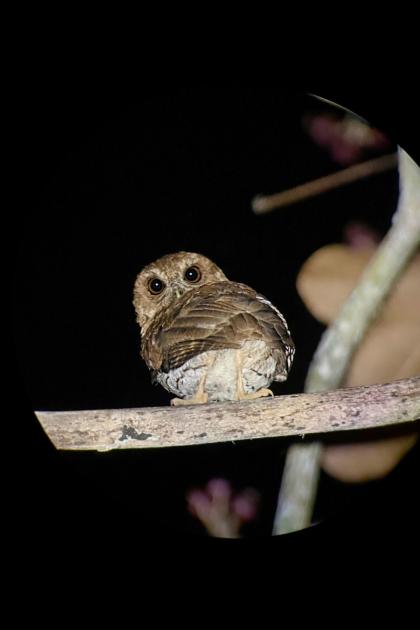
In the afternoon we made our way through the western mountains to the town of Maricao, and then on to Hacienda Juanita, our lovely accommodation situated on a coffee plantation, for the next two nights. After dinner we spent about thirty minutes listening to and enjoying gorgeous, though partly obscured, looks at a Puerto Rican Owl.
Day 3: We rose early and enjoyed a sunrise bird walk through the forests surrounding Hacienda Juanita where we enjoyed our first encounter with the Puerto Rican Tanager, a monotypic family (Nesospingidae) found nowhere else in the world than the highlands of Puerto Rico. After breakfast we made our first prolonged birding stop near the ranger station in the Maricao State Forest, home of the Elfin-woods Warbler, a species described to science in 1976. Shortly after getting out of the vehicle we heard our first Elfin-woods Warblers but they were far enough downslope that we couldn’t get any views. In the meantime we enjoyed close views of a pair of Puerto Rican Spindalis and a male Puerto Rican Bullfinch.
After a short walk and some great views of Puerto Rican Euphonias (above) we returned to the parking area to find a male Elfin-woods Warbler flitting about at eye-level. Near our picnic site we watched a male Puerto Rican Emerald feeding on a patch of flowers.
After lunch we returned to Hacienda Juanita for a short siesta and a swim in the pool. Post-break we walked the trail to Cascada Juanita, a small waterfall downslope from our hotel. Along the trail we encountered a female Elfin-woods Warbler as well as more Puerto Rican Tanagers and a very cooperative Puerto Rican Kingbird.
As the sun set we ate dinner and enjoyed the Venezuelan Troupials and a Puerto Rican Mango feeding on the giant blooming Pseudobombax tree in the courtyard.
Day 4: We rose early for a pre-dawn departure to the town of Sabana Grande where we had a delicious breakfast and some coffee at a local panaderia. From here we were a short drive from our morning destination, Susua State Forest, a lovely oasis nestled in a canyon surrounded by dry forest. Within moments of leaving the vehicle we could hear multiple Key West Quail-Doves singing around us. This species is probably more reliable here than any other single site in the Caribbean - the real trick is seeing one. After chatting with the local park attendant who wanted to be sure we had seen the Puerto Rican Tody, we started down a narrow forest trail in the general direction of a singing Quail-Dove. No more than five minutes had passed before, to our surprise, a Key West Quail-Dove flew in and landed mere feet overhead of the group . We watched in amazement before it realized it had landed right above a bunch of drooling birders and retreated back into the forest. Raymond found a path through the brush and managed to refind the bird, putting it in a scope for everyone to enjoy at their leisure. We watched it sing and preen off and on for the next 15 mins before we eventually left, leaving it singing on the branch where we found it. A wander around the picnic ground produced a number of Puerto Rican Mangos, a few small flocks of White-winged Parakeets, and our only Puerto Rican Pewee of the trip.
With our Hispaniolan Pewee in the bag, and the best Quail-Dove views imaginable, we were on our way toward the coast where we stopped at a non-operational salt farm to enjoy some shorebirds. A load of “Caribbean” Clapper Rails crept through the nearby mangroves, calling frequently, and the sounds of Greater and Lesser yellowlegs rang through the hot, heavy air. In the salt pans we found a Semipalmated Plover and a pair of Killdeers guarding a nest. Along the drive toward Parguera we found a shallow lagoon loaded with Black-necked Stilts and a few Stilt Sandpipers .
In Parguera we enjoyed a picnic while waited for Yellow-shouldered Blackbirds to come into the general store for their afternoon feeding. We were a bit early so we mostly enjoyed watching the local chickens battle over the picnic scraps - someone decided throwing popcorn at them was a good idea. Honestly it was quite amusing. During lunch we had a fly-over Yellow-shouldered Blackbird and a small flock of Caribbean Martins. With it being just a little early to check-in we made a drive around Rice Tech where we encountered many of the island’s introduced species: Scaly-breasted Munia, Orange-cheeked Waxbill, and Northern Red Bishop. A Merlin was perched near the rice fields awaiting its next meal and it allowed for a close approach.
After checking in at the lovely Turtle Bay Inn we took a short break and then headed to Laguna Cartagena for some birding at sunset. We quickly added multiple new birds to the trip lists including: Sora, Purple Gallinule, Limpkin, Least Bittern, and Common Yellowthroat. A Striated Heron (very rare in Puerto Rico) had been spending time at the lagoon for the last couple of weeks and we were able to locate it, along with at least 10 Masked Ducks tucked away in the nearby aquatic vegetation . As a bonus, after much work, we were able to get everyone nice views of the tiny and secretive Yellow-breasted Crake as it crept through the tall grasses along the edge of the wetland.
From here we headed for dinner and then on to the red light district (if you know you know), a nearby hotspot for the endemic Puerto Rican Nightjar. It wasn’t long before we could hear one singing nearby, Raymond quickly located it through a narrow window in the vegetation giving nice views for all. It was a long day but the nightjar represented the last of the Puerto Rican endemics for the trip - high fives and happiness all around (and this was only day 3 of birding).
Day 5: With a long few days behind us the morning bird walk was optional, though nearly everybody showed up, and with smiling faces. We made a trip up to Rice Tech to look for the Blue Grosbeak that had been hanging around and were successful in our morning endeavor, finding not one, but two individuals in a stand of tall grasses on the agricultural complex.
We circled back to the hotel and enjoyed a delicious hot breakfast before heading out for the rest of the morning. Near the town of Boqueron we stopped at a neighborhood pond where we enjoyed a large flock of the endangered Yellow-shouldered Blackbirds at a nearby feeding station .
The neighborhood pond contained about 675 White-cheeked Pintails and over 500 Stilt Sandpipers. We enjoyed watching a “White-shielded” American Coot building a nest.
We made a stop at the Cabo Rojo lighthouse where we enjoyed scenic views of the ocean, watched a couple of Brown Boobies bobbing in the surf, and followed a pair of Caribbean Elaenias as they chased each other through the mangrove trees. After lunch and one more look at Laguna Cartagena we took a well deserved break in the afternoon. After dinner we went out searching for the “Caribbean” Short-eared Owl, and boy were we lucky! Not long after arriving at the agricultural complex Raymond spotted an owl in a distant field and maneuvered the vehicle lights to illuminate the bird. It seemed unphased so we set-up the scope and watched in amazement as the bird walked around in the barren field in search of its next meal. As we were watching the bird on the edges of the beam it picked up and flew to within about 50 feet of us, allowing for even better views. Another individual barked nearby.
After everyone was satisfied we headed back to the Turtle Bay Inn for a good night’s rest.
Day 6: Just like that we were gearing up for our final day of birding. We had breakfast and said goodbye to Turtle Bay Inn. We pointed our van east and headed along the coast to a well known fried chicken joint that hosts reliable Antillean Crested Hummingbirds in the flowering shrubs across the road. We waited for about 15 minutes before our first and only sighting of this lovely little hummingbird. We enjoyed views for the better part of 20 minutes as up to 3 fed meticulously at each flower, poking their short bills into the base of the flower rather than burying their heads deep in the bloom, a behavior known as nectar robbing, as it doesn’t typically promote pollination.
To our surprise there was another hummingbird in attendance, a Green-throated Carib, which also hung around for many minutes.
From here we checked a nearby beach and found up to 29 Wilson’s Plover, a bird that seems to be on the decline globally. After lunch at El Meson we ditched the coast and headed for the Central Mountains to a small community where Plain Pigeon can sometimes be found. We arrived in the heat of the day and despite much searching by ourselves and other birders in the area we were unsuccessful in our attempts at locating this scare species. Crossing San Juan is always an adventure, but we missed the bulk of rush hour and made it without any struggle to our hotel for our goodbye dinner where we shared our favorite moments of the tour, and laughed a lot. After hugs all around we said our goodbyes. Caribbean life has a way of getting into your soul and we all left feeling grateful for our little chunk of time in the Caribbean sun, with friends, new and old, celebrating fabulous and unique bird life.
- Raymond VanBuskirk
A marvelous tour! 113 total species, the vast majority of which were Puerto Rican endemics or Caribbean specialties. The weather in Puerto Rico this time of year is wonderful: mid-80s F; occasional, but very brief rain showers.
- Frank K. on Puerto Rico
Roland is one of the best guides I have been on a tour with. An expert and knowledgeable birder, and quick, very quick to locate a skulker and get us on it. He was very patient and understanding... He was a joy to be with and I would certainly go on a trip again with him as leader. Ten out of ten.
- John S. on Puerto Rico
Very high marks for Roland Rumm. I've not met him before, but we clicked in the field and I really enjoyed this trip because of him. He was remarkably patient and diplomatic with our group, fun to be around, and thankfully never deviated from his main focus which was to go birding and provide as many opportunities to see birds... I would definitely bird with Roland again.
- Cynthia L. on Puerto Rico
Maximum group size seven with one leader.
More Tours with these Leaders