Poland in Spring
-
May 19-26, 2027
Stephen Menzie


Birding in Eastern Poland in late May is magical. Every mile of road has at least one pair of White Storks nesting on top of a roadside telegraph pole, the incessant crex crex call of Corncrakes, and Common Cuckoos seem to be in every patch of woodland or reed. The general area hosts a range of habitats, from the extensive Biebrza Marshes – home to a significant proportion of the world’s breeding Aquatic Warblers – to the primeval Bialowieza Forest. Accordingly, a wide variety of species can be encountered, many in numbers seldom found elsewhere in Europe.


Day 1: The tour begins this evening in Warsaw, Poland. Night in Warsaw.
Days 2–4: We’ll leave Warsaw travelling northeast towards the city of Bialystok and Biebrza National Park (Bialowieza Park Narodowy). We’ll make several stops on route, including one for one of Europe’s fastest declining species, Ortolan Bunting. Our first glimpses of the extensive marsh complexes might reveal our first White-winged Tern, and we’ll keep an eye out for White-tailed, Lesser Spotted and Greater Spotted Eagles.
As we will be in the same hotel for three nights, we will have some flexibility with our schedule.
We’ll visit an accessible area of marshland that holds breeding Aquatic Warbler and explore a nearby nature reserve where we’ll look for Savi’s Warbler, Penduline Tit and, if we’re lucky, Little Crake or a Great Grey Shrike. We will also drive along the famous (and bumpy!) Tsar’s Road, which runs along the spine of the national park, in search of woodland species, such as Icterine and Wood Warblers, Red-breasted Flycatcher and Hawfinch.
We’ll explore areas of flooded meadow that, in most years, holds breeding White-winged and Whiskered Terns. Depending on which area of the meadow they’re nesting in, views can be as close as a few dozen yards away as they hawk for insects by the side of the road.
Exploring the central area of the river valley, we’ll hope to see Ruff, Wood Sandpiper, Bluethroat, Citrine Wagtail, and perhaps Eurasian Bittern.
Polish dinners tend to be served relatively early, opening up the evening for birding…and it’s a great time to visit the marshes, with Eurasian Woodcocks ‘roding’ over the woodland, and a host of ‘night singers’, including Thrush Nightingale, Grasshopper Warbler and Tawny Owl, as well as a chance of Moose.
All nights will be spent in or close to the Biebrza National Park.
Day 5: We’ll spend the day travelling southwest towards the Bialowieza Forest, with birding enroute. We’ll be alert for birds of agricultural land, such as Grey Partridge and Corn Bunting, and, depending on water levels, we may visit some lagoons to look for waterfowl and shorebirds. If time permits, we’ll do some birding around Bialowieza village. Night in Bialowieza.
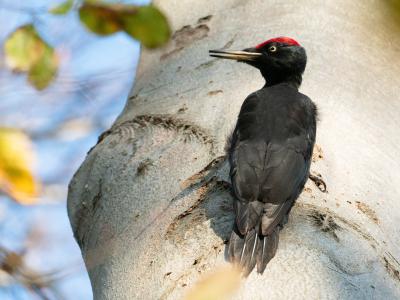
Day 6: We’ll spend the day birding around the Bialowieza Forest Reserve, where we’ll hope to see a variety of woodpeckers including Great Spotted, Lesser Spotted, Black, Grey-headed, White-backed, and if we’re extremely lucky, the elusive Three-toed. The forest edges hold Golden Oriole, Common Rosefinch, and perhaps River Warbler.
A visit to the grounds of the Bialowieza forest park might bring Middle Spotted Woodpecker and Wryneck, as well as other open-parkland species including the stunning black-and-white Collared Flycatcher, Serin and Tree Pipit, while the park lake holds Great Reed Warbler. The area north of the park is a good area to look for one of Europe’s most endangered mammals, the European Bison.
Night in Bialowieza National Park.
Day 7: We’ll spend our final morning birding in the area west of Bialowieza Forest, where we’ll aim to catch up with any species that we haven’t seen. Depending on the schedule, to be decided according to birding opportunities, we will take lunch in Bialowieza or enroute to Warsaw. Night in Warsaw.
Day 8: The tour concludes this morning in Warsaw at a hotel near the airport.
WINGS Birding Tours © 2025, last modified Tue, Jun 16, 2025.
Note: The information presented here is an abbreviated version of our formal General Information for Tours to Poland. Its purpose is solely to give readers a sense of what might be involved if they take this tour. Although we do our best to make sure that what follows here is completely accurate, it should not be used as a replacement for the formal document which will be sent to all tour registrants, and whose contents supersedes any information contained here.
TRAVEL TO WARSAW, POLAND: This tour begins and ends in Warsaw, Poland.
WINGS and Frosch Travel would be happy to assist with your travel arrangements. If you would like assistance, please contact Mario Fronda and his team at 646-490-3494 or [email protected] and identify yourself as a WINGS client. When contacting Frosch, please have details ready, such as your name as it appears on your passport, passport details, mileage and pre-check numbers, and departure and arrival details (as suggested in the Tour Confirmation message). Please note a ticketing fee applies for this service.
ENTERING AND LEAVING POLAND: A passport valid for at least three months after the conclusion of your stay and with at least two blank pages for entry stamps. Visas are not required for US or British citizens for stays of under 90 days. Citizens of other countries should contact their nearest Polish consulates or embassies for the rules applicable to them.
It is a good idea to take a photocopy of your passport and air ticket with you when traveling abroad. Copies can prove invaluable in helping you get replacements if your originals are lost or stolen. You should pack the photocopies separately from the originals.
COUNTRY INFORMATION: You can review the U.S. Department of State Country Specific Travel Information here: https://travel.state.gov/content/travel.html. Review foreign travel advice from the UK government here: https://www.gov.uk/foreign-travel-advice and travel advice and advisories from the Government of Canada here: https://travel.gc.ca/travelling/advisories.
PACE OF THE TOUR: This is a fairly relaxed tour. Breakfast will be between 7.30 and 8.00am, and we may do some pre-breakfast birding on some days. Lunch will usually consist of a casual sit-down meal at a local restaurant. When scheduling allows, we will return to the hotel in time to freshen up for dinner; on some evenings, we will do some post-dinner birding.
Virtually all the walking is fairly easy on good paths, trails or boardwalks. Most of the birdwatching is done within a short distance of our vehicle. At a few locations, several flights of stairs may need to be climbed to reach the top of birding towers, and at least one hotel may require climbing a flight of stairs to reach the rooms. Depending on the success we have in the first days of the tour looking for Aquatic Warbler, we may decide to take a 3.5-mile round walk to the species’ core habitat in the centre of the marsh. This walk will be along a level, solid track.
HEALTH: The Centers for Disease Control and Prevention (CDC) recommends that all travellers be up to date on routine vaccinations. These include measles-mumps-rubella (MMR) vaccine, diphtheria-tetanus-pertussis vaccine, varicella (chickenpox) vaccine, polio vaccine, and your yearly flu shot.
CLIMATE: Temperatures will typically range from 15°C (about 60°F) in the morning to a maximum of 25°C (75°F) at midday, although it can be (or feel…) colder if overcast and windy, and warmer temperatures are likewise possible. The average rainfall in Poland in May is 110mm (4.5 in), and thundery downpours are possible.
ACCOMMODATION: Our hotel in the Biebrza Marshesis the located in the small town of Grajewo, a short drive from the centre of the Biebrza National Park. Our hotel in Bialowieza Forest is located in the heart of the forest, in the small village of Bialowieza.
Amenities: Wifi is available in both hotels but may not be available in every bedroom. Laundry service should be available but will be confirmed upon arrival.
FOOD: Polish cuisine is often simple and rustic, with dumplings, pickled produce and soups forming the staple of many meals. Options for dining are limited in the areas we’ll be in, but our leader will aim to ensure there is a varied choice of food available. Vegetarian options should be available though may be limited in their variety.
TRANSPORTATION: Our transportation will be by mini-bus driven by the leader. The leader will be aware of seating arrangements, making sure all participants may have an equal opportunity for more desired seat, although the small group size should – depending on the seating configuration of the vehicle we are allocated – allow all participants to take a window seat.
SMOKING: Smoking is prohibited in the vehicles or when the group is gathered for meals, checklists, etc. While in the field or traveling, use of a smokeless alternative such as nicotine gum is requested. Please do not smoke at short stops while traveling. If you smoke in the field, do so well away and downwind from the group and leave ample time between smoking and getting back into the vehicle. If you are sharing a room with a non-smoker, please do not smoke in the room. If any lodge, accommodation or location where the group is staying or is gathered has a more restrictive smoking policy than WINGS’ policy, the more restrictive policy will prevail. The leader reserves the right to modify this policy if the situation warrants it.
TERMS AND CONDITIONS OF WINGS TOURS: Please take a moment to read the Terms and Conditions on the ‘About Our Tours’ segment of the WINGS website, it contains important information about how we conduct tours, e.g., what is included in the tour price, refund and cancellation policies, pace of the tours and other information that will help you prepare for the tour.
FINAL INFORMATION: Final information with instructions for meeting the group, hotel addresses, etc., will be mailed about three weeks before trip departure. Other news will be communicated as necessary. If you have any questions, please let us know.
2025 Narrative
eBird trip report: https://ebird.org/tripreport/371312
Day 1 – Thursday May 15th
Having gathered the night before in Warsaw, we left Poland’s capital after breakfast, heading northeast toward the Biebrza Marshes. En route we stopped at a gas station, where we were introduced to a number of Poland’s countryside birds – Black Redstart, White and Yellow Wagtails, Greenfinch, Eurasian Tree Sparrow and, best of all, a stunning male Red-backed Shrike.
A Green Woodpecker passed in front of the car as we passed along the highway, while a little further on, a roadside stop to take a look at a Yellowhammer turned into something of a raptor-fest, with a Lesser Spotted Eagle, a Montagu’s Harrier, a Common Buzzard and a Eurasian Hobby. Further on, as we entered the marshland area, we found a pair of Common Cranes, while White Storks (a few of which had been seen earlier in the day) became numerous, with several nesting pairs in each of the villages we passed through.
Along the Biebrza River, we found several Common Terns, a flock of Ruff, the males looking dapper in their extravagant breeding plumage, and a Black-tailed Godwit, while overhead a Common Snipe was ‘drumming’.
More new birds were sighted as we drove towards lunch – a showy Woodlark, a pair of Grey Partridges and a Great Grey Shrike – as well as several more Black Redstarts, including some smart-looking adult males.
After a delicious lunch, we took a short walk around the restaurant grounds, seeing Citrine Wagtail, Great Reed Warbler and our first Sedge Warblers of the trip. Then we checked in to our lodgings nearby, where we were greeted by a singing Tree Pipit, a Wood Warbler and a Marsh Tit.
Our final new species of the day was Fieldfare, before we enjoyed another excellent Polish meal and the headed off to bed.
Day 2 – Friday May 16th
Out second day dawned cold – much colder than expected, with some snow flurries first thing! Not to be deterred, we headed off for a continental breakfast, finding two Black Terns over the lake next to where we had parked the car.
Heading into the heart of the Biebrza marshlands, we spent some time atop a birding tower, where we found more Black Terns plus some Whiskered Terns, a male Northern Shoveler, a Great White Egret, Black-tailed Godwits, Meadow Pipits and Common Cuckoos.
At a nearby reservoir, we located no less than three White-tailed Eagles, a couple of flocks of Whooper Swans (as well as the much commoner Mute Swans), more Black Terns and Whiskered Tern, plus our first Great Crested Grebes of the trip. On the drive back we stumbled across a smart, male Whinchat and a pair of showy Grey Partridges.
That evening we visited an area that in most years holds Aquatic Warbler, but we were met by a rather sad sight – the usually lush and green area of the marsh was instead brown, with stunted growth and very little sedge. A drought through the winter had left the marsh parched and struggling to come to life, and the unseasonable cold temperatures during the week we were visiting were certainly not helping the situation. The Polish marshes hold a not-insignificant proportion of the world population of this rare warbler, and there is growing concern that the state of the marsh in 2025 may have a negative impact on their numbers globally.
Day 3 – Saturday May 17th
The day started in much the same way as the day before, cold and with Black Terns over the small lake next to where we took out breakfast. This morning, however, we located several more songbirds – in addition to yesterday’s Citrine Wagtail, which was showing well again today, we also found a male Common Rosefinch and a stunning male Bluethroat.
A short drive away, we stopped to look for Grey-headed Woodpecker. One was heard briefly but refused to give itself up; however, as we waited, a large bird glided into the marsh – a Black Stork! A scarce and often hard-to-catch-up-with species. Then, another surprise – three European Bee-eaters! After initially brief, fly-over views, we located one of these spectacularly colored migrants perched in a tree.
Heading out into some farmland on the west side of the marsh area, we found another difficult-to-connect-with species: Ortolan Bunting. Ortolan populations have been in freefall across Europe, and the species is by no means guaranteed on the tour. We were very pleased to catch up with no less than three individuals, along with a supporting cast of a Hobby, a Lesser Spotted Eagle and several Common Cranes.
Back into the marshes, we enjoyed close views of a Penduline Tit, as well as brief views of a Golden Oriole and another Great Grey Shrike.
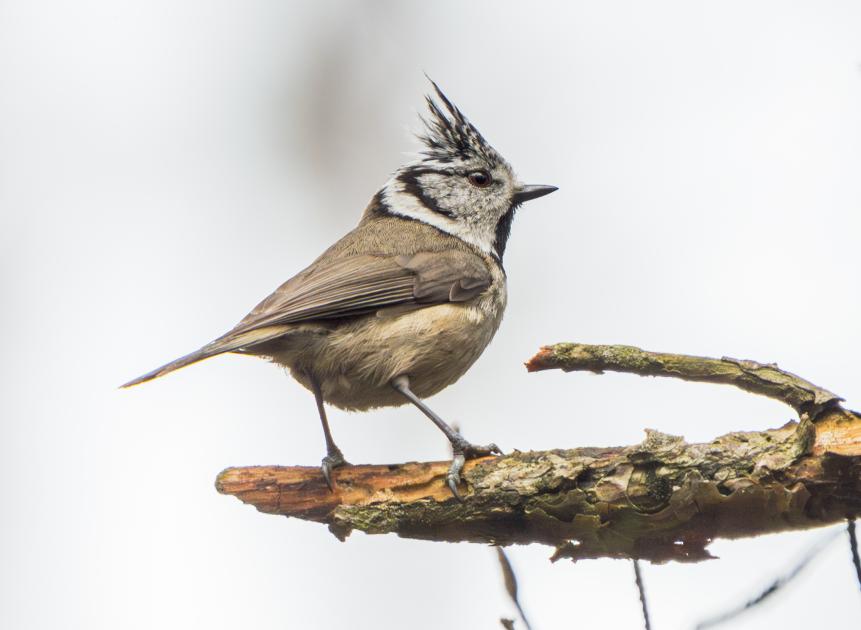
The afternoon was spent in some nearby woodland, finding a Great Spotted Woodpecker nest as well as another brief Golden Oriole, a small group of Willow Tits, several Mistle Thrushes and, best of all, a single Crested Tit that afforded excellent views.
Just when we thought the day’s birding was done, the accommodation grounds threw up some last surprises: arriving back, we found a Hoopoe on the driveway. Then, as we took a walk around the garden, we flushed a Eurasian Nightjar. Finally, dusk fell, we stood outside the house and watched at least three ‘roding’ Eurasian Woodcocks – a magical end to the day!
Day 4 – Sunday May 18th
Our last day in the marshes dawned warmer, with our first bird of the day being a Coal Tit, which came almost close enough to touch, followed by a male Serin, which we found sitting up on some telephone wires in the nearby village.
At breakfast, we found the usual suspects – Great Reed Warbler, Black Tern, Citrine Wagtail and Bluethroat – but this morning the Bluethroat was being particularly showy, performing just a few yards away.
From here, we set off southeast, stopping for lunch in the town of Białystok, followed by some time exploring the nearby fishponds. Here, we found several showing Great Reed Warblers, a pair of almost-as-showing Savi’s Warblers, two Red-necked Grebes and a group of half a dozen Common Pochards.
Continuing onwards, we reached the famous Białowieża Forest, one of Europe’s last remaining areas of untouched woodland. On our way to dinner, we found a juvenile woodpecker poking its head out of a nest hole between the reception and the dining room. Not the easiest to identify from the views we were getting, we strongly suspected the bird was White-backed – a great bird, and a strong start to our time in the forest.
After dinner, we took a drive through the nearby villages, checking the meadows for megafauna – sadly, no European Bison this evening, but we did catch up with a couple of pairs of Tawny Owls as dusk descended, including one bird that showed well at close range.
Day 6 – Monday May 19th
We started early today, with a pre-breakfast walk. Our hotel is located in a prime birding location, and we didn’t even need to leave the grounds to rack up a decent haul of new and exciting species: first up was a pair of Collared Flycatchers, nesting just behind our room block; then we revisiting the woodpecker nest, timing it just right to find a female White-backed coming in to feed the chick, confirming yesterday’s suspicions. Around the swimming pool, we found several Song Thrushes and Common Blackbirds, and even a Hawfinch coming to drink at the small water feature. A Black Woodpecker called, drummed and eventually showed itself along the entrance track, while at least two pairs of Middle Spotted Woodpeckers were busy collecting food for their little one, with one pair nesting just across the path from the hotel reception!
After a visit to the extensive breakfast buffet, we headed to the Białowieża Palace. On the way, we stopped on the edge of one of the small villages, where we found a Wryneck – a bizarre, migrant woodpecker. Reaching the palace, we took a walk around the English-style parkland, where large trees are spaced across open meadows, finding several Firecrests, Nuthatches and Hawfinches.
Heading for dinner, we passed by the same meadows that we had driven through yesterday, but today we were in luck – a single, male Bison! We watched the animal dust-bathe and browse, before it started to walk towards us, coming closer… and closer. Eventually, it crossed the road some 30 feet in front of us. A magical, if slightly bated-breath-inducing, experience!
Day 7 – Tuesday May 20th
This morning was something of a ‘clean-up’ morning, starting with Red-breasted Flycatcher, a species we’d so far failed to connect with. Cruising the forest roads, we soon found a singing bird, which showed well at close range.
Next, we headed back to the east end of Białowieża village, hoping to get better views of last night’s River Warblers. Sure enough, one of the birds was showing well, sitting atop a bush, and we were all able to enjoy views of this usually skulking species.
From here, we headed back to the west end of the village for a second slice of the Barred Warbler, which duly performed for us. Driving back through the same meadows as last night, we found not one but two Bison present, though not showing as such a close distance as yesterday. And then it was off west, back towards Warsaw, though not without a stop at the fishponds near Gołębiówka. Here, we found several Caspian Gulls, as well as some close-range Great Crested Grebes (including one with chicks riding on its back). Then it was a relatively short drive back to Poland’s capital, where we concluded the tour with another fine dinner and some extravagant desserts.
- Stephen Menzie
Stephen did an outstanding job. His knowledge of each species, their habits, and their preferred habitat, led to a resoundingly successful tour. Steven's audio birding skills were particularly noteworthy. On numerous occasions, he heard desired species while driving the van and was able to get us on them. He worked hard to enable us to see a significantly higher number of species than on previous tours, at times in adverse weather. Additionally, he nearly seamlessly resolved some unanticipated logistics problems, allowing the tour to continue without disruption. I would definitely participate on any tour led by Stephen.
- Rick S. on Poland in Spring
Stephen was an exemplary leader. His birding skills, expertise and knowledge were astonishingly good. His previous trips had given him local knowledge which he used well. He enabled me to see all the birds I was hoping for and many others, and he was good at checking in with whether we had seen enough. His patience and good humour with the group never wavered. I enjoyed Stephen’s company throughout; his openness, friendliness and humour were great. 5 stars!!
- Tom H. on Poland in Spring
This tour is limited to 7 participants with one leader.
More Tours with these Leaders