
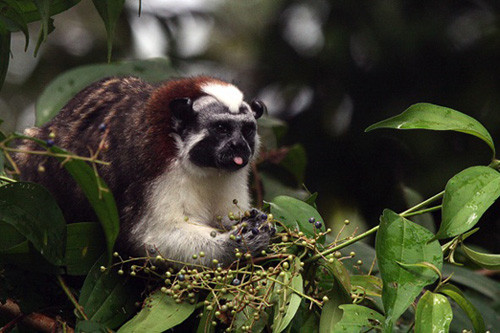
 A trip to central Panama involves a lot of mammals too, like this impish Geoffrey’s Tamarin spotted from the Canopy Tower.
Photo: Gavin Bieber
A trip to central Panama involves a lot of mammals too, like this impish Geoffrey’s Tamarin spotted from the Canopy Tower.
Photo: Gavin Bieber -
A trip to central Panama involves a lot of mammals too, like this impish Geoffrey’s Tamarin spotted from the Canopy Tower. Photo: Gavin Bieber
-
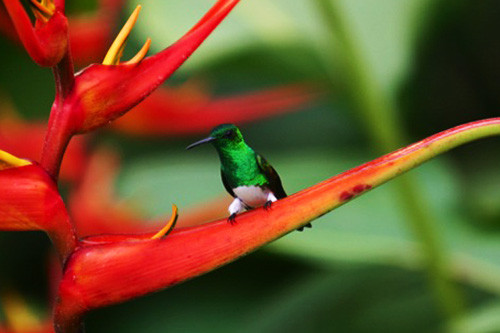
We see several dozen species of hummingbird around the Canopy Tower and Lodge, with Snowy-bellied being one of the more common. Photo: Gavin Bieber
-
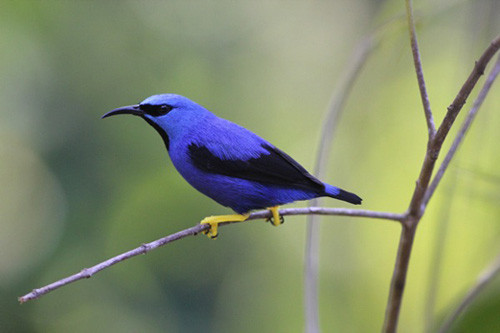
Picking a favorite among the many dazzling tanagers on the tour is tough, but the leader has a preference for Shining Honeycreeper. Photo: Gavin Bieber
-
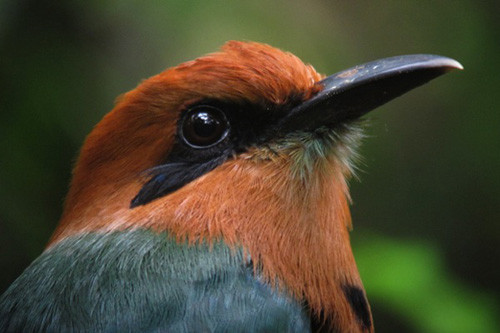
We often obtain excellent views of Broad-billed Motmot, one of four species of motmot likely on the tour Photo: Gavin Bieber
-
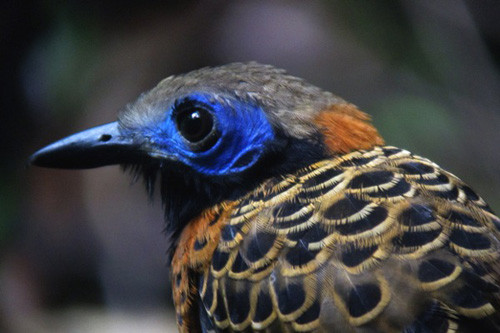
Army ant swarms are often common in central Panama, and we’ll seek them out to find, among others, the gorgeous Ocellated Antbird. Photo: Gavin Bieber
-
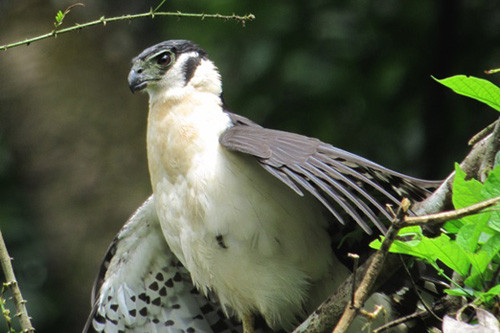
Collared Forest-Falcon is an unobtrusive but very vocal forest falcon and one of many raptors found in Panama. Photo: Gavin Bieber
-
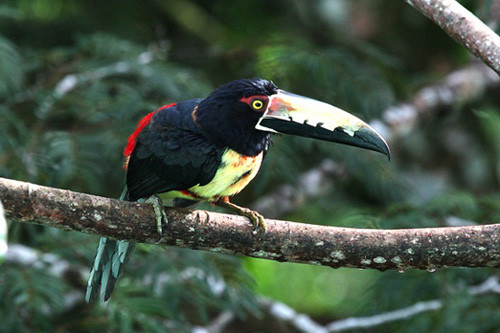
Collared Aracaris are a frequent sight around the Canopy Tower forests and a great welcoming committee for the tropical birder. Photo: Gavin Bieber
Panama is one of those fortunate places where two great avifaunas meet. As one moves from the Costa Rican border east toward the Colombian border, Central American birds drop out and the truly Neotropical groups such as antbirds, woodcreepers, tyrant flycatchers, hummingbirds and tanagers begin to dominate. It all makes for an exceedingly rich birding experience. Our trip is timed to take advantage of the tail end of the dry season and the influx of wintering migrants and transients from North America, who join the resident breeding birds during the colder months in the north. This influx of Nearctic migrants makes for a very diverse avian assemblage. The acclaimed Canopy Tower serves as a delightful home base as we explore several remarkable birding areas including Pipeline Road, which offers arguably the best lowland birding in Central America, with over 400 species recorded from this single locale! After our week-long stay at the Tower we’ll relocate to the delightful Canopy Lodge, roughly two hours west of Panama City and nestled in the Talamanca Foothills. Here we’ll find extensive and lush cloud forest, dry pacific savannahs and a substantially new suite of birds.
Canopy Tower
Day 1: The tour begins at 6:30 p.m. with an introductory meeting in the main room at the Canopy Tower. Night at the Canopy Tower.
This was an excellent trip, relatively relaxed because of staying mostly just in two places, and the birding and guides were outstanding.
Gavin was well organized, excellent at keeping us informed about what to expect on the schedule, and extremely knowledgeable on a number of natural history subjects, especially birds of course. He was an excellent bird spotter and provided great directions to get on the bird. He had lots of interesting and amusing tidbits to share, on various subjects. We have been on a number of birding tours but I would have to say that Gavin was the best leader that we have ever had. I really enjoyed him.
Willie D’Anna, Mar. 2017
Day 2: In early dawn light, coffee in hand, we’ll stand on the top deck of the Canopy Tower, enjoying the sunrise over the forested hillsides below us and scanning the skies and the trees for parrots, pigeons, mixed canopy flocks and the perhaps one or two of the true prizes of the forest canopy, such as Green Shrike-Viero or the stunning Blue Cotinga. After breakfast we’ll walk down the mile-long Canopy Tower entrance road, possibly encountering a troupe of Panamanian Capuchins Mantled Howler Monkeys or the very attractive Geoffrey’s Tamarin. The forest floor along the roadside is open in many places, greatly improving our chances of actually seeing such ground-dwelling species as Black-faced Antthrush and Great Tinamou. Three species of motmots, Crimson-crested, Black-cheeked, Lineated and Cinnamon Woodpeckers and a host of flycatchers and antbirds should help make for a very full morning of birding. We’ll return to the Canopy Tower for lunch and an early afternoon siesta (in our rooms or in hammocks on the top floor) — or to watch the hummingbird feeders for Blue-chested and Rufous-tailed Hummingbirds, White-necked Jacobin and Long-billed and Stripe-throated Hermits. Later we’ll drive north along the Panama Canal to Gamboa and the justly famous but perhaps not-so-enchantingly named Ammo Dump Ponds. Here we’ll find our first waterbirds including numbers of Wattled Jacanas. White-throated Crake and Gray-colwed Wood-Rail lurk in the reed beds and there is always the chance of finding a motionless Rufescent Tiger-Heron along the pond margins. Here too large grass beds contain mixed groups of Yellow-bellied, Ruddy-breasted and Variable Seedeaters and Thick-billed Seed-Finch while the tangled vegetation around the larger pond holds Buff-breasted and Plain Wrens. Large concentrations of Gray-breasted Martin and Mangrove and Southern Rough-winged Swallows often gather along the canal, which also offers a corridor for pelagic species to cross the isthmus — overhead there could be passing Magnificent Frigatebirds, Brown Pelicans, Ospreys or terns. Night at the Canopy Tower.
Day 3: We’ll rise early for an all-day expedition to Pipeline Road, considered by many to be the premier lowland birding location in Central America. We’ll walk Pipeline, followed by our vehicles (with our picnic lunch), and make a particular effort to locate such difficult species as King Vulture, Streak-chested Antpitta, Black-striped Woodcreepers, Moustached (Pygmy) Antwren, Forest and Choco Elaenias, Velvety and Red-capped Manakins, Pied, White-necked, Black-breasted and White-whiskered Puffbirds and Song Wren. We will keep a close eye out for ant swarms attended by obligate ant followers such as Bicolored, Spotted and perhaps the superlative Ocellated Antbirds, as well as several species of Woodcreepers. Watching dozens of birds in attendance on a swarm, seemingly oblivious to our presence, is an experience a naturalist can truly revel in. In addition to the birds the forest here is literally alive with butterflies, dragonflies and (depending on moisture levels) a host of frogs. Everywhere we look, there will be things of interest and it will not be easy to leave. Night at the Canopy Tower.
Day 4: We’ll again have an early-morning watch from the top of the tower. Canopy flocks containing birds such as Green Shrike-Vireo, Brown-capped Tyrannulet and White-shouldered Tanagers should be visible if we’re not distracted by the flocks of Red-lored, Mealy, Brown-hooded and/or Blue-headed Parrots wheeling around below us. Keel-billed Toucans and Collared Aracari are common around the tower early in the morning, often perching up in nearby Cecropias. After an hour on the deck, we’ll have breakfast and then drive to Plantation Road, a nearby forest trail. In this lowland forest we’ll hope to encounter flocks containing Dot-winged, White-flanked and Checker-throated Antwrens, Black-crowned Antshrike, Cocoa Woodcreeper and canopy species such as Yellow and Scarlet-rumped Caciques and Purple-throated Fruitcrow. This trail is often excellent for forest raptors such as Double-toothed and Gray-headed Kites, Black Hawk-Eagle, and Collared Forest-Falcon. In the mid-afternoon we’ll drive to the nearby Summit Ponds where edge specialists such as Buff-throated Saltator, Gray-headed Chachalaca, Jet Antbird and Golden-fronted Greenlet are often found along the access road. We should also encounter a few mixed flocks of open-country tanagers and flycatchers including the incredible Crimson-backed Tanager. Around the ponds we could see Boat-billed Heron, Greater and Lesser Kiskadees, and kingfishers including Amazon, Green and possibly even American Pygmy. After dinner we’ll offer an optional night tour back down the road to the ponds. The forest feels like a very different place when it’s dark, with a diverse frog chorus and with Western Night Monkeys, Kinkajou, Tamandua and bats competing with a long potential night bird list that includes Spectacled, Mottled, Crested, Black-and-white and Tropical Screech-Owls, Pauraque and Great and Common Potoos. Once at the ponds there is a good chance we’ll witness the antics of the Greater Bulldog Fishing Bat, a large golden bat that spends its evenings hunting surface fish in ponds close to forests. Night at the Canopy Tower.
Day 5: After an early breakfast we’ll pass Gatun Lock and the Panama Canal before reaching the Achiote Road on the Caribbean coast. Achiote is widely regarded as the best place in the canal area for diurnal raptors, and we’ll keep our eyes upward for White, Gray-lined, Common Black, Great Black, and Short-tailed Hawks and several kites and falcons. We’ll also look for local species such as White-headed Wren, Montezuma and Crested Oropendolas, Spot-crowned Barbet, Pacific Antwren, Long-tailed Tyrant, Bare-crowned Antbird and Red-breasted Meadowlark. We’ll have a picnic lunch at a scenic old Spanish fort located on a bluff above the mouth of the Chagres River, where it meets the sparkling Caribbean. At a nearby mangrove forest in the late afternoon we can spend some time looking for birds such as Streak-headed Woodcreeper, Mangrove Cuckoo, Black-tailed Trogon and Muscovy Duck. Afterwards we’ll head back across the country to the Canopy Tower. Night at the Canopy Tower.
Day 6: We’ll leave early this morning for Cerro Azul. Though only about two hours away, these highlands present a whole new world where trees are laden with epiphytes and colorful orchids. Mixed canopy flocks often include a variety of dazzling tanagers such as Emerald, Silver-throated, Bay-headed, Rufous-winged, Speckled and Black-and-yellow. We have reasonable expectations of seeing the endemic Stripe-cheeked Woodpecker, the beautiful (and near-endemic) Violet-capped Hummingbird and the amazingly colorful Yellow-eared Toucanet. We’ll visit a wonderful array of hummingbird feeders, where we regularly encounter over 9 species and hundreds of individuals over the course of a few hours. After lunch we’ll drive toward Panama City to investigate the waterfront at Panama Viejo, which plays host to an amazing assemblage of shorebirds. We should encounter thousands of birds of over a dozen species, and we’ll look especially hard for Collared Plover and Cocoi Heron. Night at the Canopy Tower.
Day 7: The main tour will conclude this morning with a drive to Panama City’s International airport in time to catch the 9 a.m. (and later) departures. For those continuing on the extension (or those with much later flights out from Panama City) we’ll spend the morning atop the tower and then around the immediate vicinity with by now old bird friends and just perhaps something new.
Canopy Lodge Extension
Day 7: Those continuing on the Canopy Lodge Extension will drive toward the Talamancan Foothills of western Panama. A lush valley just above the lovely town of El Valle del Anton is home to the Canopy Lodge. This two-story lodge lies alongside the scenic Rio Guayabo and abuts both a large plot of privately owned forest and the Cerro Gaital Natural Monument. We’ll spend the rest of the daylight hours birding around the lodge grounds, which have been extensively planted with Heliconia, Erythrina and Verbena, and where there are several feeding stations continuously stocked with bananas. Hummingbirds abound: Violet-headed and Snowy-bellied Hummingbirds, Garden Emerald, Green, Stripe-throated and Rufous-breasted Hermits, White-vented Plumeleteer and Crowned Woodnymph are usually most common but with luck there’s even a chance for Long-billed Starthroat or Rufous-crested Coquette. The lodge verandah is a great place to watch for many of these species and to enjoy our excellent meals. Night at the Canopy Lodge.
Day 8: We’ll spend a relaxed day inspecting the nearby forested areas around the Macho Falls where, among large trees and a mix of open and tangled understory, we’ll have three main target birds: White-tipped Sicklebill, Tody Motmot and Rosy Thrush-Tanager. Other species of interest include Bay and Scaly-breasted Wrens, Flame-rumped Tanager, White-thighed Swallow and Black-headed and Streaked Saltators. In the afternoon we’ll explore a nearby trail in search of Whooping Motmot, Lesser Elaenia, Pale-eyed Pygmy-Tyrant, Barred, Great and Fasciated Antshrikes, Sepia-capped Flycatcher, Red-crowned Ant-Tanager, White-throated Robin, and Black-chested Jay. In recent years a pair of Rufous-vented Ground-Cuckoos have become resident in the valley above the lodge, and if there has been any sign of recent activity from the pair we’ll take some time to look for this amazing species. Night at the Canopy Lodge.
Day 9: We’ll spend this day birding several spots above the lodge, including the Cerro Gaital Natural Monument. At an elevation of 1,800 feet, Cerro Gaital encompasses a fine stand of lower cloud forest reminiscent of the forests around Cerro Azul although the birds are significantly different as we’re now in the western highland’s range of the local Orange-bellied Trogon as well as Barred Forest-Falcon, Scale-crested Pygmy-Tyrant, Tawny-crested Tanager, Black Guan, Bran-colored Flycatcher, Black-faced Grosbeak, Long-billed and Tawny-faced Antwrens, Plain Antvireo, White-ruffed Manakin and Silver-throated Tanager. After lunch we’ll stop briefly for shopping at a local market in El Valle and then spend the late afternoon birding one of the forest trails or roads below the lodge, where we’ll hope for birds such as Tody Motmot, White-thighed and Blue-and-White Swallows, White-lined Tanager and a wealth of wintering migrant species. Night at the Canopy Lodge.
Day 10: Today we’ll explore the higher country of Los Altos del Maria. At roughly 4,000 feet above Sea Level, the forest here is often shrouded in fog and is perpetually wet. Even at the height of the “dry” season these epiphyte-laden, soggy forests are remarkable. The road is generally in good condition and we’ll spend the day in the upland areas and on a long road back through the mountains to El Valle del Anton. Species here that are likely to be new for us include Rufous-browed Tyrannulet, Spotted Barbtail, Red-faced Spinetail, Brown-billed Scythebill, Slaty Antwren, Spot-crowned Antvireo, Pale-vented Robin, Ochraceous Wren, Tufted Flycatcher, Silver-throated Tanager, Common Chlorospingus, Green-crowned Brilliant, and the exquisite Snowcap. Night at the Canopy Lodge.
Day 11: On our final day of birding we’ll descend to the dry Pacific forests of coastal Cocle Province. Here a new host of birds awaits us, including Crested Bobwhite, Ferruginous Pygmy-Owl, Pearl Kite, Brown-throated and Yellow-crowned Parrots, Lesser Yellow-headed Vulture, Savannah Hawk, Blue Ground-Dove, Sapphire-throated Hummingbird and Rufous-browed Peppershrike. A few less common species such as the endemic Veraguan Mango, Mouse-colored Tyrannulet and the very attractive Lance-tailed Manakin are at home here as well. We’ll spend the full day in the lowlands, having a picnic lunch on the beach while frigatebirds and pelicans soar overhead and then transfer to our hotel in Panama City to prepare for our flights home the following day. Night at the Amador Country Inn.
Day 12: The tour concludes this morning in Panama City.
Updated: 20 April 2023
Prices
- 2025 Tour Price Not Yet Known
- (2024 Tour Price $3,550 )
Notes

Questions? Tour Manager: Matt Brooks. Call 1-866-547-9868 (US or Canada) or (01) 520-320-9868 or click here to email.
* Tour invoices paid by check carry a 4% discount. Details here.
*Single Room Supplement (SRS): At the both the Canopy Tower and Canopy Lodge, single rooms are smaller but now have en suite bathrooms and showers. There is no SRS for these rooms. A single person requesting a larger double room at the Tower or the Lodge is subject to their $182/night supplement rate (so $1092 for the Tower tour, $728 for the Lodge extension).
Maximum group size 10 with one leader and a local guide.