New Jersey: Cape May
2026
Single Room Supplement $920
2027
Tour Price to be Determined
2028
Tour Price to be Determined


2026
Single Room Supplement $920
2027
Tour Price to be Determined
2028
Tour Price to be Determined
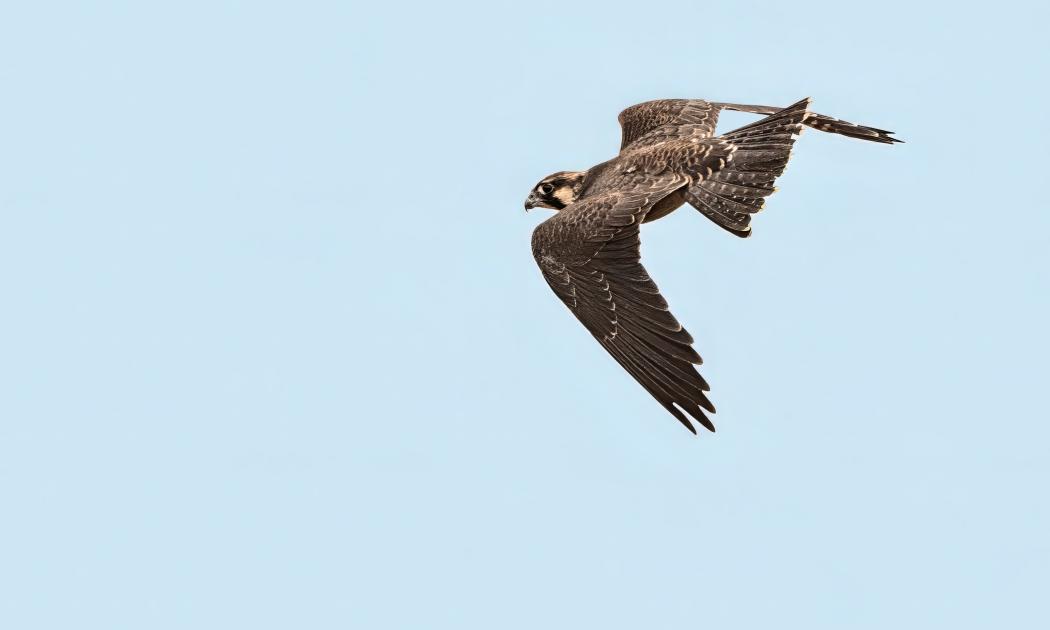
There’s no other way to put it: Cape May is the place to watch the fall migration in eastern North America. At regular intervals, the weather both induces birds to migrate and drives them to the coast, where geography funnels them to the very tip of this narrow sandy peninsula, often followed by impressive numbers of Peregrine Falcons, Merlins, and Sharp-shinned Hawks. Cape May’s marshes, beaches, and mudflats attract sometimes dazzling numbers of egrets and shorebirds, while gulls, terns, and the occasional jaeger or pelican patrol the nearshore waters of the Atlantic.
Apart from our first night in Philadelphia, we’ll be based in a single hotel in Cape May, letting us keep our day-to-day schedule as flexible as possible so that we can take advantage of changing weather conditions—and the unexpected rarities that can show up at any time.

Day 1: The tour begins at 6:00 pm in our Philadelphia airport-area hotel, followed by dinner. Night in Philadelphia.
Cape May with Skye Haas was a great tour. Skye had served for several years at the sea watch, and built up good relationships with the excellent local birders. This really benefited our tour, because he was able to network to find the very best birds and locations each day. Skye is a very pleasant person, good leader, and fantastic birder. He is also a patient and enthusiastic teacher, bringing everyone’s birding up a level. Over 150 species were seen, with care that each member of the group saw every bird. We were also fortunate to hit peak migration and great weather. The warblers and other migrants literally landed all around us in early mornings, and the hawk watch was astonishing. Lastly, the hotel and top restaurants were a pleasure. Thanks for a wonderful time! I highly recommend this tour. - Judi W
Day 2: We’ll leave Philadelphia after an early breakfast for the two-hour drive to Cape May. If the weather seems good for a passerine flight, we’ll drive straight through; otherwise, we’ll make a few stops along the Delaware Bayshore to look for migrants. Once in Cape May, we’ll walk the trails through the weedy fields of Higbee Beach and Hidden Valley to see what may have dropped in overnight. We’ll spend the afternoon at Cape May Point State Park, walking the beach for gulls and terns, checking the ponds for shorebirds—and constantly, obsessively looking up: Bald Eagles are frequent fly-bys this time of year, and up to a dozen species of raptor can occur in numbers. Night in Cape May.
Day 3-4: Even more than the rest of Cape May, Higbee Beach at dawn is charged with all the mystery and excitement of migration. As the sun rises over the ocean, and assuming there has been a good nocturnal migration, the morning flight of Northern Flickers, vireos, warblers, Scarlet Tanagers, and Bobolinks peaks as birds continuing on from night migration encounter the barrier of the Delaware Bay and swing north right over Higbee Beach. The most numerous warblers are likely to be Northern Parula, Black-and-white, and American Redstart, but on a good flight day, more than 20 species are possible, including such uncommon birds as the Connecticut Warbler. Later risers than the falcons and accipiters, Black and Turkey Vultures also spend the night in the area, their lumpy dark forms simultaneously eerie and comical as they crowd the trees.
Each morning will be slightly different and there’s always something new. From Higbee, we’ll drive just down the road to The Nature Conservancy’s South Cape May Meadows. The freshwater ponds and marsh here, protected from the ocean by high dunes, are a great place to watch roosting waterfowl, shorebirds, and terns at close range. We may also bird Cape May Point State Park with its iconic hawk watch platform, an excellent viewpoint to see pond, ocean and sky. In the afternoon we’ll drive north along the Atlantic coast to Stone Harbor, a long barrier island that serves as a regular hang-out for American Oystercatchers, Piping Plovers, Black Skimmers, and roosting terns including Caspian, Common, Forster’s and Royal. The nearby saltmarsh of Nummy Island is famous for the Tricolored and Little Blue Herons that feed daintily in the grassy salt pans. Night in Cape May.
Day 5: We’ll let last night’s weather determine our pre-dawn destination, whether it’s back to Higbee Beach or the Meadows or through the well-treed neighborhoods around the Point. After breakfast, we’ll make the hour’s drive north to the Brigantine unit of Forsythe National Wildlife Refuge. Brig is the best place around to look for godwits, and we should find White-rumped and Western Sandpipers among the thousands of Semipalmated Sandpipers. American Golden-Plover is also a possibility here—as is just about any shorebird ever recorded in eastern North America. Boat-tailed Grackle can be common, and any of the marsh-specialist sparrows is possible along the eight-mile wildlife drive. Night in Cape May.
Day 6: This morning we’ll follow the birds across the mouth of Delaware Bay, taking a large, stable car ferry seventeen miles from Cape May to Lewes, Delaware. Along the way we’ll be on the lookout for Brown Pelicans, Northern Gannets, and Parasitic Jaegers, which regularly harass the flocks of Common and Forster’s Terns feeding offshore. Once in Delaware, we’ll bird Cape Henlopen State Park for Brown-headed Nuthatches and migrants, then move north to Prime Hook National Wildlife Refuge for shorebirds. We’ll have a late lunch, then board the ferry for the return trip to Cape May. Night in Cape May.
Day 7: After a final early morning in Cape May, we’ll return to Philadelphia International Airport where about noon the tour concludes.
Note: The information presented here is an abbreviated version of our formal General Information for Tours to New Jersey. Its purpose is solely to give readers a sense of what might be involved if they take this tour. Although we do our best to make sure that what follows here is completely accurate, it should not be used as a replacement for the formal document which will be sent to all tour registrants, and whose contents supersedes any information contained here.
ENTERING THE UNITED STATES: Non-US citizens will need a valid passport and may need a tourist visa. Consult your nearest US Embassy or consulate for details. All participants must carry some form of photo ID for boarding the Cape May - Lewes ferry.
HEALTH: Birdwatching in New Jersey and Delaware poses no major health hazards. Though their numbers will have decreased greatly by late September, mosquitoes are likely in the more sheltered wooded areas, and biting flies may be present in the saltmarshes. Ticks in this area are known to carry Lyme disease and other potentially serious diseases; precautions are in order.
PACE OF THE TOUR: Early mornings in search of dawn migrants should be expected every day, but some morning starts may be later, depending on overnight weather. Birding will typically end before dark, though we may devote a windless evening to owling. We’ll probably be walking a total of a few miles every day, but always at a slow pace, and the terrain is entirely level.
CLIMATE: Fall weather in southern New Jersey and Delaware is usually pleasant, with mornings in the 50s or 60s F and daytime temperatures rarely higher than the 70s. Breezy, partly cloudy weather is the norm. Those very sensitive to the sun should be prepared with the appropriate hat and effective sunscreen. Rain and wind are possible, so raingear is highly recommended.
ACCOMMODATION: Standard motels throughout.
DRESS: Informal throughout.
TRANSPORT: Travel will be in a fifteen-passenger window van driven by the leader.
SMOKING: We request that you not smoke in vehicles or when the group is gathered for meals, checklist sessions, etc. If you are sharing a room with a non-smoker, please do not smoke in the room.
GENERAL INFORMATION AND CONDITIONS OF WINGS TOURS: Please take a moment to read the General Information and Conditions. This section contains important information about how we conduct tours, e.g., what is included in the tour price, refund and cancellation policies, pace of the tours, and other information that will help you prepare for the tour. If you don’t have access to the WINGS website, please ask the WINGS office to send you a copy.
ADDITIONAL INFORMATION: A more complete General Information for Tours to New Jersey and Delaware will be sent to each registrant on receipt of booking. Final information with instructions for meeting the group, hotel addresses, etc., will be mailed about three weeks before trip departure. Other news will be communicated as necessary. If you have any questions, please let us know.
2025 Narrative
It was a wonderful week in Cape May. The weather was simply gorgeous, perhaps a little too nice at times, but the sunny skies and nice temperatures made for really pleasant birding conditions. We didn’t have any cold fronts that pushed big numbers of migrant songbirds into the area but what was around showed well and made for a great time for our group. Cape May Bird Observatory runs a few different migratory watch sites and we visited all of them over the course of the tour.
We met up as a group in Philadelphia, where we got to know one-another over dinner, and then hit the hay so we could get some rest from our day of flying. After a hearty pancake breakfast the following morning, it was time to break out the bins and we headed out for a birdy morning at Forsythe National Wildlife Refuge, formerly and still called by the locals Brigantine or the Brig. The highlight of this refuge is its many miles of an auto loop through the coastal marshes north of Atlantic City. Right off the bat, we encountered quite the bird prize of the marsh, a cryptically patterned American Bittern right off the road in a cattail-lined canal. What an excellent look the bird gave us before slinking back into the reeds!
A little further down the road, we had some good looks at a small flock of handsome Wood Ducks. Further out, a Northern Harrier rolled over the marsh looking for prey. There were flocks of both Fish and American Crows flying by, but having caught a look at something larger, I was pleased to show the group an (uncommon) Common Raven. As we pressed on deeper into the marsh, we began to encounter wading birds, Snowy and Great Egrets and even more intriguing—both White and Glossy Ibis! There were a lot of shorebirds present, flocks of Black-bellied Plovers, Greater Yellowlegs and Semipalmated Sandpipers. We were hoping to connect with a recently reported Curlew Sandpiper, but the bird had apparently moved on. Still, we were happy to accept a consolation in the form of a small flock of American Avocets! And as we drove out of the refuge, another birder flagged us down to look at a juvenile Common Gallinule, a first ever for this tour! It took hours to sort through the flocks of birds present, but eventually we tore ourselves away so we could continue on down to Cape May to check into our quaint beachside hotel that would be our comfortable home for the rest of the week. After we settled in and enjoyed a short break, it was getting a bit late in the day, but we headed over to the North Woods Center, the bookstore and offices for Cape May Bird Observatory where a few short trails through a woodlot are well situated on the edge of a small lake to catch the late afternoon sun. This is a great set-up to find and get good looks at foraging warblers, and it did not disappoint! We had several species including many Northern Parulas and Black-throated Blue Warblers, as well as warblers like Magnolia, Blackpoll and American Redstart. A skulky calling Hooded Warbler teased us by periodically calling but never showed well. It was such pleasant birding, it was hard to have to put up the binoculars and dash off to catch our dinner reservations at a local (and fantastic!) Italian restaurant.
The next morning we were up early for breakfast and then headed to one of my most favorite birding spots in all of Cape May, the Coral Deck. This is a small observation deck located at the southern tip of Cape May, a location where many actively moving migrants must make their final decision whether to head back up the peninsula or start their flight south over the Delaware Bay. This makes for a very active corridor for bird activity and for the next couple of hours we enjoyed a diverse array of birds including Black Scoter, Parasitic Jaeger, and Black Skimmer out over the ocean, while inland and above our heads, flocks of Northern Flickers, American Kestrels, and Palm Warblers were observed. We heard a few Dickcissels going by, but sadly never laid eyes on one. But no time to linger on could-have-beens...
It was time to take our boat tour of the salt marshes of Cape May! With a small flat-bottomed boat, we’re able to get deep into the marsh in shallow water and get an intimate look at the interior of the vast grassy wetlands and motor right up to birds resting on sandbars or breakwalls. And great looks were had at many species, a boat dock had Forster’s Terns and Ruddy Turnstones right at eye level, and when we headed out toward the Two Mile breakwall, flocks of American Oystercatchers coated the rock walls. Way out at the tip we found a Common Yellowthroat, likely caught over the ocean during its nocturnal migration and was wise enough to wait for the cover of darkness to make it back to shore, lest a gull might make it a snack! Further into the marsh, we had birds like American Black Duck, Willet, and Short-billed Dowitcher. A brushy island held a roosting flock of Black-crowned and Yellow-crowned Night-Herons, and particularly delightful was a flock of eight Tricolored Herons.
After our morning cruise, we got out of the wind with a nice hot lunch at a local restaurant, and then headed off to see the Hawk Count, one of the research programs conducted by Cape May Bird Observatory (CMBO). A modest but steady flight of raptors streamed overhead, with some good looks at Northern Harriers, Merlins and Peregrine Falcons. And as a special treat, there was a Dickcissel coming into the seed pile set out by the CMBO counters to attract birds. This was a great look and more than made up for the earlier heard-onlys!
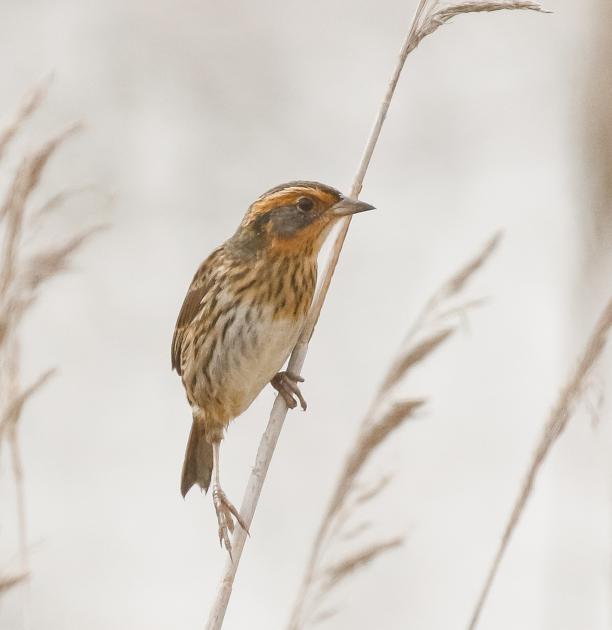
For the start of our birding the next morning, we headed up to a Wildlife Management Area to look for some woodland birds. The real prize here came quickly, several family groups of the glamorous looking Red-headed Woodpecker, both adults and juveniles. Other woodpeckers encountered here included several Red-bellied and a Hairy Woodpecker. Some Red-eyed Vireos gave some unusually prolonged looks and a cooperative Eastern Towhee was a nice treat. We then headed out to the coast for another round of shorebirds, this time looking for and finding a flock of Red Knots! Other beach shorebirds included flocks of Sanderlings and Dunlin along with over a hundred Black-bellied Plovers. As we continued up the coast, we pulled over for an interesting looking tern on a bridge guardrail that turned out to be our only Common Tern for the tour. This proved fortuitous as in addition to the tern, a flock of 11 Marbled Godwits was roosting nearby! Later, we took a stroll at the Wetlands Institute where in addition to a large flock of Willets, we picked up our only Little Blue Heron of the trip! Continuing our search for salt marsh birds we went to Two Mile Landing where we had several calling Clapper Rails, one right at our feet, yet could never lay eyes on one! One lucky participant got a look at a Saltmarsh Sparrow, but all of us had an excellent study of a Seaside Sparrow. These large, dusky sparrows can be quite hard to get a good look at but careful working of the bird allowed it to feel comfortable and pop out of the reeds right in front of us!
We started out the next morning at the Coral Deck again. It was birdy as it tends to be and we again had a nice mix of waterbirds, songbirds and raptors. Most folks got a scope look at one of the several Parasitic Jaegers out harassing the terns and gulls, but sadly only one of the participants was able to see the Red-throated Loon that flew by. Several flocks of White Ibis flew by and a few ducks moved down the shoreline. Songbirds were fun, we had some looks at Indigo Buntings, Palm Warblers, Brown Thrasher, and both Red-eyed and White-eyed Vireos. Another unexpected sighting was fellow WINGS leader Rich Hoyer who happened to be visiting Cape May for his own birding pleasure- sooner or later all birds and birders show up here! But the real show were the raptors this morning. Continual lines of Kestrels and Ospreys kept coming by, and it was a first-rate morning workshop in learning how to identify the many dozens of Sharp-shinned and Cooper’s Hawks rolling overhead. And we were even treated to a nice Buteo kettle with Broad-wings, Red-tails and even a Red-shouldered Hawk.
We took a late morning walk over at Higbee Wildlife Area, but a gusty wind had started up and bird activity was low, though we did enjoy a great look at a couple of Black-and-White Warblers. We then headed over to the home of a pair of birder friends to enjoy their native gardens and see what was in their yard. Louise Zemaitis and Michael O’Brien are expert tour leaders themselves, so they were happy to host our group, and Louise, also a fantastic artist, hauled out some of her work so folks could do a little gift buying right from one of the best local artists! We poked around a few more places but the wind was such that the birds were laying low so we turned in early so the gang could either rest or take a little time explore downtown Cape May on their own for a couple hours before dinner.
Our penultimate day was quite the adventure. We got up extra early so we could get on the dawn ferry to Delaware. An hour plus ride across the Delaware Bay gave us a chance to look at seabirds as we crossed. Most were just Laughing, Herring and Great Black-backed Gulls but we started seeing Brown Pelicans, Black Scoters, Parasitic Jaegers and even some marine mammals like Bottlenose Dolphins and a Gray Seal. Upon reaching the Delaware shores, we headed over to Cape Henlopen State Park and its pineywood forest over a series of sand dune ridges. The park was a little bit on the quiet side, but we hit a few flocks of birds that made it worth our while. Carolina Chickadees, Pine Warblers, Chipping Sparrows and even some Golden-crowned Kinglets were all nice pickups for the tour, but the real prize was Brown-headed Nuthatch! A flock was quite cooperative, offering many good views and we really soaked in these cute and nasal-voiced sweeties here at the northern end of their range. We then headed out to grab some sandwiches and head up to Bombay Hook National Wildlife Refuge. Another great waterfowl and shorebird refuge like the Brig, we had birds like 200+ plus Green-winged Teal and a pair of Snow Geese. And if we had been excited about a handful of Avocets at Brig, the flock of 300 feeding on the mudflats in front of us here was a genuine treat! Passerines were a bit light here but as we were headed out, a couple of Blue Grosbeaks flew up out of the weeds to give us a look! While common in the summer, they are an early migrant and we often miss them on this tour.
And for our final morning on the tour, we made sure to run over to Coral Deck one last time to make sure there wasn't a good morning flight of birds going over, but the winds were positively in the wrong direction for migrants today and I decided our best bet was to go back one last time into the salt marshes for rails and sparrows. And boy, this sure paid off! We were barely out of the car, enjoying a last-minute pickup of our first Killdeer for the tour, when a Clapper Rail started darting in and out of the reeds. After a little bit of working the bird over, it stepped out and stood there for a good minute giving everyone a stellar look at this retiring species. And then just for the cherry on top, we had a Saltmarsh Sparrow tee up in the grasses giving folks a look at one last lifer for the tour. Just the way I love to end a trip—with a bang!
- Skye Haas
Skye is a very pleasant person, good leader, and fantastic birder. He is also a patient and enthusiastic teacher, bringing everyone's birding up a level.
- Judith W. on New Jersey: Cape May
Skye was the best tour leader I could hope to have. I am a beginning birder and we had a variety of knowledge among the tour members. Skye did a superb job of adjusting to our various needs for information, to adjusting as needed to make sure each of us could see the birds, to adjusting on the fly when new info came in about where the birds were, or the best areas to bird at a given moment. His extensive knowledge of so many individual birds and their details: male and female coloring, their songs, their flight patterns, where they should be or not be and he has an excellent ability to convey the info to us.
- Kathy K. on New Jersey: Cape May
Cape May with Skye Haas was a great tour. Skye had served for several years at the sea watch, and built up good relationships with the excellent local birders. This really benefited our tour, because he was able to network to find the very best birds and locations each day. Skye is a very pleasant person, good leader, and fantastic birder. He is also a patient and enthusiastic teacher, bringing everyone’s birding up a level. Over 150 species were seen, with care that each member of the group saw every bird. We were also fortunate to hit peak migration and great weather. The warblers and other migrants literally landed all around us in early mornings, and the hawk watch was astonishing. Lastly, the hotel and top restaurants were a pleasure. Thanks for a wonderful time! I highly recommend this tour.
- Judi W. on New Jersey: Cape May
You all did a great job. Thanks, Erin. Skye was great. Truly a joy to be around. He showed incredible patience, willingness to teach, great improvisation with tougher conditions this year (persistent East Wind), all of which made it a great trip. Thanks, Skye. Hotel was basic but plenty good. Dinner spots were well thought out and excellent. The van was excellent. All in all, a really nice trip made as best as possible despite some slower than normal bird activity.
- Craig D. on New Jersey: Cape May
Maximum group size seven with one leader.
More Tours with these Leaders
Cruise: Pacific Coast in Fall
Albatrosses, Pterodromas, and Seabirding in Comfort
Albatrosses, Pterodromas, and Seabirding in Comfort
Sep 19-25, 2026 • Ed Corey and Skye Haas