Mexico: Oaxaca at Christmastime
-
Dec 22-31, 2027
Rich Hoyer
Tour Price to be Determined


Tour Price to be Determined
The city of Oaxaca lies in an arid valley ringed by mountains in south-central Mexico. The site has been occupied for centuries, as evidenced by the colonial architecture and nearby pre-Columbian ruins, but the city remains rather small and retains a vibrant atmosphere. And although Oaxacan handicrafts offered in the colorful markets have lured travelers from all over the world, the visitors have not changed the town’s unique flavor. When Oaxaca celebrates the holidays, it is perhaps the most Mexican of all cities. The area has also acquired a reputation among birdwatchers, for in the immediate surroundings of the city one can find a variety of habitats, from desert and oak thorn-scrub to pine and cloud forest. Birds of at least three distinct faunal regions occur here, among them many of Mexico’s most notable endemic species. This trip departs somewhat from the normal pattern of our tours: while all mornings will be spent birdwatching, some time in the afternoons will be devoted to cultural activities such as the Noche de Rábanos in Oaxaca City, exploring a nearby market, visiting local craftspeople, or sightseeing at ruins. Although undoubtedly a birding tour, this trip also offers the unforgettable opportunity to take a Christmas vacation and experience the holidays in the surroundings of a different culture, all while providing chances to see a number of Mexico’s rare endemic birds.


Day 1: The tour begins at 6:00 pm in Oaxaca City. Our comfortable hotel is perched on a hillside with a splendid view of Oaxaca City. A good restaurant, shuttle service to downtown, and a pool round out the important amenities. Night in Oaxaca City.
This is, by far, one of the best birding tours EVER for me. The location with its birding opportunities, the time of year (Christmas getaway!) and the general pace of the tour were great. Of course, all of this was made possible by Rich Hoyer who was a fantastic guide, sharing his love for this region of Mexico and his endless enthusiasm for the natural world. - Alane G.
Days 2-5: Our explorations will begin the morning of day 2. Each of our forays afield will concentrate on a particular habitat, with ample time to observe the common birds and seek out the rare or more retiring ones. Visiting thorn-scrub and arid oak forest north and southeast of town, we expect to see Dusky Hummingbird, Gray-breasted Woodpecker, Rufous-capped Warbler, Bridled Sparrow, and perhaps the very localized Oaxaca Sparrow. Dwarf and Golden Vireos are both possible. Exploring the higher elevations on Cerro San Felipe north of town, with stops in pine-oak, fir, and cloud forests, we’ll look for Gray-barred Wren, Mountain Trogon, Chestnut-sided Shrike-Vireo, Tufted Flycatcher, Cinnamon-bellied Flowerpiercer, Collared Towhee, and Rufous-capped Brushfinch. Warbler flocks should include migrant species from the north like Black-throated Green mingling with the local Crescent-chested, Golden-browed, and Red Warblers, as well as Slate-throated Redstart. And of course we’ll search for Dwarf Jay, the specialty of Cerro San Felipe.
We’ll also bird near and in the famous ruins of Monte Albán and Yagul. Located on lower hills near the main valley, species here might include Boucard’s Wren, Gray Silky-flycatcher, Beautiful Hummingbird, and Pileated Flycatcher. There will even be some time to bird on the hotel grounds in your spare time, where White-throated Towhees and Dusky Hummingbirds mingle with the many migrant Western Tanagers, Blue-gray Gnatcatchers, and Nashville and Yellow-rumped Warblers.
Days 6-8: We’ll make a two-night, three-day side trip to Tuxtepec in the Gulf of Mexico lowlands. The distance to Tuxtepec is only 130 miles, but because of the winding mountain road and several birding stops along the way, it will take us all day to reach our hotel, arriving in the late afternoon before dinner. The road above the town of Valle Nacional passes through one of the finest stretches of cloud forest in Mexico. This road is rich in birds, virtually none of which can be found in the Oaxaca Valley. Here we may see Montezuma Oropendola, Slate-colored Solitaire, Common Chlorospingus, Azure-hooded and Unicolored Jays and many others characteristic of this more humid forest. A number of raptors are possible, with White Hawk or Black Hawk-Eagle among the standouts. In the lowlands around Tuxtepec, we’ll enjoy birds of a rather tropical flavor, such as Band-backed and White-bellied Wrens, Yellow-tailed and Black-cowled Orioles, Keel-billed Toucan, Barred Antshrike, Rufous-breasted Spinetail, Black-headed Saltator, and many other species that will boost our trip list. Several new hummingbirds will be available, including Emerald-chinned Hummingbird, Stripe-throated Hermit, White-bellied Emerald, and with luck the dainty and elegant Black-chested Coquette. We even have a small chance of seeing the Mexico endemic Sumichrast’s Wren.
Days 9-10: We’ll have two nights and one final day based out of our Oaxaca City hotel to visit some new locations in the interior valleys or perhaps return to the pine-oak if any key specialties still elude us. We usually drop down a few kilometers into the Tehuantepec drainage into a beautiful giant cactus woodland where White-lored Gnatcatcher, Nutting’s Flycatcher, Banded Wren, Russet-naped Wren, or Coppery-tailed Trogon could be trip additions.
With the exception of our three-day excursion to Tuxtepec, we finish birding most days with lunch and an afternoon stop or two to examine local rugs, textiles, and handicrafts in the open-air markets. On the way back to the hotel one of the days we may stop to ogle at a famously huge and ancient tree. On a couple days participants even will have time to honor the Mexican tradition of the afternoon siesta, or else take a short personal trip by taxi to walk around the lively downtown area, enjoying the architecture and absorbing the festive spirit of the season.
The tour concludes in Oaxaca City on the morning of Day 10.
Note: The information presented here is an abbreviated version of our formal General Information for Tours to Mexico: Oaxaca. Its purpose is solely to give readers a sense of what might be involved if they take this tour. Although we do our best to make sure that what follows here is completely accurate, it should not be used as a replacement for the formal document which will be sent to all tour registrants, and whose contents supersedes any information contained here.
ENTERING MEXICO: Mexico requires of U.S. citizens a passport valid for at least six months from the date of entry and with a least one blank page for an entry stamp. Citizens of other countries may need a visa and should check their nearest Mexican embassy.
COUNTRY INFORMATION: You can review the U.S. Department of State Country Specific Travel Information here: https://travel.state.gov/content/travel.html and the CIA World Factbook here: https://www.cia.gov/the-world-factbook/. Review foreign travel advice from the UK government here: https://www.gov.uk/foreign-travel-advice and travel advice and advisories from the Government of Canada here: https://travel.gc.ca/travelling/advisories.
PACE OF THE TOUR: We plan to be in the field at dawn, about 6:45 a.m., which means a 6:00 a.m. departure most days, and a 5:30 departure on at least two. Birding sites are usually 45 minutes to an hour from the hotels. We usually finish our day’s birding at lunch, after which we may stop at a ruin, market, or another site of more cultural interest, typically getting back to the hotel between 2:30 and 5:00 with time off until our checklist session and dinner starting at about 5:30. We offer owling on one day, one starting with an early picnic dinner in a beautiful pine-oak forest, arriving back to the hotel between 9:00 and 10:00 p.m.
Birding in and around the valley of Oaxaca is from 5,300 to 6,000 feet in elevation. Birding around the Monte Albán ruins involves walking on uneven ground. Some trails are narrow, scrubby, and thorny (shorts not recommended). There are short series of tall steps and some moderate slopes within Monte Albán as well as at Yagul.
The drive to and from Tuxtepec takes a full day (with birding stops) on a paved two-lane highway. On those two days, we start with a 5:30 departure. Many participants will find it comfortable to bring a neck pillow (like you might use on an airplane) in the van, especially for these long drives through the mountains. During our full day at Tuxtepec we bird all morning but return to the hotel for lunch; an optional birding outing is offered in the afternoon.
One Tuxtepec trail we may take in search of Sumichrast’s Wren is about a half mile round trip on very uneven and highly eroded rocky limestone in the forest understory. We proceed very slowly and carefully but those who find this one outing too treacherous may wish to stay back at the vehicle for the two hours or so that we bird here. On Cerro San Felipe above Oaxaca City, we will be birding on dirt roads at about 9,000-9,900 feet. We will be walking slowly at this elevation, but some stretches of road are steep and pose possible difficulties for those with bad knees or hips. A hiking stick might be useful.
Throughout the tour we do lots of standing and watching, and we generally move very slowly. If this tends to tire your lower back a small, lightweight travel stool that you can carry with a strap over your shoulder would be useful.
A small amount of group time will be devoted to outings of a more cultural interest, such as visiting the Night of the Radishes, viewing the calendas, seeing the famous Tule Tree and spending about one-half hour each at several of the markets and ruins. We’ll be at Monte Albán and Yagul ruins a bit longer but birding during that time. Some people may find our limited time in these locations too brief; you may wish to consider arriving earlier or staying on after the tour to enjoy the rich cultural offerings of Oaxaca at this season.
The Midnight Mass on the 24th is an attraction for some, Fridays offer a Guelaguetza dance performance, museums and an ethnobotanical garden are popular attractions, and several outlying villages are frequent tourist destinations for their market specialties, restaurants, or cooking classes. Arrangements to visit all of these can be made through the transportation company we use or with the travel desk in our Oaxaca City hotel.
HEALTH: The Centers for Disease Control and Prevention (CDC) recommends that all travelers be up to date on routine vaccinations. These include measles-mumps-rubella (MMR) vaccine, diphtheria-tetanus-pertussis vaccine, varicella (chickenpox) vaccine, polio vaccine, and your yearly flu shot.
They further recommend that most travelers have protection against Hepatitis A and Typhoid.
Malaria: The CDC recommends travelers to rural areas in the Mexican state of Oaxaca are at risk for malaria. We presume they mean only the tropical elevations such as near Tuxtepec, where we do spend two nights. In reality, Malaria is extremely rare here, and our leaders never take prophylaxis. Please consult your physician.
Please contact your doctor well in advance of your tour’s departure as some medications must be initiated weeks before the period of possible exposure.
The most current information about travelers’ health recommendations can be found on the CDC’s Travel Health website here: https://wwwnc.cdc.gov/travel/destinations/list
Elevation: The Valley of Oaxaca is situated at between 5,300 and 6,000 feet. On Cerro San Felipe we’ll be birding (slowly) between 9,000 and 10,000 feet. Please consult your physician if you have cardiovascular issues.
Smoking: Smoking and vaping is prohibited in the vehicles or when the group is gathered for meals, checklists, etc. If you are sharing a room with a nonsmoker, please do not smoke in the room. If you smoke in the field, do so well away and downwind from the group. If any location where the group is gathered has a stricter policy than the WINGS policy, that stricter policy will prevail.
Miscellaneous: Sun in Mexico can be very intense. Please bring adequate protection, including a sun hat and a strong sun screen of at least 15 rating. We have found that with careful eating habits, intestinal problems can be largely avoided.
Immodium or Pepto Bismol in tablet form can be recommended as the best treatment for occasional traveler’s diarrhea. Gatorade or other electrolyte-replacement drinks in powder form are also worth bringing, as they replace the vital salts and minerals lost during a bout of diarrhea.
Biting insects and arachnids are seldom a major nuisance although chiggers and biting gnats can be locally numerous at Tuxtepec, and there may a few mosquitoes active in the late afternoon/early evening even in Oaxaca; only those who are attractive to them and are sensitive to such bites will even notice. Careful application of repellent provides good protection and the leader will advise you when it will be necessary. In general, a repellent should contain 30% of the active ingredient, diethyltoluamide (DEET).
The best prevention against chiggers (but also somewhat helpful against mosquitoes) is to treat your clothing with permethrin one to a few days before you leave home. This non-staining, odorless chemical is non-toxic to humans and protective on clothing through several launderings. Camping supply and drug stores sell sprays containing 0.5% permethrin, while online sources also offer pump sprays as well as a more economical 10% concentrate which you dilute and then treat clothing by soaking it in a large bag and then hang out to dry; be sure to look into this option well in advance of the tour. (One currently available brand is Duration, from Traveler’s Supply, Inc., https://www.travelerssupply.com/).
In most of Mexico it is unwise to drink untreated water. We will be carrying bottled water and other drinks with us during our days.
CLIMATE: This is the dry season, but we are far enough from the equator that cold fronts from the North America can have a strong effect. Near Oaxaca City and in the mountains early morning temperatures can be quite cold, in the 30°s F. If it’s clear and calm after a cold front, frost is even possible. During the passage of a cold front, a persistent mist and fog with wind at 45°F can feel even colder, and the high temperature in the mountains may not get much higher than 55-60°F. But most days it’s very pleasant, a chilly 45-50° first thing in the morning, then an hour or two after sunrise the temperatures rise with the sun, peaking around 65-75° in the mountains and possibly up to around 85° in the valley and at Tuxtepec (where it also much more tropically humid). We rarely encounter heavy rain, but light rain or mist is possible in some areas, especially on our trip to Tuxtepec.
In summary, you should be prepared with clothing layers, including gloves and hat, and if misty in the mountains above Oaxaca, rain/wind pants and jacket would be a good idea.
ACCOMMODATIONS: In Oaxaca City we stay in a nice hotel on the hill overlooking the city. The extensive grounds have lots of trees and are surrounded by brushy habitat that can be full of birds. There is a swimming pool. We are not immediately next to downtown, but it is walkable and only a 10-minute (80 pesos) taxi ride; the hotel also provides a complimentary shuttle that runs every hour in the late morning and evening. In Tuxtepec our hotel is much simpler but still modern, with air conditioning, private baths, and a hotel restaurant. Wifi is available in both hotels.
FOOD: Breakfasts will be picnics in the field, generally consisting of hard-boiled eggs, yogurt, cereal, fruit, etc. Most lunches will be in restaurants, either at our hotel or near our birding, with at least three picnics in the field consisting of sandwiches with cheese and cold meat, fruit, fresh guacamole (made in the field!), snacks and cold drinks. All dinners will be in local restaurants, with the exception of one picnic dinner which will be a bit more substantial than our lunches, followed by owling. In general, the food in Oaxaca City is excellent to outstanding and is often regarded as the pinnacle of Mexican cuisine, which is generally only hot if you add hot sauce to it; restaurants will warn you if any dish is naturally hot. Rich chile-nut sauces of several kinds, called mole, and local vegetables and side dishes are consistently raved about during the tour. We make a point to visit three or four of the top restaurants in the city.
Food Allergies / Requirements: We cannot guarantee that all food allergies can be accommodated at every destination. Participants with significant food allergies or special dietary requirements should bring appropriate foods with them for those times when their needs cannot be met. Announced meal times are always approximate depending on how the day unfolds. Participants who need to eat according to a fixed schedule should bring supplemental food. Please contact the WINGS office if you have any questions.
WINGS tours are all-inclusive and no refunds can be issued for any missed tour meals.
TRANSPORTATION: Transportation is by 12-passenger vans with a local driver. Participants should be able to ride in any seat in tour vehicles.
2025 Narrative
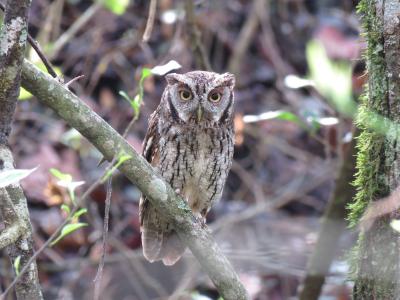
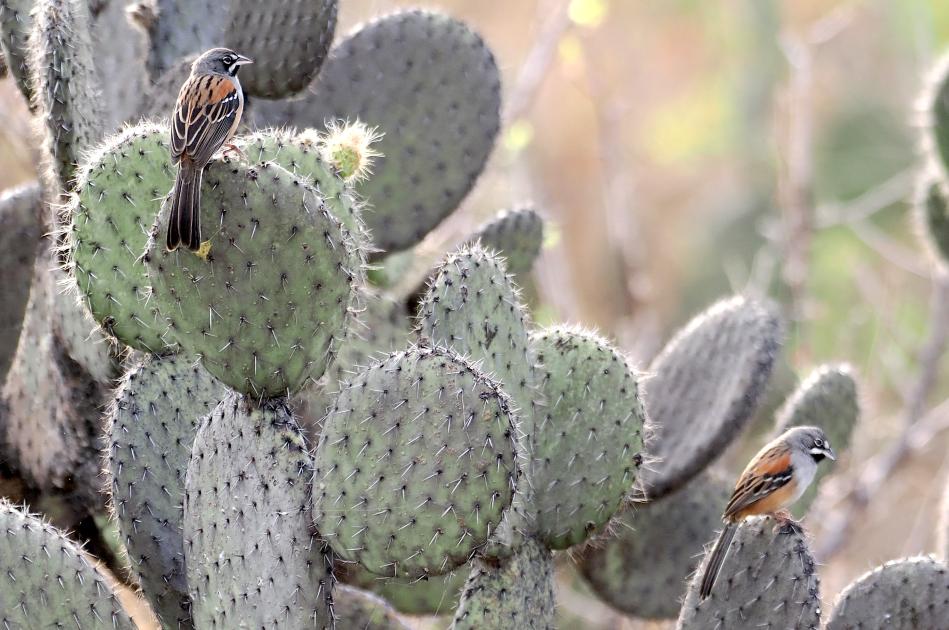
In Brief: Amazing food, festive holiday decorations, mind-boggling radish carvings, fascinating ruins, busy artisan markets, perfect weather, and superb companions were the highlights from this year's Oaxaca at Christmastime tour. We also saw some pretty awesome birds, nicely mixed with a good variety of other critters and botany during our eight days in the field. Topping the list of favorite birds were two owls: A Ferruginous Pygmy-Owl that at first sounded like a distant echo in a desert canyon materialized over our heads with an entourage of mobbing hummingbirds, warblers, and gnatcatchers. After our picnic breakfast in the dark fog of tall pine-oak forest the phantasm of a Fulvous Owl gave a few tantalizing songs before appearing in flight over the road and landing several times for fabulous views, a vision that will last a lifetime. We birded the dry interior valleys on several days, where a pair of the shockingly colorful Bridled Sparrow sat up on a cactus, fulfilling a long-awaited sighting. In the cool, humid pine-oak forests above town we couldn't get enough of the brilliant Red Warblers, and an improbably ornate Chestnut-sided Shrike-Vireo left a lasting memory.
There were some outstanding finds on our two-night side trip to the cloud forest and tropical lowlands of northern Oaxaca state, including a single, furtive Tody Motmot that required an intense amount of patience and teamwork for everyone to see well, and the surprising appearance of a rare Sungrebe that took its time paddling across the Valle Nacional River, allowing for extended scope views. Joining us on nearly every day of the tour, but still top favorites, were cheerful and trusty Rufous-capped Warblers chipping and singing from close range, and the highly underrated Turkey Vultures, missed up north during our colder winters and valued for their environmental services. Other sightings that left a lasting impression from the highlands included flocks of Gray Silky-flycatchers as we waited in line for the Night of the Radishes, a flock of Dwarf Jays that showed well, a small covey of Long-tailed Wood-Partridges at a new stakeout, two perfectly posed White-throated Magpie-Jays, colorful Slate-throated Redstarts with tails all a-spread, and a confiding pair of Oaxaca Sparrows on the last day. From the Tuxtepec side trip, a stoic Green Heron perched below the bridge we were standing on, an Aplomado Falcon hunted around a burning sugar cane field, candy corn-billed Montezuma Oropendolas uttered their incredible display songs, an Ochre-bellied Flycatcher filled in an old, gaping hole in a checklist, an intensely red White-winged Tanager appeared out of nowhere, and a lovely Broad-winged Hawk, perched at eye-level, caused us to stop and discover one of the birdiest mornings of the tour.
In Detail: Our first morning began below Monte Alban ruins, where Ruby-throated and Berylline Hummingbirds fought over the tree morning glory flowers. We coaxed out our first Rufous-capped Warblers, a bird that would become a trusty companion throughout the tour. Most people got a glimpse of a furtive Slaty Vireo, a hard bird this time of year, while everyone saw well the Zone-tailed Hawk that flew around the top of the hill all morning long. Only after seeing it several times did we finally manage to see a real Turkey Vulture. After lunch we made our way to the Zocalo where we waited in line for only a little less than two hours for the privilege of unblocked views of the amazing radish displays. During the wait, we were entertained by several species of birds in the trees, the most memorable being Gray Silky-flycatchers which offered great views and eventually flew off in big flocks to find their nightly roost.
Hearing about the opportunity to see Long-tailed Wood-Partridge coming to seed being scattered behind a roadside restaurant, we decided to give it shot. It was a convenient place to pitch our picnic breakfast in any event, but our breakfast was interrupted when proprietor Jacobo whispered to us that the birds had arrived. It was a treat to be the first birders to see this species at a known stakeout. The area was good for birding, giving us good comparisons of Chestnut-capped Brush-Finch and Collared Towhee, and here we saw our first of several stunning Red Warblers. We relocated higher up the mountain to a very mossy oak and pine forest where we caught up with a mixed flock of larger birds containing two highly sought-after birds. We ended up with great views of several Dwarf Jays, while the Chestnut-sided Shrike-Vireo sat fully exposed for scope views when it was still a bit foggy and backlit. Nonetheless, its exotic patterns and colors were there to appreciate. A much rarer species in the same flock was Strong-billed Woodcreeper, represented by a pair. Lunch at Restaurante Colibrí was delicious, highlighted by Blue-throated Mountain-gem and our best views of Steller's Jays.
Breakfast on our third day was at the incredibly birdy Piedra Azul reservoir, thanks to high water levels. After padding the list with so many water birds which we were already mostly familiar with, we concentrated on the more tropical avifauna, which included a few Streak-backed Orioles, a subtle Greenish Elaenia, and a Blue Mockingbird that showed well. Just up the road from the reservoir we surprised a family group of West Mexican Chachalacas that scampered across the road in front of our van. A bit higher up the mountain we were teased by a pair of Oaxaca Sparrows that most people at least glimpsed, while even higher up we found a mixed flock in the oaks that contained our first Golden Vireo. Just before lunch, we lured in a rarely seen White-striped Woodcreeper, while a female Mountain Trogon made a brief showing. The evening highlight was our picnic dinner high in the forest of La Cumbre, followed by the magical showing of a single Fulvous Owl.
Our morning at Yagul was peaceful. While Mexican Cottontails crossed the road free of traffic, Bridled Sparrows perched on their prickly pear cactus, and Boucard's Wren sat up on the organ pipe-like Myrtillocactus. After admiring the splendid setting of the ruins and its famous ball court, we dropped into the Tehuantepec watershed where several new birds awaited us. We connected almost immediately with two pairs of White-lored Gnatcatchers, and we would see several more farther up the wash. A single Orange-breasted Bunting elicited gasps as the birders' binoculars locked on it one-by-one. Farther up the canyon an echo of a Ferruginous Pygmy-Owl became the real thing, accompanied by several mobbing birds. A Plain-capped Starthroat in the blooming kapok trees was a rare bird for the tour list. As we left, a group of White-throated Magpie-Jay flew down the canyon and passed in front of us. As we were almost back at the vehicle, a female Coppery-tailed Trogon appeared in the stately rock fig growing out of the cliff. The courtyard of Rancho Zapata where we had lunch was pretty birdy, and we finished the day's outing at the Mitla ruins and its bustling market. Dinner at Las Quince Letras was nearly everyone's favorite to date.
We set out early for our drive to Tuxtepec, starting at a pullout where some glimpsed bits and pieces of a very shy Ocellated Thrasher. Most of the group got much better views of a Slaty Vireo here, while a Painted Bunting was a fun find. Down on the Rio Grande River where we had picnic breakfast, lots of birds were around, including Cinnamon-rumped Seedeaters sitting up handsomely, and a Rusty-crowned Ground-Sparrow that responded to trolling efforts. We scored the expected Violet-crowned Hummingbird while overlooking the river, where a Spotted Sandpiper teetered on a rock and two male Green Kingfishers sorted out their differences. The high cloud forests above Valle Nacional were very quiet, but we managed to see two pairs of the extraordinarily blue Unicolored Jays. A pair of Rusty Sparrows were a good find in a grassy area, while some good bird action at a lower elevation was highlighted by an Ochre-bellied Flycatcher. We arrived in Tuxtepec as the region's many Black Vultures were gathering to roost for the night on the powerline towers.
We birded a new area this year, between Jacaltepec and Vega del Sol, and we weren't disappointed. The numbers of wintering wood-warblers, vireos, flycatchers, and other local birds kept us busy all morning long. While we did hear the very local Sumichrast's Wren, a single Tody Motmot in a super dense curtain of vegetation was the prize bird. We also had several White-bellied Emeralds and from the bridge enjoyed a Green Heron below us and a Northern Neotropical River Otter dozing on a rock. We went to a different bridge in the afternoon where an Amazon Kingfisher and a Sungrebe were excellent finds, the latter our first sighting on this tour in 29 years. A confusing warbler turned out to be a vagrant Blackpoll Warbler, only the fourth record for Oaxaca and one of the most unexpected birds ever found on this tour. Down the road we passed a field of sugar cane that was being burned in preparation for harvest, discovering an Aplomado Falcon taking advantage of the abundance of flushed prey.
Our drive back to Tuxtepec began with a great sighting of a Broad-winged Hawk perched at eye level next to the road. Since it was rather close to where we were going to have breakfast anyway, we got out to get good looks, only to be washed over by a cascade of wonderful bird sightings. Black-crested Coquette was foraging in a tree alongside a White-bellied Emerald, while a Canivet's Emerald was in roadside flowers. Big and showy were Montezuma Oropendolas and a Keel-billed Toucan.
Farther up the road we spent time with two White-faced Quail-Doves, one seen only by a couple of people when it flushed, but it and a second bird were heard singing back in response to playback. In the process we discovered a Western Flycatcher, a very uncommon bird here, new for the all-time list. We made one last attempt for the Ocellated Thrasher at the same spot instead getting views of a pair of furtive Orange-billed Nightingale-Thrushes.
Our last day of birding was just outside of Oaxaca City at the very base of the foothills. While we had our picnic breakfast, Rivoli's Hummingbirds alternated with Berylline Hummingbirds in the tree morning glories while a White-tailed Kite perched distant on a power line. Down the trail we found a female Beautiful Hummingbird that mostly stayed behind the branches. A pair of Oaxaca Sparrows was great to finally get good looks at, followed by a busy mixed flock that contained a pair of Dwarf Vireos, Golden Vireo, and a wonderful tail-swishing Slate-throated Redstart.
- Rich Hoyer
Rich is an excellent leader. His ability to call birds in, vary his "owl" dialects, and get participants seeing the birds is stellar. He has attention to detail for every aspect of the tour start to finish!
- Kathy C. on Mexico: Oaxaca at Christmastime
This is, by far, one of the best birding tours EVER for me. The location with its birding opportunities, the time of year (Christmas getaway!) and the general pace of the tour were great. Of course, all of this was made possible by Rich Hoyer who was a fantastic guide, sharing his love for this region of Mexico and his endless enthusiasm for the natural world.
- Alane G. on Mexico: Oaxaca at Christmastime
Rich Hoyer is a joy to tour with. He not only knows the birds extremely well, but is well organized, good at communicating logistics, and patient with my repeated questions. His knowledge of birds, both visual and audio ID, are excellent, as is his ability to teach us about them. His knowledge and ability to communicate a wide variety of natural history makes for a very interesting (if sometimes overwhelming) tour. Lastly, his enthusiasm is contagious, especially for all the other things around us beyond the birds.
- Paul K. on Mexico: Oaxaca at Christmastime
This tour is offered every other year, on odd years.
Maximum group size nine participants with two leaders.
More Tours with these Leaders