
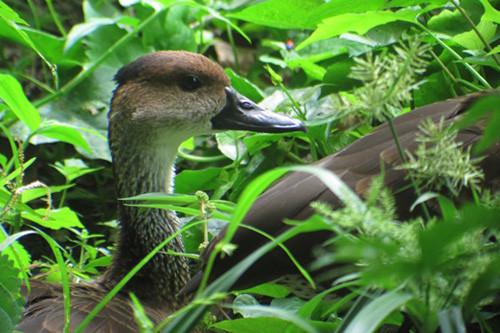
 Although the 30 endemics are a primary focus of the trip, species restricted to the Caribbean, like the threatened West Indian Whistling-Duck, are found here too.
Photo: Gavin Bieber
Although the 30 endemics are a primary focus of the trip, species restricted to the Caribbean, like the threatened West Indian Whistling-Duck, are found here too.
Photo: Gavin Bieber -
Although the 30 endemics are a primary focus of the trip, species restricted to the Caribbean, like the threatened West Indian Whistling-Duck, are found here too. Photo: Gavin Bieber
-
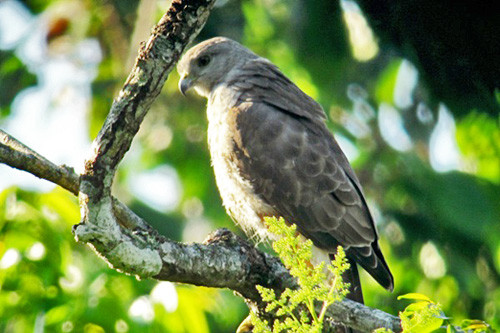
We should encounter Ridgway’s Hawks near their main stronghold on the island, Los Haitises National Park. Photo: Gavin Bieber
-
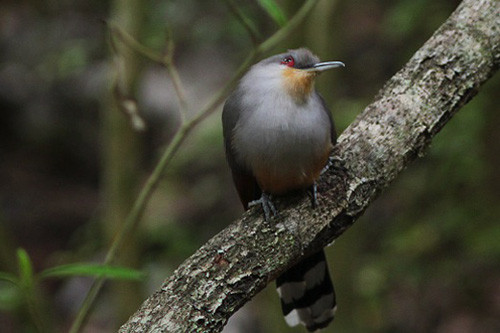
The active and often squirrel-like Hispaniolan Lizard Cuckoo is one of the island's more vocal endemics. Photo: Gavin Bieber
-
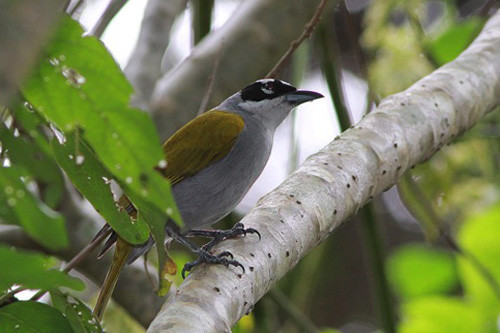
Known locally as “quatro-ojos” the boldly marked Black-crowned Palm-Tanager is likely not a tanager at all. Photo: Gavin Bieber
-
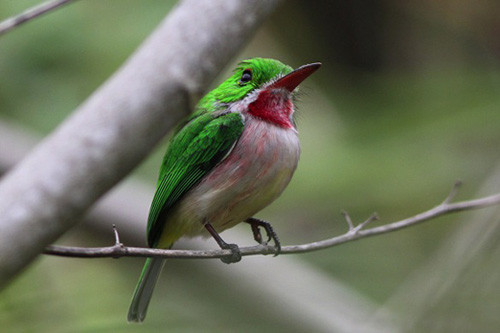
One of two tody species present on the island, Broad-billed Tody is always a crowd pleaser. Photo: Gavin Bieber
-
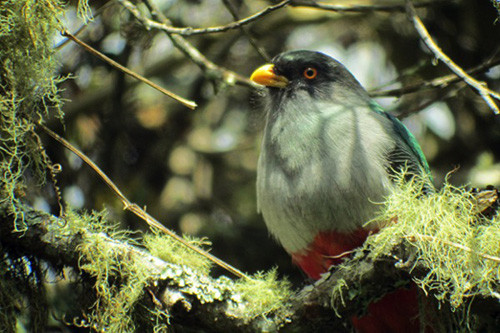
Among the 3o endemic species Hispaniola Trogon is perhaps the most gaudy. Photo: Gavin Bieber
-
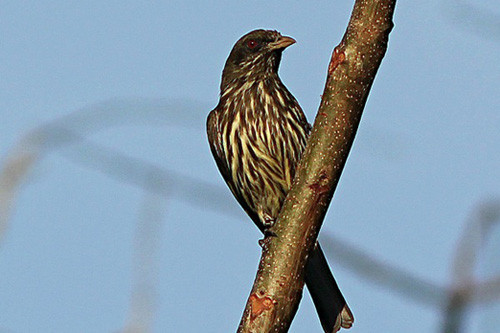
A ubiquitous sight in the country, the Palmchat is the only member in the family Dulidae. Photo: Gavin Bieber
Santo Domingo is the site of the oldest European city in the New World, and the capital city of the Dominican Republic. The country occupies the eastern two-thirds of the island of Hispaniola, the second largest island in the Greater Antilles. Dominated by the highest mountains in the Caribbean and ringed by a startlingly beautiful coastline, this varied landscape is home to no fewer than thirty-two endemic bird species, including Palmchat, the single representative of the monotypic family Dulidae and two species of Todies. Our search for the endemics and regional specialties will take us to the cloud forest, pine savannas, and thorn scrub of the rugged Sierra de Bahoruco, as well as to the bizarre cactus forest of the Lago Enriquillo basin, which is home to Palm and White-necked Crows, American Flamingos, and various species of herons, shorebirds, and waterfowl. A side trip to the very different north shore of the island will allow us to look for the extremely rare Ridgway’s Hawk in lush limestone karst forest. Our visit to the Dominican Republic will be enriched by the gracious hospitality of its people and their excellent Caribbean-style cuisine.
For those interested in a longer Carribbean adventure, this tour can be combined with Puerto Rico.
Day 1: The tour begins this evening in Santo Domingo, capital of the Dominican Republic. Our hotel is situated close to the center of colonial Santo Domingo, and those who arrive early may wish to explore the many historic buildings and museums close by. We’ll start the first evening with dinner and a logistical meeting. We may have time to check a nearby roost of Hispaniolan Parakeets. Night in Santo Domingo.
Day 2: We’ll begin our first full day at the extensive and beautifully maintained botanical garden, centered on a densely forested canyon. A morning walk here provides an excellent introduction to the island’s birds. In addition to the ubiquitous Hispaniolan Woodpecker, we should find Vervain Hummingbird (ostensibly the world’s second-smallest bird), Antillean Palm-Swift, Red-legged Thrush, Black-crowned Palm-Tanager, and Hispaniolan Lizard-Cuckoo. We can also expect to see the bizarre Palmchat, in a family unto itself, which builds enormous communal nests in palm trees. With some luck, we may happen upon West Indian Whistling-Ducks, which can often be found along a small stream in the gardens. Upon leaving the gardens we’ll begin the drive eastward towards Sabana de la Mar, on the Bay of Samaná. The hotel here is a real treat, with rushing streams all around the grounds, dried leaves impressed into the stucco walls, and wonderful patios. We will search this evening for the endemic Ashy-faced Owl. Night in Sabana de la Mar.
Day 3: In the early morning we plan to search for the critically endangered Ridgway’s Hawk. This formerly widespread species is now extremely local and infrequently seen. By this time of year, adults are usually engaged in nest building, and we hope to have a nest site pinned down. Getting there will likely involve a relatively short but sometimes steep and occasionally wet walk—well worth it for the chance of seeing this wonderful raptor at its nest! In the flowering trees nearby, we could see Hispaniolan Oriole, and we often encounter Ruddy Quail-Doves in the forest understory. If time and conditions allow, we may take a boat trip out into the bay and around the many limestone islets, stopping to look for West Indian Whistling-Ducks, White-crowned Pigeons, Hispaniolan Parrots, nesting Magnificent Frigatebirds, and various waterbirds. In the afternoon we’ll make our way back westward toward Santo Domingo for the evening. Night in Santo Domingo.
Day 4: We’ll spend much of today traveling west across the country with a few stops for birds and scenic ocean views. Provided travel goes smoothly, we will do some birding near our accommodations in Pedernales in the evening hours. Night in Pedernales.
Day 5: Today we’ll focus on the south side of the Sierra de Bahoruco. Our morning will begin upslope on the paved Alcoa Road. Near the top of this old mining road we will be able to access an extensive upland pine forest. This forest is reminiscent of the longleaf pine forests of the southeastern United States, but here we’ll look for Hispaniolan Crossbill, Golden Swallow (now a Hispaniolan endemic as the population in Jamaica has disappeared), and Antillean Siskin. Hispaniolan Trogons are common in these forests. We’ll spend most of the morning in this rapidly declining habitat before heading to lunch. After lunch we’ll drive south stopping at Oviedo Lagoon, where we will take an hour-long boat trip out into the lagoon for close views of their resident American Flamingos, and a selection of breeding waterbirds and wintering waterfowl. We may also encounter Roseate Spoonbills, and a nice array of shorebirds and waders. Also here we hope to find Mangrove Cuckoos and “Golden” Yellow Warblers lurking in the mangroves. After the boat trip we’ll make our way to our lovely hotel for the evening. Night at Hotel Quemaito near Barahona.
Day 6: This morning we will rise very early and have breakfast on the go. We’ll ride in 4x4 vehicles upslope for our first exploration of the unique cloud forest habitat found in the highest elevations of the island. With luck we’ll find Eastern Chat-Tanager before lunch as well as encounter Bicknell’s Thrush on their wintering grounds. Many other island endemics utilize this habitat including both Narrow-billed and Broad-billed Tody, and Green-tailed Ground Tanager (formerly Warbler), amongst others. After a delicious morning of birding we’ll head to lunch in Barahona and continue our drive to Duverge for the evening. We are likely to go out for a bit of night birding despite an early wake-up tomorrow (optional). Possibilities include Least Pauraque, Ashy-faced Owl, “Northern” Potoo, and Chuck-will’s Widow. Night in Duverge.
Day 7: Today we’ll leave “dark and early” and head back into the high mountains of the south-central part of the island. We’ll ride for multiple hours in 4x4 vehicles to reach a remote section of Sierra de Bahoruco National Park at a site called Zapoten. This site is well known for being the most reliable site on the island for encountering La Selle Thrush, White-winged Warbler (not a Warbler), and Western Chat-Tanager. As we ascend, we’ll make a few pre-dawn stops looking and listening for Hispaniolan Nightjar, Least Pauraque and Northern Potoo. Our main target just after dawn will be the very local LaSelle Thrush, which lives in a beautiful but restricted patch of cloud forest. Other highlights may include Hispaniolan Emerald, Hispaniolan Parrot, Hispaniolan Trogon, Narrow-billed Tody, Green-tailed Ground Warbler, White-winged Warbler, Hispaniolan Spindalis, and Greater Antillean Bullfinch. After birding the high elevation broad-leaf forest we will head further uphill into the pines to look for Hispaniolan Crossbill and the insular subspecies of Pine Warbler. After a nice morning of birding, we’ll make our way back downslope for lower elevation species. Birding around Puerto Escondido may produce Stolid Flycatchers and Greater Antillean Bullfinches. In the dry scrubby forests downslope we should see Flat-billed Vireo. A nearby streamside trail will take us through an excellent patch of humid forest. Birds abound here, and we should see quite a few endemics and a nice array of migrants. With patience we can often locate Key West (and sometimes White-fronted) Quail-Doves walking on the forest floor upslope from the trail. The endemic and spectacular Bay-breasted Cuckoo occasionally puts in an appearance here as well. Night in Duverge.
Day 8: For our last morning we’ll start by cleaning up on any species we missed the day before near Puerto Escondido along the La Placa trail. We’ll have lunch and then drive down to Lago Enriquillo. Lying more than 120 feet below sea level, this intensely saline lake is the remnant of a channel that once divided Hispaniola into two islands. Our primary goal is Hispaniolan Palm Crow, but we may also see an interesting assortment of migrant warblers, lizards, and Plain Pigeon in the very bizarre cactus forest. After this we’ll make our way back to Santo Domingo for our farewell dinner. Night near the Santo Domingo Airport.
Day 9: The tour concludes this morning in Santo Domingo with transfers to the airport.
Updated: 14 September 2023
Prices
- 2025 Tour Price : $4,450
- Single Occupancy Supplement : $290
Notes

Questions? Tour Manager: Stephanie Schaefer. Call 1-866-547-9868 (US or Canada) or (01) 520-320-9868 or click here to email.
* Tour invoices paid by check carry a 4% discount. Details here.
Maximum group size 8 with two leaders.